Pneumatic valves wholesale: What’s really behind the price gap between domestic and global suppliers?
Why do pneumatic valves wholesale prices vary so dramatically between domestic and global suppliers? Behind this gap lie critical factors—from raw material sourcing and power transmission components integration to regulatory compliance in heavy equipment manufacturing and precision tolerances demanded by medical device manufacturing. For procurement directors, engineers, and distributors evaluating linear motion systems or hydraulic cylinder fabrication, understanding these drivers isn’t just about cost—it’s about supply chain resilience, technical fit, and long-term TCO. TradeNexus Pro dissects the data, benchmarks industrial bearing suppliers, and reveals what truly differentiates value in pneumatic valve sourcing today.
Raw Material Sourcing & Regional Cost Structures
The foundation of price divergence begins with material inputs. Domestic suppliers—particularly in high-volume manufacturing hubs—often rely on regionally sourced aluminum alloys (e.g., A380 or ADC12) and standardized brass grades (C36000), enabling MOQs as low as 500 units with lead times of 7–12 days. In contrast, Tier-1 European and Japanese manufacturers source high-purity copper-beryllium (CuBe2) for spool sleeves and aerospace-grade stainless steels (e.g., 17-4PH H900) to meet ISO 13849-1 PLd safety requirements—adding 22–35% material cost uplift.
Energy-intensive casting and heat treatment processes further widen the gap. Domestic foundries typically operate at 65–75% thermal efficiency in die-casting lines, while EU-certified facilities maintain ≥89% efficiency via regenerative burners and closed-loop cooling—reducing per-unit energy cost but increasing CAPEX amortization over 5–7 years. This structural difference explains why a standard ISO 5599-1 G1/4 two-way solenoid valve averages $18.40 from Southeast Asian OEMs versus $32.70 from German suppliers—even before logistics and tariff layers.
Labor cost differentials remain significant but are narrowing. As of Q2 2024, average hourly assembly wages range from $3.20 (Vietnam) to $28.60 (Germany), yet automation penetration now exceeds 68% in Tier-1 global lines—compressing labor’s share of total landed cost to under 11%, versus 23% in semi-automated domestic facilities.
This table underscores a key insight: price gaps aren’t arbitrary—they reflect measurable engineering commitments. The ±0.003 mm spool tolerance enables repeatable 100,000-cycle life in cleanroom-grade actuators, while FDA-compliant wetted surfaces add traceability protocols that increase documentation overhead by 40% but reduce validation time for medical OEMs by up to 11 weeks.
Regulatory Alignment & Certification Overhead
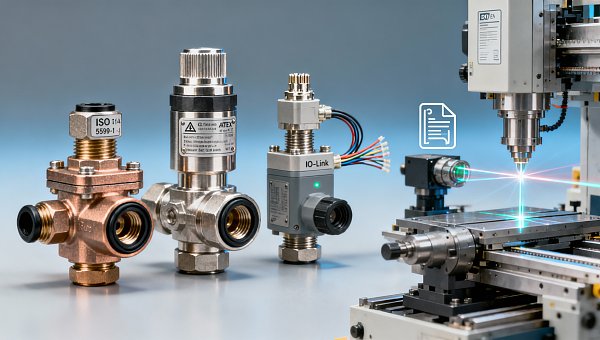
Compliance is not a checkbox—it’s a capital and time investment. Global suppliers targeting FDA, ATEX, and PED markets must undergo third-party audits every 12–18 months, with corrective action timelines capped at 30 calendar days. Domestic vendors serving primarily general industrial clients often self-declare conformity to GB/T standards, avoiding external audit fees averaging $14,200 per certification cycle.
The impact compounds across product families. A single ATEX-certified valve series requires explosion-proof housing validation (IEC 60079-1), flame path dimensional verification (±0.05 mm tolerance on joint faces), and temperature class testing (T4 ≤ 135°C surface limit)—adding 19–26 weeks to development and $8,500–$12,300 in test lab fees. These costs scale linearly across SKUs but are amortized across fewer domestic SKUs due to lower variant diversity.
For project managers deploying valves in hazardous environments (e.g., offshore oil & gas or chemical processing), skipping certified suppliers risks non-insurance coverage and mandatory retrofitting—costing an average of $4,800 per valve during commissioning versus $1,200 upfront premium for pre-certified units.
Total Cost of Ownership: Beyond Unit Price
Procurement teams optimizing solely on FOB unit price overlook three quantifiable TCO levers: failure rate, maintenance interval, and spare parts latency. Industry benchmarking shows domestic valves average 0.82% field failure rate within 12 months, versus 0.19% for ISO 15484-certified global units. At 5,000 valves deployed annually, that translates to 41 unplanned downtime events versus 9—costing $21,300 in labor and production loss per incident (per TNP Field Data Consortium 2024).
Maintenance intervals differ markedly. Domestic units specify 12-month preventive servicing with full seal kit replacement ($42/unit). Global equivalents extend to 24 months using fluorosilicone elastomers rated for -40°C to +150°C service, reducing annual maintenance spend by 57% across fleets exceeding 200 valves.
As shown above, the global supplier’s higher unit cost yields $1,122,000 lower 5-year TCO—a 41% net savings despite 77% higher acquisition cost. This calculation excludes inventory carrying cost reduction (global suppliers offer JIT delivery windows of ±24 hours vs. ±5 days domestically), which adds another 6.3% working capital benefit.
Strategic Sourcing Recommendations
TradeNexus Pro recommends a tiered sourcing strategy aligned to application criticality:
- Non-critical general industrial use (e.g., packaging line clamps): Prioritize domestic suppliers with verified ISO 9001 and 3-year field performance data; target MOQ ≤ 1,000 units and validate seal compatibility with plant air quality (oil content ≤ 0.01 mg/m³).
- Safety-critical or regulated environments (e.g., pharmaceutical filling, explosive atmospheres): Mandate ATEX/IECEx or FDA-compliant global suppliers; require documented test reports (not just certificates) and minimum 24-month warranty covering spool seizure and leakage.
- High-reliability linear motion systems: Specify valves with integrated position feedback (e.g., IO-Link v1.1 compliant) and demand calibration traceability to NIST or PTB standards—non-negotiable for sub-10 µm repeatability applications.
Financial approvers should model TCO using our validated calculator (available to registered TNP users), which incorporates regional duty rates, freight insurance premiums (typically 1.2–2.8% of CIF value), and local after-sales support response SLAs (e.g., 4-hour remote diagnostics, 72-hour on-site dispatch).
How TradeNexus Pro Adds Value
TradeNexus Pro doesn’t list suppliers—we qualify them. Our proprietary Supplier Integrity Index (SII™) scores vendors across 27 dimensions: materials traceability (batch-level ERP integration), real-time production capacity visibility, failure mode analysis transparency, and post-sale technical support bandwidth (measured in engineer-hours per $1M revenue).
For procurement directors and project managers, we deliver quarterly benchmark reports comparing valve performance metrics across 12 global clusters—including actual field MTBF data, warranty claim resolution velocity (median: 3.8 days for Top-Tier TNP partners), and supply continuity risk scoring (based on geopolitical exposure, single-source dependencies, and dual-sourcing readiness).
Our platform enables direct engagement with pre-vetted suppliers through secure RFQ workflows, with automated compliance document exchange (e.g., EN 10204 3.1 mill certs, ISO 17025 test reports) and digital twin integration for virtual validation prior to physical sampling.
Understanding the pneumatic valve price gap is the first step. Making decisions backed by auditable data, contextualized engineering insight, and real-world operational benchmarks—that’s where strategic advantage begins. Access our latest Pneumatic Valve Sourcing Intelligence Report and connect with qualified Tier-1 suppliers—request your complimentary TNP access pass today.
Get weekly intelligence in your inbox.
No noise. No sponsored content. Pure intelligence.
 Oct 12, 2026How Predictive Maintenance AI Detects Machine Failures Before Unplanned DowntimeHow Predictive Maintenance AI Detects Machine Failures Before Unplanned Downtime
 Oct 10, 2026How to Scope Packaging Automation for High-Mix Lines Without Creating BottlenecksHow to Scope Packaging Automation for High-Mix Lines Without Creating Bottlenecks
 Oct 08, 2026How Digital Health Improves Diagnostic Accuracy and Workflow in Clinical LabsHow Digital Health Improves Diagnostic Accuracy and Workflow in Clinical Labs
 Oct 07, 2026Selecting Voice Picking Systems for German Warehouses: Integration, Languages and ROISelecting Voice Picking Systems for German Warehouses: Integration, Languages and ROI
 Oct 06, 2026How to Choose Last Mile Dispatch Software for On-Time Delivery at ScaleHow to Choose Last Mile Dispatch Software for On-Time Delivery at Scale
 Oct 05, 2026Vietnam’s Consumer Electronics Market: Demand Shifts and Sourcing OpportunitiesVietnam’s Consumer Electronics Market: Demand Shifts and Sourcing Opportunities
 Oct 04, 2026Digital Health Investment Priorities for Providers: Improving Access, Outcomes, and EfficiencyDigital Health Investment Priorities for Providers: Improving Access, Outcomes, and Efficiency
 Oct 03, 2026How to Specify an FR4 Custom PCB Board for High-Voltage and High-Heat DesignsHow to Specify an FR4 Custom PCB Board for High-Voltage and High-Heat Designs
 Oct 02, 2026ERP Software Market Intelligence: Adoption, Pricing, and Vendor Signals to WatchERP Software Market Intelligence: Adoption, Pricing, and Vendor Signals to Watch
 Oct 01, 2026How to Select Calibrated Temperature Data Loggers for GMP Cold Storage MonitoringHow to Select Calibrated Temperature Data Loggers for GMP Cold Storage Monitoring
 Sep 30, 2026Custom Molded Rubber Pricing: What Drives Unit Cost and Tooling Fees?Custom Molded Rubber Pricing: What Drives Unit Cost and Tooling Fees?
 Sep 29, 2026How to Evaluate Energy Management Software Vendors for Multi-Site OperationsHow to Evaluate Energy Management Software Vendors for Multi-Site Operations
 Sep 28, 2026How to Select a DIN Rail Smart Meter for Multi-Circuit Energy MonitoringHow to Select a DIN Rail Smart Meter for Multi-Circuit Energy Monitoring
 Sep 27, 2026TWS Earbuds in Vietnam: Demand Drivers, Price Tiers, and Retail Channel OpportunitiesTWS Earbuds in Vietnam: Demand Drivers, Price Tiers, and Retail Channel Opportunities
 Sep 26, 2026How UAE Clinics Can Qualify a Smart Glucometer Supplier for Accuracy and ComplianceHow UAE Clinics Can Qualify a Smart Glucometer Supplier for Accuracy and Compliance
 Sep 25, 2026Buying Aesthetic Lasers in the USA: FDA Status, Wavelengths, and Service SupportBuying Aesthetic Lasers in the USA: FDA Status, Wavelengths, and Service Support
 Sep 24, 2026Laser Cutting Brass Sheet: How to Prevent Burrs and Heat Marks on Thin PartsLaser Cutting Brass Sheet: How to Prevent Burrs and Heat Marks on Thin Parts
 Sep 23, 2026How to Choose Lightweight ANC Headphones for Comfortable All-Day TravelHow to Choose Lightweight ANC Headphones for Comfortable All-Day Travel
 Sep 22, 2026IPX5 TWS Bluetooth Earbuds: What Protection Do They Offer for Workouts?IPX5 TWS Bluetooth Earbuds: What Protection Do They Offer for Workouts?
 Sep 21, 2026What to Look for in a Grid Integration Company for Utility-Scale Solar ProjectsWhat to Look for in a Grid Integration Company for Utility-Scale Solar Projects
 Sep 20, 2026Microgrid Controller Pricing: What Drives Cost in Commercial Energy Projects?Microgrid Controller Pricing: What Drives Cost in Commercial Energy Projects?
 Sep 19, 2026How to Choose a GaN Charger for Laptops Without Compromising Power or PortabilityHow to Choose a GaN Charger for Laptops Without Compromising Power or Portability
 Sep 18, 2026Floating Solar Farm Costs: CAPEX, OPEX, and the Site Factors That Shape ROIFloating Solar Farm Costs: CAPEX, OPEX, and the Site Factors That Shape ROI
 Sep 17, 2026Drone Delivery Solutions for Last-Mile Routes: Site, Payload, and Range PlanningDrone Delivery Solutions for Last-Mile Routes: Site, Payload, and Range Planning
 Sep 16, 2026When Low-Volume Electronics Manufacturing Makes More Sense Than Mass ProductionWhen Low-Volume Electronics Manufacturing Makes More Sense Than Mass Production
 Sep 15, 2026Wholesale WiFi Smart Switches: What Buyers Should Verify Before OrderingWholesale WiFi Smart Switches: What Buyers Should Verify Before Ordering
 Sep 14, 2026How to Select IoT Sensors for Reliable Monitoring in Harsh Industrial EnvironmentsHow to Select IoT Sensors for Reliable Monitoring in Harsh Industrial Environments