
What port automation tech actually cuts terminal delays?
Terminal congestion is no longer just an operational issue—it is a strategic risk for global trade. For business leaders evaluating port automation tech for container terminals, the real question is which technologies measurably reduce vessel wait times, yard bottlenecks, and labor inefficiencies. This article examines the automation solutions that deliver the strongest impact on terminal delays and long-term supply chain performance.
What decision-makers are really asking about port automation tech for container terminals
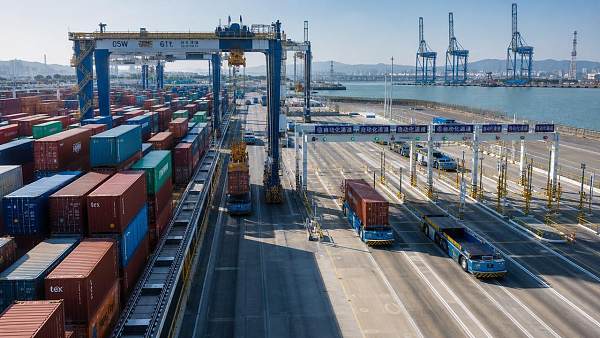
The core search intent behind this topic is practical, not academic. Executives want to know which automation technologies actually reduce delays, where returns appear fastest, and which investments create measurable throughput gains.
They are not looking for a broad list of emerging tools. They want evidence-based guidance on what works in live terminal environments, what depends on local conditions, and what often gets oversold.
For enterprise decision-makers, the priority questions are straightforward. Which systems cut berth waiting time, improve yard flow, increase equipment utilization, reduce rehandles, and strengthen schedule reliability across the supply chain?
They also care about implementation risk. Even strong technology can fail if it disrupts labor relations, lacks data integration, or cannot scale across mixed terminal operations and legacy infrastructure.
The short answer is this: the technologies that most consistently cut delays are not always the most futuristic. The biggest gains often come from integrated planning, yard orchestration, gate automation, and equipment optimization.
Fully autonomous terminals can deliver major performance benefits, but only when traffic volume, labor structure, land constraints, and capital budgets justify the complexity. For many operators, selective automation creates better near-term returns.
Which technologies reduce terminal delays most consistently
Among all port automation tech for container terminals, terminal operating system upgrades and real-time orchestration layers produce the most repeatable impact. They improve decisions across berth planning, yard allocation, equipment dispatch, and truck flows.
A modern TOS does more than record moves. It continuously optimizes vessel stow plans, crane assignments, yard slotting, and handoffs between marine, yard, rail, and gate operations.
When paired with execution dashboards and predictive analytics, this technology reduces planning lag and operational conflict. That means fewer unproductive moves, faster exception handling, and better use of cranes, trucks, and stacking equipment.
Automated gate systems also deliver visible delay reduction. Optical character recognition, RFID, appointment systems, and automated document checks cut truck transaction times and reduce queue formation outside and inside the terminal.
Yard automation is another high-impact category. Automated stacking cranes, rubber-tired gantry automation, and AI-assisted slotting improve density and consistency while reducing the rehandles that often drive hidden delay costs.
Quay-side automation can be powerful, especially with remote crane operations and automated crane scheduling. But its effectiveness depends on whether marine productivity is truly the main bottleneck rather than yard or gate congestion.
In many terminals, delay is a systems problem. That is why standalone equipment upgrades often underperform unless connected to planning, telemetry, and workflow rules across the full terminal operating environment.
Why integrated planning software often beats expensive hardware-first projects
Many leaders assume delay reduction starts with autonomous vehicles or fully automated cranes. In reality, software-led orchestration often creates faster gains because poor synchronization is a larger problem than equipment capability alone.
If yard blocks are badly assigned, vessels are sequenced inefficiently, or truck arrivals remain unmanaged, adding expensive machinery may simply automate congestion instead of eliminating it.
Integrated planning platforms address this by improving how assets work together. They connect berth windows, crane productivity targets, container positioning, gate appointments, and labor deployment into a single operating logic.
This matters because terminal delays usually come from handoff friction. A vessel can be ready, but the yard is not. The gate can move, but the stack is blocked. A crane is available, but trucking is misaligned.
Software orchestration reduces these mismatches. It gives operators a better sequence of moves, faster response to disruption, and clearer visibility into where the next bottleneck will emerge before queues build.
For business leaders, this also lowers capital risk. A digital optimization layer can improve existing assets first, creating operational evidence that informs where later automation spending will generate the highest marginal return.
What specific technologies have the strongest delay-reduction impact
First, advanced TOS platforms with optimization engines rank near the top. They improve berth planning, yard logic, crane coordination, and exception management, which directly affects turnaround times and terminal fluidity.
Second, truck appointment systems and smart gate automation produce strong gains where landside congestion is severe. They smooth arrival peaks, shorten processing times, and reduce idle time that can spill back into yard operations.
Third, automated stacking cranes can significantly reduce yard bottlenecks in high-density terminals. Their value is strongest where land is constrained and rehandle rates are materially affecting vessel or truck service levels.
Fourth, equipment telematics and AI dispatching improve utilization of terminal tractors, straddle carriers, and cranes. Better dispatch logic reduces empty travel, idle moves, and delays caused by equipment imbalance across the site.
Fifth, remote crane operations can improve labor productivity, safety, and consistency. In some terminals, this supports longer operating windows and better responsiveness during peak periods, though integration quality remains critical.
Sixth, predictive ETA, digital twin, and simulation tools help operators prepare before disruption becomes visible on the quay. These tools are especially useful in terminals facing weather volatility, schedule instability, or tight berth capacity.
No single category is universally best. The highest-impact stack depends on whether delay originates mainly at berth allocation, yard density, gate queues, intermodal interfaces, or workforce coordination.
How to match automation choices to the actual bottleneck
The most common strategic mistake is buying automation based on industry momentum instead of root-cause analysis. Decision-makers should first identify where delay minutes accumulate and which constraint has the highest financial impact.
If vessel waiting time is the issue, berth planning, crane scheduling, and marine-side visibility deserve immediate attention. If truck turn time is the issue, gate automation and appointments may outperform larger infrastructure projects.
If stack congestion drives rehandles and missed connections, yard automation and dynamic slotting become higher priorities. If asset imbalance causes downtime, dispatch optimization and telemetry may create better returns than new machinery.
Leaders should segment delays into categories: berth delays, crane delays, transfer delays, stack delays, gate delays, rail interface delays, and exception delays caused by customs, paperwork, or inspection events.
Once the terminal has a delay map, technology choices become clearer. The best port automation tech for container terminals is the one that removes the largest recurring operational constraint with acceptable implementation risk.
This approach also improves internal alignment. Operations, finance, IT, and executive leadership can evaluate the same bottleneck data rather than debating automation in broad, disconnected terms.
What ROI looks like in real terminal automation decisions
For executives, ROI should not be limited to labor reduction. The more strategic value often comes from higher throughput, lower dwell time, better schedule reliability, improved customer retention, and reduced congestion-related penalties.
A terminal that shortens truck turn times can attract more carrier and drayage loyalty. A terminal that improves berth productivity may support larger service volumes without immediately expanding physical footprint.
Yard automation can raise storage efficiency and reduce costly rehandles. Planning software can improve crane productivity and asset utilization, delaying the need for additional capex while supporting stronger service consistency.
Other gains are indirect but important. Better visibility and predictability support shippers, inland transport providers, and procurement teams that depend on reliable cargo flow to avoid inventory disruption and missed delivery windows.
When building a business case, leaders should compare baseline and projected performance across vessel turnaround, berth occupancy, crane moves per hour, truck turn time, yard dwell, rehandle ratio, and equipment idle rates.
They should also model downside scenarios. A project with strong average returns may still be unattractive if implementation downtime, integration complexity, or labor resistance creates substantial short-term operational risk.
What can go wrong with port automation programs
Automation projects often underdeliver for reasons that have little to do with the technology itself. Weak process redesign, fragmented data, poor systems integration, and unrealistic deployment timelines are common failure points.
Labor dynamics are another major factor. Even when automation is operationally justified, poor stakeholder planning can slow implementation, increase disruption, and dilute the expected benefit during the transition period.
Cybersecurity and resilience also matter. As terminals become more connected, disruption risk can shift from mechanical failure to software outage, data integrity issues, or vulnerabilities across partner interfaces.
Another risk is over-automation. Some terminals invest in highly complex systems that require traffic patterns, labor conditions, and volume stability that do not exist in practice. The result is long payback and operational rigidity.
Decision-makers should therefore assess not just the technology promise, but also data maturity, integration architecture, vendor track record, local workforce context, and the terminal’s ability to manage change at operating speed.
How enterprise leaders should evaluate vendors and deployment strategy
Vendor evaluation should begin with operational proof, not presentation quality. Leaders should ask where the solution has reduced delay in comparable terminals, under what conditions, and which KPIs improved after stabilization.
They should also test interoperability. A strong solution must connect with existing TOS platforms, ERP environments, equipment telemetry, customs interfaces, and carrier or trucking systems without excessive custom development.
Implementation strategy matters as much as product quality. Phased rollouts usually outperform big-bang transitions because they limit disruption, generate early evidence, and allow process refinement before scaling across the terminal.
A practical roadmap often starts with visibility, orchestration, and gate optimization. It then expands into yard automation, remote operations, and more advanced autonomy once data quality and workflow discipline are established.
For enterprise buyers, the winning supplier is rarely the one with the broadest marketing narrative. It is the one that can show measurable throughput improvement, integration realism, operator usability, and resilient support capacity.
The clearest strategic conclusion for container terminal automation
The technologies that actually cut delays are the ones that remove the terminal’s dominant constraint. In most cases, that starts with integrated planning, real-time visibility, yard logic, and gate flow automation.
Hardware-heavy automation becomes most valuable when a terminal has sufficient volume, density, and process maturity to support it. Without those conditions, selective automation often produces stronger returns with lower execution risk.
For leaders assessing port automation tech for container terminals, the smartest move is not to ask which tool sounds most advanced. It is to ask which solution measurably reduces delay minutes, protects throughput, and scales sustainably.
That mindset turns automation from a technology purchase into a strategic operating decision. And in a supply chain environment where reliability increasingly defines competitive advantage, that distinction matters.
Get weekly intelligence in your inbox.
No noise. No sponsored content. Pure intelligence.
 Oct 08, 2026How Digital Health Improves Diagnostic Accuracy and Workflow in Clinical LabsHow Digital Health Improves Diagnostic Accuracy and Workflow in Clinical Labs
 Oct 07, 2026Selecting Voice Picking Systems for German Warehouses: Integration, Languages and ROISelecting Voice Picking Systems for German Warehouses: Integration, Languages and ROI
 Oct 06, 2026How to Choose Last Mile Dispatch Software for On-Time Delivery at ScaleHow to Choose Last Mile Dispatch Software for On-Time Delivery at Scale
 Oct 05, 2026Vietnam’s Consumer Electronics Market: Demand Shifts and Sourcing OpportunitiesVietnam’s Consumer Electronics Market: Demand Shifts and Sourcing Opportunities
 Oct 04, 2026Digital Health Investment Priorities for Providers: Improving Access, Outcomes, and EfficiencyDigital Health Investment Priorities for Providers: Improving Access, Outcomes, and Efficiency
 Oct 03, 2026How to Specify an FR4 Custom PCB Board for High-Voltage and High-Heat DesignsHow to Specify an FR4 Custom PCB Board for High-Voltage and High-Heat Designs
 Oct 02, 2026ERP Software Market Intelligence: Adoption, Pricing, and Vendor Signals to WatchERP Software Market Intelligence: Adoption, Pricing, and Vendor Signals to Watch
 Oct 01, 2026How to Select Calibrated Temperature Data Loggers for GMP Cold Storage MonitoringHow to Select Calibrated Temperature Data Loggers for GMP Cold Storage Monitoring
 Sep 30, 2026Custom Molded Rubber Pricing: What Drives Unit Cost and Tooling Fees?Custom Molded Rubber Pricing: What Drives Unit Cost and Tooling Fees?
 Sep 29, 2026How to Evaluate Energy Management Software Vendors for Multi-Site OperationsHow to Evaluate Energy Management Software Vendors for Multi-Site Operations
 Sep 28, 2026How to Select a DIN Rail Smart Meter for Multi-Circuit Energy MonitoringHow to Select a DIN Rail Smart Meter for Multi-Circuit Energy Monitoring
 Sep 27, 2026TWS Earbuds in Vietnam: Demand Drivers, Price Tiers, and Retail Channel OpportunitiesTWS Earbuds in Vietnam: Demand Drivers, Price Tiers, and Retail Channel Opportunities
 Sep 26, 2026How UAE Clinics Can Qualify a Smart Glucometer Supplier for Accuracy and ComplianceHow UAE Clinics Can Qualify a Smart Glucometer Supplier for Accuracy and Compliance
 Sep 25, 2026Buying Aesthetic Lasers in the USA: FDA Status, Wavelengths, and Service SupportBuying Aesthetic Lasers in the USA: FDA Status, Wavelengths, and Service Support
 Sep 24, 2026Laser Cutting Brass Sheet: How to Prevent Burrs and Heat Marks on Thin PartsLaser Cutting Brass Sheet: How to Prevent Burrs and Heat Marks on Thin Parts
 Sep 23, 2026How to Choose Lightweight ANC Headphones for Comfortable All-Day TravelHow to Choose Lightweight ANC Headphones for Comfortable All-Day Travel
 Sep 22, 2026IPX5 TWS Bluetooth Earbuds: What Protection Do They Offer for Workouts?IPX5 TWS Bluetooth Earbuds: What Protection Do They Offer for Workouts?
 Sep 21, 2026What to Look for in a Grid Integration Company for Utility-Scale Solar ProjectsWhat to Look for in a Grid Integration Company for Utility-Scale Solar Projects
 Sep 20, 2026Microgrid Controller Pricing: What Drives Cost in Commercial Energy Projects?Microgrid Controller Pricing: What Drives Cost in Commercial Energy Projects?
 Sep 19, 2026How to Choose a GaN Charger for Laptops Without Compromising Power or PortabilityHow to Choose a GaN Charger for Laptops Without Compromising Power or Portability
 Sep 18, 2026Floating Solar Farm Costs: CAPEX, OPEX, and the Site Factors That Shape ROIFloating Solar Farm Costs: CAPEX, OPEX, and the Site Factors That Shape ROI
 Sep 17, 2026Drone Delivery Solutions for Last-Mile Routes: Site, Payload, and Range PlanningDrone Delivery Solutions for Last-Mile Routes: Site, Payload, and Range Planning
 Sep 16, 2026When Low-Volume Electronics Manufacturing Makes More Sense Than Mass ProductionWhen Low-Volume Electronics Manufacturing Makes More Sense Than Mass Production
 Sep 15, 2026Wholesale WiFi Smart Switches: What Buyers Should Verify Before OrderingWholesale WiFi Smart Switches: What Buyers Should Verify Before Ordering
 Sep 14, 2026How to Select IoT Sensors for Reliable Monitoring in Harsh Industrial EnvironmentsHow to Select IoT Sensors for Reliable Monitoring in Harsh Industrial Environments
 Sep 13, 2026How Procurement Teams Can Improve Supplier Reliability With Supply Chain VisibilityHow Procurement Teams Can Improve Supplier Reliability With Supply Chain Visibility
 Sep 12, 2026Smart Manufacturing Trends 2026: What Leaders Should Prioritize for ROISmart Manufacturing Trends 2026: What Leaders Should Prioritize for ROI



























