Lathe Turning vs Milling: Which Process Fits Shafts, Bushings, and Tight Tolerances?
Lathe Turning vs Milling: Which Process Fits Shafts, Bushings, and Tight Tolerances?
When selecting the right machining method for shafts, bushings, and precision parts, lathe turning often becomes the first process engineers evaluate.
But milling also plays a major role when geometry, tolerance, and production speed become more demanding.
The better choice depends on part shape, datum strategy, finish targets, and total manufacturing risk.
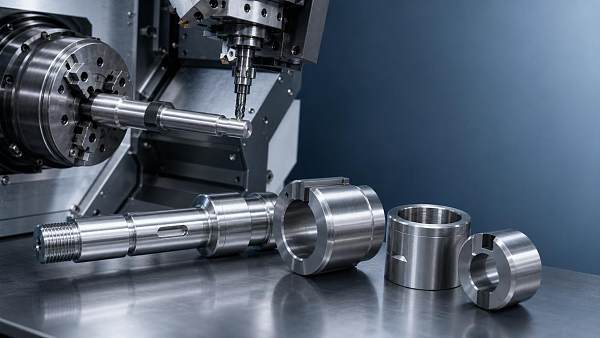
For shafts and bushings, the debate is rarely about one process replacing the other.
More often, it is about knowing where lathe turning delivers value first, and where milling adds necessary features.
That distinction matters when schedules are tight, tolerances are narrow, and cost pressure is real.
Why Lathe Turning Usually Leads for Rotational Parts
Lathe turning is built for parts that revolve around a central axis.
That makes it a natural fit for shafts, bushings, sleeves, pins, rollers, and bearing seats.
In practical sourcing, this geometry advantage often translates into faster cycle times and cleaner concentricity control.
A turning process removes material while the workpiece rotates, so roundness and coaxial relationships are easier to maintain.
That is especially important when fit, runout, or bearing performance can affect final assembly behavior.
- Best for outer diameters, inner diameters, shoulders, grooves, tapers, and threads.
- Strong process control for concentric surfaces and long cylindrical features.
- Often lower cost than milling for round parts.
- Efficient material removal on bars, forgings, and near-net blanks.
If the design is mostly rotational, lathe turning is usually the starting point for both design review and supplier selection.
Where Milling Becomes the Better Choice
Milling handles shapes that turning cannot create efficiently.
Think keyways, flats, pockets, slots, bolt patterns, cross holes, and non-round profiles.
For bushings with lubrication channels or shafts with drive features, milling often becomes the second critical process.
It also gains importance when the part datum does not align neatly with the centerline.
From a decision standpoint, milling is less about rotational efficiency and more about geometric flexibility.
- Ideal for prismatic features added to turned parts.
- Useful when multiple faces or indexed positions matter.
- Better for complex contours outside a pure round envelope.
- Often essential for multi-feature functional interfaces.
So while lathe turning may shape the core form, milling often defines how the part actually works in the assembly.
Tight Tolerances: Which Process Holds Better?
Tight tolerances do not automatically favor one process in every case.
The real question is which tolerance is critical.
If the requirement is roundness, concentricity, diameter control, or straightness along an axis, lathe turning usually has the edge.
If the requirement is positional accuracy between holes, flats, and faces, milling may be better suited.
This is why tolerance review should happen feature by feature, not part by part.
In other words, lathe turning wins many tolerance battles on round features, but milling wins when relationships between non-round features drive function.
Surface Finish, Tool Access, and Part Stability
Surface finish is often treated as a secondary detail, but it can shift process choice quickly.
Lathe turning often produces very consistent finishes on cylindrical surfaces, especially with stable setups and appropriate inserts.
That matters for sealing surfaces, sliding fits, and wear zones.
Milling can also achieve fine finishes, but tool marks, cutter engagement, and vibration need closer review.
Part stability is another factor that shows up early in production, not only in prototypes.
Long, slender shafts may deflect during lathe turning if unsupported.
Thin-wall bushings may distort during either process if clamping pressure is not controlled.
- Use steady rests or tailstocks for long shafts.
- Review chucking strategy for thin-wall bushings.
- Check finish requirements before assigning secondary grinding.
- Confirm whether one setup can protect critical datums.
These details are often where good machining plans separate from expensive rework loops.
Cost and Lead Time in Real Production
From a cost perspective, lathe turning is usually more efficient for high-volume cylindrical work.
Bar feeding, rapid cycle times, and simpler workholding all help reduce cost per part.
Milling tends to add time when features require multiple orientations or extra setups.
Still, the lowest apparent machining cost is not always the best commercial choice.
If a part needs both lathe turning and milling, supplier capability matters more than single-process price.
A shop with mill-turn equipment may reduce handling, improve repeatability, and shorten lead time.
That is often a stronger business case than splitting work across vendors.
- Estimate cycle time by feature group, not only by part count.
- Compare setup count across supplier options.
- Ask whether lathe turning and milling can run in one machine cell.
- Review scrap risk for thin walls, long parts, and close-fit features.
In actual programs, lead time risk usually comes from setup complexity and inspection bottlenecks, not only from cutting speed.
A Practical Selection Guide for Shafts and Bushings
A simple decision rule helps.
If the part is mostly round and performance depends on diameter, bore, and concentricity, start with lathe turning.
If function depends on flats, slots, indexed holes, or non-round geometry, add milling where those features create value.
For many industrial components, the winning route is not turning versus milling.
It is turning first, milling second, with tolerances assigned according to functional priority.
- Choose lathe turning for shafts, bushings, sleeves, and bearing surfaces.
- Choose milling for keyways, drive flats, ports, and bolt features.
- Use combined processes for parts with rotational cores and functional side features.
- Align tolerances with assembly performance, not drawing habits.
This approach keeps machining decisions connected to cost, quality, and delivery realities.
It also supports better supplier conversations because the process logic is clear from the start.
When reviewing a new component, begin with geometry, then move to tolerances, then finish, then production scale.
That sequence usually reveals whether lathe turning should anchor the manufacturing plan, or whether milling needs to lead critical feature control.
Get weekly intelligence in your inbox.
No noise. No sponsored content. Pure intelligence.
 Sep 15, 2026Wholesale WiFi Smart Switches: What Buyers Should Verify Before OrderingWholesale WiFi Smart Switches: What Buyers Should Verify Before Ordering
 Sep 14, 2026How to Select IoT Sensors for Reliable Monitoring in Harsh Industrial EnvironmentsHow to Select IoT Sensors for Reliable Monitoring in Harsh Industrial Environments
 Sep 13, 2026How Procurement Teams Can Improve Supplier Reliability With Supply Chain VisibilityHow Procurement Teams Can Improve Supplier Reliability With Supply Chain Visibility
 Sep 12, 2026Smart Manufacturing Trends 2026: What Leaders Should Prioritize for ROISmart Manufacturing Trends 2026: What Leaders Should Prioritize for ROI
 Sep 11, 2026B2B Market Analysis: How Buyers Evaluate Suppliers, Pricing, and Delivery RiskB2B Market Analysis: How Buyers Evaluate Suppliers, Pricing, and Delivery Risk
 Sep 10, 2026Residential Solar Kits in Canada: How to Size a System for Your Home and ClimateResidential Solar Kits in Canada: How to Size a System for Your Home and Climate
 Sep 09, 2026How to Specify a Syringe Assembly Line for High-Volume Sterile ProductionHow to Specify a Syringe Assembly Line for High-Volume Sterile Production
 Sep 08, 2026How to Evaluate Warehouse Robotics System Suppliers for Reliable Multi-Site DeploymentHow to Evaluate Warehouse Robotics System Suppliers for Reliable Multi-Site Deployment
 Sep 07, 2026Renewable Geothermal Energy Explained: How It Works for Heating and PowerRenewable Geothermal Energy Explained: How It Works for Heating and Power
 Sep 07, 2026How to Choose an Industrial Packaging Robot Manufacturer for Your Production LineHow to Choose an Industrial Packaging Robot Manufacturer for Your Production Line
 Sep 05, 2026How to Evaluate a Turnkey Hydro Turbine Generator Supplier for Remote Power ProjectsHow to Evaluate a Turnkey Hydro Turbine Generator Supplier for Remote Power Projects
 Sep 04, 2026Automated Ultrasonic Welding for Thermoplastic Assemblies: Process Controls That MatterAutomated Ultrasonic Welding for Thermoplastic Assemblies: Process Controls That Matter
 Sep 03, 2026Energy Forecasting for Grid Planning: Sizing Solar and Storage CapacityEnergy Forecasting for Grid Planning: Sizing Solar and Storage Capacity
 Sep 02, 2026Which Metrics Should an Energy Analytics Dashboard Track for Factory Energy Management?Which Metrics Should an Energy Analytics Dashboard Track for Factory Energy Management?
 Sep 01, 2026How Warehouse Voice Picking Improves Accuracy and Throughput in Order FulfillmentHow Warehouse Voice Picking Improves Accuracy and Throughput in Order Fulfillment
 Aug 31, 2026How to Automate Dropshipping Order Processing Without Overselling StockHow to Automate Dropshipping Order Processing Without Overselling Stock
 Aug 30, 2026How to Evaluate a Smart Lighting Supplier for Multi-Site Commercial ProjectsHow to Evaluate a Smart Lighting Supplier for Multi-Site Commercial Projects
 Aug 29, 2026Recent Advances in Smart Manufacturing and Materials Reshaping Factory InvestmentRecent Advances in Smart Manufacturing and Materials Reshaping Factory Investment
 Aug 29, 2026Selecting Lightweight Aluminum Extrusions for Strength-Critical Industrial DesignsSelecting Lightweight Aluminum Extrusions for Strength-Critical Industrial Designs
 Aug 29, 2026Vertical Powder Anodizing Explained: Process Controls for Uniform Coating QualityVertical Powder Anodizing Explained: Process Controls for Uniform Coating Quality
 Aug 29, 2026PV Module Product Due Diligence: What Buyers Should Verify Before ContractingPV Module Product Due Diligence: What Buyers Should Verify Before Contracting
 Aug 29, 2026Solar Design for Challenging Terrain: Managing Slope, Soil, and Shading RisksSolar Design for Challenging Terrain: Managing Slope, Soil, and Shading Risks
 Aug 29, 2026IS 16444 Smart Meter Requirements: Key Functions, Tests, and ComplianceIS 16444 Smart Meter Requirements: Key Functions, Tests, and Compliance
 Aug 29, 2026Rehabilitation Equipment Market Outlook: Demand Drivers and Growth SegmentsRehabilitation Equipment Market Outlook: Demand Drivers and Growth Segments
 Aug 29, 2026When Does Container Handling Automation Deliver ROI in Port Yard Operations?When Does Container Handling Automation Deliver ROI in Port Yard Operations?
 Aug 29, 2026Customs API Integration: A Practical Checklist for Automated Trade ComplianceCustoms API Integration: A Practical Checklist for Automated Trade Compliance
 Aug 29, 2026Returnable Packaging for Automotive: How to Cut Damage and Reverse Logistics CostsReturnable Packaging for Automotive: How to Cut Damage and Reverse Logistics Costs