
Why digital customs clearance still slows cross-border trade
Despite years of automation, digital customs clearance for cross-border trade remains slower than many businesses expected. Digital forms replaced paper in many corridors, yet border movement still faces delays, rechecks, and inconsistent approvals.
This gap matters because customs performance now shapes landed cost, delivery predictability, and market entry speed. When digital customs clearance for cross-border trade fails to work smoothly, operational planning becomes less reliable.
The issue is not simply outdated software. It is a layered problem involving fragmented data standards, uneven regulation, weak system interoperability, and growing compliance pressure across multiple jurisdictions.
For companies tracking trade efficiency, the real question is no longer whether customs is digital. The real question is why digital customs clearance for cross-border trade still creates friction in supposedly connected global networks.
Border digitization expanded, but trade clearance stayed structurally fragmented
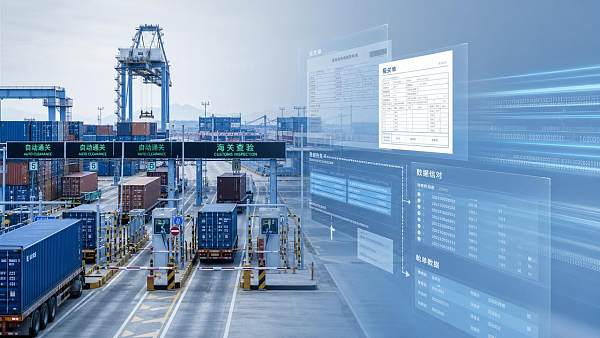
Over the past decade, customs authorities invested heavily in portals, e-filing systems, and risk engines. On paper, this should have accelerated digital customs clearance for cross-border trade across most major routes.
Yet many national systems were built independently. They digitized domestic procedures first, not international data exchange. That design choice still slows border processing today.
A shipment can move through digitally enabled ports, but still face manual intervention between agencies, brokers, logistics providers, and destination authorities. Digital entry does not guarantee digital continuity.
This explains why digital customs clearance for cross-border trade often feels modern at the interface level, but outdated at the workflow level. Screens changed faster than institutions.
The strongest trend signals point to deeper complexity, not faster simplification
Several market signals show that customs modernization is becoming more complex. Trade controls now extend beyond duties into security, sustainability, sanctions, product traceability, and origin verification.
As a result, digital customs clearance for cross-border trade must process more data points than before. More digital fields do not always mean faster outcomes.
- Single-window systems exist, but cross-agency integration remains uneven.
- HS classification disputes trigger frequent exception handling.
- Rules of origin checks increased under regional trade agreements.
- Data localization and cybersecurity rules limit information sharing.
- Sanctions screening now overlaps with customs review workflows.
These signals show a wider pattern. Clearance systems are not failing because digitization stopped. They are slowing because regulatory expectations expanded faster than process harmonization.
Why digital customs clearance for cross-border trade still slows down
The core causes can be organized into structural, technological, and policy-based constraints. Each one contributes to delay, but their interaction causes the biggest impact.
Data quality remains the hidden bottleneck
Many delays begin before a shipment reaches the border. Product descriptions are often incomplete, tariff codes are too broad, and origin records are not aligned across systems.
Digital customs clearance for cross-border trade depends on structured, accurate, reusable data. If upstream documentation is inconsistent, the digital layer only accelerates error detection, not release speed.
Interoperability is still weaker than marketing claims suggest
Ports, carriers, brokers, customs platforms, and enterprise systems often use different message formats. APIs exist in some markets, but not across all participating border actors.
That means digital customs clearance for cross-border trade still relies on repetitive uploads, manual mapping, and human validation. The process is digitized, but not fully synchronized.
Regulation changes faster than technical integration cycles
Governments update import controls quickly when security, industrial policy, or geopolitical conditions shift. Enterprise systems and partner workflows usually adapt much more slowly.
This mismatch creates a recurring burden. Compliance teams may know the rule, but digital customs clearance for cross-border trade still stalls until forms, fields, and evidence chains are updated.
The impact is wider than customs delay alone
Slower digital customs clearance for cross-border trade affects inventory strategy, customer promise dates, route design, and working capital. A border delay is rarely isolated.
When release timing becomes uncertain, businesses often hold extra stock, use more expensive transport options, or avoid certain product-market combinations altogether. That weakens commercial agility.
- Lead times become less predictable across multimodal lanes.
- Duty estimation and total landed cost lose precision.
- Exception handling consumes staff time across departments.
- Supplier diversification becomes harder to scale safely.
- Market expansion decisions face added regulatory uncertainty.
This is especially relevant in advanced manufacturing, healthcare technology, smart electronics, green energy, and software-linked supply chains, where documentation precision and timing sensitivity are both high.
What deserves closer attention now
The most useful response is not chasing every new customs tool. It is identifying the operational points where digital customs clearance for cross-border trade most often breaks down.
- Check whether product master data supports customs-grade descriptions.
- Review HS code governance and origin documentation discipline.
- Map where manual data re-entry still occurs between systems.
- Track exception rates by lane, broker, and product category.
- Monitor rule changes affecting sanctions, permits, and traceability.
- Assess whether digital filing success equals actual release speed.
These checkpoints reveal whether the main problem is data design, workflow coordination, or jurisdictional mismatch. Without that diagnosis, digitization spending often misses the real bottleneck.
A practical decision framework for reducing clearance friction
Improvement efforts should prioritize repeatability over appearance. The goal is not a more attractive portal experience. The goal is fewer exceptions in digital customs clearance for cross-border trade.
A disciplined approach turns customs from a reactive checkpoint into a measurable performance domain. That shift improves both compliance resilience and commercial planning quality.
The next step is better trade intelligence, not just more software
Digital customs clearance for cross-border trade will remain uneven until data standards, regulatory coordination, and system interoperability improve together. Technology alone cannot solve institutional fragmentation.
The most effective next step is building visibility around recurring border friction, market-specific rule shifts, and documentation weak points. Better decisions start with better trade intelligence.
TradeNexus Pro tracks these structural shifts across critical global sectors, helping organizations evaluate where customs friction may affect expansion, sourcing continuity, and digital readiness. In a fragmented trade environment, informed judgment becomes a strategic advantage.
Get weekly intelligence in your inbox.
No noise. No sponsored content. Pure intelligence.
 Oct 08, 2026How Digital Health Improves Diagnostic Accuracy and Workflow in Clinical LabsHow Digital Health Improves Diagnostic Accuracy and Workflow in Clinical Labs
 Oct 07, 2026Selecting Voice Picking Systems for German Warehouses: Integration, Languages and ROISelecting Voice Picking Systems for German Warehouses: Integration, Languages and ROI
 Oct 06, 2026How to Choose Last Mile Dispatch Software for On-Time Delivery at ScaleHow to Choose Last Mile Dispatch Software for On-Time Delivery at Scale
 Oct 05, 2026Vietnam’s Consumer Electronics Market: Demand Shifts and Sourcing OpportunitiesVietnam’s Consumer Electronics Market: Demand Shifts and Sourcing Opportunities
 Oct 04, 2026Digital Health Investment Priorities for Providers: Improving Access, Outcomes, and EfficiencyDigital Health Investment Priorities for Providers: Improving Access, Outcomes, and Efficiency
 Oct 03, 2026How to Specify an FR4 Custom PCB Board for High-Voltage and High-Heat DesignsHow to Specify an FR4 Custom PCB Board for High-Voltage and High-Heat Designs
 Oct 02, 2026ERP Software Market Intelligence: Adoption, Pricing, and Vendor Signals to WatchERP Software Market Intelligence: Adoption, Pricing, and Vendor Signals to Watch
 Oct 01, 2026How to Select Calibrated Temperature Data Loggers for GMP Cold Storage MonitoringHow to Select Calibrated Temperature Data Loggers for GMP Cold Storage Monitoring
 Sep 30, 2026Custom Molded Rubber Pricing: What Drives Unit Cost and Tooling Fees?Custom Molded Rubber Pricing: What Drives Unit Cost and Tooling Fees?
 Sep 29, 2026How to Evaluate Energy Management Software Vendors for Multi-Site OperationsHow to Evaluate Energy Management Software Vendors for Multi-Site Operations
 Sep 28, 2026How to Select a DIN Rail Smart Meter for Multi-Circuit Energy MonitoringHow to Select a DIN Rail Smart Meter for Multi-Circuit Energy Monitoring
 Sep 27, 2026TWS Earbuds in Vietnam: Demand Drivers, Price Tiers, and Retail Channel OpportunitiesTWS Earbuds in Vietnam: Demand Drivers, Price Tiers, and Retail Channel Opportunities
 Sep 26, 2026How UAE Clinics Can Qualify a Smart Glucometer Supplier for Accuracy and ComplianceHow UAE Clinics Can Qualify a Smart Glucometer Supplier for Accuracy and Compliance
 Sep 25, 2026Buying Aesthetic Lasers in the USA: FDA Status, Wavelengths, and Service SupportBuying Aesthetic Lasers in the USA: FDA Status, Wavelengths, and Service Support
 Sep 24, 2026Laser Cutting Brass Sheet: How to Prevent Burrs and Heat Marks on Thin PartsLaser Cutting Brass Sheet: How to Prevent Burrs and Heat Marks on Thin Parts
 Sep 23, 2026How to Choose Lightweight ANC Headphones for Comfortable All-Day TravelHow to Choose Lightweight ANC Headphones for Comfortable All-Day Travel
 Sep 22, 2026IPX5 TWS Bluetooth Earbuds: What Protection Do They Offer for Workouts?IPX5 TWS Bluetooth Earbuds: What Protection Do They Offer for Workouts?
 Sep 21, 2026What to Look for in a Grid Integration Company for Utility-Scale Solar ProjectsWhat to Look for in a Grid Integration Company for Utility-Scale Solar Projects
 Sep 20, 2026Microgrid Controller Pricing: What Drives Cost in Commercial Energy Projects?Microgrid Controller Pricing: What Drives Cost in Commercial Energy Projects?
 Sep 19, 2026How to Choose a GaN Charger for Laptops Without Compromising Power or PortabilityHow to Choose a GaN Charger for Laptops Without Compromising Power or Portability
 Sep 18, 2026Floating Solar Farm Costs: CAPEX, OPEX, and the Site Factors That Shape ROIFloating Solar Farm Costs: CAPEX, OPEX, and the Site Factors That Shape ROI
 Sep 17, 2026Drone Delivery Solutions for Last-Mile Routes: Site, Payload, and Range PlanningDrone Delivery Solutions for Last-Mile Routes: Site, Payload, and Range Planning
 Sep 16, 2026When Low-Volume Electronics Manufacturing Makes More Sense Than Mass ProductionWhen Low-Volume Electronics Manufacturing Makes More Sense Than Mass Production
 Sep 15, 2026Wholesale WiFi Smart Switches: What Buyers Should Verify Before OrderingWholesale WiFi Smart Switches: What Buyers Should Verify Before Ordering
 Sep 14, 2026How to Select IoT Sensors for Reliable Monitoring in Harsh Industrial EnvironmentsHow to Select IoT Sensors for Reliable Monitoring in Harsh Industrial Environments
 Sep 13, 2026How Procurement Teams Can Improve Supplier Reliability With Supply Chain VisibilityHow Procurement Teams Can Improve Supplier Reliability With Supply Chain Visibility
 Sep 12, 2026Smart Manufacturing Trends 2026: What Leaders Should Prioritize for ROISmart Manufacturing Trends 2026: What Leaders Should Prioritize for ROI



























