Are smart lighting bulbs worth it for cutting home energy costs?
As energy prices rise, many households ask whether smart lighting bulbs truly deliver measurable savings or simply add another gadget to the growing smart home stack. For buyers comparing smart home hubs, IoT sensors, and even broader efficiency investments like energy storage, the real value lies in balancing upfront cost, automation potential, and long-term energy reduction. This article examines whether smart lighting bulbs are a practical choice for cutting home energy costs.
For operators, project managers, financial approvers, and safety-focused decision-makers, the question is not just whether a smart bulb uses less electricity than an old incandescent lamp. The more relevant issue is whether connected lighting can lower wasted runtime, improve control discipline, and fit within a broader home energy management strategy.
In practical procurement terms, smart lighting bulbs should be evaluated like any other efficiency upgrade: purchase cost, compatibility, expected duty cycle, maintenance burden, and measurable payback. In many homes, savings are real but moderate. The strongest value often comes from automation, occupancy-based scheduling, and reduced human error rather than from the bulb hardware alone.
How smart lighting bulbs reduce energy use in real homes
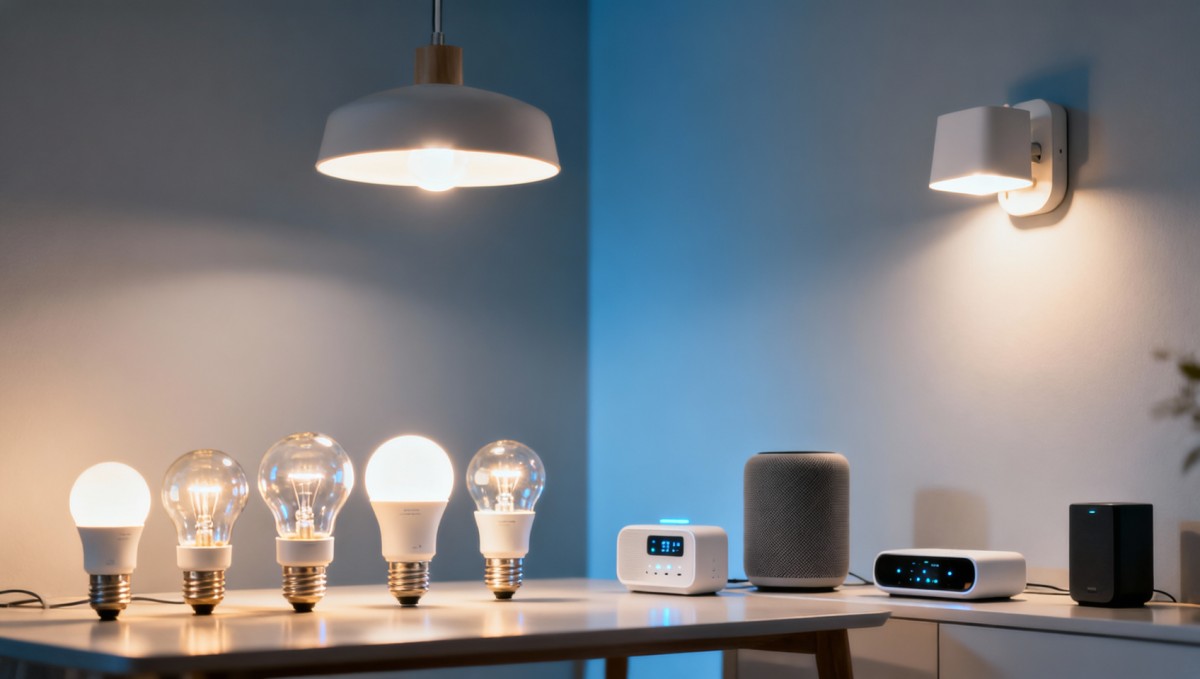
A smart lighting bulb typically combines LED efficiency with wireless control through Wi-Fi, Zigbee, Bluetooth, or a hub-based protocol. Compared with a traditional incandescent bulb using 40–60 watts, a typical LED smart bulb often consumes around 7–12 watts for similar brightness. That drop in baseline power is already significant before automation is added.
However, energy savings are not created by connectivity alone. If a household replaces a standard LED bulb of 8 watts with a smart LED bulb of 9 watts and never uses scheduling or dimming, the difference may be negligible. The real advantage appears when users cut unnecessary runtime by 1–4 hours per day in low-discipline areas such as hallways, kitchens, children’s rooms, and outdoor entrances.
For example, a 9-watt smart bulb left on for 3 fewer hours daily saves about 9.9 kWh per year. On a single bulb, that is modest. Across 10 to 20 frequently used fixtures, the annual reduction becomes more meaningful, especially in households with high evening usage patterns or irregular occupancy.
Another efficiency lever is dimming. When a bulb runs at 50% output for ambient lighting rather than full brightness, actual power draw usually drops, though not always in a perfectly linear way. In rooms that need task lighting only part of the time, dimming can cut consumption while also extending LED lifespan over 15,000–25,000 hours in common product ranges.
Where savings usually come from
Most measurable savings come from operational discipline enabled by automation. In household terms, this means fewer lights accidentally left on overnight, lower brightness during non-task hours, and routines that match occupancy patterns. For buyers assessing whether smart lighting is worth it, the central issue is waste prevention rather than dramatic load reduction from the bulb alone.
- Scheduled shutoff after 11:00 PM or another fixed threshold for shared spaces.
- Motion-triggered activation for short-duration areas such as corridors, garages, and storage rooms.
- Daylight-linked control that reduces artificial lighting during bright morning or afternoon periods.
- Remote verification through an app, which prevents lights from staying on during travel or work hours.
The table below shows how different lighting types compare when measured against typical residential energy and control factors.
The key takeaway is straightforward: replacing incandescent lighting almost always saves energy, while replacing standard LEDs with smart LEDs only makes financial sense when the user will actively use smart controls. In decision-making terms, behavior and system design determine the return more than the smart feature label itself.
What the economics look like: upfront cost, operating cost, and payback
For finance-minded buyers, the first barrier is price. A conventional LED bulb may cost only a few dollars, while a smart lighting bulb often falls in the range of $8–$25 depending on protocol, color tuning, brand tier, and ecosystem support. In larger homes with 15–30 fixtures, the capital difference is noticeable, so payback must be judged by zone rather than by whole-house replacement on day one.
Standby power also matters. Smart bulbs usually draw a small amount of electricity when off but connected, often below 1 watt per bulb. That does not erase the benefits, but it means buyers should avoid installing connected bulbs in low-use locations where automation adds little value. A bulb in a guest room used 2 hours per week is very different from one in an entryway used every day.
Payback periods vary widely. If smart lighting replaces incandescent lamps and cuts runtime in busy zones, the return can be relatively quick. If it merely swaps out efficient manual LEDs without changing behavior, payback may stretch beyond 3–5 years. That is why a targeted deployment often outperforms blanket installation.
Decision-makers should also include indirect value. Smart lighting can support home security simulation, reduce manual switching needs for elderly users, and provide better auditability of energy habits. These benefits do not always show up in a simple electricity calculation, but they affect perceived value and long-term adoption.
A practical cost screen for buyers
The following matrix helps compare common home lighting scenarios from a cost-control perspective rather than a gadget perspective.
This comparison shows why selective deployment is often the most rational path. Buyers trying to control home energy costs should prioritize spaces with frequent misuse, long evening operation, or strong automation potential. A room-by-room approach generally produces a clearer business case than full-home replacement in one purchasing cycle.
Recommended purchase sequence
- Start with 4–8 bulbs in the highest-use zones such as the kitchen, living room, hallway, and porch.
- Track usage behavior for 30–60 days through app routines and manual observation.
- Expand only if schedules, dimming, or occupancy control are actually used.
- Keep decorative or rarely used rooms on standard LED lamps unless another use case exists.
From a budget governance standpoint, this phased model lowers risk and creates a more defensible approval path for households or property managers reviewing multiple smart home investments at once.
Best-fit use cases and when smart bulbs are not the best answer
Smart lighting bulbs work best where lighting waste is behavior-driven. Homes with children, shift workers, elderly residents, short-term rentals, or multiple entrances often benefit most because lights are more likely to be left on unintentionally. In these environments, even modest per-bulb savings can scale across 8–20 fixtures and deliver better comfort at the same time.
They are also useful in retrofit situations where the user wants automation without rewiring. Installing a smart bulb generally takes minutes, while a fully hardwired smart switch or integrated lighting system may require electrician time, compatibility checks, and circuit planning. For project managers handling low-disruption upgrades, this simplicity matters.
That said, smart bulbs are not always the highest-value option. In homes with already disciplined lighting habits, abundant daylight, or extensive use of standard LEDs, the incremental energy reduction may be too small to justify the premium. In those cases, a smart switch, occupancy sensor, or whole-home energy monitor may provide a better return per dollar spent.
Another limitation is switch behavior. If residents often cut power at the wall switch, the bulb loses its smart functions until power is restored. This can reduce convenience and make automation less reliable. Operationally, that issue should be considered before purchase, especially in shared households where control habits vary.
Where smart bulbs tend to perform well
- Entryways and hallways with repeated short-cycle use throughout the day.
- Porch or exterior lights that can run on sunset-to-midnight schedules rather than all night.
- Living rooms where dimming reduces evening power demand by 20%–50% depending on scene settings.
- Vacation homes or rental units where remote shutoff prevents multi-day lighting waste.
Where alternative solutions may be stronger
A smart switch often makes more sense for ceiling fixtures with multiple bulbs because one controller can manage several lamps at once. Occupancy sensors may be better for garages, utility rooms, and basements where on/off automation matters more than color control or app features. For buyers focused purely on cost reduction, the cheapest solution with reliable behavioral impact is usually the right one.
The table below maps common residential scenarios to the most suitable lighting control option.
For strategic buyers, the conclusion is clear: smart lighting bulbs are a targeted tool, not a universal answer. Their value is highest when the control method matches the room’s real usage pattern.
How to evaluate smart lighting bulbs before purchase and rollout
A strong buying decision starts with compatibility. Not all smart lighting bulbs work with every home ecosystem, router environment, or voice assistant. Before purchase, users should confirm the communication method, whether a hub is required, and how many devices the system can support without stability issues. In practice, a small apartment and a 2-story house may have very different wireless performance.
Brightness and color temperature are equally important. A bulb rated at 800 lumens is commonly used as a replacement for a 60W incandescent lamp, while 450–500 lumens may suit accent or bedside use. If the brightness is too low, users often compensate by adding more fixtures or running nearby lights longer, which undermines energy savings.
Financial approvers should also review lifespan and warranty terms. A 15,000-hour lamp used 3 hours daily can last more than 13 years in theory, but heat, fixture enclosure, and network electronics can affect real-world durability. Products deployed in enclosed fittings, humid bathrooms, or exterior fixtures should be checked carefully against environmental recommendations.
From a safety and quality perspective, buyers should avoid choosing solely on the lowest upfront price. Firmware reliability, app stability, and support continuity matter. A cheap bulb that loses connectivity every week or receives no updates after 12 months can create operational friction that outweighs its initial savings.
Five-point evaluation checklist
- Confirm wattage, lumen output, and color temperature range for the intended room function.
- Check whether the bulb requires a hub, and include that cost in the project budget.
- Review standby power and app functionality, especially for schedules and remote shutoff.
- Test switch behavior in shared spaces where manual wall control is common.
- Prioritize products with a clear support path, software updates, and realistic warranty coverage.
Implementation approach for low-risk adoption
A controlled rollout usually works better than an immediate whole-home conversion. Start by mapping rooms into three tiers: high-use, moderate-use, and low-use. Then test smart bulbs in 2–3 high-use zones for 4–8 weeks. Track whether schedules are maintained, whether residents override them, and whether measured convenience is high enough to support broader deployment.
This staged process mirrors how enterprise buyers validate technology investments before wider rollout. It reduces sunk-cost risk, clarifies real usage behavior, and produces better evidence for the next purchasing decision.
Common questions, risks, and the final decision framework
The most common misunderstanding is that every smart bulb automatically produces major utility savings. In reality, the savings range from minimal to meaningful depending on the baseline fixture, household behavior, and automation setup. If the bulb replaces an old incandescent and prevents overnight waste, the case is strong. If it replaces a low-cost LED in a low-use room, the case is weak.
Another risk is overbuilding the system. Some households buy 20 or more connected bulbs before establishing routines, then discover that only 5–8 are truly valuable. A better approach is to align purchase volume with actual use cases and expand only after clear evidence of reduced runtime or improved control.
There is also a network and maintenance angle. Too many Wi-Fi devices on an entry-level router can affect responsiveness, while inconsistent app management can lead to user frustration. In technical terms, a simple, stable lighting setup often outperforms a feature-heavy but poorly managed one.
For most households, smart lighting bulbs are worth it when they are deployed selectively, connected to practical routines, and integrated into a broader energy-saving mindset. They should be treated as one efficiency layer among others, including insulation, appliance upgrades, thermostat management, and energy monitoring.
FAQ: Are smart bulbs worth it for cutting home energy costs?
Do smart bulbs save more energy than regular LED bulbs?
Not by default. A smart bulb and a regular LED bulb may have similar operating wattage, often within the 8–10W range for standard brightness. The extra savings come when automation reduces daily runtime, enables dimming, or prevents overnight use.
How many smart bulbs should a household start with?
A pilot of 4–8 bulbs is usually enough to test real value. Prioritize high-traffic areas first, then evaluate usage over 30–60 days before scaling up.
Are smart bulbs better than smart switches?
It depends on the fixture. Smart bulbs are often better for single lamps, fast retrofits, and scene control. Smart switches may be more economical for multi-bulb ceiling fixtures because one device can control several lamps at once.
What is the biggest buying mistake?
The biggest mistake is buying for novelty instead of measured use. If there is no schedule, no dimming plan, and no high-waste zone to address, the return on investment is usually limited.
Smart lighting bulbs can be a worthwhile energy-saving upgrade, but only when matched to the right rooms, user habits, and control strategy. For operators and decision-makers evaluating connected home technologies, the strongest business case comes from targeted deployment, clear automation goals, and practical compatibility checks. To explore more data-driven guidance on smart electronics, energy efficiency, and connected product adoption, contact TradeNexus Pro for deeper market insights, tailored solution research, and strategic sourcing intelligence.
Get weekly intelligence in your inbox.
No noise. No sponsored content. Pure intelligence.
 Apr 24, 2026India BIS Mandates IS 13252:2025 for PLCs & HMIs by Oct 2026India BIS Mandates IS 13252:2025 for PLCs & HMIs by Oct 2026
 Apr 24, 2026SASO EV Charger Regulation: Sand-Resistant Grid Compatibility Testing RequiredSASO EV Charger Regulation: Sand-Resistant Grid Compatibility Testing Required
 Apr 24, 2026Japan Updates JIS for Rehab Devices: IEC 62366-1:2024 Usability Compliance RequiredJapan Updates JIS for Rehab Devices: IEC 62366-1:2024 Usability Compliance Required
 Apr 24, 2026China Customs Launches RCEP Origin Smart Pre-Review SystemChina Customs Launches RCEP Origin Smart Pre-Review System
 Apr 24, 2026ANATEL Mandates Localized Voice Assistants for Smart Home Devices in BrazilANATEL Mandates Localized Voice Assistants for Smart Home Devices in Brazil
 Apr 24, 2026TÜV Rheinland Updates IoT EMC Standard with AI Edge抗扰度 RequirementTÜV Rheinland Updates IoT EMC Standard with AI Edge抗扰度 Requirement
 Apr 24, 20262M Alliance Shortens Ningbo–Rotterdam Route to 18 Days Amid 35% Slot Premium2M Alliance Shortens Ningbo–Rotterdam Route to 18 Days Amid 35% Slot Premium
 Apr 24, 2026Vietnam Enforces Bilingual Safety Labels for Imported Electronic Components from Apr 22, 2026Vietnam Enforces Bilingual Safety Labels for Imported Electronic Components from Apr 22, 2026
 Apr 24, 2026USTR Launches Sunset Review on China Solar PV AD/CVD DutiesUSTR Launches Sunset Review on China Solar PV AD/CVD Duties
 Apr 24, 2026EU New Battery Regulation Fully Effective Apr 24, 2026EU New Battery Regulation Fully Effective Apr 24, 2026
 Apr 23, 2026Taobao Factory Spark 3.0 Launches AI Workbench for SME Export FactoriesTaobao Factory Spark 3.0 Launches AI Workbench for SME Export Factories
 Apr 23, 2026TENENG Group Inspects IoT Safety Compliance at Jiangnan ChemicalTENENG Group Inspects IoT Safety Compliance at Jiangnan Chemical
 Apr 23, 2026China Launches First Embodied AI Open Data CommunityChina Launches First Embodied AI Open Data Community
 Apr 23, 2026PV Glass Prices Flat for 9 Weeks Amid Rising Integrated ProcurementPV Glass Prices Flat for 9 Weeks Amid Rising Integrated Procurement
 Apr 23, 20262984 NQI One-Stop Platforms Launched Nationwide2984 NQI One-Stop Platforms Launched Nationwide
 Apr 23, 2026China’s Green Smart Ship Tech Norms Accelerate BMS & Shore Power ExportChina’s Green Smart Ship Tech Norms Accelerate BMS & Shore Power Export
 Apr 23, 2026China Builds World's Largest Agri-Meteorological IoT NetworkChina Builds World's Largest Agri-Meteorological IoT Network
 Apr 23, 2026EU CBAM Carbon Tariff Enters Enforcement on April 1, 2026EU CBAM Carbon Tariff Enters Enforcement on April 1, 2026
 Apr 23, 2026Five Ministries Issue Zero-Carbon Factory Guidance for Export IndustriesFive Ministries Issue Zero-Carbon Factory Guidance for Export Industries
 Apr 23, 2026ISO Releases First Zero-Carbon City Standard — China’s Practices IncludedISO Releases First Zero-Carbon City Standard — China’s Practices Included
 Apr 22, 2026China Leads Global Offshore Wind Installations for 5th YearChina Leads Global Offshore Wind Installations for 5th Year
 Apr 22, 2026China Launches National Mine Safety IoT Monitoring NetworkChina Launches National Mine Safety IoT Monitoring Network
 Apr 22, 2026Yinchuan Boiler Pure Water Solution Certified for Middle East ProjectsYinchuan Boiler Pure Water Solution Certified for Middle East Projects
 Apr 22, 2026China to Enforce Mandatory EV Battery Recycling Standards by 2026China to Enforce Mandatory EV Battery Recycling Standards by 2026
 Apr 22, 2026Vietnam Launches Anti-Circumvention Probe on Electronic ComponentsVietnam Launches Anti-Circumvention Probe on Electronic Components
 Apr 22, 20262026 Shanghai Fastener Show: Robotic Fasteners Drive Overseas Procurement2026 Shanghai Fastener Show: Robotic Fasteners Drive Overseas Procurement
 Apr 22, 2026US BIS Adds EV On-Board Charger Crypto Modules to EAR Appendix 7US BIS Adds EV On-Board Charger Crypto Modules to EAR Appendix 7