How effective are active noise cancelling headphones
Active noise cancelling headphones are increasingly judged not just by comfort, but by measurable performance in work, travel, and industrial settings. For buyers, operators, and enterprise evaluators, understanding how effective they truly are requires looking at noise reduction capability, battery life, fit, and long-term value. This article explores the real-world effectiveness of active noise cancelling headphones through a practical B2B and user-focused lens.
For enterprise procurement teams, distributor channels, and technical reviewers, the question is not whether active noise cancelling headphones work in theory. The real question is how well they perform across different noise profiles, duty cycles, and user environments. In offices, aircraft cabins, production floors, and field service routes, effectiveness changes with frequency range, seal quality, microphone design, and wear duration.
That makes evaluation more complex than reading a consumer-facing spec sheet. A headset that performs well in steady low-frequency cabin noise may be less effective around intermittent alarms, speech-heavy environments, or machinery with fluctuating pitch. For B2B decision-makers, selecting the right active noise cancelling headphones requires balancing acoustic performance with safety, operating cost, compatibility, and user acceptance.
What active noise cancelling headphones do well in real operating conditions
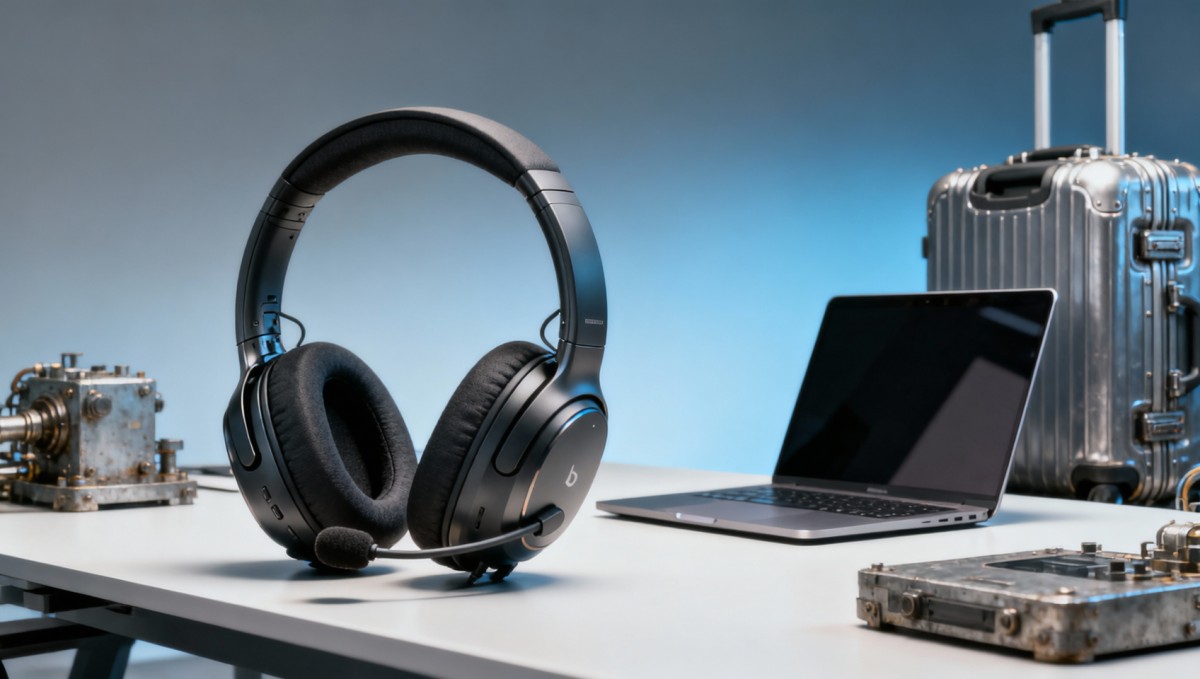
Active noise cancelling headphones use microphones and internal signal processing to detect ambient sound and generate an opposite waveform. In practical terms, they are usually most effective against consistent low-frequency noise, such as aircraft engine hum, HVAC systems, train rumble, or background drone in open-plan offices. In many common use cases, the strongest benefit appears in the roughly 20 Hz to 1,000 Hz range, where passive isolation alone is often less efficient.
This is why users often report that active noise cancelling headphones feel more effective on long flights, during remote work, or in transport-heavy commuting environments than in highly variable industrial zones. They can reduce listening fatigue over 2 to 8 hours of use by lowering the perceived pressure of constant environmental noise. That matters for operators who need concentration, call clarity, or reduced distraction during repetitive tasks.
However, effectiveness is not the same as complete silence. Most active systems do not fully remove sharp transient sounds such as human shouting, metal impacts, nearby alarms, or sudden tool bursts. Instead, they lower the background load so speech, audio prompts, and communication channels become easier to hear at lower playback volume. For enterprise users, that can translate into reduced volume exposure and better comfort over a standard 6-hour or 8-hour workday.
Another practical strength is performance consistency in hybrid work. Staff moving between office, airport, warehouse office, and home desk do not need multiple audio devices if one model combines stable ANC, microphone intelligibility, and 20 to 40 hours of battery life. That reduces accessory sprawl and simplifies support for IT and procurement teams managing distributed users across more than 1 region or operating site.
Where users notice the biggest gains
The most noticeable gains from active noise cancelling headphones usually appear in four situations:
- Long-duration travel, where engine or rail noise is stable for 1 to 6 hours at a time.
- Open offices with constant low-level background conversation and ventilation noise.
- Remote and hybrid work, where concentration matters more than full hearing isolation.
- Field roles that require calls in moderately noisy transit or staging areas.
For these scenarios, active noise cancelling headphones can provide clear productivity value even when they do not replace specialist hearing protection. That distinction is important for safety managers and quality teams reviewing fit-for-purpose equipment.
Typical effectiveness by noise type
The table below gives a practical comparison of how active noise cancelling headphones tend to perform against common workplace and travel noise patterns.
The main takeaway is simple: active noise cancelling headphones are highly effective in predictable acoustic environments and much less reliable against irregular, high-impact, or safety-critical sounds. Buyers should therefore assess use case before they assess price.
Limits, risks, and common misunderstandings in B2B evaluation
One of the biggest misunderstandings is assuming that active noise cancelling headphones equal certified hearing protection. In many business settings, they do not. If employees work near heavy machinery, compressed air tools, or regulated sound exposure zones above common occupational thresholds, procurement and safety teams must verify whether a model is designed for comfort audio, communication, or true protective use. These are not interchangeable categories.
A second limitation is fit dependency. Even strong active circuitry loses effectiveness if the ear cup seal is weak, if eyewear disrupts contact, or if users wear the headset loosely for more than a few minutes at a time. In practice, a poor seal can reduce total perceived benefit far more than a 5% to 10% difference in advertised ANC performance. This is why user trials across at least 5 to 10 participants often reveal more than spec comparisons alone.
Battery behavior also affects effectiveness. If active noise cancelling headphones provide 30 hours on paper but only 18 to 22 hours under mixed wireless calling, high-volume playback, and continuous ANC, a mobile team may experience charging gaps. For shift-based use, battery planning matters as much as acoustic performance. Some enterprises now treat 25 hours as a practical minimum for traveling staff and 35 hours or more as preferable for multi-day field schedules.
There is also a human-factor risk: ear pressure perception. Some users adapt within 2 or 3 days, while others remain sensitive to the cancellation effect and prefer moderate ANC instead of maximum mode. This matters for deployment success. If 20% of assigned users reject the device due to comfort or pressure sensation, expected productivity gains can disappear despite strong technical specs.
Key risk checks before enterprise rollout
- Confirm whether the product is intended for consumer listening, office communication, or regulated industrial use.
- Test seal quality with eyewear, caps, or other PPE used during normal shifts.
- Measure real battery endurance under ANC-on, Bluetooth-on, and call-heavy conditions for at least 1 full workday.
- Review microphone performance in ambient noise levels common to your actual site, not just in a quiet demo room.
- Check charging method, replaceability of cushions, and expected wear cycle over 12 to 24 months.
Why overreliance can create operational issues
When active noise cancelling headphones are chosen without role-based assessment, companies can face missed alarms, user complaints, hygiene problems, or poor call quality in high-noise spaces. These are not product failures in every case. They are often selection failures. A travel headset, a contact-center headset, and a maintenance headset may all include ANC, but they solve different problems and should be evaluated against different acceptance criteria.
For distributors and resellers, this creates a clear sales responsibility: guide the customer by noise environment, wearing duration, and risk profile, not only by brand reputation or discount level. That leads to fewer returns and better long-term account retention.
How to evaluate active noise cancelling headphones for procurement and technical review
A practical procurement framework should include at least 4 dimensions: acoustic effectiveness, communication quality, operational endurance, and lifecycle cost. For B2B buyers, active noise cancelling headphones are not simply accessories. They can affect concentration, call clarity, traveler comfort, and replacement budgets over 12 to 36 months. A low upfront price may become more expensive if failure rates, earpad wear, or battery degradation increase support load.
Technical evaluators should first map the dominant noise environment. Is the user exposed to cabin rumble, office ventilation, warehouse movement, or machine noise with intermittent peaks? Next, define the average wear time per day: under 2 hours, 2 to 6 hours, or more than 6 hours. This determines whether weight, clamp force, and heat buildup become limiting factors. In many deployments, comfort failure appears before electronic failure.
Business reviewers should then assess whether the headset supports the workflow. If staff spend 40% to 70% of the day on calls, microphone pickup and wind handling may matter more than maximum ANC strength. If travelers use the headset mainly for focus and rest, foldability, quick charge, and battery reserve become more valuable. Matching the device to the operational pattern typically creates better outcomes than choosing the highest advertised specification.
Finance and approval teams often benefit from a simple total cost logic: purchase price, average service life, accessory replacement frequency, and expected user adoption rate. A model that lasts 24 months with one earpad replacement may outperform a cheaper unit that requires frequent replacement after 9 to 12 months.
Suggested procurement scorecard
The table below can be used as a practical decision tool when comparing active noise cancelling headphones across office, travel, and mixed-use fleets.
Using a scorecard like this helps procurement teams compare total usability rather than relying on marketing claims. It also gives distributors and technical consultants a clearer basis for recommendation and tender response.
A simple 5-step selection process
- Define the main environment: office, travel, light industrial admin area, or mobile field use.
- Set non-negotiable thresholds such as battery life, comfort duration, and call performance.
- Run a 7 to 14 day user pilot with mixed job roles.
- Track complaints, recharge frequency, and acceptance rate.
- Select the model with the best operational fit, not just the strongest headline ANC claim.
Use-case fit: office teams, travelers, field staff, and industrial-adjacent roles
Not every buyer needs the same type of active noise cancelling headphones. Office users usually benefit from balanced ANC, lightweight construction, and reliable microphones for video calls. Travelers tend to prioritize strong low-frequency cancellation, folding design, and battery capacity that can last across 2 or 3 travel days. Field teams may need all of that plus stable wireless connectivity and fast charging within 10 to 15 minutes for several hours of emergency use.
Industrial-adjacent roles require a more careful split. Supervisors, quality staff, and logistics coordinators who work in office areas near operational zones may use ANC headsets for focus and communication, but employees exposed to active machine hazards need safety-based evaluation first. In other words, active noise cancelling headphones may support adjacent administrative functions in industrial environments without being the correct choice for direct high-risk exposure tasks.
This distinction matters to quality control managers and safety officers because a poor device-policy match can create confusion. If a company issues one headset type to every role for convenience, it may simplify ordering but weaken user suitability. Segmenting by 2 or 3 user groups often improves both compliance and satisfaction with only a limited increase in sourcing complexity.
For dealers and channel partners, role-based packaging can also increase conversion. A proposal framed as “travel executive bundle,” “hybrid office fleet,” or “field communication set” speaks more directly to buyer intent than a generic ANC product pitch.
Scenario-based matching guide
The following comparison shows how active noise cancelling headphones should be matched to common business scenarios.
This type of segmentation prevents overbuying and under-specifying at the same time. It also helps finance teams justify why different roles may require different headset profiles instead of a one-model-fits-all purchase.
Implementation, maintenance, and buying recommendations for long-term value
The effectiveness of active noise cancelling headphones does not end at purchase. Rollout quality affects adoption, maintenance cost, and measurable value. A strong implementation plan usually includes user guidance, charging habits, cleaning rules, replacement part planning, and a review point after the first 30 to 60 days. These steps are especially useful in organizations deploying 20, 50, or 200 units across multiple teams.
Maintenance is often underestimated. Ear cushions may require replacement every 6 to 18 months depending on usage intensity, hygiene protocols, and climate conditions. Battery performance may gradually decline after repeated charging cycles, especially in devices used daily. If replacement accessories are difficult to source, the practical lifespan of otherwise capable active noise cancelling headphones can shorten significantly.
For procurement managers, the best buying decision usually comes from combining pilot feedback with support planning. Ask suppliers about spare parts, warranty handling time, and whether firmware or compatibility support is available for common enterprise devices. A response window of 3 to 5 business days may be acceptable for standard fleets, but mobile executive teams often require faster turnaround.
For channel partners and enterprise advisors, the most credible recommendation is a transparent one: active noise cancelling headphones are highly effective when matched to the right acoustic environment and user behavior. They are less effective when treated as universal hearing protection, or when comfort and maintenance are ignored during selection.
Practical FAQ for buyers and evaluators
How effective are active noise cancelling headphones for office productivity?
In most office settings, they are effective at reducing steady background distractions such as HVAC noise and general room hum. They are less consistent against nearby conversations, but still valuable for improving focus, reducing listening fatigue, and helping users keep playback volume lower over 3 to 8 hours of work.
Can they be used in industrial environments?
They can be useful in industrial-adjacent administrative or supervisory environments, but they should not automatically be assumed suitable for regulated high-noise zones. Safety teams should review noise exposure, alarm audibility, and device purpose before deployment.
Which metrics matter most during procurement?
At minimum, review 5 areas: ANC performance in your main noise profile, battery life with ANC enabled, long-wear comfort, microphone quality, and replacement-part availability. For enterprise fleets, lifecycle support often matters as much as launch price.
What is a reasonable trial period before bulk purchase?
A 7 to 14 day pilot is usually enough to detect fit problems, recharge habits, user acceptance, and microphone issues. If the product is intended for travel-heavy teams, include at least 1 full trip cycle in the test period.
Active noise cancelling headphones can deliver strong real-world value when assessed against actual noise patterns, wear duration, call needs, and maintenance realities. Their best results come in steady low-frequency environments, hybrid work, and business travel, while more caution is needed in safety-sensitive or highly variable industrial settings. For buyers, technical reviewers, and channel partners, the most effective approach is a role-based evaluation backed by pilot testing, service planning, and lifecycle cost review. To explore more practical sourcing insights, use-case analysis, and solution guidance for smart electronics and enterprise procurement, contact TradeNexus Pro to discuss your requirements or request a tailored recommendation framework.
Get weekly intelligence in your inbox.
No noise. No sponsored content. Pure intelligence.
 Apr 24, 2026India BIS Mandates IS 13252:2025 for PLCs & HMIs by Oct 2026India BIS Mandates IS 13252:2025 for PLCs & HMIs by Oct 2026
 Apr 24, 2026SASO EV Charger Regulation: Sand-Resistant Grid Compatibility Testing RequiredSASO EV Charger Regulation: Sand-Resistant Grid Compatibility Testing Required
 Apr 24, 2026Japan Updates JIS for Rehab Devices: IEC 62366-1:2024 Usability Compliance RequiredJapan Updates JIS for Rehab Devices: IEC 62366-1:2024 Usability Compliance Required
 Apr 24, 2026China Customs Launches RCEP Origin Smart Pre-Review SystemChina Customs Launches RCEP Origin Smart Pre-Review System
 Apr 24, 2026ANATEL Mandates Localized Voice Assistants for Smart Home Devices in BrazilANATEL Mandates Localized Voice Assistants for Smart Home Devices in Brazil
 Apr 24, 2026TÜV Rheinland Updates IoT EMC Standard with AI Edge抗扰度 RequirementTÜV Rheinland Updates IoT EMC Standard with AI Edge抗扰度 Requirement
 Apr 24, 20262M Alliance Shortens Ningbo–Rotterdam Route to 18 Days Amid 35% Slot Premium2M Alliance Shortens Ningbo–Rotterdam Route to 18 Days Amid 35% Slot Premium
 Apr 24, 2026Vietnam Enforces Bilingual Safety Labels for Imported Electronic Components from Apr 22, 2026Vietnam Enforces Bilingual Safety Labels for Imported Electronic Components from Apr 22, 2026
 Apr 24, 2026USTR Launches Sunset Review on China Solar PV AD/CVD DutiesUSTR Launches Sunset Review on China Solar PV AD/CVD Duties
 Apr 24, 2026EU New Battery Regulation Fully Effective Apr 24, 2026EU New Battery Regulation Fully Effective Apr 24, 2026
 Apr 23, 2026Taobao Factory Spark 3.0 Launches AI Workbench for SME Export FactoriesTaobao Factory Spark 3.0 Launches AI Workbench for SME Export Factories
 Apr 23, 2026TENENG Group Inspects IoT Safety Compliance at Jiangnan ChemicalTENENG Group Inspects IoT Safety Compliance at Jiangnan Chemical
 Apr 23, 2026China Launches First Embodied AI Open Data CommunityChina Launches First Embodied AI Open Data Community
 Apr 23, 2026PV Glass Prices Flat for 9 Weeks Amid Rising Integrated ProcurementPV Glass Prices Flat for 9 Weeks Amid Rising Integrated Procurement
 Apr 23, 20262984 NQI One-Stop Platforms Launched Nationwide2984 NQI One-Stop Platforms Launched Nationwide
 Apr 23, 2026China’s Green Smart Ship Tech Norms Accelerate BMS & Shore Power ExportChina’s Green Smart Ship Tech Norms Accelerate BMS & Shore Power Export
 Apr 23, 2026China Builds World's Largest Agri-Meteorological IoT NetworkChina Builds World's Largest Agri-Meteorological IoT Network
 Apr 23, 2026EU CBAM Carbon Tariff Enters Enforcement on April 1, 2026EU CBAM Carbon Tariff Enters Enforcement on April 1, 2026
 Apr 23, 2026Five Ministries Issue Zero-Carbon Factory Guidance for Export IndustriesFive Ministries Issue Zero-Carbon Factory Guidance for Export Industries
 Apr 23, 2026ISO Releases First Zero-Carbon City Standard — China’s Practices IncludedISO Releases First Zero-Carbon City Standard — China’s Practices Included
 Apr 22, 2026China Leads Global Offshore Wind Installations for 5th YearChina Leads Global Offshore Wind Installations for 5th Year
 Apr 22, 2026China Launches National Mine Safety IoT Monitoring NetworkChina Launches National Mine Safety IoT Monitoring Network
 Apr 22, 2026Yinchuan Boiler Pure Water Solution Certified for Middle East ProjectsYinchuan Boiler Pure Water Solution Certified for Middle East Projects
 Apr 22, 2026China to Enforce Mandatory EV Battery Recycling Standards by 2026China to Enforce Mandatory EV Battery Recycling Standards by 2026
 Apr 22, 2026Vietnam Launches Anti-Circumvention Probe on Electronic ComponentsVietnam Launches Anti-Circumvention Probe on Electronic Components
 Apr 22, 20262026 Shanghai Fastener Show: Robotic Fasteners Drive Overseas Procurement2026 Shanghai Fastener Show: Robotic Fasteners Drive Overseas Procurement
 Apr 22, 2026US BIS Adds EV On-Board Charger Crypto Modules to EAR Appendix 7US BIS Adds EV On-Board Charger Crypto Modules to EAR Appendix 7