How to choose ergonomic gaming mice that reduce strain
Choosing ergonomic gaming mice that truly reduce hand and wrist strain requires more than comparing shapes or price tags. For users, technical evaluators, and business buyers alike, the right selection depends on fit, sensor performance, button layout, and long-session comfort. This guide explains how to assess ergonomic gaming mice with a practical, decision-focused lens, helping you balance usability, durability, and value before making a purchase.
For B2B buyers, lab managers, IT teams, esports venue operators, resellers, and procurement specialists, mouse selection is not only a comfort issue. It affects user fatigue, return rates, product acceptance, maintenance planning, and even workstation safety outcomes during 4- to 10-hour usage blocks. A model that feels acceptable in a short demo can still create strain when deployed across teams that perform repeated clicks, high-speed tracking, or hybrid work-and-play tasks.
The best ergonomic gaming mice combine shape fit, controlled weight, reliable sensor behavior, surface compatibility, and durable switches. They also need to match hand size, grip style, and operating context. The sections below break down the key decision points, common buying mistakes, and practical evaluation methods for selecting ergonomic gaming mice that reduce strain without sacrificing control or business value.
Why ergonomics matters more than marketing claims
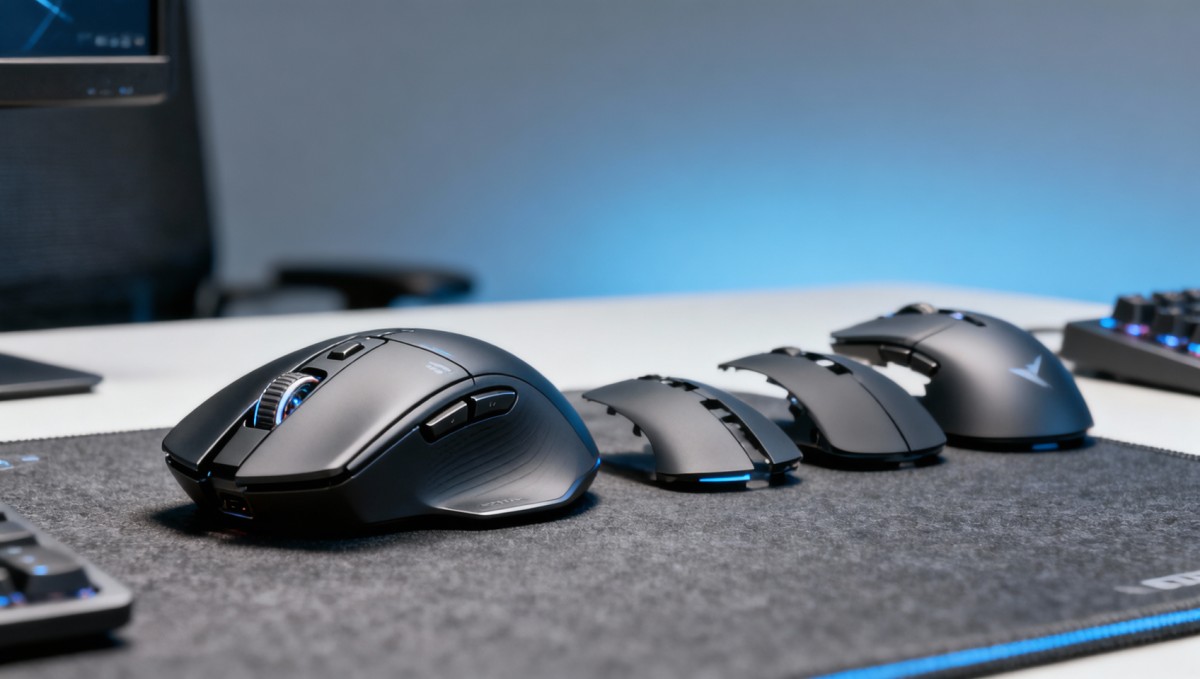
Many gaming mice are marketed as ergonomic, but comfort claims are often based on appearance rather than measurable fit. A pronounced hump, thumb rest, or aggressive curve does not automatically reduce strain. Real ergonomic value depends on whether the mouse supports neutral wrist posture, reduces excessive finger extension, and avoids pressure points during repeated movement cycles over 2,000 to 8,000 actions per session.
Strain typically comes from three sources: poor hand support, excessive gripping force, and repetitive micro-adjustments. If a mouse is too narrow, users pinch harder with the thumb and ring finger. If it is too long, the palm may drag or the fingers overreach the buttons. If it is too heavy, forearm tension rises over long use periods. Even a 15 to 25 gram difference can change fatigue levels across a 6-hour day.
For business evaluation teams, ergonomics should be linked to operating context. A mouse used in a design office, testing station, control room, or esports facility may run 5 days a week for 8 to 12 months before replacement review. That means comfort issues become a lifecycle cost factor, not just a personal preference issue. Better fit can lower user complaints, reduce unnecessary replacements, and improve consistency in pointer control.
Core signs of strain-reducing design
A strain-reducing ergonomic gaming mouse usually supports a relaxed wrist angle, keeps primary buttons easy to reach, and lets the user move with the arm and hand together rather than isolating tension in the fingers. In practical testing, look for a shape that allows stable control with light grip pressure at low, medium, and high sensitivity settings.
- A medium hand often works best with a body length of roughly 118 to 128 mm and a width of 62 to 70 mm, though exact fit depends on grip style.
- Weight between 60 g and 90 g is commonly preferred for longer sessions, while some users in controlled desktop settings may accept 90 g to 110 g if shape support is excellent.
- A higher rear hump may help palm grip users, while lower-profile shells often suit fingertip or claw users who need faster lift-off adjustment.
The table below summarizes the most common ergonomic variables and how they affect fatigue risk in real-world selection projects.
The key takeaway is that ergonomic gaming mice should be judged by posture support and repeat-use behavior, not by surface styling alone. Buyers evaluating products for broader deployment should request handling samples and test them over at least 3 user profiles before making a volume decision.
How to match mouse shape to hand size and grip style
Fit is the first selection filter. A technically advanced mouse with a top-tier sensor will still cause strain if its shell shape conflicts with the user’s hand dimensions. Most selection errors happen because buyers evaluate only external specs such as DPI, polling rate, or RGB features, while ignoring the relationship between hand length, palm width, and grip behavior.
A practical hand-size process is simple. Measure from the wrist crease to the tip of the middle finger, then measure palm width across the knuckles. Small hands are often below 17 cm, medium hands around 17 to 19.5 cm, and large hands above 19.5 cm. These ranges are not absolute, but they help narrow the correct shell category before product trials begin.
Grip style matters just as much. Palm grip users tend to need fuller rear support and a longer contact area. Claw grip users usually prefer a compact body with a defined hump for fast control. Fingertip grip users often choose lighter shells with lower height and minimal rear bulk. In procurement settings, one-size-fits-all selection rarely works if teams have mixed usage patterns.
Practical fit categories
To reduce mismatch, buyers can group users into three profile bands and align shell geometry accordingly. This is especially useful for shared environments such as esports lounges, QA labs, simulation stations, or technical support centers where the mouse may be used by multiple operators across shifts.
- Small-hand users: generally benefit from shorter bodies, lighter weight, and easier side-button reach.
- Medium-hand users: can use the broadest range, but still need the correct hump and side contour.
- Large-hand users: often need longer shells and more palm support to avoid finger overcurl and wrist extension.
Left-handed and ambidextrous considerations
Many ergonomic gaming mice are right-handed by design. That may limit suitability for shared fleets or training environments. If 10% to 20% of the user base is left-handed or frequently switches hands due to workload rotation, an ambidextrous shell may offer better operational flexibility, even if it gives up some contour depth.
The following table can help technical evaluators quickly match hand profile to likely ergonomic direction before live testing.
No specification sheet can replace physical fit testing. A good B2B selection process uses at least 20 to 30 minutes of continuous handling per candidate model and records user feedback on wrist angle, thumb comfort, click reach, and perceived tension after repeated movement.
Performance specifications that influence comfort in long sessions
Performance and ergonomics are closely linked. A mouse that tracks inconsistently forces the user to compensate with extra corrections, while stiff buttons increase finger effort. When comparing ergonomic gaming mice, buyers should focus on performance specs that affect workload, not just headline numbers intended for marketing display.
Sensor quality matters because it determines how accurately the pointer follows the hand. Most modern gaming-grade sensors offer more DPI than users need, but practical comfort comes from stable tracking, low jitter, and predictable lift-off behavior. For most desktop and gaming environments, a usable setting often falls between 800 and 3200 DPI, not the maximum number printed on the box.
Polling rate also affects feel. A 1000 Hz polling rate is now common and usually sufficient for responsive use. Higher rates, such as 2000 Hz to 8000 Hz, may improve responsiveness in some scenarios, but they can also increase power draw, system load, and cost. For enterprise or multi-station deployment, the best value often comes from stable 1000 Hz performance with proven driver reliability.
Buttons, scroll wheel, and feet
Primary switch force should be light enough to reduce finger fatigue but not so light that accidental clicks rise. Scroll wheel tension also matters, especially in hybrid use cases where operators switch between gaming, browsing, spreadsheets, and technical software. PTFE feet, low-friction skates, and a balanced base reduce the force needed for large directional moves.
- Look for smooth tracking on common pad surfaces, including cloth and hard pads used in office or gaming environments.
- Check whether side buttons are easy to actuate without shifting grip, especially during repeated shortcut use.
- Test lift-off distance and glide consistency after 1 to 2 hours, not just during a quick demo.
Wireless versus wired comfort trade-offs
Wireless ergonomic gaming mice can reduce cable drag and improve movement freedom, but battery mass and charging intervals must be considered. A wireless unit that lasts 70 to 150 hours per charge may be ideal for mobile or shared setups. Wired models avoid charging downtime and can be easier to standardize in fixed stations where cable management is well controlled.
From a strain perspective, the best choice is the one that minimizes resistance and interruption. If cable snag is common, wireless may improve comfort. If battery maintenance creates workflow gaps across 20 or more stations, wired deployment may deliver better operational efficiency.
Procurement checklist for technical teams and business buyers
A structured buying process reduces the risk of choosing ergonomic gaming mice based on branding alone. For distributors, enterprise buyers, and procurement managers, the goal is to balance user comfort with durability, supportability, and total ownership cost over a 12- to 24-month review period. A lower unit price may not deliver lower cost if return rates or replacement frequency increase.
Start with use segmentation. Are the mice intended for esports stations, office-gaming hybrids, QA systems, training labs, internet cafés, or resale channels? Then define the user mix by hand size, grip style, and session length. A site where users play or work in 1- to 2-hour intervals has different needs from a facility where operators log 6 to 8 hours per shift.
Next, score products against operational criteria such as switch life expectations, cable or battery management, firmware stability, packaging consistency, and warranty handling. Technical reviewers should also check software requirements, especially if endpoint restrictions or locked-down enterprise systems limit driver installation.
Recommended 5-step evaluation process
- Create a shortlist of 3 to 5 models based on shell type, weight band, and connection method.
- Run hands-on trials with at least 5 users from different hand-size groups.
- Measure comfort after 30 minutes, 2 hours, and end-of-session use.
- Review failure-risk indicators such as loose buttons, wheel inconsistency, or side flex.
- Compare total ownership cost, including support workload, replacements, and charging logistics.
The matrix below provides a practical procurement framework that can be adapted for internal scoring or supplier comparison.
For resellers and channel partners, products with clearer ergonomic positioning and consistent quality control are often easier to sell and support. Lower complaint rates can improve customer retention, especially when the buyer expects both gaming performance and workplace comfort from the same device.
Common mistakes, maintenance factors, and long-term value
One of the most common mistakes is overvaluing maximum specifications while undervaluing actual handling comfort. A mouse with 26,000 DPI, ultra-high polling, and aggressive styling may still perform poorly for strain reduction if the shell forces the wrist outward or makes the user grip too tightly. Selection should start with fit, then confirm performance, not the other way around.
Another frequent error is ignoring surface and workstation conditions. Mouse feet, pad friction, desk height, and armrest position can all influence how an ergonomic gaming mouse feels after several hours. In some cases, replacing a worn mouse pad or adjusting desk geometry by 2 to 3 cm can improve comfort almost as much as changing the mouse itself.
Maintenance also affects strain and lifecycle value. Dust buildup in the sensor area, worn skates, degraded switches, or unstable wireless charging habits can all change handling feel over time. For shared environments, a simple 30-day inspection cycle can help preserve performance consistency and reduce false product-failure reports.
Practical maintenance checklist
- Inspect feet wear every 1 to 2 months in high-use stations.
- Clean sensor opening and shell contact points weekly in shared environments.
- Review battery health or cable strain relief during quarterly asset checks.
- Replace worn pads when glide resistance noticeably increases.
FAQ: decision-focused questions buyers often ask
How many users should test a mouse before volume purchase? For most B2B decisions, 5 to 10 users across at least 3 hand-size or grip profiles is a practical minimum. This usually reveals obvious fit and button-access problems early.
Is a lighter mouse always better for reducing strain? Not always. Many users prefer 60 g to 80 g for speed and lower fatigue, but some environments benefit from 80 g to 95 g if control, stability, and hand support are better.
Are ergonomic gaming mice suitable for office and technical work? Yes, especially where users combine precise pointer tasks, frequent scrolling, and extended usage. The key is choosing a model with balanced buttons, stable software behavior, and non-fatiguing shape rather than selecting on gaming branding alone.
How often should ergonomic gaming mice be replaced? Replacement cycles vary by usage intensity, but many organizations review condition at 12 months and refresh between 18 and 36 months depending on wear, complaint rates, and maintenance history.
Choosing ergonomic gaming mice that reduce strain requires disciplined evaluation of fit, weight, sensor behavior, button feel, and deployment conditions. The strongest purchasing outcomes come from testing real users, comparing lifecycle factors, and aligning the mouse to the actual work or gaming session length rather than chasing headline specifications. If your team is assessing peripherals for resale, workplace deployment, esports facilities, or technical environments, TradeNexus Pro can help you explore deeper product-selection frameworks, sourcing intelligence, and category-level decision support. Contact us to discuss tailored research, product evaluation criteria, or broader procurement strategy.
Get weekly intelligence in your inbox.
No noise. No sponsored content. Pure intelligence.
 Apr 24, 2026India BIS Mandates IS 13252:2025 for PLCs & HMIs by Oct 2026India BIS Mandates IS 13252:2025 for PLCs & HMIs by Oct 2026
 Apr 24, 2026SASO EV Charger Regulation: Sand-Resistant Grid Compatibility Testing RequiredSASO EV Charger Regulation: Sand-Resistant Grid Compatibility Testing Required
 Apr 24, 2026Japan Updates JIS for Rehab Devices: IEC 62366-1:2024 Usability Compliance RequiredJapan Updates JIS for Rehab Devices: IEC 62366-1:2024 Usability Compliance Required
 Apr 24, 2026China Customs Launches RCEP Origin Smart Pre-Review SystemChina Customs Launches RCEP Origin Smart Pre-Review System
 Apr 24, 2026ANATEL Mandates Localized Voice Assistants for Smart Home Devices in BrazilANATEL Mandates Localized Voice Assistants for Smart Home Devices in Brazil
 Apr 24, 2026TÜV Rheinland Updates IoT EMC Standard with AI Edge抗扰度 RequirementTÜV Rheinland Updates IoT EMC Standard with AI Edge抗扰度 Requirement
 Apr 24, 20262M Alliance Shortens Ningbo–Rotterdam Route to 18 Days Amid 35% Slot Premium2M Alliance Shortens Ningbo–Rotterdam Route to 18 Days Amid 35% Slot Premium
 Apr 24, 2026Vietnam Enforces Bilingual Safety Labels for Imported Electronic Components from Apr 22, 2026Vietnam Enforces Bilingual Safety Labels for Imported Electronic Components from Apr 22, 2026
 Apr 24, 2026USTR Launches Sunset Review on China Solar PV AD/CVD DutiesUSTR Launches Sunset Review on China Solar PV AD/CVD Duties
 Apr 24, 2026EU New Battery Regulation Fully Effective Apr 24, 2026EU New Battery Regulation Fully Effective Apr 24, 2026
 Apr 23, 2026Taobao Factory Spark 3.0 Launches AI Workbench for SME Export FactoriesTaobao Factory Spark 3.0 Launches AI Workbench for SME Export Factories
 Apr 23, 2026TENENG Group Inspects IoT Safety Compliance at Jiangnan ChemicalTENENG Group Inspects IoT Safety Compliance at Jiangnan Chemical
 Apr 23, 2026China Launches First Embodied AI Open Data CommunityChina Launches First Embodied AI Open Data Community
 Apr 23, 2026PV Glass Prices Flat for 9 Weeks Amid Rising Integrated ProcurementPV Glass Prices Flat for 9 Weeks Amid Rising Integrated Procurement
 Apr 23, 20262984 NQI One-Stop Platforms Launched Nationwide2984 NQI One-Stop Platforms Launched Nationwide
 Apr 23, 2026China’s Green Smart Ship Tech Norms Accelerate BMS & Shore Power ExportChina’s Green Smart Ship Tech Norms Accelerate BMS & Shore Power Export
 Apr 23, 2026China Builds World's Largest Agri-Meteorological IoT NetworkChina Builds World's Largest Agri-Meteorological IoT Network
 Apr 23, 2026EU CBAM Carbon Tariff Enters Enforcement on April 1, 2026EU CBAM Carbon Tariff Enters Enforcement on April 1, 2026
 Apr 23, 2026Five Ministries Issue Zero-Carbon Factory Guidance for Export IndustriesFive Ministries Issue Zero-Carbon Factory Guidance for Export Industries
 Apr 23, 2026ISO Releases First Zero-Carbon City Standard — China’s Practices IncludedISO Releases First Zero-Carbon City Standard — China’s Practices Included
 Apr 22, 2026China Leads Global Offshore Wind Installations for 5th YearChina Leads Global Offshore Wind Installations for 5th Year
 Apr 22, 2026China Launches National Mine Safety IoT Monitoring NetworkChina Launches National Mine Safety IoT Monitoring Network
 Apr 22, 2026Yinchuan Boiler Pure Water Solution Certified for Middle East ProjectsYinchuan Boiler Pure Water Solution Certified for Middle East Projects
 Apr 22, 2026China to Enforce Mandatory EV Battery Recycling Standards by 2026China to Enforce Mandatory EV Battery Recycling Standards by 2026
 Apr 22, 2026Vietnam Launches Anti-Circumvention Probe on Electronic ComponentsVietnam Launches Anti-Circumvention Probe on Electronic Components
 Apr 22, 20262026 Shanghai Fastener Show: Robotic Fasteners Drive Overseas Procurement2026 Shanghai Fastener Show: Robotic Fasteners Drive Overseas Procurement
 Apr 22, 2026US BIS Adds EV On-Board Charger Crypto Modules to EAR Appendix 7US BIS Adds EV On-Board Charger Crypto Modules to EAR Appendix 7