Battery energy storage cost in 2026: what really drives the budget?
In 2026, battery energy storage budgets will be shaped by far more than battery cells alone. From IoT sensors and inventory management systems to aluminum extrusions, plastic injection molding, and smart home hubs, every component and supply chain decision affects total cost. For buyers, engineers, and financial approvers, understanding these hidden drivers is essential to making smarter, lower-risk energy storage investments.
What really sits inside battery energy storage cost in 2026?
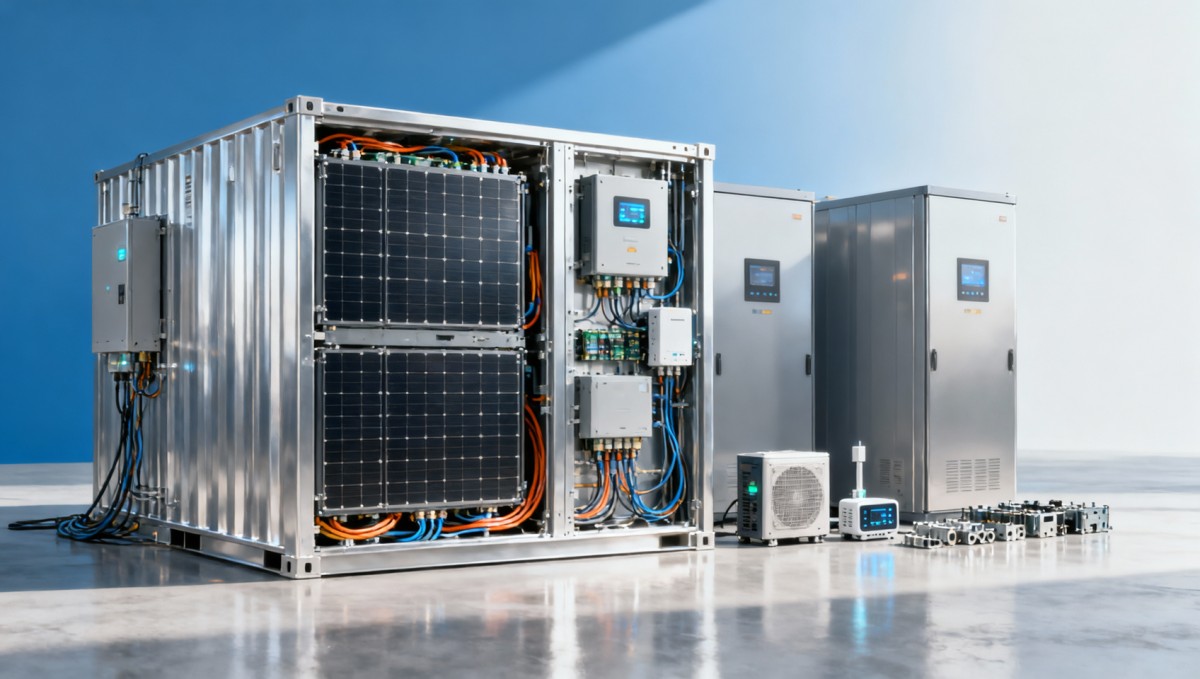
Many procurement teams still ask a narrow question: what is the battery energy storage cost per kWh? That metric matters, but it never tells the full budget story. In practical B2B projects, the 2026 cost base is spread across cells, battery management systems, power conversion equipment, thermal control, enclosure design, wiring, software, commissioning, and after-sales support.
For enterprise decision-makers, the bigger issue is not just purchase price. It is total installed cost over a 5–15 year operating horizon. A lower upfront offer may still create a higher budget if integration time stretches from 2 weeks to 8 weeks, if replacement parts are difficult to source, or if compliance documentation is incomplete during project approval.
Operators and project managers feel this gap first. They are often asked to run systems in mixed environments such as commercial buildings, light industrial sites, logistics hubs, or residential energy communities. In each case, battery energy storage cost changes with ambient temperature range, charging cycles, peak demand profile, and the number of connected devices or monitoring points.
Financial approvers usually need a cleaner breakdown. Instead of debating a single headline number, it is more useful to divide cost into 4 layers: core hardware, integration and controls, site-specific engineering, and lifecycle support. That structure makes supplier comparison more realistic and reduces the risk of hidden budget overruns after purchase orders are issued.
Four budget layers that shape total project value
A battery energy storage system is rarely a standalone box. It is a coordinated asset that must work with inverters, local loads, grid conditions, safety systems, data platforms, and maintenance workflows. That is why cross-functional review between engineering, finance, operations, and safety teams is essential before final approval.
- Core hardware: battery cells, module architecture, racks, BMS, PCS, enclosures, busbars, cable assemblies, and cooling systems.
- Integration and digital layer: EMS software, IoT sensors, smart meters, remote diagnostics, dashboard setup, and cybersecurity provisions.
- Site engineering: civil preparation, electrical balance of system, installation labor, commissioning, fire protection interfaces, and local utility coordination.
- Lifecycle support: spare parts planning, warranty terms, preventive maintenance frequency, data subscriptions, and performance reporting.
This layered view helps quality and safety managers identify which supplier quotations are incomplete. It also gives finance teams a more stable basis for ROI calculation, especially when comparing systems with different service intervals, software licenses, or response-time commitments.
Which cost drivers are commonly underestimated by buyers and engineers?
The most overlooked cost drivers in battery energy storage are often outside the battery pack itself. Enclosure materials, thermal insulation, molded plastic components, aluminum frame machining, sensor count, and communications architecture can change project economics significantly. These details are especially important in distributed energy applications where dozens or even hundreds of field units may need standardized deployment.
Inventory strategy is another hidden factor. A buyer may secure an attractive cell price but lose savings if replacement connectors, fan modules, fuse assemblies, or control boards require 6–12 week replenishment. In volatile supply chains, carrying critical spares for 3–6 months may be cheaper than dealing with site downtime, emergency freight, or delayed commissioning.
Software and connectivity are also moving up the budget stack. In 2026, more projects will expect remote visibility, predictive alerts, integration with facility systems, and configurable alarms. That means the true battery energy storage cost includes not only hardware but also communication gateways, cloud connectivity options, local data retention policies, and periodic firmware support.
Safety compliance has budget impact as well. Fire detection interfaces, shutdown logic, ventilation design, cable routing separation, and documentation reviews may add time and engineering expense. However, these items should be treated as risk controls, not optional extras, because missing them can delay approvals and expose operating teams to avoidable hazards.
A practical cost map for 2026 battery storage projects
The table below organizes major battery energy storage cost drivers into practical review categories. It is designed for procurement teams, project leaders, and financial approvers who need to compare more than one supplier without overlooking lifecycle exposure.
A table like this is useful during the first 2–3 rounds of supplier screening. It prevents teams from comparing quotations that include different scopes, which is one of the most common reasons battery energy storage budgets drift upward between technical review and final contract award.
Three warning signs in supplier quotations
If a quotation lists only battery cabinets and inverter capacity, treat it as incomplete until integration scope is clarified. The same applies when communication architecture, enclosure grade, operating temperature range, or commissioning responsibilities are left undefined.
- No clear boundary between included and excluded installation work.
- No statement on software update policy, data ownership, or remote diagnostics access.
- No spare parts or response-time framework for the first 12–24 months.
These gaps matter because they affect not only budget control but also operating continuity. For quality teams and project owners, a slightly higher upfront quote can be the lower-risk option if it reduces ambiguity across installation, compliance, and maintenance.
How should procurement teams compare battery storage options without chasing the lowest quote?
Procurement decisions become stronger when comparison moves from unit price to use-case fit. A commercial facility shaving peaks for 2–4 hours needs a different budget model from a microgrid supporting resilience, and both differ from behind-the-meter systems tied to smart building controls. The right battery energy storage cost benchmark depends on operational duty, not generic market averages.
For project managers, the best comparison framework usually includes 5 dimensions: technical fit, deployment complexity, compliance burden, service model, and cashflow timing. This is especially relevant in mixed-industry environments where battery storage may interact with HVAC loads, EV charging, production equipment, or digital building platforms.
Financial approvers also need to test cost alternatives. Is the project better served by a modular design that phases capacity over 2 stages? Does a standardized enclosure reduce manufacturing and transport cost? Can shared monitoring infrastructure lower recurring software expense across multiple sites? These questions often reveal more savings than hard negotiation on battery price alone.
At TradeNexus Pro, this is where market intelligence becomes practical. Buyers are not only comparing components; they are comparing supply risk, delivery resilience, and implementation confidence across sectors such as green energy, smart electronics, and advanced manufacturing. Deep supplier evaluation reduces the chance of selecting a quote that looks efficient on paper but performs poorly in field execution.
Decision matrix for cost, risk, and deployment fit
The following comparison table can be used during pre-award review. It helps teams score battery energy storage options beyond nominal capacity and identify the trade-offs that really shape 2026 budgets.
This comparison is not about choosing the most expensive offer. It is about identifying which quotation aligns with project realities. In many cases, the most budget-stable option is the one that reduces engineering ambiguity, shrinkage in delivery performance, and maintenance uncertainty over the first 12–36 months.
A 5-point procurement checklist
- Confirm the real duty cycle: daily cycling, backup-only use, peak shaving, or hybrid operation.
- Check if the quote covers communications, metering, alarms, and remote access tools.
- Review enclosure materials, IP level, thermal management method, and operating temperature assumptions.
- Ask for service boundaries: spare part lead time, response time, and maintenance interval expectations.
- Map approval requirements early, including electrical, fire safety, and site-specific compliance needs.
This checklist supports not only buyers but also safety managers and approvers. When all 5 points are clear, the battery energy storage cost discussion becomes faster, more measurable, and less vulnerable to scope drift.
What implementation, compliance, and operating factors reshape budget after purchase?
Post-purchase costs often emerge during implementation. Transport restrictions, lifting access, site layout, cable distances, switchgear adaptation, and commissioning windows can add meaningful expense. A battery energy storage system that looks simple on a datasheet may require 3 phases of coordination: factory readiness, site preparation, and final functional validation.
Compliance work also changes timing. Depending on location and application, teams may need electrical review, fire protection coordination, local utility documentation, and internal safety sign-off. Even when no special certification is requested by the buyer, standard good practice still requires traceable documentation on operating limits, shutdown logic, installation procedures, and maintenance instructions.
Operating cost is shaped by maintenance design. Fans, filters, connectors, thermal components, and monitoring hardware all influence field workload. Systems that require quarterly inspection, annual firmware checks, or periodic balancing should be priced with labor and downtime assumptions. Without that, budget forecasts remain incomplete.
For companies managing several sites, standardization can reduce hidden cost. Using common enclosure formats, repeatable communication protocols, and aligned spare parts policies across 5, 10, or 20 installations may lower training burden and shorten troubleshooting time. This is one reason multi-sector intelligence matters when assessing scalable energy storage programs.
Typical implementation stages and budget checkpoints
A structured rollout reduces surprises. The process below is common across commercial and industrial battery storage projects, although exact timing varies by site complexity and approval environment.
- Pre-engineering review, usually 1–3 weeks, covering application profile, electrical interface, installation assumptions, and compliance scope.
- Procurement and production coordination, often 4–12 weeks, depending on cell availability, power electronics sourcing, and enclosure fabrication.
- Site installation and commissioning, commonly 3–10 days for smaller standardized systems and longer for multi-cabinet or integrated facility projects.
- Operational handover, including alarms, documentation, safety training, and maintenance planning for the first 6–12 months.
Each step should have a budget gate. When this discipline is missing, costs tend to move from predictable capital expense into reactive operational spending. That shift is what many financial approvers want to avoid, especially when energy storage is part of a larger facility modernization plan.
Common misconceptions that inflate battery energy storage cost
A common misconception is that a higher energy density design always produces the better business case. In reality, service access, thermal stability, replacement simplicity, and transport practicality may matter more in certain applications. Another mistake is assuming software is optional; in many modern deployments, data visibility is what protects uptime and supports warranty conversations.
Teams also underestimate the budget value of documentation quality. Clear manuals, wiring diagrams, alarm mapping, and parts lists shorten startup time and reduce future service friction. For project owners, this is not paperwork overhead. It is an operating cost control mechanism.
Finally, some buyers treat smart home hubs, facility automation interfaces, or local energy management links as separate projects. In practice, these interfaces can directly influence usable system value, demand response capability, and user control. If they are required, they should be budgeted from day one rather than added later as fragmented upgrades.
FAQ: what do buyers, operators, and approvers ask most often?
How should we estimate battery energy storage cost for a new project?
Start with the application profile, not a generic price benchmark. Define discharge duration, expected cycling frequency, peak load purpose, site constraints, monitoring requirements, and approval needs. Then separate the estimate into hardware, integration, site implementation, and lifecycle support. This approach is more reliable than using a single per-kWh figure alone.
Which projects are most vulnerable to hidden budget increases?
Projects with mixed responsibilities are especially exposed. Examples include sites where one vendor supplies the battery cabinet, another handles electrical works, and a third manages software or facility integration. Budget risk rises when communication protocols, installation exclusions, and approval responsibilities are not clarified in the first review stage.
What should safety and quality teams verify before approval?
They should check operating temperature assumptions, shutdown logic, enclosure protection, cable routing, alarm definitions, maintenance access, and documentation completeness. They should also verify whether the supplier has clearly defined commissioning tests, spare parts coverage, and any site-specific integration limits. These checks reduce rework and improve handover quality.
Does digital integration really affect battery energy storage cost that much?
Yes, because digital functions influence both capex and opex. Remote diagnostics, dashboards, data export, IoT sensor layers, and gateway hardware may seem secondary, but they affect visibility, fault response speed, and maintenance planning. In multi-site operations, digital integration can reduce troubleshooting time enough to justify the added initial spend.
Why work with TradeNexus Pro when evaluating 2026 battery storage budgets?
Battery energy storage cost in 2026 will be decided by cross-sector realities, not isolated component pricing. TradeNexus Pro helps procurement leaders, engineering teams, and financial approvers evaluate those realities through deeper market intelligence across green energy, advanced manufacturing, smart electronics, healthcare technology, and supply chain software environments.
This matters when your project includes more than batteries. If your budget is influenced by aluminum parts sourcing, molded component availability, control electronics, smart monitoring, or inventory strategy, you need a platform that sees the whole chain. TNP is built for that level of evaluation, especially for global B2B teams managing supply risk and vendor comparison under time pressure.
You can use TNP to sharpen supplier screening, compare implementation approaches, and identify where a quotation may be under-scoped. That includes support for parameter confirmation, product selection logic, delivery cycle review, customization feasibility, compliance discussion, sample planning, and quotation benchmarking across relevant sectors.
If you are preparing a battery energy storage procurement plan, a site rollout, or a budget approval package, contact TradeNexus Pro to discuss your actual decision points. Share your target capacity range, operating scenario, delivery window, monitoring requirements, and compliance concerns. A more informed review now can reduce scope gaps, budget surprises, and implementation delays later.
Get weekly intelligence in your inbox.
No noise. No sponsored content. Pure intelligence.
 Apr 24, 2026India BIS Mandates IS 13252:2025 for PLCs & HMIs by Oct 2026India BIS Mandates IS 13252:2025 for PLCs & HMIs by Oct 2026
 Apr 24, 2026SASO EV Charger Regulation: Sand-Resistant Grid Compatibility Testing RequiredSASO EV Charger Regulation: Sand-Resistant Grid Compatibility Testing Required
 Apr 24, 2026Japan Updates JIS for Rehab Devices: IEC 62366-1:2024 Usability Compliance RequiredJapan Updates JIS for Rehab Devices: IEC 62366-1:2024 Usability Compliance Required
 Apr 24, 2026China Customs Launches RCEP Origin Smart Pre-Review SystemChina Customs Launches RCEP Origin Smart Pre-Review System
 Apr 24, 2026ANATEL Mandates Localized Voice Assistants for Smart Home Devices in BrazilANATEL Mandates Localized Voice Assistants for Smart Home Devices in Brazil
 Apr 24, 2026TÜV Rheinland Updates IoT EMC Standard with AI Edge抗扰度 RequirementTÜV Rheinland Updates IoT EMC Standard with AI Edge抗扰度 Requirement
 Apr 24, 20262M Alliance Shortens Ningbo–Rotterdam Route to 18 Days Amid 35% Slot Premium2M Alliance Shortens Ningbo–Rotterdam Route to 18 Days Amid 35% Slot Premium
 Apr 24, 2026Vietnam Enforces Bilingual Safety Labels for Imported Electronic Components from Apr 22, 2026Vietnam Enforces Bilingual Safety Labels for Imported Electronic Components from Apr 22, 2026
 Apr 24, 2026USTR Launches Sunset Review on China Solar PV AD/CVD DutiesUSTR Launches Sunset Review on China Solar PV AD/CVD Duties
 Apr 24, 2026EU New Battery Regulation Fully Effective Apr 24, 2026EU New Battery Regulation Fully Effective Apr 24, 2026
 Apr 23, 2026Taobao Factory Spark 3.0 Launches AI Workbench for SME Export FactoriesTaobao Factory Spark 3.0 Launches AI Workbench for SME Export Factories
 Apr 23, 2026TENENG Group Inspects IoT Safety Compliance at Jiangnan ChemicalTENENG Group Inspects IoT Safety Compliance at Jiangnan Chemical
 Apr 23, 2026China Launches First Embodied AI Open Data CommunityChina Launches First Embodied AI Open Data Community
 Apr 23, 2026PV Glass Prices Flat for 9 Weeks Amid Rising Integrated ProcurementPV Glass Prices Flat for 9 Weeks Amid Rising Integrated Procurement
 Apr 23, 20262984 NQI One-Stop Platforms Launched Nationwide2984 NQI One-Stop Platforms Launched Nationwide
 Apr 23, 2026China’s Green Smart Ship Tech Norms Accelerate BMS & Shore Power ExportChina’s Green Smart Ship Tech Norms Accelerate BMS & Shore Power Export
 Apr 23, 2026China Builds World's Largest Agri-Meteorological IoT NetworkChina Builds World's Largest Agri-Meteorological IoT Network
 Apr 23, 2026EU CBAM Carbon Tariff Enters Enforcement on April 1, 2026EU CBAM Carbon Tariff Enters Enforcement on April 1, 2026
 Apr 23, 2026Five Ministries Issue Zero-Carbon Factory Guidance for Export IndustriesFive Ministries Issue Zero-Carbon Factory Guidance for Export Industries
 Apr 23, 2026ISO Releases First Zero-Carbon City Standard — China’s Practices IncludedISO Releases First Zero-Carbon City Standard — China’s Practices Included
 Apr 22, 2026China Leads Global Offshore Wind Installations for 5th YearChina Leads Global Offshore Wind Installations for 5th Year
 Apr 22, 2026China Launches National Mine Safety IoT Monitoring NetworkChina Launches National Mine Safety IoT Monitoring Network
 Apr 22, 2026Yinchuan Boiler Pure Water Solution Certified for Middle East ProjectsYinchuan Boiler Pure Water Solution Certified for Middle East Projects
 Apr 22, 2026China to Enforce Mandatory EV Battery Recycling Standards by 2026China to Enforce Mandatory EV Battery Recycling Standards by 2026
 Apr 22, 2026Vietnam Launches Anti-Circumvention Probe on Electronic ComponentsVietnam Launches Anti-Circumvention Probe on Electronic Components
 Apr 22, 20262026 Shanghai Fastener Show: Robotic Fasteners Drive Overseas Procurement2026 Shanghai Fastener Show: Robotic Fasteners Drive Overseas Procurement
 Apr 22, 2026US BIS Adds EV On-Board Charger Crypto Modules to EAR Appendix 7US BIS Adds EV On-Board Charger Crypto Modules to EAR Appendix 7