Microgrid vs backup power: which fits your site
For sites weighing resilience, cost, and long-term energy strategy, the choice between backup power and a microgrid can reshape operations far beyond outage protection. This guide compares both options through the lens of energy transition, helping technical teams, procurement leaders, and business decision-makers identify the right fit for performance, risk control, and scalable power planning.
Across manufacturing campuses, healthcare facilities, warehouses, data-supported commercial sites, and multi-building industrial parks, power continuity is no longer only about keeping lights on for 2 to 8 hours during a grid event. It now affects uptime, safety, energy cost exposure, carbon targets, and the ability to add new electric loads such as automation, cold chain, EV fleets, or process electrification.
For procurement teams and operators, the real question is not simply microgrid versus backup power. It is whether the site needs short-duration emergency support, or a controllable on-site energy system that can optimize daily operations, support islanding, and scale over a 5- to 15-year horizon. That distinction has direct implications for CAPEX, OPEX, maintenance complexity, and business resilience.
Understanding the Difference Between Backup Power and a Microgrid
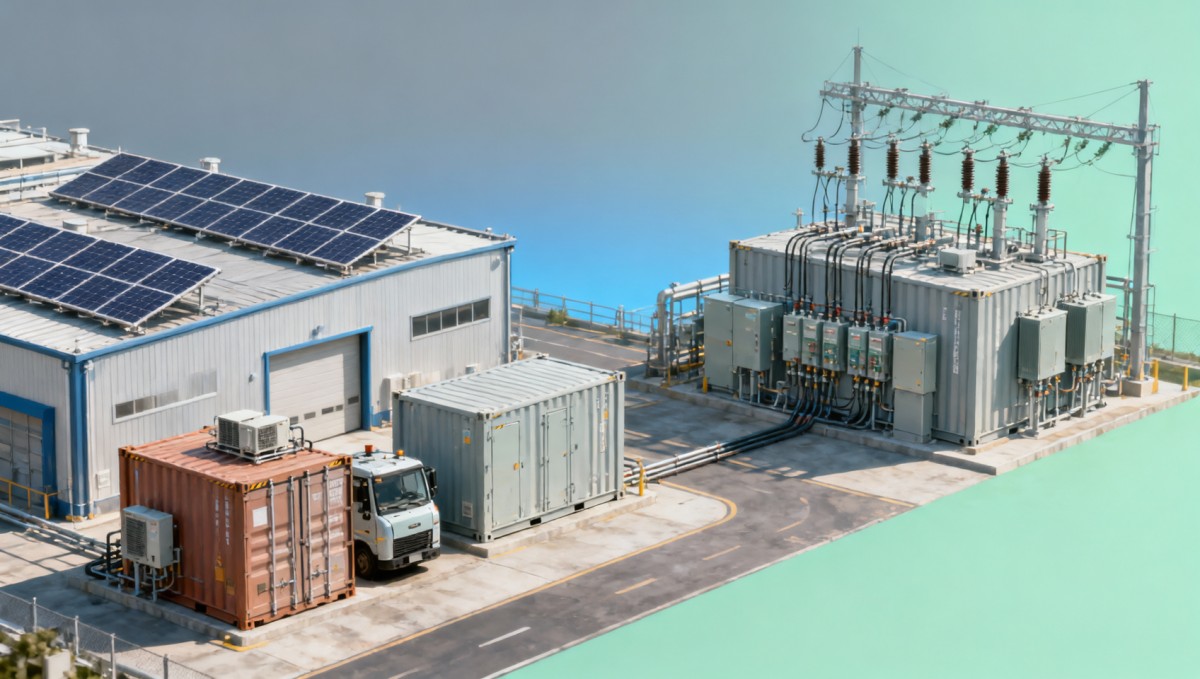
Backup power is designed first for emergency continuity. In most sites, it means diesel or natural gas generators, uninterruptible power supply units, or a combination of UPS and gensets sized to support critical loads for a defined period, often 15 minutes for UPS bridging and 4 to 72 hours for generation, depending on fuel access and facility risk.
A microgrid is broader. It is a local energy system that can combine distributed energy resources such as solar PV, battery energy storage, generators, controllable loads, and microgrid controls. Unlike a standalone backup system, a microgrid can operate in parallel with the utility during normal conditions and disconnect to island during an outage when properly engineered and permitted.
This difference matters because a generator-based backup design is usually idle for most of the year except for testing, while a microgrid may deliver daily value through peak shaving, demand charge management, renewable integration, and power quality support. For many enterprise sites, the comparison is therefore between a single-purpose resilience asset and a multi-purpose energy platform.
The table below highlights the operational distinction that technical evaluators and commercial decision-makers usually focus on during early screening.
For many sites, the most important takeaway is that microgrid planning starts with load strategy, not equipment alone. If the site needs to manage 24/7 operations, fluctuating energy prices, or future expansion, a microgrid assessment is often justified even when conventional backup power remains part of the final architecture.
Where confusion usually happens
A battery system by itself is not automatically a microgrid, and a generator plant with automatic transfer switching is not a full microgrid either. What turns distributed assets into a microgrid is coordinated control, defined islanding logic, protection design, and an operating philosophy that balances resilience, cost, and power quality.
A practical rule of thumb
If the site requirement is “keep essential loads alive for 8 hours during rare outages,” backup power may be enough. If the requirement is “support essential loads, reduce utility peaks, absorb renewables, and prepare for a 30% load increase over 3 to 5 years,” microgrid thinking becomes far more relevant.
When Backup Power Is the Better Fit
Backup power remains the right answer for a large share of commercial and industrial facilities. If outages are infrequent, utility tariffs are relatively stable, and the business only needs emergency continuity for life safety systems, refrigeration, server rooms, or critical process lines, a simpler architecture can deliver the best value with lower upfront complexity.
This is especially true for smaller sites with peak demand below roughly 250 kW to 500 kW, single-building operations, leased properties with uncertain tenure, or facilities that cannot justify a 7- to 12-year energy optimization payback model. In these cases, generator backup or generator-plus-UPS can meet risk control goals without expanding into advanced distributed energy management.
Another reason backup power wins is implementation speed. A standard standby system may move from design to commissioning in 8 to 20 weeks depending on switchgear, permitting, acoustic requirements, and fuel arrangements. A microgrid often requires longer design coordination, interconnection review, control integration, and commissioning testing across multiple assets.
For quality, safety, and compliance teams, the lower operational learning curve also matters. Operators are already familiar with periodic test runs, load bank testing, and emergency fuel procedures. A microgrid adds software logic, battery operating constraints, inverter coordination, and additional cybersecurity considerations.
Typical sites that favor backup power
- Retail and light commercial facilities needing code-driven emergency support for selected circuits.
- Warehouses where outages are disruptive but daily tariff optimization is not a major cost lever.
- Tenant-operated sites with 3- to 5-year lease visibility and limited authority for major electrical redesign.
- Facilities with narrow critical load pockets, such as 50 kW to 200 kW of essential equipment within a much larger building load.
Decision checkpoints before choosing standby-only
Teams should confirm at least four items: outage frequency, acceptable restart time, fuel logistics, and maintenance discipline. If the business can tolerate 10 to 30 seconds of transfer time, has fuel autonomy for 24 to 72 hours, and does not need daily dispatch value, backup power often remains a rational procurement choice.
Common caution
The main risk is under-sizing. Many projects size backup only for current loads and overlook expansion, HVAC dependencies, or control system loads. A modest 15% to 25% growth buffer can prevent expensive retrofit work after new process equipment or warehouse automation is installed.
When a Microgrid Delivers Greater Strategic Value
A microgrid tends to outperform backup-only designs when the site has three characteristics: high outage impact, meaningful energy spend, and a long ownership horizon. Manufacturing plants, healthcare campuses, semiconductor-related operations, cold chain facilities, and high-throughput logistics sites often fall into this category because one power event can trigger production loss, spoilage risk, data interruption, or safety issues.
The economic case improves further where electricity tariffs include high demand charges, time-of-use pricing, or power quality penalties. Batteries paired with solar or controllable generation can reduce peaks by hundreds of kilowatts, support frequency-sensitive equipment, and create more predictable operating costs over 10 years or more.
Microgrids also align with electrification. As sites add EV charging, electric boilers, robotics, and digitally managed process lines, load volatility rises. A microgrid gives operators a framework to prioritize circuits, shift noncritical loads, and maintain essential functions during utility constraints. That capability is becoming increasingly relevant where grid congestion or resilience standards are tightening.
For enterprise decision-makers, the strategic question is not only “Will this save money?” but “Will this preserve throughput and operational flexibility?” In many sectors, avoiding one major disruption can justify part of the investment, especially when outages affect customer service level agreements, temperature control, or regulated operations.
Microgrid value areas that backup systems usually cannot match
- Daily peak shaving and demand management across 12 to 16 hours of site operation.
- Integration of on-site renewables without sacrificing resilience planning.
- Selective load control, allowing Tier 1 loads to remain energized while Tier 2 and Tier 3 loads cycle down.
- Improved energy visibility through controller and metering data, often at 15-minute or sub-minute intervals.
The table below provides a scenario-based screening view often used in early feasibility workshops.
The core conclusion is that a microgrid makes the most sense when resilience and energy management are intertwined. If the site would benefit from both outage protection and routine operational optimization, a microgrid can create a more durable business case than emergency backup alone.
How to Evaluate Cost, Risk, and Technical Fit
A sound procurement process compares both options on life-cycle value rather than initial price alone. Backup power may have lower CAPEX, but it also produces limited daily return. A microgrid may cost more upfront, yet reduce utility exposure, improve controllability, and support future load growth. The right choice depends on whether the site prioritizes minimum compliance, operational continuity, or strategic energy performance.
Technical teams should begin with a load study covering at least 12 months of interval data where available. Separate loads into critical, important, and deferrable categories. Many projects discover that only 30% to 50% of the connected load must remain online during an emergency, which can significantly change generator size, battery duration, and switchgear scope.
Finance reviewers should examine three windows: upfront investment, annual operating cost, and avoided loss. For example, a site with only 2 outages per year and modest downtime impact may struggle to justify a complex microgrid. A pharmaceutical or cold storage site facing one high-value interruption may see a very different return profile because product loss and restart delays can exceed annual maintenance budgets.
Safety and compliance teams should also weigh fuel handling, emissions limits, acoustic restrictions, fire safety design for battery rooms, and operator training. The cheapest technical configuration on paper may create downstream permitting or operational burdens that offset early savings.
Five evaluation criteria that matter most
- Critical load profile: identify kW demand, motor starting behavior, and minimum runtime requirements.
- Outage risk and consequence: measure not only frequency but also restart cost, scrap risk, and safety exposure.
- Tariff and energy economics: review demand charges, time-of-use windows, and any value from on-site generation.
- Expansion pathway: estimate likely load growth over 3, 5, and 10 years.
- Operational readiness: confirm maintenance capacity, controls expertise, and incident response procedures.
Indicative comparison points
As a practical rule, sites with less than 4 hours of required autonomy and limited daily dispatch value often lean toward backup power. Sites needing 8 to 24 hours of selective resilience, renewable coordination, and tariff management often merit microgrid modeling. These are not fixed thresholds, but they help frame early-stage decisions before detailed engineering begins.
Implementation, Procurement, and Common Mistakes to Avoid
Whether choosing backup power or a microgrid, implementation quality determines whether the asset performs as expected during a real event. A well-run project usually moves through five stages: load assessment, conceptual design, interconnection and permitting review, equipment procurement, and commissioning with scenario testing. Skipping any one of these stages can create delays or underperformance after installation.
Procurement leaders should insist on a clear responsibility matrix. In hybrid projects, problems often arise when the generator supplier, battery integrator, switchgear vendor, and controls contractor each optimize only their own scope. The buyer needs one integrated operating philosophy that defines transition timing, load shedding logic, black-start sequence, maintenance intervals, and fault response.
Another common mistake is treating runtime as the only resilience metric. In reality, three other measures matter just as much: transfer speed, power quality, and recoverability. A system that runs for 24 hours but cannot handle voltage-sensitive equipment or restart a process line smoothly may still fail the business requirement.
For distributors, EPC partners, and channel participants, the strongest projects are those with documented acceptance criteria. That may include full-load testing, islanding simulation, controller failover checks, and maintenance handover. These details reduce commercial disputes and make aftermarket support easier over years 1 through 10.
Procurement checklist
- Request single-line diagrams and load prioritization schedules, not only equipment lists.
- Verify delivery lead times for generators, switchgear, batteries, and protection relays; some items can extend to 12 to 30 weeks.
- Ask for maintenance scope by year, including inspection frequency, consumables, software updates, and emergency response windows.
- Confirm whether the system is designed for full-site support, partial critical loads, or staged restoration.
Common selection errors
Three errors appear repeatedly. First, buyers over-focus on nameplate capacity and ignore usable duration or load diversity. Second, they underestimate permitting timelines, especially where emissions or battery fire code reviews apply. Third, they fail to plan for future loads such as automation cells, HVAC expansion, or EV charging, forcing costly retrofit within 24 to 36 months.
What good commissioning looks like
Commissioning should test at least three conditions: normal parallel operation, utility loss and transition, and restoration back to grid mode. For microgrids, add control sequence verification, battery state-of-charge logic, and priority-based load shedding. For standby systems, confirm ATS timing, fuel system integrity, and runtime under representative load.
FAQ: Choosing the Right Site Power Strategy
The questions below reflect common buying and engineering discussions across industrial, commercial, and institutional sites. They are especially relevant for teams comparing resilience options during expansion, retrofit, or utility risk planning.
How do I know if my site needs a microgrid instead of a generator?
Start with three tests. First, does downtime create large financial or safety consequences? Second, can the site gain daily value from peak shaving, renewable integration, or load management? Third, is the site likely to remain in operation for 5 years or more with rising electrical demand? If the answer is yes to at least two of those three, a microgrid feasibility review is usually worthwhile.
Can backup power and a microgrid be combined?
Yes. In fact, many robust designs combine both. A generator may provide long-duration support, while batteries handle fast response and ride-through, and solar offsets daytime energy use. The important factor is coordinated control. Without proper integration, the site may end up with parallel assets that do not deliver the expected resilience or economic benefit.
What runtime should be planned for critical loads?
There is no single answer, but many facilities model 4, 8, 24, and 72-hour scenarios. Office and light commercial sites often focus on short continuity windows. Healthcare, cold chain, and industrial operations may require longer duration depending on fuel access, restart sequences, and product sensitivity. Runtime should be defined by business process needs, not by equipment preference alone.
How long does a typical project take?
A conventional backup power project may move in roughly 2 to 5 months for straightforward installations, while a microgrid can take 4 to 12 months or longer depending on interconnection, protection studies, controls integration, and local permitting. Early load definition and vendor alignment can reduce schedule risk significantly.
The choice between microgrid and backup power should be based on how your site operates, what downtime costs, and how energy needs will evolve over the next several years. Backup power is often the best fit for focused emergency continuity with lower complexity. A microgrid becomes the stronger option when resilience, energy optimization, and future scalability must work together as one operating strategy.
For organizations evaluating site power investments across manufacturing, healthcare technology, smart facilities, green energy infrastructure, or supply chain operations, structured comparison is essential. TradeNexus Pro supports that process with sector-focused intelligence, technical context, and decision-ready market insight for procurement teams and enterprise planners.
If you are assessing a new installation, retrofit, or multi-site resilience program, contact us to discuss your use case, get a tailored evaluation framework, and explore more solutions for reliable and scalable site power planning.
Get weekly intelligence in your inbox.
No noise. No sponsored content. Pure intelligence.
 Apr 24, 2026India BIS Mandates IS 13252:2025 for PLCs & HMIs by Oct 2026India BIS Mandates IS 13252:2025 for PLCs & HMIs by Oct 2026
 Apr 24, 2026SASO EV Charger Regulation: Sand-Resistant Grid Compatibility Testing RequiredSASO EV Charger Regulation: Sand-Resistant Grid Compatibility Testing Required
 Apr 24, 2026Japan Updates JIS for Rehab Devices: IEC 62366-1:2024 Usability Compliance RequiredJapan Updates JIS for Rehab Devices: IEC 62366-1:2024 Usability Compliance Required
 Apr 24, 2026China Customs Launches RCEP Origin Smart Pre-Review SystemChina Customs Launches RCEP Origin Smart Pre-Review System
 Apr 24, 2026ANATEL Mandates Localized Voice Assistants for Smart Home Devices in BrazilANATEL Mandates Localized Voice Assistants for Smart Home Devices in Brazil
 Apr 24, 2026TÜV Rheinland Updates IoT EMC Standard with AI Edge抗扰度 RequirementTÜV Rheinland Updates IoT EMC Standard with AI Edge抗扰度 Requirement
 Apr 24, 20262M Alliance Shortens Ningbo–Rotterdam Route to 18 Days Amid 35% Slot Premium2M Alliance Shortens Ningbo–Rotterdam Route to 18 Days Amid 35% Slot Premium
 Apr 24, 2026Vietnam Enforces Bilingual Safety Labels for Imported Electronic Components from Apr 22, 2026Vietnam Enforces Bilingual Safety Labels for Imported Electronic Components from Apr 22, 2026
 Apr 24, 2026USTR Launches Sunset Review on China Solar PV AD/CVD DutiesUSTR Launches Sunset Review on China Solar PV AD/CVD Duties
 Apr 24, 2026EU New Battery Regulation Fully Effective Apr 24, 2026EU New Battery Regulation Fully Effective Apr 24, 2026
 Apr 23, 2026Taobao Factory Spark 3.0 Launches AI Workbench for SME Export FactoriesTaobao Factory Spark 3.0 Launches AI Workbench for SME Export Factories
 Apr 23, 2026TENENG Group Inspects IoT Safety Compliance at Jiangnan ChemicalTENENG Group Inspects IoT Safety Compliance at Jiangnan Chemical
 Apr 23, 2026China Launches First Embodied AI Open Data CommunityChina Launches First Embodied AI Open Data Community
 Apr 23, 2026PV Glass Prices Flat for 9 Weeks Amid Rising Integrated ProcurementPV Glass Prices Flat for 9 Weeks Amid Rising Integrated Procurement
 Apr 23, 20262984 NQI One-Stop Platforms Launched Nationwide2984 NQI One-Stop Platforms Launched Nationwide
 Apr 23, 2026China’s Green Smart Ship Tech Norms Accelerate BMS & Shore Power ExportChina’s Green Smart Ship Tech Norms Accelerate BMS & Shore Power Export
 Apr 23, 2026China Builds World's Largest Agri-Meteorological IoT NetworkChina Builds World's Largest Agri-Meteorological IoT Network
 Apr 23, 2026EU CBAM Carbon Tariff Enters Enforcement on April 1, 2026EU CBAM Carbon Tariff Enters Enforcement on April 1, 2026
 Apr 23, 2026Five Ministries Issue Zero-Carbon Factory Guidance for Export IndustriesFive Ministries Issue Zero-Carbon Factory Guidance for Export Industries
 Apr 23, 2026ISO Releases First Zero-Carbon City Standard — China’s Practices IncludedISO Releases First Zero-Carbon City Standard — China’s Practices Included
 Apr 22, 2026China Leads Global Offshore Wind Installations for 5th YearChina Leads Global Offshore Wind Installations for 5th Year
 Apr 22, 2026China Launches National Mine Safety IoT Monitoring NetworkChina Launches National Mine Safety IoT Monitoring Network
 Apr 22, 2026Yinchuan Boiler Pure Water Solution Certified for Middle East ProjectsYinchuan Boiler Pure Water Solution Certified for Middle East Projects
 Apr 22, 2026China to Enforce Mandatory EV Battery Recycling Standards by 2026China to Enforce Mandatory EV Battery Recycling Standards by 2026
 Apr 22, 2026Vietnam Launches Anti-Circumvention Probe on Electronic ComponentsVietnam Launches Anti-Circumvention Probe on Electronic Components
 Apr 22, 20262026 Shanghai Fastener Show: Robotic Fasteners Drive Overseas Procurement2026 Shanghai Fastener Show: Robotic Fasteners Drive Overseas Procurement
 Apr 22, 2026US BIS Adds EV On-Board Charger Crypto Modules to EAR Appendix 7US BIS Adds EV On-Board Charger Crypto Modules to EAR Appendix 7