Solar tracker costs: when does the upgrade make sense
As the energy transition accelerates, many buyers are asking whether a solar tracker upgrade delivers enough value to justify the added investment. For project developers, technical evaluators, and financial decision-makers, the answer depends on site conditions, microgrid strategy, performance gains, and lifecycle economics. This article examines solar tracker costs, key ROI drivers, and when the upgrade makes practical business sense.
When do solar tracker costs create measurable business value?
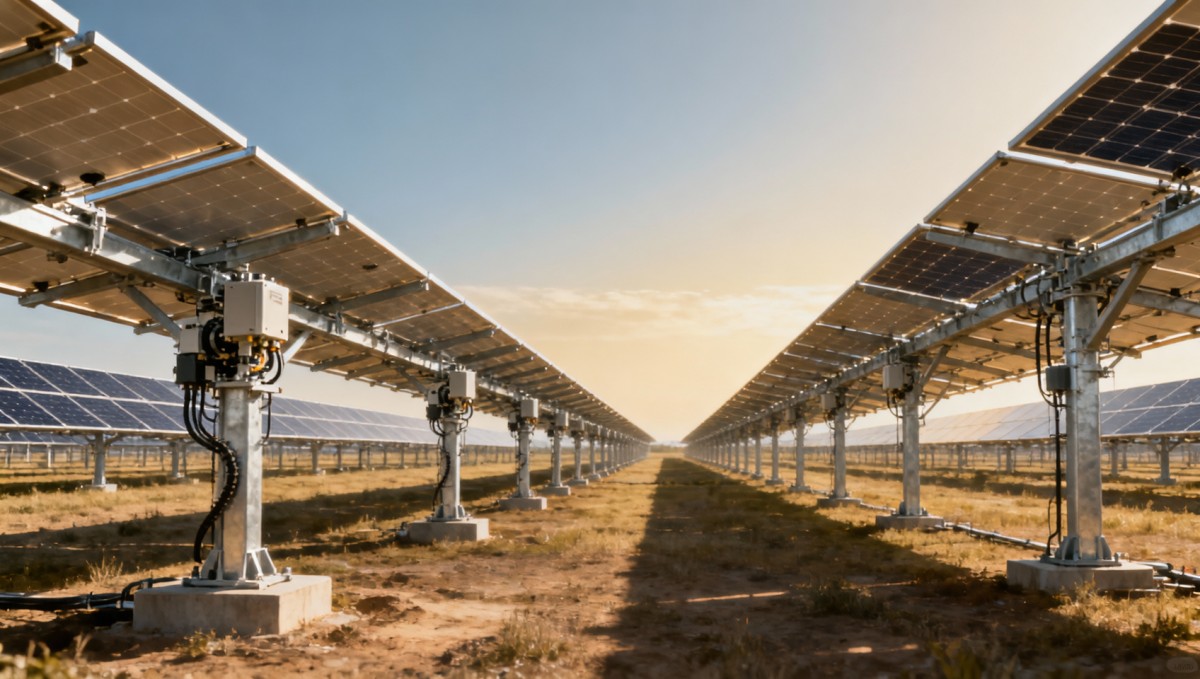
A solar tracker is not simply an add-on for higher energy yield. In commercial and utility-scale projects, it changes the economics of land use, generation profiles, operations planning, and financing assumptions. The core question is not whether trackers improve output, but whether the gain is large enough over 20–30 years to offset higher capital cost, added maintenance, and site-specific engineering complexity.
In most B2B procurement discussions, solar tracker costs are evaluated against four practical factors: expected energy uplift, local irradiation pattern, mechanical reliability, and tariff or offtake structure. A tracker system may make strong sense where daytime pricing rewards later-afternoon output, while the same investment may be less attractive in flat-rate markets or constrained sites with difficult geotechnical conditions.
For technical teams, the comparison usually starts with fixed-tilt versus single-axis tracking. Industry practice often sees single-axis trackers used in large ground-mounted systems, while fixed-tilt remains common for rooftops, small industrial sites, and projects where structural simplicity matters more than maximum yield. Typical decision windows begin during early-stage design and should be revisited before final EPC bidding, usually within a 4–8 week feasibility cycle.
For finance and procurement leaders, the upgrade makes sense only when the project can demonstrate a credible payback path. That requires matching tracker cost to a realistic production model, not an optimistic headline estimate. This is where decision-makers increasingly rely on specialized market intelligence platforms such as TradeNexus Pro, which help teams compare supplier positioning, technology maturity, delivery risks, and cross-sector demand signals before capital is committed.
The four main value drivers buyers should test
- Energy gain versus fixed-tilt: many evaluations use a modeled uplift range rather than a fixed assumption, because actual gains depend on latitude, weather profile, row spacing, and backtracking strategy.
- Capex premium: tracker hardware, control systems, foundations, and installation can add a meaningful upfront premium that must be weighed against long-term revenue.
- Opex and reliability: motors, bearings, controllers, and wind stow functions introduce moving parts, which may require inspection routines every quarter or according to site maintenance policy.
- Revenue timing: in some markets, improved production during shoulder hours can be more valuable than total annual kWh alone.
Fixed-tilt or tracker: which cost structure fits your project model?
A useful way to evaluate solar tracker costs is to break the decision into cost buckets rather than treat the system as a single line item. Buyers often focus on module price trends and underestimate the importance of mounting structure, drive assemblies, controls, civil work, and long-term serviceability. In practice, the tracker premium may look manageable at bid stage but become less favorable if terrain adaptation, wind engineering, or logistics complexity increases.
For procurement teams comparing multiple suppliers, the most relevant question is not just “How much more does the tracker cost?” but “What does the premium buy?” In some projects, it buys denser output value per hectare, smoother generation curves, and a better fit for storage integration. In others, it mainly buys design complexity with limited commercial upside. The matrix below helps frame a more disciplined comparison.
This comparison shows why solar tracker costs should always be tied to project purpose. If the system is intended to support a microgrid, a battery-coupled plant, or a site with high afternoon load, the tracker may create more value than a simple annual energy comparison suggests. If the priority is low-complexity operation over 15–25 years, fixed-tilt may still be the stronger procurement decision.
Distributors and EPC partners should also note that installation sequencing changes. Tracker projects often require tighter mechanical alignment tolerances, more site commissioning checks, and clearer spare-parts planning. That can affect labor scheduling across 2–3 construction phases and influence total installed cost even when component pricing appears competitive.
Where cost overruns often appear
Common underestimated items
- Soil and foundation adjustments when pile driving conditions differ from initial surveys.
- Wind and stow engineering for sites with seasonal gusts or open-field exposure.
- Controller integration with plant SCADA, especially when multiple vendors are involved.
- Longer commissioning windows, often extending by several days to 2 weeks compared with simpler mounting systems.
What technical and site conditions decide tracker ROI?
The strongest predictor of tracker ROI is not a universal percentage uplift. It is the fit between site conditions and system design. Teams evaluating solar tracker costs should start with at least five technical checkpoints: latitude, direct and diffuse irradiance mix, terrain variability, wind profile, and row spacing constraints. A project can look attractive in theory but underperform if shading, slope, or high wind stow frequency reduces effective tracker benefit.
Single-axis trackers typically perform best in broad, unobstructed sites where row orientation and backtracking can be optimized. On highly irregular land or constrained industrial parcels, the additional moving geometry may reduce layout efficiency. In those cases, the apparent energy gain can be diluted by lower DC packing density or higher civil costs. This is why technical evaluation should combine energy simulation with constructability review, not treat them as separate exercises.
Operations teams should also assess service access and fault response. A tracker field with hundreds or thousands of linked rows may require planned inspection intervals every month, every quarter, or after major weather events. While modern designs improve durability, the site still needs a maintenance protocol for motor faults, communication loss, and stow verification. For safety managers, emergency shutdown and wind response logic must be reviewed alongside electrical protection and worker access routes.
The table below highlights how common site variables influence tracker viability. It is not a replacement for engineering simulation, but it is a practical screening tool for developers, buyers, and financial approvers deciding whether a tracker upgrade deserves deeper due diligence.
For readers conducting early-stage market research, this is where good intelligence shortens the cycle. TradeNexus Pro helps teams move beyond generic assumptions by tracking supplier capabilities across green energy, advanced manufacturing, and supply chain software. That matters because tracker economics are influenced not only by hardware price but by sourcing stability, service coverage, and digital monitoring maturity.
A practical 5-point technical screening checklist
- Confirm whether the site layout can support efficient row spacing without excessive shading losses.
- Review wind design assumptions, including stow logic and post-event inspection procedures.
- Check geotechnical conditions early to avoid redesign after procurement.
- Assess maintenance access for replacement parts, technician routes, and communication diagnostics.
- Model project value under at least 3 scenarios: base case, high-performance case, and constrained-operation case.
How should procurement, finance, and operations teams evaluate solar tracker costs together?
One reason tracker decisions stall is that each stakeholder uses a different success metric. Engineers may focus on yield uplift. Finance teams ask about payback and internal rate assumptions. Operators care about failure modes and spare parts. Procurement wants clarity on supplier risk, warranty terms, and delivery lead time. A strong decision process connects these views in one framework instead of letting each team work from separate spreadsheets.
A practical approach is to evaluate solar tracker costs through a lifecycle lens: Capex at award, schedule risk during delivery, Opex over the service period, and revenue sensitivity across different generation profiles. For many B2B buyers, the most useful planning horizon is 10–15 years for internal review, even if the technical asset life extends beyond that. This shorter financial lens helps teams compare upgrade options in terms that budget holders can actually approve.
It also helps to define procurement gates. For example, a buyer may require supplier prequalification in stage 1, technical and site compatibility review in stage 2, and commercial negotiation plus service assessment in stage 3. This 3-stage process reduces the risk of selecting the lowest initial quote while overlooking controller compatibility, regional support limitations, or replacement part delays that could affect uptime later.
The decision matrix below is especially useful for enterprise buyers, distributors, and project developers who need to justify the tracker premium to both technical and non-technical stakeholders.
Used correctly, this matrix keeps the solar tracker cost discussion grounded in business value. It also supports clearer communication between engineering teams and financial approvers, especially when the project competes with alternative upgrades such as higher-efficiency modules, additional inverters, or battery storage expansion.
Common alternatives buyers should compare before approving the upgrade
- Higher-wattage or higher-efficiency modules when the site is area-constrained but operations teams prefer static structures.
- Storage integration to shift value without adding mechanical complexity to the mounting system.
- Improved inverter architecture, string design, or DC/AC ratio optimization for projects seeking incremental gains.
- Hybrid strategies, where only selected arrays use tracking based on terrain and load value.
What mistakes cause buyers to overestimate tracker ROI?
The first common mistake is using a generic energy uplift assumption without site modeling. Buyers may hear a broad performance range and treat it as a guaranteed outcome. In reality, the gain depends on configuration, weather, site geometry, and system downtime assumptions. A strong investment case should test at least 2–3 realistic scenarios rather than one idealized forecast.
The second mistake is ignoring operational discipline. Trackers are not inherently problematic, but they do require more coordinated maintenance than fixed-tilt structures. If the plant operator lacks spare-parts planning, remote diagnostics, or trained local service support, minor faults can turn into lost production. This concern is especially relevant for remote sites, cross-border projects, and distributor-led installations with limited long-term O&M resources.
The third mistake is focusing only on hardware price while overlooking project execution. Delivery lead time, installation sequencing, commissioning checks, and warranty response all shape real ownership cost. In many industrial projects, a 2–6 week schedule slip can affect financing milestones or offtake obligations more than a small component price difference. Procurement teams should therefore compare full deployment readiness, not just quotation totals.
Finally, some buyers evaluate solar tracker costs in isolation from broader energy strategy. A tracker may be valuable as part of a microgrid, storage-supported plant, or phased decarbonization program. The same tracker may be less compelling if the facility’s actual challenge is nighttime demand, unstable grid interconnection, or roof-limited installation area. The upgrade should be judged within the full system plan, not as a stand-alone technology trend.
FAQ for buyers, evaluators, and approval teams
Are solar trackers suitable for all project sizes?
No. They are generally more compelling in ground-mounted commercial or utility-scale projects where land layout, generation value, and engineering support can justify the added complexity. Smaller or rooftop systems often prioritize structural simplicity and lower maintenance burden. A practical screening step is to compare total installed economics and service requirements across the first 10–15 years.
What should finance teams ask before approving solar tracker costs?
They should ask for three things: a range-based energy model, a lifecycle cost estimate including maintenance, and a supplier risk review covering lead time, warranty support, and spare-parts access. This turns the proposal into a decision-ready business case rather than a technical upgrade request. If the site has a battery or time-sensitive tariff, that value should be modeled explicitly.
How long does implementation usually take?
Implementation depends on project size, civil scope, and supplier readiness. In typical B2B planning, buyers should separate the process into 3 stages: evaluation, procurement, and installation/commissioning. Smaller projects may progress faster, while larger sites can require several additional weeks for geotechnical review, row alignment, controls integration, and acceptance testing.
Which teams should be involved in the final decision?
At minimum, include technical evaluation, procurement, finance, and operations. For larger projects, quality, HSE, and legal or contract teams should also review the scope. This multi-function review is important because solar tracker costs affect not only equipment price but installation risk, long-term service planning, and contractual performance expectations.
Why work with TradeNexus Pro when evaluating solar tracker costs?
TradeNexus Pro supports buyers who need more than surface-level product information. Our platform is built for procurement directors, technical evaluators, supply chain managers, and enterprise decision-makers operating across green energy and adjacent industrial sectors. That cross-sector view matters because the viability of a tracker upgrade often depends on equipment sourcing, digital monitoring capability, implementation timing, and integration with broader energy infrastructure.
Instead of relying on fragmented vendor claims, TNP helps organizations structure better decisions. You can use our intelligence environment to compare supplier positioning, review technology trends, identify sourcing signals, and connect commercial assumptions with operational realities. For distributors and global exporters, this also creates a stronger basis for partner selection, market entry planning, and account-based solution design.
If your team is deciding whether solar tracker costs are justified for a utility-scale plant, industrial microgrid, or large commercial installation, we can help you narrow the evaluation faster. Typical support areas include 5 core topics: parameter confirmation, solution comparison, supplier screening, delivery-cycle assessment, and integration planning with storage or digital plant controls.
Contact TradeNexus Pro to discuss your project assumptions in practical terms. You can consult us on tracker versus fixed-tilt selection, expected implementation stages, spare-parts and service considerations, compliance and documentation needs, quotation benchmarking, and customized sourcing paths for different regions. That gives your technical team, commercial team, and approval team a shared basis for making a stronger investment decision.
Get weekly intelligence in your inbox.
No noise. No sponsored content. Pure intelligence.
 Apr 24, 2026India BIS Mandates IS 13252:2025 for PLCs & HMIs by Oct 2026India BIS Mandates IS 13252:2025 for PLCs & HMIs by Oct 2026
 Apr 24, 2026SASO EV Charger Regulation: Sand-Resistant Grid Compatibility Testing RequiredSASO EV Charger Regulation: Sand-Resistant Grid Compatibility Testing Required
 Apr 24, 2026Japan Updates JIS for Rehab Devices: IEC 62366-1:2024 Usability Compliance RequiredJapan Updates JIS for Rehab Devices: IEC 62366-1:2024 Usability Compliance Required
 Apr 24, 2026China Customs Launches RCEP Origin Smart Pre-Review SystemChina Customs Launches RCEP Origin Smart Pre-Review System
 Apr 24, 2026ANATEL Mandates Localized Voice Assistants for Smart Home Devices in BrazilANATEL Mandates Localized Voice Assistants for Smart Home Devices in Brazil
 Apr 24, 2026TÜV Rheinland Updates IoT EMC Standard with AI Edge抗扰度 RequirementTÜV Rheinland Updates IoT EMC Standard with AI Edge抗扰度 Requirement
 Apr 24, 20262M Alliance Shortens Ningbo–Rotterdam Route to 18 Days Amid 35% Slot Premium2M Alliance Shortens Ningbo–Rotterdam Route to 18 Days Amid 35% Slot Premium
 Apr 24, 2026Vietnam Enforces Bilingual Safety Labels for Imported Electronic Components from Apr 22, 2026Vietnam Enforces Bilingual Safety Labels for Imported Electronic Components from Apr 22, 2026
 Apr 24, 2026USTR Launches Sunset Review on China Solar PV AD/CVD DutiesUSTR Launches Sunset Review on China Solar PV AD/CVD Duties
 Apr 24, 2026EU New Battery Regulation Fully Effective Apr 24, 2026EU New Battery Regulation Fully Effective Apr 24, 2026
 Apr 23, 2026Taobao Factory Spark 3.0 Launches AI Workbench for SME Export FactoriesTaobao Factory Spark 3.0 Launches AI Workbench for SME Export Factories
 Apr 23, 2026TENENG Group Inspects IoT Safety Compliance at Jiangnan ChemicalTENENG Group Inspects IoT Safety Compliance at Jiangnan Chemical
 Apr 23, 2026China Launches First Embodied AI Open Data CommunityChina Launches First Embodied AI Open Data Community
 Apr 23, 2026PV Glass Prices Flat for 9 Weeks Amid Rising Integrated ProcurementPV Glass Prices Flat for 9 Weeks Amid Rising Integrated Procurement
 Apr 23, 20262984 NQI One-Stop Platforms Launched Nationwide2984 NQI One-Stop Platforms Launched Nationwide
 Apr 23, 2026China’s Green Smart Ship Tech Norms Accelerate BMS & Shore Power ExportChina’s Green Smart Ship Tech Norms Accelerate BMS & Shore Power Export
 Apr 23, 2026China Builds World's Largest Agri-Meteorological IoT NetworkChina Builds World's Largest Agri-Meteorological IoT Network
 Apr 23, 2026EU CBAM Carbon Tariff Enters Enforcement on April 1, 2026EU CBAM Carbon Tariff Enters Enforcement on April 1, 2026
 Apr 23, 2026Five Ministries Issue Zero-Carbon Factory Guidance for Export IndustriesFive Ministries Issue Zero-Carbon Factory Guidance for Export Industries
 Apr 23, 2026ISO Releases First Zero-Carbon City Standard — China’s Practices IncludedISO Releases First Zero-Carbon City Standard — China’s Practices Included
 Apr 22, 2026China Leads Global Offshore Wind Installations for 5th YearChina Leads Global Offshore Wind Installations for 5th Year
 Apr 22, 2026China Launches National Mine Safety IoT Monitoring NetworkChina Launches National Mine Safety IoT Monitoring Network
 Apr 22, 2026Yinchuan Boiler Pure Water Solution Certified for Middle East ProjectsYinchuan Boiler Pure Water Solution Certified for Middle East Projects
 Apr 22, 2026China to Enforce Mandatory EV Battery Recycling Standards by 2026China to Enforce Mandatory EV Battery Recycling Standards by 2026
 Apr 22, 2026Vietnam Launches Anti-Circumvention Probe on Electronic ComponentsVietnam Launches Anti-Circumvention Probe on Electronic Components
 Apr 22, 20262026 Shanghai Fastener Show: Robotic Fasteners Drive Overseas Procurement2026 Shanghai Fastener Show: Robotic Fasteners Drive Overseas Procurement
 Apr 22, 2026US BIS Adds EV On-Board Charger Crypto Modules to EAR Appendix 7US BIS Adds EV On-Board Charger Crypto Modules to EAR Appendix 7