How to pick PCR machines for lab testing workflows
Selecting the right PCR machines can significantly improve lab testing accuracy, throughput, and compliance across healthcare technology workflows. For technical evaluators, operators, procurement teams, and enterprise decision-makers, understanding performance specifications, integration needs, and long-term operating costs is essential. This guide explains how to compare PCR machines effectively, reduce procurement risk, and align equipment choices with quality, safety, and business goals.
What should buyers evaluate first when choosing PCR machines?
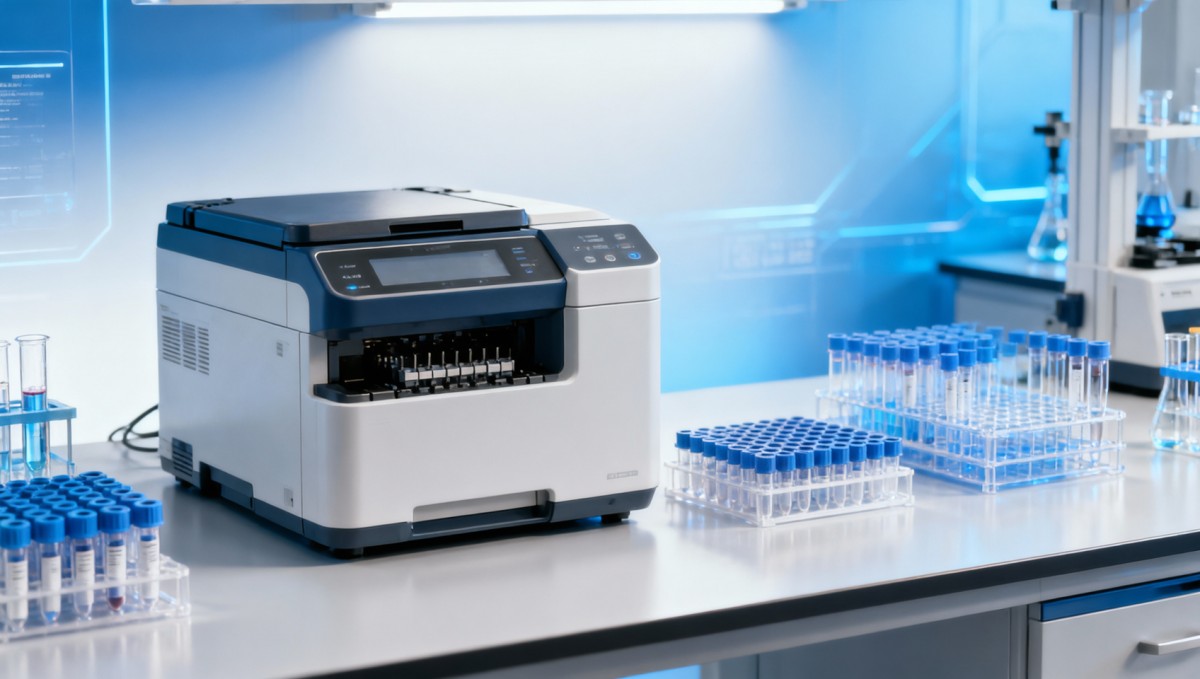
PCR machine selection often fails when teams start with price or brand familiarity instead of workflow fit. In lab testing workflows, the first 3 decision layers are application type, daily sample volume, and regulatory environment. A machine that performs well for low-volume research may become inefficient in a diagnostic, contract testing, or quality-control setting where repeatability, audit trails, and run scheduling matter every day.
For information researchers and technical assessment teams, the core question is not simply which PCR machine is best. It is which thermal cycler configuration supports the required assay format, turnaround expectations, and operator skill level. Typical labs evaluate throughput ranges such as 16-well, 48-well, 96-well, or 384-well systems, then narrow the list based on temperature uniformity, ramp rate, software usability, and service access.
Operators and quality managers usually focus on consistency. They want stable block performance across repeated runs, clear user permissions, and low risk of setup errors. Finance and business reviewers tend to focus on 3-to-5-year ownership cost, service contracts, calibration frequency, and the impact of downtime. Enterprise decision-makers must balance all of these factors, especially when the PCR machine will connect to broader digital lab workflows.
In cross-border B2B procurement, distributor support and documentation quality are also important. TradeNexus Pro helps procurement leaders and technical buyers compare suppliers more effectively by focusing on practical buying criteria, supply chain visibility, and implementation readiness rather than generic catalog claims. That matters when lead times can vary from 2–6 weeks for standard units to longer periods for configured systems or region-specific compliance packages.
A fast screening checklist for PCR machine selection
- Confirm whether the workflow needs standard endpoint PCR, real-time PCR compatibility, gradient capability, or high-throughput thermal cycling.
- Estimate realistic daily and weekly run volume, including peak demand periods, reruns, and urgent samples.
- Review installation conditions such as bench space, ventilation, power stability, network access, and data export requirements.
- Check service response expectations, preventive maintenance schedules, and availability of replacement parts in the target region.
Which PCR machine specifications matter most in real lab testing workflows?
Not every specification has equal purchasing value. In practical lab testing, buyers should prioritize 5 performance areas: temperature accuracy, temperature uniformity, ramp rate, block format, and software control. These determine whether the PCR machine can support reproducible amplification, acceptable run times, and reliable method transfer between sites. For multi-site organizations, consistency between instruments may matter more than headline speed.
Temperature accuracy and uniformity are especially important for assay stability. Labs often compare values expressed in narrow ranges such as ±0.2°C to ±0.5°C, though the useful interpretation depends on assay sensitivity and validation requirements. Faster ramp rates can shorten runs, but speed alone does not guarantee better outcomes. In workflows with validated protocols, excessive focus on ramp rate may create unnecessary cost without improving throughput.
Gradient functionality is another frequent decision point. It is useful during assay optimization, method development, and transfer between reagent sets. However, routine testing labs with locked methods may not need advanced gradient features on every unit. Procurement teams can often reduce capital expense by matching advanced features only to development benches while placing standardized PCR machines in routine production or screening positions.
Software should not be treated as a secondary issue. In high-accountability environments, user access control, run history, export formats, instrument logs, and integration with laboratory information systems can save many hours per month. For operators, clear touchscreen workflows and template reuse reduce training burden. For quality personnel, complete traceability supports internal review, deviation management, and audit preparation.
How to interpret core PCR machine parameters
The table below helps technical evaluators compare PCR machine specifications in a way that connects directly to workflow impact, rather than reading datasheets in isolation.
A good PCR machine specification review should translate technical data into operational consequences. If the lab runs 4–8 batches per day, even small differences in setup speed, profile storage, and cooldown behavior may affect scheduling. If the workflow is low volume but highly controlled, traceability and reliability often deserve more weight than top-end throughput.
Questions technical teams should ask suppliers
- How often is calibration recommended, and what documentation is provided after service?
- Can the PCR machine store multiple user profiles, locked methods, and audit-friendly run logs?
- What is the expected restart or recovery process after a power interruption or interrupted run?
- Are consumables and accessories standard, proprietary, or dependent on regional supply channels?
How do different lab scenarios change the right PCR machine choice?
The best PCR machines for lab testing workflows depend heavily on the operating context. A hospital-associated lab, a contract testing center, a manufacturing quality lab, and a distributor demo facility all use different decision logic. This is why blanket recommendations often lead to overspending or under-specification. Buyers should classify the purchase according to at least 4 scenario variables: throughput, protocol stability, compliance pressure, and expected user turnover.
In routine healthcare technology workflows, priority usually goes to repeatability, documentation, and dependable vendor support. In R&D or assay transfer environments, flexibility and gradient optimization may have greater value. In decentralized operations, compact footprint and training simplicity can be decisive. For distributors and agents, after-sales supportability, install base compatibility, and demo readiness may influence the product mix just as much as the instrument specification.
Many procurement delays happen because one department evaluates the PCR machine for current use while another expects it to support future expansion. A practical solution is to define minimum needs for the next 12 months and probable needs for the next 24–36 months. This keeps the team from buying an inflexible system that becomes a bottleneck, or a premium system whose advanced functions remain unused.
TradeNexus Pro is particularly valuable in these cross-functional buying situations because it helps align technical, commercial, and supply chain perspectives. Instead of viewing PCR machine procurement as a one-time equipment order, TNP supports a more strategic lens: service continuity, supplier responsiveness, documentation quality, and interoperability across regional operations.
PCR machine selection by application scenario
The following comparison table shows how common lab scenarios shift the buying criteria for PCR machines and related thermal cycler solutions.
This scenario-based approach helps different stakeholders make better decisions. Operators can identify usability risks, technical teams can confirm method fit, finance can understand the cost implications of downtime, and business leaders can determine whether the PCR machine supports planned service growth or regional rollout.
Common scenario-specific warning signs
- A high-throughput machine is selected for a low-volume site, resulting in underused capacity and unnecessary service cost.
- A compact entry-level PCR machine is placed in a regulated workflow that requires stronger user control and traceability.
- A system is approved before checking whether local teams can obtain parts, maintenance, and installation support within acceptable time windows.
How should procurement teams compare cost, compliance, and implementation risk?
A PCR machine purchase should be assessed as a total workflow investment, not just a capital item. The real cost includes installation, calibration, training, preventive maintenance, accessories, downtime exposure, and possible qualification work. In many organizations, the budget owner and the end user are not the same person. That creates risk unless the procurement process clearly separates must-have functions from optional features and maps each cost to a business impact.
Compliance review is equally important. Depending on use case and market, buyers may need documentation related to electrical safety, quality system manufacturing, software records, or local import requirements. While exact obligations vary, most technical evaluation teams should request 4 document groups early: product specifications, user and service manuals, installation requirements, and available quality or conformity documentation. Waiting until the purchase order stage can delay deployment by 1–3 weeks or more.
Implementation risk usually comes from avoidable gaps. Common examples include insufficient staff training, poor protocol transfer, inadequate environmental preparation, and unclear maintenance responsibilities. Quality and safety managers should define acceptance criteria before delivery. That typically includes installation checks, temperature performance verification, software review, operator training records, and backup procedures in case a unit goes offline during critical testing periods.
For cross-functional B2B buying, a structured evaluation process reduces disagreement. TNP supports this with decision-oriented content that helps procurement directors, supply chain managers, and enterprise buyers compare supplier readiness, delivery realism, and long-term operational fit. In a volatile sourcing environment, visibility into support depth can be just as valuable as the instrument itself.
A practical 4-step procurement workflow for PCR machines
- Define the intended workflow, expected sample volume, required documentation, and the maximum acceptable downtime window.
- Shortlist 2–4 PCR machines based on block format, software functionality, service reach, and installation constraints.
- Request commercial and technical review together, including lead time, training scope, spare part availability, and service response assumptions.
- Approve purchase only after confirming acceptance testing, calibration plans, operator onboarding, and escalation contacts.
What cost elements are often missed?
Many teams compare PCR machines only by acquisition price, but that leaves out the operational drivers that affect return on investment. A low-price unit with slower workflows, weak service coverage, or frequent manual intervention may cost more over 24 months than a higher-priced system with better reliability and clearer user controls. This is particularly true where labor costs, urgent retesting, or compliance penalties are significant.
- Training time for new operators, especially in labs with rotating staff or multiple shifts.
- Qualification or validation effort when introducing the PCR machine into an existing controlled process.
- Service delays that can interrupt batch release, clinical reporting, or customer delivery commitments.
- Software limitations that increase manual transcription or reduce traceability during audits.
What mistakes do buyers make, and how can they avoid them?
One of the most common mistakes in PCR machine procurement is treating all thermal cyclers as interchangeable. They are not. Small differences in programming logic, block configuration, user access control, and service arrangements can create major workflow consequences. Another frequent error is relying on a single stakeholder opinion. Operators, quality teams, technical evaluators, finance reviewers, and procurement staff each see different risks, and all of them should be included before final selection.
A second mistake is underestimating implementation. Even when delivery occurs on time, rollout can stall if the site is not ready. Basic issues such as power quality, network settings, accessory availability, or approved SOP updates can delay productive use for several days. For regulated or semi-regulated settings, the gap between physical installation and approved operational release may be longer if acceptance documents were not prepared in advance.
A third mistake is buying for theoretical future demand without defining realistic growth thresholds. If a lab currently runs 1–2 batches per day and does not expect rapid expansion within 12 months, it may not benefit from the highest-capacity PCR machine. On the other hand, if business plans indicate regional consolidation, new assay menus, or distributor-led rollout across multiple sites, it may be smarter to standardize early on a scalable platform.
The strongest buying teams use a decision matrix. They assign weighted importance to performance, workflow fit, compliance support, service responsiveness, and total cost. This approach is useful for enterprise decision-makers who need to justify approvals across technical and commercial functions. It also helps distributors and agents explain why a particular PCR machine makes sense for a defined market segment rather than for every account.
FAQ: real buying questions about PCR machines
How do I choose between a 96-well and a 384-well PCR machine?
Start with actual throughput, not aspirational throughput. If your lab runs moderate daily volumes and values flexibility, a 96-well PCR machine is often easier to schedule, validate, and maintain. A 384-well system becomes more attractive when batch density is consistently high, turnaround pressure is strong, and workflows are standardized enough to keep the larger format efficiently loaded.
Is faster ramp rate always better for lab testing workflows?
No. Faster cycling can improve throughput, but only if the assay chemistry, protocol design, and validation status support it. In many controlled workflows, stable and reproducible thermal performance is more valuable than the shortest possible run time. Buyers should compare total workflow impact, including setup, transfer, documentation, and rerun risk.
What is a reasonable lead time for PCR machine procurement?
For standard configurations, many buyers plan around 2–6 weeks, but this can vary by region, stock status, distributor network, and documentation needs. If training, qualification, or special accessories are required, the operational go-live date may be later than the physical delivery date. Procurement teams should separate shipping lead time from implementation lead time.
What should quality and safety teams verify before approval?
They should review installation requirements, available service records, calibration expectations, user access controls, data export options, and any documentation needed for internal quality systems. A practical pre-approval package usually covers at least 5 items: technical specifications, manuals, installation conditions, maintenance expectations, and acceptance criteria for the receiving site.
Why work with TradeNexus Pro when evaluating PCR machines and suppliers?
Choosing PCR machines is no longer a simple equipment comparison. For global B2B buyers, the real challenge is connecting technical suitability with sourcing reliability, workflow continuity, and long-term market intelligence. TradeNexus Pro supports this decision process by helping procurement leaders, technical evaluators, distributors, and enterprise managers analyze the factors that matter beyond the brochure: supply stability, implementation readiness, and strategic fit within healthcare technology operations.
TNP is especially useful for organizations that need to align multiple stakeholders across 3 layers of review: technical qualification, commercial assessment, and operational deployment. Instead of making decisions from fragmented supplier claims, teams can use a structured, industry-focused lens to compare options and prepare more confident internal approvals. This reduces the risk of delayed deployment, underused capacity, or mismatched service expectations.
If you are assessing PCR machines for a new project, replacing legacy equipment, or planning multi-site standardization, TNP can support more informed conversations around parameter confirmation, product selection, delivery timing, documentation readiness, and route-to-market considerations. That includes practical questions such as expected lead times, support model differences, integration needs, and how to balance budget with operational risk.
Contact TradeNexus Pro to discuss your PCR machine sourcing priorities, compare suitable equipment paths, clarify compliance-related documentation needs, review implementation planning, or explore distributor and supplier opportunities. Whether you need help narrowing specifications, preparing an internal business case, checking delivery assumptions, or requesting a quotation pathway, TNP provides a focused B2B environment for smarter lab testing procurement decisions.
Get weekly intelligence in your inbox.
No noise. No sponsored content. Pure intelligence.
 Apr 24, 2026India BIS Mandates IS 13252:2025 for PLCs & HMIs by Oct 2026India BIS Mandates IS 13252:2025 for PLCs & HMIs by Oct 2026
 Apr 24, 2026SASO EV Charger Regulation: Sand-Resistant Grid Compatibility Testing RequiredSASO EV Charger Regulation: Sand-Resistant Grid Compatibility Testing Required
 Apr 24, 2026Japan Updates JIS for Rehab Devices: IEC 62366-1:2024 Usability Compliance RequiredJapan Updates JIS for Rehab Devices: IEC 62366-1:2024 Usability Compliance Required
 Apr 24, 2026China Customs Launches RCEP Origin Smart Pre-Review SystemChina Customs Launches RCEP Origin Smart Pre-Review System
 Apr 24, 2026ANATEL Mandates Localized Voice Assistants for Smart Home Devices in BrazilANATEL Mandates Localized Voice Assistants for Smart Home Devices in Brazil
 Apr 24, 2026TÜV Rheinland Updates IoT EMC Standard with AI Edge抗扰度 RequirementTÜV Rheinland Updates IoT EMC Standard with AI Edge抗扰度 Requirement
 Apr 24, 20262M Alliance Shortens Ningbo–Rotterdam Route to 18 Days Amid 35% Slot Premium2M Alliance Shortens Ningbo–Rotterdam Route to 18 Days Amid 35% Slot Premium
 Apr 24, 2026Vietnam Enforces Bilingual Safety Labels for Imported Electronic Components from Apr 22, 2026Vietnam Enforces Bilingual Safety Labels for Imported Electronic Components from Apr 22, 2026
 Apr 24, 2026USTR Launches Sunset Review on China Solar PV AD/CVD DutiesUSTR Launches Sunset Review on China Solar PV AD/CVD Duties
 Apr 24, 2026EU New Battery Regulation Fully Effective Apr 24, 2026EU New Battery Regulation Fully Effective Apr 24, 2026
 Apr 23, 2026Taobao Factory Spark 3.0 Launches AI Workbench for SME Export FactoriesTaobao Factory Spark 3.0 Launches AI Workbench for SME Export Factories
 Apr 23, 2026TENENG Group Inspects IoT Safety Compliance at Jiangnan ChemicalTENENG Group Inspects IoT Safety Compliance at Jiangnan Chemical
 Apr 23, 2026China Launches First Embodied AI Open Data CommunityChina Launches First Embodied AI Open Data Community
 Apr 23, 2026PV Glass Prices Flat for 9 Weeks Amid Rising Integrated ProcurementPV Glass Prices Flat for 9 Weeks Amid Rising Integrated Procurement
 Apr 23, 20262984 NQI One-Stop Platforms Launched Nationwide2984 NQI One-Stop Platforms Launched Nationwide
 Apr 23, 2026China’s Green Smart Ship Tech Norms Accelerate BMS & Shore Power ExportChina’s Green Smart Ship Tech Norms Accelerate BMS & Shore Power Export
 Apr 23, 2026China Builds World's Largest Agri-Meteorological IoT NetworkChina Builds World's Largest Agri-Meteorological IoT Network
 Apr 23, 2026EU CBAM Carbon Tariff Enters Enforcement on April 1, 2026EU CBAM Carbon Tariff Enters Enforcement on April 1, 2026
 Apr 23, 2026Five Ministries Issue Zero-Carbon Factory Guidance for Export IndustriesFive Ministries Issue Zero-Carbon Factory Guidance for Export Industries
 Apr 23, 2026ISO Releases First Zero-Carbon City Standard — China’s Practices IncludedISO Releases First Zero-Carbon City Standard — China’s Practices Included
 Apr 22, 2026China Leads Global Offshore Wind Installations for 5th YearChina Leads Global Offshore Wind Installations for 5th Year
 Apr 22, 2026China Launches National Mine Safety IoT Monitoring NetworkChina Launches National Mine Safety IoT Monitoring Network
 Apr 22, 2026Yinchuan Boiler Pure Water Solution Certified for Middle East ProjectsYinchuan Boiler Pure Water Solution Certified for Middle East Projects
 Apr 22, 2026China to Enforce Mandatory EV Battery Recycling Standards by 2026China to Enforce Mandatory EV Battery Recycling Standards by 2026
 Apr 22, 2026Vietnam Launches Anti-Circumvention Probe on Electronic ComponentsVietnam Launches Anti-Circumvention Probe on Electronic Components
 Apr 22, 20262026 Shanghai Fastener Show: Robotic Fasteners Drive Overseas Procurement2026 Shanghai Fastener Show: Robotic Fasteners Drive Overseas Procurement
 Apr 22, 2026US BIS Adds EV On-Board Charger Crypto Modules to EAR Appendix 7US BIS Adds EV On-Board Charger Crypto Modules to EAR Appendix 7