PCR machines: which specs matter most in daily use
In daily lab operations, choosing among pcr machines is rarely about headline performance alone. For users, technical evaluators, and business decision-makers, the real value lies in temperature accuracy, ramp consistency, throughput, software usability, and long-term reliability. This guide explains which specifications matter most in routine use, helping teams compare systems with greater confidence, reduce operational risk, and make smarter purchasing decisions.
Which PCR machine specifications actually affect daily use?
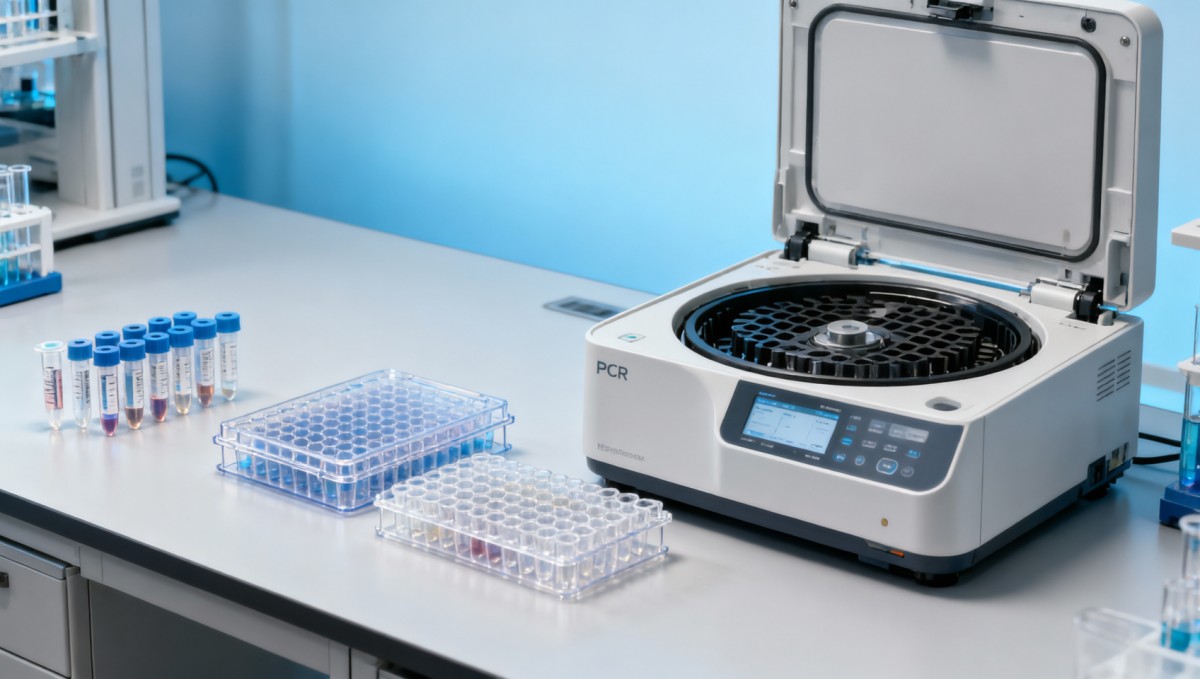
When teams compare pcr machines, the most important question is not which unit advertises the fastest cycle time. In routine use, what matters is whether the system can deliver repeatable amplification over hundreds of runs, across different operators, reagent lots, and sample loads. A machine that looks strong on paper but drifts in temperature or produces inconsistent well-to-well performance can create hidden costs in retesting, delayed release, and troubleshooting time.
For operators, three daily-use indicators usually stand out first: temperature accuracy, temperature uniformity, and ramp rate stability. Temperature accuracy describes how closely the block reaches the target setpoint. Uniformity describes variation across wells, often expressed within a range such as ±0.2°C to ±0.5°C depending on platform class. Ramp rate matters because a high maximum speed is useful only if it remains consistent under real workflows rather than only under ideal demonstration conditions.
Technical evaluators also look beyond the thermal block. Lid temperature control, condensation prevention, reaction volume range, and gradient capability all affect usability. In many labs, reaction volumes fall in the 10–50 µL range, and inconsistent lid pressure or poor sealing compatibility can increase evaporation risk. A gradient function is especially useful during assay development, where a temperature spread of around 8°C–20°C can reduce optimization time across multiple primer conditions.
For commercial and finance reviewers, daily-use performance links directly to ownership cost. A system that saves 10–15 minutes per run may look attractive, but if it requires more calibration checks, more service visits, or longer downtime, the total value can be weaker. That is why pcr machines should be evaluated as workflow assets, not just instruments with isolated speed specifications.
The five specification groups that matter most
A practical review often starts with five groups rather than a long technical sheet. This helps cross-functional teams align quickly, especially when users, procurement staff, quality personnel, and distributors all need to comment within a 2–4 week selection cycle.
- Thermal performance: accuracy, uniformity, overshoot control, and cycle-to-cycle repeatability.
- Workflow fit: plate or tube format, throughput per run, run time, and user interface efficiency.
- Software and data handling: protocol storage, user permissions, export formats, and audit support.
- Serviceability: calibration frequency, spare part access, remote diagnostics, and average repair disruption.
- Commercial risk: warranty scope, lead time, training support, and total cost over 3–5 years.
This framework works well in healthcare technology environments, contract testing labs, education, applied research, and industrial quality workflows. It also helps B2B buyers avoid a common mistake: overvaluing one visible metric while underestimating service continuity and operator ease.
How should buyers compare thermal performance, throughput, and usability?
A structured comparison is useful because pcr machines often appear similar until the evaluation moves into real operating details. Procurement teams need a common language that bridges technical and business concerns. The table below summarizes how common specification areas should be interpreted during selection, especially for labs running daily batches, multi-shift workflows, or mixed assay portfolios.
The comparison above shows why similar pcr machines can perform very differently in operational terms. A unit with moderate ramp speed but strong thermal consistency may deliver better weekly output than a faster model that generates more reruns or setup confusion.
Why throughput is more than plate capacity
Throughput is often oversimplified as the number of wells per run. In reality, throughput combines run time, loading time, protocol switching, user training level, and the frequency of unplanned interruptions. A 96-well platform may be sufficient for one lab and limiting for another, even if both process similar sample counts. The difference often comes from assay diversity and urgency windows rather than block size alone.
For example, a site handling 3–5 protocol types per day may benefit more from intuitive software and quick protocol recall than from a slightly faster ramp specification. In contrast, a centralized lab running repeated standardized methods across two shifts may prioritize robust cycle repeatability and service support over interface sophistication. The correct choice depends on how the instrument behaves during an entire day, not a single demonstration run.
Usability can change cost outcomes
Many purchasing teams underestimate usability because it feels subjective. Yet in real operations, software clarity, screen logic, and error prevention can influence training time by several days and reduce routine mistakes. This matters when labs have rotating staff, regional branches, or distributor-installed systems with varying operator experience.
Ask practical questions during review. How many steps are needed to load a saved program? Can the system flag incorrect parameters before the run starts? Is user access segmented for operator, supervisor, and administrator roles? For quality-sensitive environments, these details can be as valuable as block specifications because they protect process discipline.
What should different buyer roles focus on during PCR machine selection?
One reason pcr machines are difficult to approve is that each stakeholder uses a different lens. Operators care about reliability and ease. Technical evaluators care about thermal behavior and validation readiness. Commercial managers care about supply continuity and contract terms. Finance teams want a justified lifecycle cost. A good selection process should separate these concerns but still lead to one shared decision path.
In many B2B projects, the most effective review window is a 4-step process over 2–6 weeks: define use case, shortlist technical fit, validate service and compliance, then finalize commercial terms. This approach lowers the risk of buying a machine optimized for one department but problematic for another.
Role-based selection priorities
The matrix below helps align internal stakeholders when evaluating pcr machines for routine use, pilot expansion, or distributor portfolio planning.
This role-based view is especially valuable for enterprise buyers who need to standardize decisions across multiple sites. It also helps distributors and agents position the right platform to the right end user instead of selling on a single headline metric.
A practical review checklist before approval
- Confirm assay type, daily run count, and expected sample volume for the next 12–24 months, not only current use.
- Check whether the instrument supports required plate, tube, or strip consumables already used in the lab.
- Review installation, training, and maintenance responsibilities, including who handles calibration and within what service window.
- Ask for documentation relevant to quality systems, software controls, and any applicable safety or electrical compliance requirements.
- Estimate indirect cost from reruns, waiting time, or assay transfer issues, not just purchase price.
Teams that use this checklist tend to make more stable purchasing decisions because they compare pcr machines in the context of actual workflow, not just catalog structure.
How do cost, service, and compliance shape the real buying decision?
Price matters, but in B2B procurement the visible purchase price is only one part of the decision. The real comparison should include maintenance planning, calibration needs, installation readiness, training effort, and potential disruption if the machine fails during a priority testing window. A lower upfront quote can become more expensive over 3–5 years if service coverage is weak or local support is slow.
Lead time is another overlooked issue. Depending on region, configuration, and distribution model, standard delivery for pcr machines may range from 2–8 weeks, while special variants or bundled accessories may require longer. For projects with quarterly budget windows or urgent lab expansion, this timing can affect approval strategy as much as the technical specification sheet.
Compliance should be treated as a screening requirement rather than a marketing extra. Buyers may need to confirm electrical safety conformity, documentation for installation and operation, and software records appropriate to internal quality procedures. In regulated or semi-regulated contexts, the machine should fit validation expectations, user access control needs, and data export practices without creating manual workarounds.
Common cost elements beyond purchase price
To compare pcr machines more accurately, finance and procurement teams should separate direct and indirect cost components. This often reveals why two similar quotations do not represent the same operational value.
- Acquisition cost: instrument, starter accessories, shipping, installation, and any bundled software.
- Operating cost: calibration visits, replacement parts, consumable compatibility limits, and energy use.
- Disruption cost: delayed testing, repeated runs, temporary outsourcing, and operator overtime during downtime.
- Expansion cost: additional training, protocol transfer, or integration effort if more units are added later.
For many organizations, the most economical choice is not the cheapest unit but the one that keeps testing stable, serviceable, and predictable over the full operating period.
Where TradeNexus Pro adds value in evaluation
For buyers navigating multiple vendors, uneven documentation quality, and cross-border supply decisions, TradeNexus Pro provides a stronger decision environment than broad listings alone. TNP focuses on high-value sectors where procurement risk, technology change, and supply chain visibility matter. That means users can assess pcr machines within a wider context that includes sourcing resilience, technical positioning, and vendor credibility.
This matters for enterprise decision-makers, regional distributors, and sourcing teams that must compare not only instruments but also support ecosystems. Instead of relying on fragmented product claims, they can use TNP to frame shortlists, identify practical decision criteria, and prepare better supplier conversations around parameters, lead time, service commitments, and deployment feasibility.
FAQ: what do buyers and operators ask most about PCR machines?
How fast should a PCR machine be for routine lab work?
There is no single best speed. For routine workflows, the right answer depends on assay design, batch size, and how many runs are needed per day. A faster ramp rate can shorten cycle time, but it should not be prioritized ahead of thermal consistency and repeatability. For many labs, saving 5–10 minutes per run is less important than avoiding even one failed batch per week.
Are gradient PCR machines necessary for every lab?
Not always. Gradient capability is highly useful during assay development, optimization, and method transfer because it allows multiple annealing conditions in one run. However, labs performing only fixed, validated protocols may place lower value on gradient range and higher value on simplicity, reliability, and service support. The choice should reflect whether development work is frequent, occasional, or rare.
What is a reasonable service expectation after installation?
A practical service discussion should cover installation timing, operator training, preventive maintenance recommendations, and response targets for faults. Many buyers expect initial setup within days of delivery readiness and a defined support response within 24–72 hours, depending on region and contract level. The key issue is not only whether support exists, but whether it is accessible when testing schedules are tight.
What mistakes are most common when comparing PCR machines?
The most common mistakes are focusing only on maximum speed, ignoring software usability, overlooking consumable compatibility, and treating service as an afterthought. Another frequent problem is selecting for current sample volume without considering the next 12–24 months of growth. Strong procurement outcomes usually come from balanced evaluation across thermal performance, workflow fit, compliance needs, and lifecycle cost.
Why choose us for PCR machine market insight and sourcing guidance?
If you are comparing pcr machines for lab expansion, distributor selection, or enterprise procurement, the hardest part is often not finding options but narrowing them with confidence. TradeNexus Pro helps teams move from broad market scanning to structured decision-making by connecting technical evaluation with commercial reality. This is especially useful when your stakeholders include users, QA personnel, procurement managers, and final approvers with different priorities.
You can work with TNP to clarify key parameters, compare suitable machine classes, review likely lead-time windows, and identify the right discussion points before requesting quotations. We also help buyers frame supplier conversations around thermal specifications, throughput expectations, software needs, service readiness, and documentation concerns relevant to healthcare technology and adjacent B2B sectors.
For exporters, distributors, and solution providers, TNP offers a stronger way to present technical value in a serious B2B environment. For buyers, it reduces wasted time spent on weak shortlists and incomplete comparisons. If you need support with product selection, parameter confirmation, application fit, delivery scheduling, certification-related questions, sample planning, or quotation alignment, this is the right point to start a more focused conversation.
Contact TradeNexus Pro to discuss your use case, target throughput, required documentation, service expectations, and budget range. A clear brief at the start can shorten the selection cycle, reduce approval friction, and help your team choose pcr machines that perform well not only in specification sheets, but in daily use.
Get weekly intelligence in your inbox.
No noise. No sponsored content. Pure intelligence.
 Apr 24, 2026India BIS Mandates IS 13252:2025 for PLCs & HMIs by Oct 2026India BIS Mandates IS 13252:2025 for PLCs & HMIs by Oct 2026
 Apr 24, 2026SASO EV Charger Regulation: Sand-Resistant Grid Compatibility Testing RequiredSASO EV Charger Regulation: Sand-Resistant Grid Compatibility Testing Required
 Apr 24, 2026Japan Updates JIS for Rehab Devices: IEC 62366-1:2024 Usability Compliance RequiredJapan Updates JIS for Rehab Devices: IEC 62366-1:2024 Usability Compliance Required
 Apr 24, 2026China Customs Launches RCEP Origin Smart Pre-Review SystemChina Customs Launches RCEP Origin Smart Pre-Review System
 Apr 24, 2026ANATEL Mandates Localized Voice Assistants for Smart Home Devices in BrazilANATEL Mandates Localized Voice Assistants for Smart Home Devices in Brazil
 Apr 24, 2026TÜV Rheinland Updates IoT EMC Standard with AI Edge抗扰度 RequirementTÜV Rheinland Updates IoT EMC Standard with AI Edge抗扰度 Requirement
 Apr 24, 20262M Alliance Shortens Ningbo–Rotterdam Route to 18 Days Amid 35% Slot Premium2M Alliance Shortens Ningbo–Rotterdam Route to 18 Days Amid 35% Slot Premium
 Apr 24, 2026Vietnam Enforces Bilingual Safety Labels for Imported Electronic Components from Apr 22, 2026Vietnam Enforces Bilingual Safety Labels for Imported Electronic Components from Apr 22, 2026
 Apr 24, 2026USTR Launches Sunset Review on China Solar PV AD/CVD DutiesUSTR Launches Sunset Review on China Solar PV AD/CVD Duties
 Apr 24, 2026EU New Battery Regulation Fully Effective Apr 24, 2026EU New Battery Regulation Fully Effective Apr 24, 2026
 Apr 23, 2026Taobao Factory Spark 3.0 Launches AI Workbench for SME Export FactoriesTaobao Factory Spark 3.0 Launches AI Workbench for SME Export Factories
 Apr 23, 2026TENENG Group Inspects IoT Safety Compliance at Jiangnan ChemicalTENENG Group Inspects IoT Safety Compliance at Jiangnan Chemical
 Apr 23, 2026China Launches First Embodied AI Open Data CommunityChina Launches First Embodied AI Open Data Community
 Apr 23, 2026PV Glass Prices Flat for 9 Weeks Amid Rising Integrated ProcurementPV Glass Prices Flat for 9 Weeks Amid Rising Integrated Procurement
 Apr 23, 20262984 NQI One-Stop Platforms Launched Nationwide2984 NQI One-Stop Platforms Launched Nationwide
 Apr 23, 2026China’s Green Smart Ship Tech Norms Accelerate BMS & Shore Power ExportChina’s Green Smart Ship Tech Norms Accelerate BMS & Shore Power Export
 Apr 23, 2026China Builds World's Largest Agri-Meteorological IoT NetworkChina Builds World's Largest Agri-Meteorological IoT Network
 Apr 23, 2026EU CBAM Carbon Tariff Enters Enforcement on April 1, 2026EU CBAM Carbon Tariff Enters Enforcement on April 1, 2026
 Apr 23, 2026Five Ministries Issue Zero-Carbon Factory Guidance for Export IndustriesFive Ministries Issue Zero-Carbon Factory Guidance for Export Industries
 Apr 23, 2026ISO Releases First Zero-Carbon City Standard — China’s Practices IncludedISO Releases First Zero-Carbon City Standard — China’s Practices Included
 Apr 22, 2026China Leads Global Offshore Wind Installations for 5th YearChina Leads Global Offshore Wind Installations for 5th Year
 Apr 22, 2026China Launches National Mine Safety IoT Monitoring NetworkChina Launches National Mine Safety IoT Monitoring Network
 Apr 22, 2026Yinchuan Boiler Pure Water Solution Certified for Middle East ProjectsYinchuan Boiler Pure Water Solution Certified for Middle East Projects
 Apr 22, 2026China to Enforce Mandatory EV Battery Recycling Standards by 2026China to Enforce Mandatory EV Battery Recycling Standards by 2026
 Apr 22, 2026Vietnam Launches Anti-Circumvention Probe on Electronic ComponentsVietnam Launches Anti-Circumvention Probe on Electronic Components
 Apr 22, 20262026 Shanghai Fastener Show: Robotic Fasteners Drive Overseas Procurement2026 Shanghai Fastener Show: Robotic Fasteners Drive Overseas Procurement
 Apr 22, 2026US BIS Adds EV On-Board Charger Crypto Modules to EAR Appendix 7US BIS Adds EV On-Board Charger Crypto Modules to EAR Appendix 7