What to check before outsourcing precision engineering
Before outsourcing precision engineering, the most important question is not simply “Can this supplier make the part?” It is “Can this supplier make it consistently, verify it properly, communicate clearly, and protect my commercial and quality risk at scale?” For buyers in advanced manufacturing, healthcare technology, smart electronics, and energy-related supply chains, that distinction matters. A vendor may quote an attractive unit price, but poor process control, weak traceability, unclear tolerances, or slow engineering feedback can create far higher costs later through delays, scrap, compliance issues, and field failures.
If you are sourcing parts for rearview mirror camera systems, PCR machines, solar tracker assemblies, or components tied to microgrid and energy transition projects, your evaluation should go beyond machining capability alone. You need to assess quality systems, documentation discipline, inspection methods, material control, logistics readiness, and how well the supplier fits into your broader procurement and supply chain software workflows. The right outsourcing partner reduces operational risk, protects product performance, and supports more predictable scaling.
What should you check first before outsourcing precision engineering?
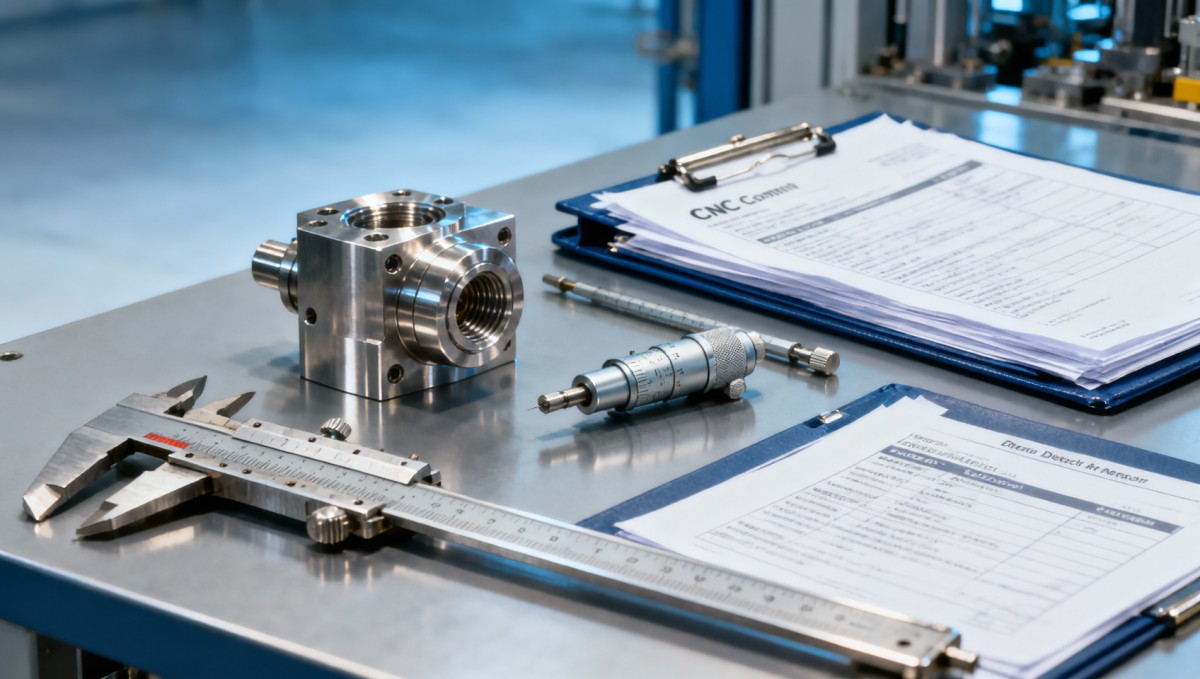
Start with five core checks: process capability, tolerance understanding, material traceability, quality management, and communication responsiveness. These are the factors that most directly affect whether outsourced precision engineering will succeed in real production conditions.
For technical evaluators, the key issue is whether the supplier can repeatedly hold required tolerances across actual batch sizes, not just sample parts. For procurement and business reviewers, the priority is total risk: delivery stability, quality cost, documentation quality, and supplier accountability. For decision-makers and finance approvers, the main concern is whether outsourcing reduces cost without creating downstream disruption.
A useful early screen is to ask for a recent project example similar to your application. If the supplier has delivered tight-tolerance machined, turned, milled, ground, or assembled components in a regulated, performance-sensitive, or environmentally demanding sector, that is more meaningful than a generic capability list.
Can the supplier truly meet your tolerances in production, not just on paper?
This is often the most important technical checkpoint. Precision engineering suppliers frequently advertise very tight tolerances, but buyers need to verify whether those tolerances are realistic for the geometry, material, surface finish, production volume, and inspection method involved.
Ask how the supplier reviews drawings before quotation. A strong supplier will flag tolerance stack-up issues, ambiguous datums, over-specified dimensions, and features that may require special tooling or secondary processes. This is a positive sign, not resistance. It shows they are trying to prevent avoidable cost and nonconformance.
You should also review:
- Critical dimensions and their process controls
- Cpk or process capability data where relevant
- First article inspection procedures
- Gauge calibration records
- Whether inspection is in-process, final-only, or both
- How nonconforming product is segregated and reported
For parts used in camera modules, diagnostic instruments, or energy system assemblies, repeatability matters as much as nominal accuracy. A supplier that can machine one acceptable prototype but cannot maintain consistency during production is a high-risk choice.
How important are material traceability and documentation?
They are essential, especially when the outsourced part affects safety, regulatory compliance, product performance, or warranty exposure. Material traceability is not just a paperwork issue. It helps confirm that the supplied alloy, polymer, or specialty material actually matches the engineering and compliance requirements.
Ask whether the supplier can provide:
- Mill certificates or material certificates
- Heat or batch traceability
- RoHS, REACH, or sector-specific compliance declarations where needed
- Coating or treatment records
- Inspection reports linked to lot numbers
- Revision-controlled drawing acknowledgement
This becomes especially important for precision components used in PCR machines, sensor housings, electrical enclosures, solar tracker mechanisms, and microgrid-related systems, where incorrect material choice can affect thermal behavior, corrosion resistance, conductivity, sterility, or long-term reliability.
Buyers in regulated or export-sensitive sectors should also confirm document retention periods and change control procedures. If a supplier cannot easily retrieve quality and production records, future problem-solving becomes slower and more expensive.
Which quality systems actually matter when evaluating a precision engineering partner?
A certificate alone is not enough, but it is still an important starting point. ISO 9001 is commonly expected. Depending on the application, additional systems or sector-specific practices may also matter, such as medical, automotive, electronics, or clean manufacturing controls.
What matters most is how the quality system works in practice. Buyers should look for evidence of disciplined execution, including:
- Documented incoming, in-process, and final inspection plans
- Root cause analysis and corrective action processes
- Operator training records
- Preventive maintenance on machines and inspection equipment
- Supplier quality management for subcontracted processes
- Control of revisions, work instructions, and released drawings
If plating, heat treatment, anodizing, passivation, welding, or specialized finishing is subcontracted, ask who controls those partners and how quality is verified after those processes. Many outsourcing failures occur not in machining itself, but in unmanaged external processing steps.
How do you assess communication and engineering support before placing orders?
Communication quality is one of the strongest predictors of outsourcing success. Precision engineering projects rarely stay static. There are drawing clarifications, manufacturability discussions, tolerance reviews, material substitutions, packaging changes, and delivery adjustments. A supplier that communicates slowly or vaguely will create avoidable risk even if its machine shop is technically capable.
Good signs include:
- Fast and structured quote feedback
- Questions about application, not just dimensions
- Clear ownership of technical and commercial contacts
- Documented revision handling
- Willingness to discuss DFM improvements
- Transparent reporting when issues arise
For international buyers, communication must also support cross-border execution. That includes shipping documentation accuracy, packaging specifications, Incoterms understanding, and alignment with freight forwarding services. If the supplier is part of a digital procurement workflow, check whether they can support PO visibility, quality status updates, and document exchange through your supply chain software or supplier portal.
What commercial risks should procurement and finance teams review?
Unit price is only one part of the decision. The more complete question is total landed and operational cost. A lower quote can be offset by long lead times, unstable quality, excess safety stock, costly inspection at receipt, or repeated engineering corrections.
Before outsourcing precision engineering, review:
- Quotation validity and assumptions
- Tooling ownership and maintenance responsibility
- Minimum order quantities
- Lead time under normal and peak demand conditions
- Scrap, rework, and replacement policy
- Packaging standards for damage prevention
- Warranty or liability terms
- Currency, payment, and price adjustment clauses
For enterprise decision-makers, resilience is also a commercial issue. If one supplier is the only approved source for a critical precision part, ask what backup capacity exists and how quickly production can recover after machine downtime, labor shortages, or material disruptions.
How do you know whether a supplier fits your application and industry risk profile?
The right supplier for a simple bracket is not automatically the right supplier for a diagnostic device part, camera alignment component, or outdoor energy assembly. Fit matters. Buyers should evaluate the supplier against the real use environment of the part.
For example:
- Rearview mirror camera components may require strong dimensional control, cosmetic quality, and vibration-related consistency.
- PCR machine parts may require cleanliness, repeatable fit, controlled materials, and rigorous documentation.
- Solar tracker assemblies may demand corrosion resistance, outdoor durability, and reliable production at scale.
- Microgrid and energy transition projects may involve long service life expectations, environmental exposure, and integration with broader system reliability requirements.
Ask for examples where the supplier has handled similar functional requirements. Industry familiarity helps reduce onboarding time and lowers the chance of avoidable mistakes.
What is a practical supplier evaluation process before full outsourcing?
A structured review process is far more effective than making a decision from capability slides and email promises. A practical approach usually includes the following steps:
- Initial capability screen: Review processes, machine ranges, materials, tolerances, quality certifications, and industries served.
- Technical drawing review: Confirm manufacturability, critical characteristics, inspection feasibility, and documentation expectations.
- Commercial review: Compare pricing logic, lead times, tooling terms, logistics readiness, and payment conditions.
- Quality assessment: Request sample inspection reports, CAPA examples, calibration records, and traceability documents.
- Pilot order or sample run: Validate dimensional consistency, finish, packaging, communication, and delivery accuracy.
- Performance monitoring: Track quality, OTD, responsiveness, and issue resolution over early production releases.
This phased method gives technical teams, quality personnel, procurement managers, and financial approvers enough evidence to make a better decision with lower exposure.
Common warning signs buyers should not ignore
Some supplier issues become visible early if you know what to look for. Treat the following as risk indicators:
- Quotes returned without technical questions on complex drawings
- Vague claims about “high precision” without measurable proof
- Inability to provide sample inspection documentation
- Weak revision control or confusion over drawing versions
- No clear answer on who manages subcontracted special processes
- Reluctance to discuss nonconformance handling
- Slow or inconsistent communication during pre-order discussions
- Promises of very short lead times without capacity explanation
These signs do not always mean the supplier is unsuitable, but they do mean you should investigate further before committing high-value or business-critical work.
Conclusion: outsource precision engineering only when control, clarity, and consistency are proven
Before outsourcing precision engineering, buyers should verify far more than machine capacity and price. The strongest supplier choice is one that can demonstrate process capability, consistent tolerance control, full material traceability, reliable quality systems, and clear communication across technical and commercial workflows. That matters whether you are sourcing for rearview mirror camera assemblies, PCR machine components, solar tracker parts, or projects linked to microgrid deployment and the wider energy transition.
In practical terms, a good outsourcing decision reduces risk across production, freight forwarding services, supply chain software integration, incoming quality control, and final field performance. If a supplier can prove repeatability, document discipline, and problem-solving ability before orders scale, you are not just buying parts more efficiently. You are protecting operational continuity, customer confidence, and long-term business value.
Get weekly intelligence in your inbox.
No noise. No sponsored content. Pure intelligence.
 Apr 24, 2026India BIS Mandates IS 13252:2025 for PLCs & HMIs by Oct 2026India BIS Mandates IS 13252:2025 for PLCs & HMIs by Oct 2026
 Apr 24, 2026SASO EV Charger Regulation: Sand-Resistant Grid Compatibility Testing RequiredSASO EV Charger Regulation: Sand-Resistant Grid Compatibility Testing Required
 Apr 24, 2026Japan Updates JIS for Rehab Devices: IEC 62366-1:2024 Usability Compliance RequiredJapan Updates JIS for Rehab Devices: IEC 62366-1:2024 Usability Compliance Required
 Apr 24, 2026China Customs Launches RCEP Origin Smart Pre-Review SystemChina Customs Launches RCEP Origin Smart Pre-Review System
 Apr 24, 2026ANATEL Mandates Localized Voice Assistants for Smart Home Devices in BrazilANATEL Mandates Localized Voice Assistants for Smart Home Devices in Brazil
 Apr 24, 2026TÜV Rheinland Updates IoT EMC Standard with AI Edge抗扰度 RequirementTÜV Rheinland Updates IoT EMC Standard with AI Edge抗扰度 Requirement
 Apr 24, 20262M Alliance Shortens Ningbo–Rotterdam Route to 18 Days Amid 35% Slot Premium2M Alliance Shortens Ningbo–Rotterdam Route to 18 Days Amid 35% Slot Premium
 Apr 24, 2026Vietnam Enforces Bilingual Safety Labels for Imported Electronic Components from Apr 22, 2026Vietnam Enforces Bilingual Safety Labels for Imported Electronic Components from Apr 22, 2026
 Apr 24, 2026USTR Launches Sunset Review on China Solar PV AD/CVD DutiesUSTR Launches Sunset Review on China Solar PV AD/CVD Duties
 Apr 24, 2026EU New Battery Regulation Fully Effective Apr 24, 2026EU New Battery Regulation Fully Effective Apr 24, 2026
 Apr 23, 2026Taobao Factory Spark 3.0 Launches AI Workbench for SME Export FactoriesTaobao Factory Spark 3.0 Launches AI Workbench for SME Export Factories
 Apr 23, 2026TENENG Group Inspects IoT Safety Compliance at Jiangnan ChemicalTENENG Group Inspects IoT Safety Compliance at Jiangnan Chemical
 Apr 23, 2026China Launches First Embodied AI Open Data CommunityChina Launches First Embodied AI Open Data Community
 Apr 23, 2026PV Glass Prices Flat for 9 Weeks Amid Rising Integrated ProcurementPV Glass Prices Flat for 9 Weeks Amid Rising Integrated Procurement
 Apr 23, 20262984 NQI One-Stop Platforms Launched Nationwide2984 NQI One-Stop Platforms Launched Nationwide
 Apr 23, 2026China’s Green Smart Ship Tech Norms Accelerate BMS & Shore Power ExportChina’s Green Smart Ship Tech Norms Accelerate BMS & Shore Power Export
 Apr 23, 2026China Builds World's Largest Agri-Meteorological IoT NetworkChina Builds World's Largest Agri-Meteorological IoT Network
 Apr 23, 2026EU CBAM Carbon Tariff Enters Enforcement on April 1, 2026EU CBAM Carbon Tariff Enters Enforcement on April 1, 2026
 Apr 23, 2026Five Ministries Issue Zero-Carbon Factory Guidance for Export IndustriesFive Ministries Issue Zero-Carbon Factory Guidance for Export Industries
 Apr 23, 2026ISO Releases First Zero-Carbon City Standard — China’s Practices IncludedISO Releases First Zero-Carbon City Standard — China’s Practices Included
 Apr 22, 2026China Leads Global Offshore Wind Installations for 5th YearChina Leads Global Offshore Wind Installations for 5th Year
 Apr 22, 2026China Launches National Mine Safety IoT Monitoring NetworkChina Launches National Mine Safety IoT Monitoring Network
 Apr 22, 2026Yinchuan Boiler Pure Water Solution Certified for Middle East ProjectsYinchuan Boiler Pure Water Solution Certified for Middle East Projects
 Apr 22, 2026China to Enforce Mandatory EV Battery Recycling Standards by 2026China to Enforce Mandatory EV Battery Recycling Standards by 2026
 Apr 22, 2026Vietnam Launches Anti-Circumvention Probe on Electronic ComponentsVietnam Launches Anti-Circumvention Probe on Electronic Components
 Apr 22, 20262026 Shanghai Fastener Show: Robotic Fasteners Drive Overseas Procurement2026 Shanghai Fastener Show: Robotic Fasteners Drive Overseas Procurement
 Apr 22, 2026US BIS Adds EV On-Board Charger Crypto Modules to EAR Appendix 7US BIS Adds EV On-Board Charger Crypto Modules to EAR Appendix 7