Plastic injection molding cost traps that delay product launch
Plastic injection molding costs rarely go off track because of one big mistake. In most delayed launches, the damage comes from a series of small decisions made too late: unclear part geometry, unrealistic tooling assumptions, material substitutions, tolerance mismatches, rushed quality fixes, and supplier communication gaps. For teams launching products such as POS terminals, smart lighting bulbs, car air purifiers, smart home hubs, and IoT sensors, these issues can quietly turn an acceptable quote into a late and expensive program.
The practical takeaway is simple: if you want to control injection molding cost and protect launch timing, focus less on the initial piece price and more on the hidden drivers of rework, qualification delays, tooling modifications, scrap, and supply chain friction. Decision-makers, engineers, quality teams, and finance approvers all need visibility into these traps before tooling is released.
Why plastic injection molding cost traps show up late in the launch cycle
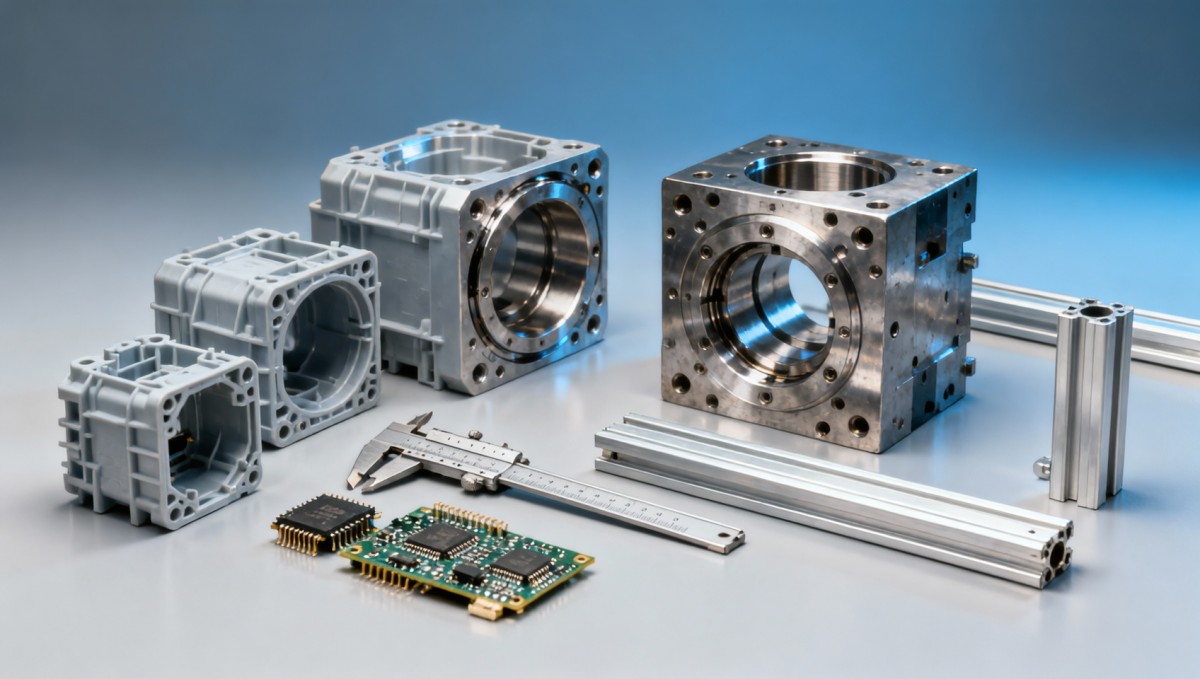
Many teams treat injection molding as a straightforward sourcing step: finalize the design, request quotations, approve tooling, and start production. In reality, the cost structure is highly sensitive to design maturity, tolerance logic, moldability, assembly fit, cosmetic expectations, and production volume assumptions. That is why the most expensive problems often appear after the quote has already been accepted.
In cross-functional product programs, the root cause is usually not a lack of effort. It is a mismatch between what each stakeholder is optimizing for:
- Product and engineering teams may prioritize functionality and form factor.
- Procurement may focus on unit price and tool amortization.
- Finance may seek capex control and faster approval.
- Quality and safety teams may emphasize validation, traceability, and compliance.
- Project managers need all of it to happen on schedule.
When these priorities are not aligned early, hidden cost traps emerge in tooling changes, extended sampling rounds, cosmetic rejection, packaging damage, or assembly issues with connected components such as aluminum extrusions, seals, PCBs, clips, filters, and housings.
The biggest cost traps that delay product launch
The following issues are the ones that most often create budget overruns and timeline slippage in plastic injection molding programs.
1. Designing for function, not for moldability
A part may look complete in CAD and still be expensive or risky to mold. Deep ribs, uneven wall thickness, sharp transitions, undercuts, sink-prone surfaces, weak snap fits, and difficult gate locations all increase the chance of tooling revision or unstable production.
This is common in compact devices like smart home hubs, IoT sensor enclosures, and POS terminal housings where industrial design pressure is high. A visually clean product can hide difficult internal geometry that causes warpage, fill imbalance, ejector marks, or poor cosmetic consistency.
What it costs: mold redesign, extra sampling, delayed T1 to T2 approval, and higher scrap in ramp-up.
2. Underestimating tooling change costs
Tooling changes are one of the fastest ways to lose both money and time. Teams often assume that “small adjustments” can be made quickly. But even minor changes to shut-offs, gates, cooling, parting lines, texture areas, or steel-safe dimensions can affect trial timing, sample approval, and dimensional consistency.
If a product depends on precise fit with other components, such as aluminum extrusions, display windows, mounting brackets, or battery frames, one incorrect assumption in tooling can trigger a chain of redesign work across multiple suppliers.
What it costs: engineering change orders, tool downtime, shipping of revised samples, and launch schedule compression.
3. Using the wrong volume assumptions
A quote may look competitive because it is built on ideal volume, optimal cycle time, or cavity assumptions that do not match real demand. If your actual ramp is lower, more variable, or slower than expected, the economics can change fast.
This matters especially in sectors where demand is tied to pilot deployment, channel testing, or staged market rollout. Energy storage parts, healthcare technology accessories, and inventory management systems hardware often scale in waves rather than in a smooth line.
What it costs: poor tool utilization, unexpected piece-price increases, excess inventory, or duplicated tooling decisions.
4. Material substitution without full validation
Teams under cost pressure sometimes approve alternative resins too quickly. A substitute material may appear equivalent on paper but behave differently in shrinkage, impact resistance, chemical exposure, UV stability, flame rating, or long-term appearance.
For products such as car air purifiers, smart lighting bulbs, and healthcare-adjacent equipment housings, this creates hidden quality and warranty exposure. In regulated or high-touch products, including certain dental chair components, material deviation can trigger revalidation or customer rejection.
What it costs: failed testing, cosmetic issues, brittle parts, compliance risk, and delayed production approval.
5. Tolerance stack-up ignored until assembly
Many molding programs fail not because the molded part is “out of spec,” but because the total assembly stack does not work. This is especially common when plastic parts must align with metal inserts, aluminum extrusions, seals, filters, fasteners, or electronic subassemblies.
What looked acceptable in isolated dimensional inspection can become a serious issue during final assembly: gaps, rattling, stress whitening, cracked clips, poor sealing, or misaligned user interfaces.
What it costs: line-side rework, assembly slowdown, fixture changes, and emergency dimensional correction in the mold.
6. Cosmetic standards are defined too late
Gloss, texture, gate vestige visibility, weld lines, color variation, and flow marks become expensive when they are debated after tooling is built. Consumer-facing products like POS devices, smart hubs, and lighting housings are particularly vulnerable because cosmetic acceptance often influences commercial approval as much as technical fit.
If cosmetic criteria are subjective or undocumented, supplier and buyer can each believe the other is causing the problem.
What it costs: rejection of acceptable parts, repeated sample loops, sorting labor, and avoidable tool surface work.
7. Quality planning starts after the first samples
When PFMEA, control plans, gauge strategy, and inspection criteria are left until late sampling, teams lose precious time diagnosing issues that should have been anticipated. This affects launch readiness more than many buyers expect.
For enterprise products with traceability expectations or safety-related performance, quality planning must begin before the first molded parts arrive. Otherwise, the factory may produce parts, but the customer still cannot approve mass production.
What it costs: delayed PPAP-style approvals, unclear defect thresholds, and prolonged pilot runs.
How smart buyers and project teams evaluate true molding cost
The most useful way to evaluate injection molding cost is to separate visible cost from launch-risk cost.
Visible cost includes:
- Tooling price
- Piece price
- Material cost
- Packaging
- Freight
Launch-risk cost includes:
- Tool modification rounds
- Sampling delays
- Assembly disruption
- Quality containment
- Scrap during ramp-up
- Emergency air shipments
- Missed market-entry windows
For procurement leaders and finance approvers, this distinction matters. The cheapest initial quotation can easily become the most expensive program if it introduces engineering uncertainty or qualification delays. A better supplier conversation is not “Who has the lowest mold price?” but “Who can show the clearest path to stable launch, validated quality, and predictable scale-up?”
Questions decision-makers should ask before releasing tooling
To reduce hidden cost traps, cross-functional teams should pressure-test a molding program before final approval. The following questions are more valuable than another round of price negotiation:
- Has a formal DFM review identified wall thickness, draft, gates, undercuts, and sink-risk zones?
- Which dimensions are truly critical to function, sealing, or assembly?
- Are tolerances realistic for the selected material and mold concept?
- Will the part interface with aluminum extrusions, electronics, inserts, or other variable components?
- What cosmetic standards are mandatory, and are they documented with visual references?
- Has the supplier confirmed expected cycle time, cavity strategy, and tool steel logic?
- What are the likely steel-safe areas versus hard-to-correct features?
- Has material selection been validated for heat, UV, chemicals, and mechanical stress?
- What quality documents must be ready before mass production approval?
- What is the fallback plan if T1 samples fail fit or appearance requirements?
These questions help project managers and engineering leads identify whether they are approving a production-ready path or merely funding the next round of uncertainty.
How to prevent delays in products with complex assemblies or compliance exposure
Some products are especially vulnerable to injection molding delays because they combine plastic housings with mechanical, electrical, aesthetic, or regulated requirements. Examples include healthcare technology devices, sensor-rich electronics, air treatment products, and user-facing commercial hardware.
In these programs, prevention usually depends on five actions:
- Lock the critical interfaces early. Define what must fit, seal, align, or snap together before cosmetic refinements consume the schedule.
- Run DFM and tolerance reviews with assembly context. Do not review the molded part alone; review it as part of the full product stack.
- Document acceptance criteria visually and dimensionally. This reduces supplier-buyer ambiguity during sampling.
- Validate material choices against real use conditions. Especially important for heat, disinfectants, outdoor exposure, vibration, or repeated user contact.
- Build timeline buffers for learning cycles. T1 samples are rarely the finish line for complex parts.
For quality personnel and safety managers, this approach also improves audit readiness and complaint prevention. For finance teams, it reduces the chance of unplanned tooling spend and late-stage expediting costs.
What a healthy injection molding launch process looks like
A healthy process is not one with zero issues. It is one where foreseeable issues are surfaced early enough to control them. In practical terms, a strong molding launch usually includes:
- Clear critical-to-quality and critical-to-assembly definitions
- Supplier-led and buyer-reviewed DFM before tool release
- Alignment on resin grade, finish, color, and compliance needs
- Tooling checkpoints tied to risk, not just calendar dates
- Sample review against functional, cosmetic, and assembly standards
- A documented path from pilot to stable mass production
This is what protects launch timing. Not optimism, and not a low quote alone.
Conclusion
Plastic injection molding cost traps delay product launch because they are usually hidden inside design assumptions, tooling decisions, tolerance logic, material changes, and weak quality planning. For companies building products like smart electronics, healthcare-related hardware, energy system components, and commercial devices, the biggest risk is not always the mold price itself. It is the late discovery of issues that force revision, revalidation, or assembly correction.
The best response is early cross-functional discipline. If procurement, engineering, quality, finance, and project leadership evaluate true launch risk before tooling is cut, they can avoid the most common cost traps and make better sourcing decisions. In injection molding, speed to launch is rarely protected by buying faster. It is protected by discovering risk earlier.
Get weekly intelligence in your inbox.
No noise. No sponsored content. Pure intelligence.
 Apr 24, 2026India BIS Mandates IS 13252:2025 for PLCs & HMIs by Oct 2026India BIS Mandates IS 13252:2025 for PLCs & HMIs by Oct 2026
 Apr 24, 2026SASO EV Charger Regulation: Sand-Resistant Grid Compatibility Testing RequiredSASO EV Charger Regulation: Sand-Resistant Grid Compatibility Testing Required
 Apr 24, 2026Japan Updates JIS for Rehab Devices: IEC 62366-1:2024 Usability Compliance RequiredJapan Updates JIS for Rehab Devices: IEC 62366-1:2024 Usability Compliance Required
 Apr 24, 2026China Customs Launches RCEP Origin Smart Pre-Review SystemChina Customs Launches RCEP Origin Smart Pre-Review System
 Apr 24, 2026ANATEL Mandates Localized Voice Assistants for Smart Home Devices in BrazilANATEL Mandates Localized Voice Assistants for Smart Home Devices in Brazil
 Apr 24, 2026TÜV Rheinland Updates IoT EMC Standard with AI Edge抗扰度 RequirementTÜV Rheinland Updates IoT EMC Standard with AI Edge抗扰度 Requirement
 Apr 24, 20262M Alliance Shortens Ningbo–Rotterdam Route to 18 Days Amid 35% Slot Premium2M Alliance Shortens Ningbo–Rotterdam Route to 18 Days Amid 35% Slot Premium
 Apr 24, 2026Vietnam Enforces Bilingual Safety Labels for Imported Electronic Components from Apr 22, 2026Vietnam Enforces Bilingual Safety Labels for Imported Electronic Components from Apr 22, 2026
 Apr 24, 2026USTR Launches Sunset Review on China Solar PV AD/CVD DutiesUSTR Launches Sunset Review on China Solar PV AD/CVD Duties
 Apr 24, 2026EU New Battery Regulation Fully Effective Apr 24, 2026EU New Battery Regulation Fully Effective Apr 24, 2026
 Apr 23, 2026Taobao Factory Spark 3.0 Launches AI Workbench for SME Export FactoriesTaobao Factory Spark 3.0 Launches AI Workbench for SME Export Factories
 Apr 23, 2026TENENG Group Inspects IoT Safety Compliance at Jiangnan ChemicalTENENG Group Inspects IoT Safety Compliance at Jiangnan Chemical
 Apr 23, 2026China Launches First Embodied AI Open Data CommunityChina Launches First Embodied AI Open Data Community
 Apr 23, 2026PV Glass Prices Flat for 9 Weeks Amid Rising Integrated ProcurementPV Glass Prices Flat for 9 Weeks Amid Rising Integrated Procurement
 Apr 23, 20262984 NQI One-Stop Platforms Launched Nationwide2984 NQI One-Stop Platforms Launched Nationwide
 Apr 23, 2026China’s Green Smart Ship Tech Norms Accelerate BMS & Shore Power ExportChina’s Green Smart Ship Tech Norms Accelerate BMS & Shore Power Export
 Apr 23, 2026China Builds World's Largest Agri-Meteorological IoT NetworkChina Builds World's Largest Agri-Meteorological IoT Network
 Apr 23, 2026EU CBAM Carbon Tariff Enters Enforcement on April 1, 2026EU CBAM Carbon Tariff Enters Enforcement on April 1, 2026
 Apr 23, 2026Five Ministries Issue Zero-Carbon Factory Guidance for Export IndustriesFive Ministries Issue Zero-Carbon Factory Guidance for Export Industries
 Apr 23, 2026ISO Releases First Zero-Carbon City Standard — China’s Practices IncludedISO Releases First Zero-Carbon City Standard — China’s Practices Included
 Apr 22, 2026China Leads Global Offshore Wind Installations for 5th YearChina Leads Global Offshore Wind Installations for 5th Year
 Apr 22, 2026China Launches National Mine Safety IoT Monitoring NetworkChina Launches National Mine Safety IoT Monitoring Network
 Apr 22, 2026Yinchuan Boiler Pure Water Solution Certified for Middle East ProjectsYinchuan Boiler Pure Water Solution Certified for Middle East Projects
 Apr 22, 2026China to Enforce Mandatory EV Battery Recycling Standards by 2026China to Enforce Mandatory EV Battery Recycling Standards by 2026
 Apr 22, 2026Vietnam Launches Anti-Circumvention Probe on Electronic ComponentsVietnam Launches Anti-Circumvention Probe on Electronic Components
 Apr 22, 20262026 Shanghai Fastener Show: Robotic Fasteners Drive Overseas Procurement2026 Shanghai Fastener Show: Robotic Fasteners Drive Overseas Procurement
 Apr 22, 2026US BIS Adds EV On-Board Charger Crypto Modules to EAR Appendix 7US BIS Adds EV On-Board Charger Crypto Modules to EAR Appendix 7