Wanhua Chemical to Reach 1-MT LFP Capacity in 2026, Reshaping Global Battery Materials Supply
On 27 May 2026, Wanhua Chemical announced a major expansion of its lithium iron phosphate (LiFePO₄ or LFP) production capacity—adding 820,000 tonnes annually—bringing its total operational LFP output to approximately one million tonnes within the year. This development directly impacts global battery material supply chains, particularly for energy storage system (ESS) integrators, EV charging infrastructure developers, and battery pack manufacturers relying on high-consistency cathode materials sourced from China.
LFP Capacity Expansion: Confirmed Operational Milestone
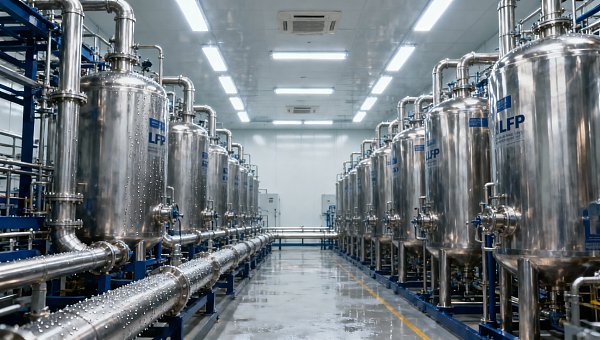
In 2026, Wanhua Chemical commissioned new LFP production lines with an additional annual capacity of 820,000 tonnes. Combined with previously operational facilities, its consolidated LFP manufacturing capacity is projected to reach one million tonnes by end-2026. This scale-up enhances China’s export capability for high-uniformity LFP cathode materials. The expansion does not involve new regulatory approvals, certifications, or trade rule changes—but it materially alters supply-side dynamics for downstream international buyers.
Impact Across Supply Chain Roles
International Trading Enterprises
Trading firms engaged in cross-border LFP distribution face tighter sourcing windows and increased reliance on top-tier Chinese producers. With Wanhua’s expanded volume, spot-market liquidity may improve—but long-term contract terms, Incoterms alignment, and customs classification (e.g., HS Code 2844.90 for lithium compounds) require proactive review amid rising buyer scrutiny.
Raw Material Procurement Entities
Buyers of upstream precursors—including Li₂CO₃, FePO₄, and conductive carbon—must reassess supplier concentration risk. Wanhua’s vertical integration and scale may compress margins for smaller LFP producers, indirectly affecting precursor demand patterns and pricing benchmarks across Asia-Pacific and EU markets.
Battery Cell & Pack Manufacturers
OEMs and battery pack assemblers gain improved negotiation leverage on pricing, delivery reliability, and regional warehousing options—especially where Wanhua has established local technical support or joint quality assurance protocols. However, qualification timelines for new LFP batches (e.g., cycle life validation per IEC 62660-1, thermal stability testing under UN 38.3) may lengthen due to heightened audit frequency from Tier-1 customers.
Supply Chain Service Providers
Logistics, certification support, and compliance advisory firms must adapt to accelerated vendor qualification cycles. Demand is rising for services covering ISO/IEC 17025-compliant test reporting, REACH/ROHS documentation packages, and APQP-aligned process audits—particularly for clients targeting UL 1973 or EN 50604-1 certification for ESS applications.
Strategic Priorities for Supplier Engagement
Accelerated Qualification & Audit Readiness
Overseas customers are intensifying pre-contract audits of Chinese LFP suppliers—including on-site process capability assessments, traceability system reviews (e.g., batch-level raw material mapping), and third-party lab verification of tap density, BET surface area, and D50 particle size distribution per ISO 13320.
Long-Term Agreement Structuring
With industry concentration increasing, buyers are shifting from transactional procurement to multi-year framework agreements—with clauses covering price adjustment mechanisms tied to lithium carbonate index fluctuations, minimum order volumes, and escalation protocols for force majeure events affecting Chinese port operations or inland transport.
Technical Documentation & Specification Alignment
Suppliers must ensure full compatibility between their product datasheets and customer-specific technical bid requirements—especially regarding moisture content (<200 ppm), residual lithium compounds (<0.15 wt%), and impurity limits (e.g., Na⁺, Ca²⁺, Cl⁻). Alignment with OEM-defined PPAP Level 3 submission packages is becoming standard practice.
Industry Observation: Consolidation as a Catalyst for Compliance Maturation
Analysis shows that this capacity milestone reflects more than industrial scaling—it signals a structural shift toward higher entry requirements for global LFP supply. Observably, overseas ESS integrators and EV infrastructure developers are no longer evaluating Chinese suppliers solely on cost and throughput, but increasingly on audit maturity, documentation rigor, and responsiveness to evolving regional safety standards (e.g., UL 9540A for cell-level thermal runaway propagation testing). It is more appropriate to understand this as a de facto tightening of commercial qualification thresholds—even absent new formal regulations.
Broader Implications for Battery Material Sourcing
This expansion underscores how private-sector capacity decisions—rather than regulatory mandates—can drive convergence in global technical expectations and contractual norms. While no new trade barrier or certification regime has been introduced, the market is self-selecting for suppliers capable of delivering consistent quality at scale, backed by auditable systems and responsive compliance infrastructure. That dynamic elevates baseline readiness—not just for Wanhua’s partners, but across the broader Chinese LFP ecosystem.
Source Attribution & Monitoring Guidance
This article synthesizes information provided in the original briefing: title, event date (27 May 2026), and factual summary. Specific official source links were not provided in the input and should be verified continuously. Stakeholders are advised to monitor upcoming updates from key bodies including the International Electrotechnical Commission (IEC), European Committee for Electrotechnical Standardization (CENELEC), and U.S. Department of Energy (DOE) on LFP application guidelines, as well as national customs tariff notices and battery-specific REACH restriction proposals currently under consultation.
Get weekly intelligence in your inbox.
No noise. No sponsored content. Pure intelligence.
 Sep 15, 2026Wholesale WiFi Smart Switches: What Buyers Should Verify Before OrderingWholesale WiFi Smart Switches: What Buyers Should Verify Before Ordering
 Sep 14, 2026How to Select IoT Sensors for Reliable Monitoring in Harsh Industrial EnvironmentsHow to Select IoT Sensors for Reliable Monitoring in Harsh Industrial Environments
 Sep 13, 2026How Procurement Teams Can Improve Supplier Reliability With Supply Chain VisibilityHow Procurement Teams Can Improve Supplier Reliability With Supply Chain Visibility
 Sep 12, 2026Smart Manufacturing Trends 2026: What Leaders Should Prioritize for ROISmart Manufacturing Trends 2026: What Leaders Should Prioritize for ROI
 Sep 11, 2026B2B Market Analysis: How Buyers Evaluate Suppliers, Pricing, and Delivery RiskB2B Market Analysis: How Buyers Evaluate Suppliers, Pricing, and Delivery Risk
 Sep 10, 2026Residential Solar Kits in Canada: How to Size a System for Your Home and ClimateResidential Solar Kits in Canada: How to Size a System for Your Home and Climate
 Sep 09, 2026How to Specify a Syringe Assembly Line for High-Volume Sterile ProductionHow to Specify a Syringe Assembly Line for High-Volume Sterile Production
 Sep 08, 2026How to Evaluate Warehouse Robotics System Suppliers for Reliable Multi-Site DeploymentHow to Evaluate Warehouse Robotics System Suppliers for Reliable Multi-Site Deployment
 Sep 07, 2026Renewable Geothermal Energy Explained: How It Works for Heating and PowerRenewable Geothermal Energy Explained: How It Works for Heating and Power
 Sep 07, 2026How to Choose an Industrial Packaging Robot Manufacturer for Your Production LineHow to Choose an Industrial Packaging Robot Manufacturer for Your Production Line
 Sep 05, 2026How to Evaluate a Turnkey Hydro Turbine Generator Supplier for Remote Power ProjectsHow to Evaluate a Turnkey Hydro Turbine Generator Supplier for Remote Power Projects
 Sep 04, 2026Automated Ultrasonic Welding for Thermoplastic Assemblies: Process Controls That MatterAutomated Ultrasonic Welding for Thermoplastic Assemblies: Process Controls That Matter
 Sep 03, 2026Energy Forecasting for Grid Planning: Sizing Solar and Storage CapacityEnergy Forecasting for Grid Planning: Sizing Solar and Storage Capacity
 Sep 02, 2026Which Metrics Should an Energy Analytics Dashboard Track for Factory Energy Management?Which Metrics Should an Energy Analytics Dashboard Track for Factory Energy Management?
 Sep 01, 2026How Warehouse Voice Picking Improves Accuracy and Throughput in Order FulfillmentHow Warehouse Voice Picking Improves Accuracy and Throughput in Order Fulfillment
 Aug 31, 2026How to Automate Dropshipping Order Processing Without Overselling StockHow to Automate Dropshipping Order Processing Without Overselling Stock
 Aug 30, 2026How to Evaluate a Smart Lighting Supplier for Multi-Site Commercial ProjectsHow to Evaluate a Smart Lighting Supplier for Multi-Site Commercial Projects
 Aug 29, 2026Recent Advances in Smart Manufacturing and Materials Reshaping Factory InvestmentRecent Advances in Smart Manufacturing and Materials Reshaping Factory Investment
 Aug 29, 2026Selecting Lightweight Aluminum Extrusions for Strength-Critical Industrial DesignsSelecting Lightweight Aluminum Extrusions for Strength-Critical Industrial Designs
 Aug 29, 2026Vertical Powder Anodizing Explained: Process Controls for Uniform Coating QualityVertical Powder Anodizing Explained: Process Controls for Uniform Coating Quality
 Aug 29, 2026PV Module Product Due Diligence: What Buyers Should Verify Before ContractingPV Module Product Due Diligence: What Buyers Should Verify Before Contracting
 Aug 29, 2026Solar Design for Challenging Terrain: Managing Slope, Soil, and Shading RisksSolar Design for Challenging Terrain: Managing Slope, Soil, and Shading Risks
 Aug 29, 2026IS 16444 Smart Meter Requirements: Key Functions, Tests, and ComplianceIS 16444 Smart Meter Requirements: Key Functions, Tests, and Compliance
 Aug 29, 2026Rehabilitation Equipment Market Outlook: Demand Drivers and Growth SegmentsRehabilitation Equipment Market Outlook: Demand Drivers and Growth Segments
 Aug 29, 2026When Does Container Handling Automation Deliver ROI in Port Yard Operations?When Does Container Handling Automation Deliver ROI in Port Yard Operations?
 Aug 29, 2026Customs API Integration: A Practical Checklist for Automated Trade ComplianceCustoms API Integration: A Practical Checklist for Automated Trade Compliance
 Aug 29, 2026Returnable Packaging for Automotive: How to Cut Damage and Reverse Logistics CostsReturnable Packaging for Automotive: How to Cut Damage and Reverse Logistics Costs