How to Evaluate a Low Volume Manufacturing Factory for Prototypes and Pilot Runs
How to Evaluate a Low Volume Manufacturing Factory for Prototypes and Pilot Runs
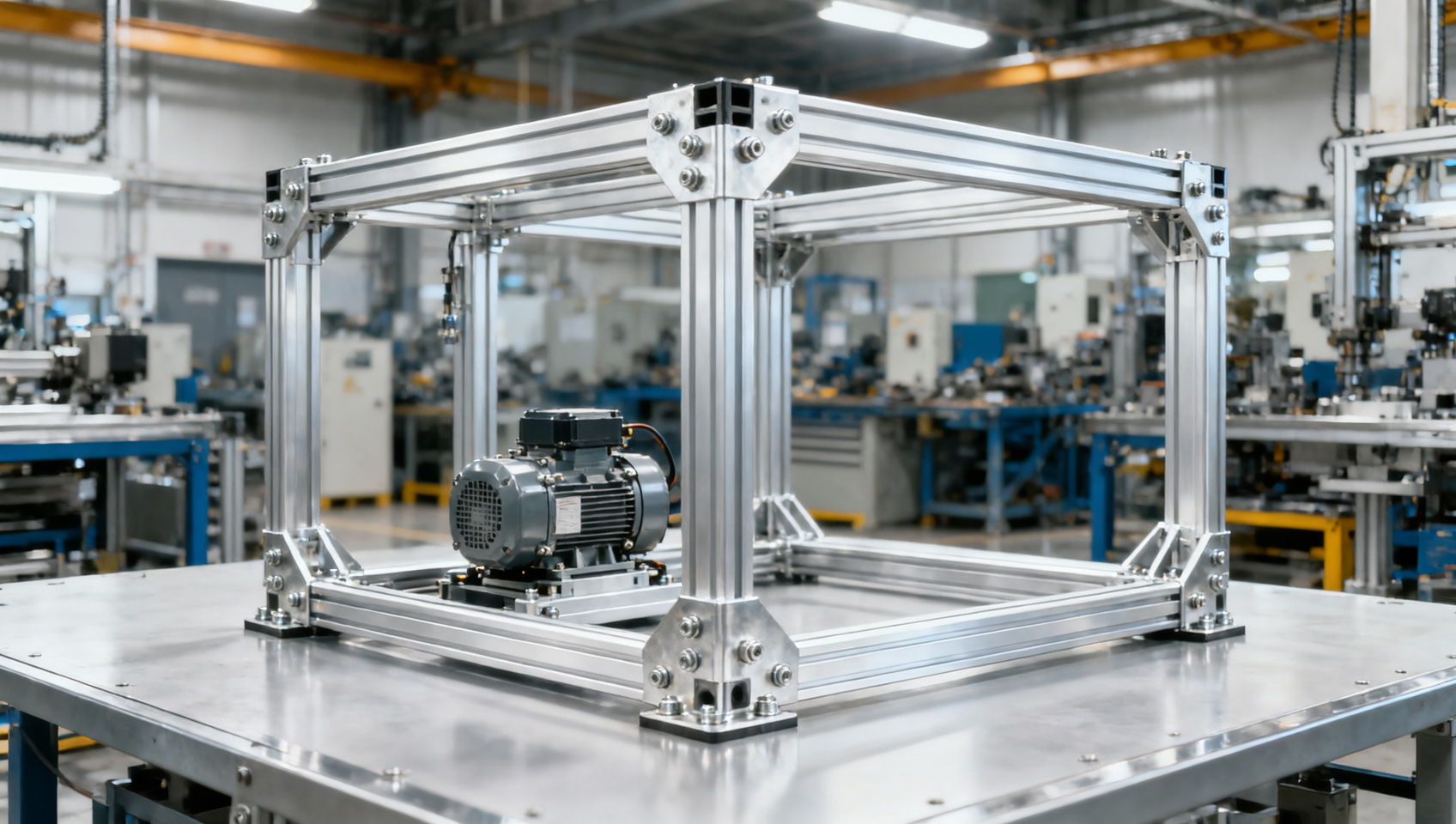
A low volume manufacturing factory is often misunderstood as simply a smaller, more expensive version of mass production. That misses the point. In prototype and pilot-run work, the factory is not only making parts. It is absorbing design uncertainty, surfacing manufacturability problems early, and helping a team decide whether a product is actually ready to scale. For procurement, that changes the evaluation logic. Unit price still matters, but the more important question is whether the factory can reduce execution risk while the product is still moving.
That distinction matters because prototype builds and pilot runs sit in an awkward middle ground. They are usually too advanced for a lab-only model shop, yet too unstable for a high-volume plant optimized around long, repeatable cycles. A capable low volume manufacturing factory works well in that gap. It can handle engineering change orders, mixed process routes, limited tooling, partial automation, tighter communication loops, and documentation that is still evolving. A factory that only knows how to run stable repeat orders may struggle here, even if its pricing looks attractive.
The first thing to test is whether the supplier understands the difference between making one good sample and building a repeatable pilot lot. Many factories can produce a visually acceptable prototype by leaning on manual rework, experienced operators, or extra inspection. That does not mean they are ready for 100, 500, or 2,000 units with consistent process capability. When evaluating a supplier, ask how they move from prototype intent to controlled repeatability. Their answer should mention process planning, fixture strategy, control points, incoming material management, revision tracking, and how they handle deviations. If the conversation stays at the level of “we can do it” without process detail, that is a warning sign.
What Good Low-Volume Capability Actually Looks Like
In practical terms, low-volume capability is less about factory size and more about factory behavior. A useful supplier is able to switch between jobs without losing control, quote from incomplete information without hiding risk, and engage engineering questions before production starts. This is especially relevant in advanced manufacturing, smart electronics, medical-related assemblies, and customized industrial components, where tolerances, material choices, and downstream use conditions can change quickly during product validation.
You can usually see this capability in three places: pre-production review, shop-floor discipline, and change management. Pre-production review shows whether the factory thinks critically about prints, BOMs, tolerances, finishing requirements, and assembly risks. Shop-floor discipline shows up in traveler documents, part identification, fixture use, traceability practices, and how nonconforming material is separated. Change management becomes visible when revision B arrives two days before machining starts, or when a component lead time slips and the supplier proposes a workable substitute path rather than letting the schedule collapse.
This is why procurement teams should avoid evaluating prototype suppliers only through commodity sourcing habits. In early-stage production, the cheapest quote may come from a factory that has underpriced engineering time, ignored tolerance stack-up problems, or assumed manual adjustments that cannot be sustained. Those issues rarely appear in the quotation spreadsheet. They appear later as missed deadlines, unstable quality, undocumented substitutions, or pilot builds that cannot be repeated.
Questions That Reveal More Than a Capability List
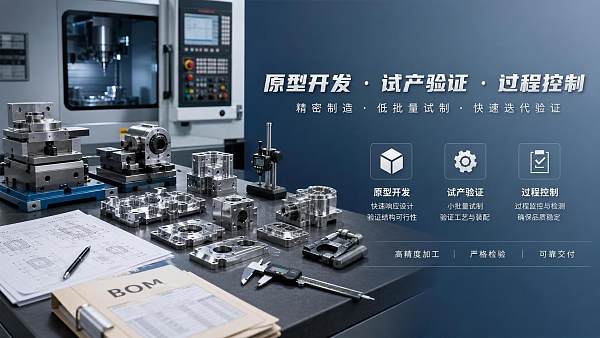
Factory websites and supplier profiles usually list CNC machining, sheet metal fabrication, injection molding, casting, PCB assembly, or box-build integration. Those process labels are only a starting point. The real evaluation happens when you ask how the supplier works under low-volume conditions.
A stronger conversation sounds like this: How do you review drawings that are not fully frozen? What documentation do you require before launching a pilot lot? Which features would you suggest changing to avoid hand-fitting? How do you manage customer-owned tooling during design revisions? When one component in a multi-part assembly is late, what is your escalation path? These questions force the factory to talk about execution, not just equipment.
Another useful test is whether the supplier can explain where low-volume work stops making sense for a given process. A factory with real experience will usually be candid about production boundaries. For example, it may explain that CNC machining is suitable for bridge quantities before hard tooling is justified, or that soft tooling can support pilot validation but may not match long-run economics or part life expectations. A supplier that never discusses process limits is often telling you what you want to hear rather than what the product needs.
Engineering Responsiveness Is a Procurement Issue
In prototypes and pilot runs, engineering responsiveness is not just a technical virtue. It has direct sourcing value. When the factory identifies manufacturability concerns early, the buyer gains time to make controlled decisions instead of paying for avoidable scrap, expedited freight, or rebuilds. This matters even more in cross-border sourcing, where time zone gaps and fragmented communication can turn a small ambiguity into a multi-week delay.
Look for evidence that the supplier can discuss design-for-manufacturing tradeoffs in plain business terms. A good partner does not simply reject a drawing or push back with vague comments. It should be able to explain, for instance, that a tolerance appears tighter than the function requires, that a cosmetic requirement may reduce yield, or that a material specification could create avoidable lead-time exposure. That kind of response helps procurement align engineering, quality, and schedule realities before purchase orders become firefighting exercises.
This is one area where supplier selection increasingly overlaps with digital credibility. Decision-makers often encounter suppliers through search, industry content, and technical profiles before any direct engagement. A supplier that can clearly explain process capability, production boundaries, and quality discipline is easier to trust than one relying only on broad claims. In sectors where evaluation cycles are compressed, clarity itself becomes a sourcing signal.
Quality Control for Pilot Runs Is Different From Final Production QA
A common mistake is to ask whether the factory has inspection equipment and stop there. Inspection tools matter, but pilot-stage quality control is really about how the supplier defines and contains uncertainty. During early production, not every characteristic carries the same risk. Some dimensions affect assembly fit, some influence safety or compliance, and others are mostly cosmetic. A competent factory should be able to distinguish those categories and build the inspection plan around them.
That does not always require a heavy formal system, especially for non-regulated products. But it does require discipline: clear revision control, sample approval logic, records of deviations, identifiable rework status, and traceability at least to the level needed for root-cause analysis. If the product falls into a regulated or compliance-sensitive space, the bar rises further, and procurement should verify that the supplier understands the documentation obligations relevant to that industry rather than assuming that generic ISO language covers everything.
Tooling Flexibility and the Cost of Being Too Early
Procurement teams often face pressure to lock in tooling decisions too soon in order to reduce piece price. In low volume manufacturing, that can be the wrong optimization. If the product design is still moving, expensive hard tooling may trap the project in an immature geometry, while overreliance on manual methods can hide the true cost of scale-up. The right factory helps navigate between those extremes.
This is where tooling flexibility becomes a serious evaluation point. Can the supplier support bridge tooling, modular fixtures, temporary gauges, or phased process development? Can it explain when soft tooling is sufficient and when production intent tooling becomes necessary? The answer affects not only immediate cost, but the quality of the decisions you can make from the pilot run. A pilot lot should teach you something reliable about the next stage, not create false confidence through methods that will disappear later.
Communication Reliability Is Often the Deciding Factor
Factories are usually compared on price, lead time, and quality. In prototype and pilot work, communication reliability deserves equal weight. A technically competent supplier can still become a poor partner if updates are inconsistent, engineering questions are delayed, or bad news is withheld until the ship date is already lost.
Reliable communication is measurable in ordinary ways: whether the supplier asks clarifying questions before quoting, whether issues are raised with evidence rather than excuses, whether meeting notes and revision references are consistent, whether schedule changes are flagged early, and whether commercial contacts stay aligned with engineering contacts. Buyers who ignore this because the sample looked good often regret it during the first compressed pilot schedule.
This is particularly relevant in international sourcing. Cross-border pilot programs involve customs timing, packaging decisions, material substitutions, regional holidays, and documentation handoffs that are easy to underestimate. A factory that communicates well reduces uncertainty across all of those interfaces. One that communicates poorly forces the buyer to become the factory’s internal project manager.
A Better Way to Compare Suppliers
When comparing candidates, treat the low volume manufacturing factory as a risk-management partner, not just a conversion vendor. The most useful scorecard is rarely the one with the lowest quoted piece price. It is the one that captures whether the supplier can support change, document decisions, protect quality under unstable conditions, and give the team a credible path from pilot to production.
If two factories appear technically similar, the better choice is often the one that exposes uncertainty more clearly. That may sound counterintuitive, but transparency is usually more valuable than an overconfident quote. A supplier that explains process limits, lead-time risk, tooling assumptions, and inspection boundaries is easier to manage than one promising certainty on incomplete information.
For procurement professionals, the practical test is simple: after the evaluation call, do you have a clearer picture of how this factory will behave when the design changes, a component slips, a tolerance causes yield problems, or a pilot lot has to be repeated? If the answer is yes, you are evaluating a factory that understands low-volume manufacturing in the way it actually matters. If the answer is no, the quote may still be usable, but the risk is probably sitting outside the spreadsheet.
Get weekly intelligence in your inbox.
No noise. No sponsored content. Pure intelligence.
 Sep 15, 2026Wholesale WiFi Smart Switches: What Buyers Should Verify Before OrderingWholesale WiFi Smart Switches: What Buyers Should Verify Before Ordering
 Sep 14, 2026How to Select IoT Sensors for Reliable Monitoring in Harsh Industrial EnvironmentsHow to Select IoT Sensors for Reliable Monitoring in Harsh Industrial Environments
 Sep 13, 2026How Procurement Teams Can Improve Supplier Reliability With Supply Chain VisibilityHow Procurement Teams Can Improve Supplier Reliability With Supply Chain Visibility
 Sep 12, 2026Smart Manufacturing Trends 2026: What Leaders Should Prioritize for ROISmart Manufacturing Trends 2026: What Leaders Should Prioritize for ROI
 Sep 11, 2026B2B Market Analysis: How Buyers Evaluate Suppliers, Pricing, and Delivery RiskB2B Market Analysis: How Buyers Evaluate Suppliers, Pricing, and Delivery Risk
 Sep 10, 2026Residential Solar Kits in Canada: How to Size a System for Your Home and ClimateResidential Solar Kits in Canada: How to Size a System for Your Home and Climate
 Sep 09, 2026How to Specify a Syringe Assembly Line for High-Volume Sterile ProductionHow to Specify a Syringe Assembly Line for High-Volume Sterile Production
 Sep 08, 2026How to Evaluate Warehouse Robotics System Suppliers for Reliable Multi-Site DeploymentHow to Evaluate Warehouse Robotics System Suppliers for Reliable Multi-Site Deployment
 Sep 07, 2026Renewable Geothermal Energy Explained: How It Works for Heating and PowerRenewable Geothermal Energy Explained: How It Works for Heating and Power
 Sep 07, 2026How to Choose an Industrial Packaging Robot Manufacturer for Your Production LineHow to Choose an Industrial Packaging Robot Manufacturer for Your Production Line
 Sep 05, 2026How to Evaluate a Turnkey Hydro Turbine Generator Supplier for Remote Power ProjectsHow to Evaluate a Turnkey Hydro Turbine Generator Supplier for Remote Power Projects
 Sep 04, 2026Automated Ultrasonic Welding for Thermoplastic Assemblies: Process Controls That MatterAutomated Ultrasonic Welding for Thermoplastic Assemblies: Process Controls That Matter
 Sep 03, 2026Energy Forecasting for Grid Planning: Sizing Solar and Storage CapacityEnergy Forecasting for Grid Planning: Sizing Solar and Storage Capacity
 Sep 02, 2026Which Metrics Should an Energy Analytics Dashboard Track for Factory Energy Management?Which Metrics Should an Energy Analytics Dashboard Track for Factory Energy Management?
 Sep 01, 2026How Warehouse Voice Picking Improves Accuracy and Throughput in Order FulfillmentHow Warehouse Voice Picking Improves Accuracy and Throughput in Order Fulfillment
 Aug 31, 2026How to Automate Dropshipping Order Processing Without Overselling StockHow to Automate Dropshipping Order Processing Without Overselling Stock
 Aug 30, 2026How to Evaluate a Smart Lighting Supplier for Multi-Site Commercial ProjectsHow to Evaluate a Smart Lighting Supplier for Multi-Site Commercial Projects
 Aug 29, 2026Recent Advances in Smart Manufacturing and Materials Reshaping Factory InvestmentRecent Advances in Smart Manufacturing and Materials Reshaping Factory Investment
 Aug 29, 2026Selecting Lightweight Aluminum Extrusions for Strength-Critical Industrial DesignsSelecting Lightweight Aluminum Extrusions for Strength-Critical Industrial Designs
 Aug 29, 2026Vertical Powder Anodizing Explained: Process Controls for Uniform Coating QualityVertical Powder Anodizing Explained: Process Controls for Uniform Coating Quality
 Aug 29, 2026PV Module Product Due Diligence: What Buyers Should Verify Before ContractingPV Module Product Due Diligence: What Buyers Should Verify Before Contracting
 Aug 29, 2026Solar Design for Challenging Terrain: Managing Slope, Soil, and Shading RisksSolar Design for Challenging Terrain: Managing Slope, Soil, and Shading Risks
 Aug 29, 2026IS 16444 Smart Meter Requirements: Key Functions, Tests, and ComplianceIS 16444 Smart Meter Requirements: Key Functions, Tests, and Compliance
 Aug 29, 2026Rehabilitation Equipment Market Outlook: Demand Drivers and Growth SegmentsRehabilitation Equipment Market Outlook: Demand Drivers and Growth Segments
 Aug 29, 2026When Does Container Handling Automation Deliver ROI in Port Yard Operations?When Does Container Handling Automation Deliver ROI in Port Yard Operations?
 Aug 29, 2026Customs API Integration: A Practical Checklist for Automated Trade ComplianceCustoms API Integration: A Practical Checklist for Automated Trade Compliance
 Aug 29, 2026Returnable Packaging for Automotive: How to Cut Damage and Reverse Logistics CostsReturnable Packaging for Automotive: How to Cut Damage and Reverse Logistics Costs