IoT Energy Monitors for Commercial Buildings: What Data Matters and How to Choose
IoT Energy Monitors for Commercial Buildings: What Data Matters and How to Choose
For project managers and facility leaders, IoT energy monitors can turn complex building operations into actionable insight.
But not all data is equally useful.
In commercial buildings, the real value comes from tracking signals that cut waste, improve uptime, support ESG targets, and guide better capital planning.
That is why the best IoT energy monitors do more than display usage.
They help teams decide what to fix first, where to invest next, and how to prove results.
Why IoT Energy Monitors Matter in Commercial Buildings

Commercial buildings run many energy-intensive systems at once.
HVAC, lighting, elevators, server rooms, refrigeration, and tenant equipment all compete for power.
Without clear data, energy decisions often rely on bills, complaints, or routine inspections.
That approach is slow and expensive.
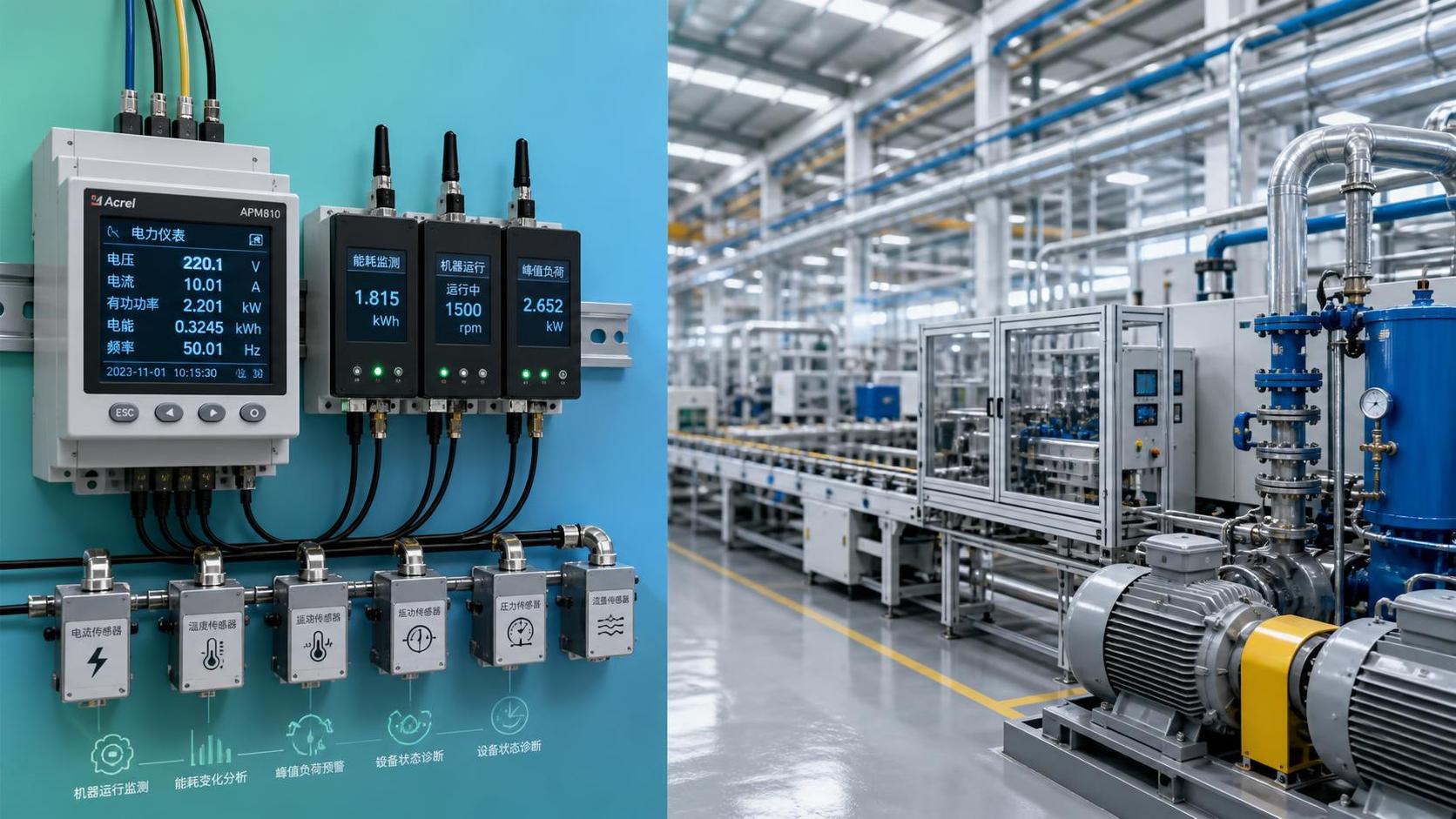
IoT energy monitors change that by showing how energy behaves across time, equipment, and zones.
From a project delivery angle, this creates a stronger case for upgrades and faster issue resolution.
In practical terms, better visibility reduces guesswork during retrofits, commissioning, and ongoing operations.
What Data Matters Most
Many platforms collect hundreds of data points.
Still, a smaller set usually delivers the biggest operational value.
1. Real-Time Energy Consumption
Start with interval-based electricity usage.
Fifteen-minute or five-minute data reveals spikes that monthly bills hide.
This helps identify after-hours waste, poor scheduling, and unexpected load growth.
2. Peak Demand and Demand Timing
Demand charges can distort total energy cost.
Good IoT energy monitors show when demand peaks happen and which assets contribute most.
That matters when staggering startup times or planning battery support.
3. Circuit-Level or Equipment-Level Load
Whole-building data is useful, but it rarely explains root causes.
Submetering for HVAC, pumps, chillers, lighting panels, and critical processes provides a clearer picture.
This is often where quick savings are found.
4. Power Quality Indicators
Voltage imbalance, harmonics, and power factor issues can damage equipment or reduce efficiency.
For facilities with sensitive electronics, power quality is not optional data.
It directly affects uptime and maintenance planning.
5. Runtime and Operating Patterns
Energy use alone does not tell the full story.
You also need to know how long systems run, how often they cycle, and whether they align with occupancy.
This is especially useful in office towers, hotels, campuses, and mixed-use properties.
6. Carbon and ESG Reporting Data
More building owners now need traceable emissions data.
IoT energy monitors that convert usage into location-based or market-based carbon metrics save reporting time.
They also make performance reviews easier for stakeholders and investors.
How to Separate Useful Data from Noise
Not every metric deserves equal attention.
The right monitoring strategy starts with business outcomes, not dashboards.
A practical way to prioritize is to ask three simple questions.
- Does this data help lower cost within one budget cycle?
- Does it reduce operational risk or unplanned downtime?
- Does it support compliance, ESG, or investment decisions?
If a metric does not answer at least one of those questions, it may be secondary.
This keeps IoT energy monitors focused on action rather than information overload.
How to Choose IoT Energy Monitors for Real Projects
Choosing a platform is not only a technology decision.
It is also a deployment, integration, and lifecycle decision.
Match the System to Building Complexity
A small retail site does not need the same monitoring depth as a hospital or manufacturing campus.
Pick IoT energy monitors that fit the asset profile, tenant mix, and control environment.
Check Integration with Existing Systems
The best data often comes from combining meters with BMS, HVAC controls, occupancy data, and maintenance systems.
Look for open protocols, API support, and practical export options.
If integration is weak, analysis becomes manual and slow.
Evaluate Alert Quality, Not Just Dashboard Design
A clean interface is helpful, but smart alerts drive faster action.
Prioritize anomaly detection, threshold settings, fault notifications, and escalation workflows.
That is where IoT energy monitors start producing real operational value.
Consider Installation Constraints Early
Retrofit environments can be difficult.
Panel access, shutdown windows, wireless coverage, cybersecurity policies, and tenant disruption all affect rollout speed.
The right solution should reduce friction, not create another project risk.
Verify Data Ownership and Scalability
As portfolios expand, teams need consistent data structures across sites.
Choose IoT energy monitors that support multi-site reporting, secure access, and long-term data portability.
That avoids vendor lock-in and simplifies future benchmarking.
Common Use Cases That Deliver Fast Value
From recent project trends, the strongest results usually come from a few repeatable use cases.
- Detecting HVAC schedule drift and eliminating after-hours energy waste.
- Comparing tenant or zone performance to identify abnormal consumption.
- Monitoring critical loads to prevent outages in data rooms or process areas.
- Verifying savings after retrofit projects, control upgrades, or equipment replacement.
- Supporting ESG reporting with auditable data instead of rough estimates.
These applications work because they link monitoring directly to decisions.
That is a more reliable path than buying IoT energy monitors for visibility alone.
Mistakes to Avoid When Selecting a Solution
Several selection mistakes appear again and again in commercial building projects.
- Buying too many sensors before defining target outcomes.
- Ignoring data quality, calibration, or communication reliability.
- Overlooking cybersecurity requirements for connected devices.
- Choosing closed systems that limit integration later.
- Expecting dashboards to solve problems without internal response processes.
A strong monitoring rollout depends on governance as much as hardware.
In real operations, response ownership matters just as much as data collection.
A Practical Selection Checklist
Before final approval, use a short checklist to compare vendors and platforms.
Final Takeaway
The best IoT energy monitors are not the ones with the most data points.
They are the ones that make building energy performance easier to understand and easier to improve.
Focus on real-time consumption, demand, submetering, power quality, runtime behavior, and carbon reporting.
Then choose a solution that fits the building, integrates cleanly, and supports action at scale.
When IoT energy monitors are selected this way, they become more than a reporting tool.
They become a practical foundation for lower cost, stronger resilience, and smarter commercial building decisions.
Get weekly intelligence in your inbox.
No noise. No sponsored content. Pure intelligence.
 Sep 15, 2026Wholesale WiFi Smart Switches: What Buyers Should Verify Before OrderingWholesale WiFi Smart Switches: What Buyers Should Verify Before Ordering
 Sep 14, 2026How to Select IoT Sensors for Reliable Monitoring in Harsh Industrial EnvironmentsHow to Select IoT Sensors for Reliable Monitoring in Harsh Industrial Environments
 Sep 13, 2026How Procurement Teams Can Improve Supplier Reliability With Supply Chain VisibilityHow Procurement Teams Can Improve Supplier Reliability With Supply Chain Visibility
 Sep 12, 2026Smart Manufacturing Trends 2026: What Leaders Should Prioritize for ROISmart Manufacturing Trends 2026: What Leaders Should Prioritize for ROI
 Sep 11, 2026B2B Market Analysis: How Buyers Evaluate Suppliers, Pricing, and Delivery RiskB2B Market Analysis: How Buyers Evaluate Suppliers, Pricing, and Delivery Risk
 Sep 10, 2026Residential Solar Kits in Canada: How to Size a System for Your Home and ClimateResidential Solar Kits in Canada: How to Size a System for Your Home and Climate
 Sep 09, 2026How to Specify a Syringe Assembly Line for High-Volume Sterile ProductionHow to Specify a Syringe Assembly Line for High-Volume Sterile Production
 Sep 08, 2026How to Evaluate Warehouse Robotics System Suppliers for Reliable Multi-Site DeploymentHow to Evaluate Warehouse Robotics System Suppliers for Reliable Multi-Site Deployment
 Sep 07, 2026Renewable Geothermal Energy Explained: How It Works for Heating and PowerRenewable Geothermal Energy Explained: How It Works for Heating and Power
 Sep 07, 2026How to Choose an Industrial Packaging Robot Manufacturer for Your Production LineHow to Choose an Industrial Packaging Robot Manufacturer for Your Production Line
 Sep 05, 2026How to Evaluate a Turnkey Hydro Turbine Generator Supplier for Remote Power ProjectsHow to Evaluate a Turnkey Hydro Turbine Generator Supplier for Remote Power Projects
 Sep 04, 2026Automated Ultrasonic Welding for Thermoplastic Assemblies: Process Controls That MatterAutomated Ultrasonic Welding for Thermoplastic Assemblies: Process Controls That Matter
 Sep 03, 2026Energy Forecasting for Grid Planning: Sizing Solar and Storage CapacityEnergy Forecasting for Grid Planning: Sizing Solar and Storage Capacity
 Sep 02, 2026Which Metrics Should an Energy Analytics Dashboard Track for Factory Energy Management?Which Metrics Should an Energy Analytics Dashboard Track for Factory Energy Management?
 Sep 01, 2026How Warehouse Voice Picking Improves Accuracy and Throughput in Order FulfillmentHow Warehouse Voice Picking Improves Accuracy and Throughput in Order Fulfillment
 Aug 31, 2026How to Automate Dropshipping Order Processing Without Overselling StockHow to Automate Dropshipping Order Processing Without Overselling Stock
 Aug 30, 2026How to Evaluate a Smart Lighting Supplier for Multi-Site Commercial ProjectsHow to Evaluate a Smart Lighting Supplier for Multi-Site Commercial Projects
 Aug 29, 2026Recent Advances in Smart Manufacturing and Materials Reshaping Factory InvestmentRecent Advances in Smart Manufacturing and Materials Reshaping Factory Investment
 Aug 29, 2026Selecting Lightweight Aluminum Extrusions for Strength-Critical Industrial DesignsSelecting Lightweight Aluminum Extrusions for Strength-Critical Industrial Designs
 Aug 29, 2026Vertical Powder Anodizing Explained: Process Controls for Uniform Coating QualityVertical Powder Anodizing Explained: Process Controls for Uniform Coating Quality
 Aug 29, 2026PV Module Product Due Diligence: What Buyers Should Verify Before ContractingPV Module Product Due Diligence: What Buyers Should Verify Before Contracting
 Aug 29, 2026Solar Design for Challenging Terrain: Managing Slope, Soil, and Shading RisksSolar Design for Challenging Terrain: Managing Slope, Soil, and Shading Risks
 Aug 29, 2026IS 16444 Smart Meter Requirements: Key Functions, Tests, and ComplianceIS 16444 Smart Meter Requirements: Key Functions, Tests, and Compliance
 Aug 29, 2026Rehabilitation Equipment Market Outlook: Demand Drivers and Growth SegmentsRehabilitation Equipment Market Outlook: Demand Drivers and Growth Segments
 Aug 29, 2026When Does Container Handling Automation Deliver ROI in Port Yard Operations?When Does Container Handling Automation Deliver ROI in Port Yard Operations?
 Aug 29, 2026Customs API Integration: A Practical Checklist for Automated Trade ComplianceCustoms API Integration: A Practical Checklist for Automated Trade Compliance
 Aug 29, 2026Returnable Packaging for Automotive: How to Cut Damage and Reverse Logistics CostsReturnable Packaging for Automotive: How to Cut Damage and Reverse Logistics Costs