Wind Farm Development Costs Explained: Land, Grid Connection, and Turbine Selection
Wind farm economics often look straightforward from a distance: secure a site, install turbines, and sell power. In practice, cost structure is more layered. Land terms, permitting complexity, grid connection distance, turbine choice, and supply chain timing all shape whether a project remains bankable across different markets.
That is why wind farm development costs matter far beyond engineering teams. They influence valuation models, supplier screening, regional entry decisions, and the pace of capital deployment. For decision-grade analysis, the useful question is not only how much a wind farm costs, but which cost drivers create the greatest uncertainty over time.
Why cost breakdown matters early
A wind farm usually carries high upfront capital expenditure and a long revenue horizon. Small errors in early assumptions can distort the entire business case. A site that looks attractive on headline land price may become expensive once transmission upgrades, environmental studies, and transport logistics are included.
This is especially relevant in cross-border project screening. Different countries apply different lease models, interconnection rules, local content expectations, and permitting timelines. Platforms focused on industrial intelligence, such as TradeNexus Pro, are useful in this context because market entry decisions depend on technical facts as much as on commercial visibility.
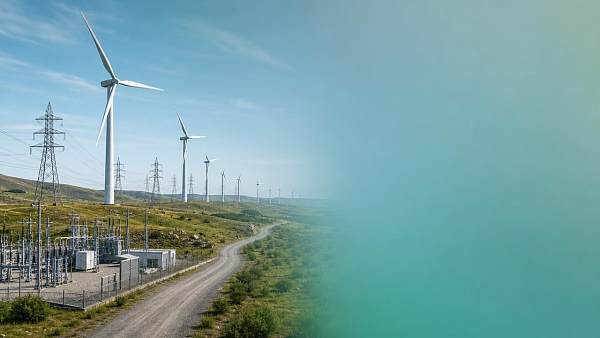
Looking at a wind farm through a structured cost lens helps separate manageable expenses from strategic risks. That distinction often decides whether a project should move forward, be redesigned, or be postponed.
Land is more than a purchase or lease line
Land cost is often underestimated because the visible transaction is only one part of the picture. A wind farm may involve long-term leases, easement agreements, access road rights, crane pad areas, substation space, and compensation arrangements with local stakeholders.
Terrain also changes cost behavior. Flat, open land may reduce civil works and logistics friction. Mountainous or remote locations can increase foundation needs, transport complexity, and maintenance planning. In some regions, land that appears inexpensive carries hidden costs linked to biodiversity restrictions or weak transport infrastructure.
Permitting sits close to land economics. A wind farm on paper can stall if aviation, noise, shadow flicker, or wildlife studies take longer than expected. Delay itself becomes a cost through financing charges, contract extensions, and equipment price exposure.
Land-related cost questions worth testing
- Does the site require multiple landowners or fragmented rights negotiations?
- Are access roads strong enough for blades, towers, and heavy cranes?
- Will environmental review limit turbine spacing or total installed capacity?
- How likely are timeline extensions caused by local approvals or appeals?
Grid connection can redefine project viability
For many developers, the most decisive wind farm cost is not the turbine itself but the path to the grid. Interconnection determines how electricity reaches buyers, but it also determines who pays for substations, transmission lines, reactive power equipment, protection systems, and grid compliance studies.
Distance matters, but available capacity matters more. A nearby connection point may still require expensive reinforcement if the local network is already constrained. In contrast, a more distant node can sometimes offer lower total risk if upgrade responsibility is clearer and curtailment risk is lower.
This is one reason wind farm comparisons across regions can be misleading. Two projects with similar turbine counts may have very different economics once interconnection queues, grid code requirements, and dispatch limits are added.
Typical grid cost components
In practical terms, a wind farm with weak grid certainty often deserves a wider contingency buffer than one with uncertain land cost. Land issues are frequently negotiable. Grid constraints are often structural.
Turbine selection shapes both capex and lifetime value
Choosing a turbine is not simply a matter of purchasing the largest available unit. The right model depends on wind regime, turbulence, transport constraints, maintenance support, financing assumptions, and expected energy yield over the asset life.
A larger rotor may improve output at lower wind speeds, but tower height, blade transport, and foundation design may become more expensive. A lower-cost turbine may reduce initial spending while creating higher operating risk if service capability or spare parts access is weak.
This is where supplier intelligence becomes valuable. In a global procurement environment, turbine pricing alone rarely tells the full story. Delivery record, warranty structure, technical documentation quality, digital monitoring capability, and local service presence all influence the real cost of a wind farm.
Selection trade-offs often include
- Higher rated output versus tougher transport and erection needs
- Lower purchase price versus weaker long-term service coverage
- Proven platform stability versus newer efficiency gains
- Standardized components versus market-specific customization
Other cost layers that change the final picture
Even when land, grid connection, and turbine choice are modeled well, a wind farm still carries supporting costs that can materially affect returns. Civil works, financing fees, insurance, foundation design, port handling, customs treatment, and currency exposure often expand during execution.
Regional policy also matters. Tax incentives, domestic manufacturing requirements, ESG disclosure expectations, and transmission access rules can shift economics quickly. In some markets, local assembly support lowers import exposure. In others, policy uncertainty becomes the larger cost variable.
Because wind farm development sits at the intersection of energy, infrastructure, manufacturing, and trade, broad business context should not be treated as background noise. It directly affects contract structure and timing risk.
A practical framework for comparing wind farm opportunities
When comparing multiple projects, it helps to move beyond headline cost per megawatt. That metric is useful, but incomplete. A stronger comparison model weighs cost certainty, schedule exposure, supply chain resilience, and expected energy performance together.
A wind farm that appears more expensive upfront may still produce a stronger long-term outcome if it benefits from stable interconnection, bankable turbine support, and fewer land disputes. The opposite is also common: low initial capex can conceal difficult grid integration or weak execution reliability.
Useful decision criteria
- Separate fixed construction costs from variable approval and interface risks.
- Model delays as financial events, not only scheduling events.
- Test turbine options against service capacity in the target region.
- Review grid assumptions with the same rigor as wind resource data.
- Track supplier credibility, not just component pricing.
Where to focus next
A useful next step is to build a market-by-market checklist for wind farm screening. Start with land control and permitting exposure, then test grid access realism, and only then compare turbine packages in detail. That sequence reduces the chance of optimizing equipment for a project that cannot connect on time.
It also helps to use intelligence sources that connect sector knowledge with commercial evaluation. In green energy markets, the best decisions usually come from combining technical review, supplier evidence, policy context, and regional trade insight rather than treating them as separate streams.
For any wind farm under review, the central task is simple: identify which costs are visible, which are conditional, and which can still change after commitment. That discipline makes feasibility work sharper, supplier discussions more grounded, and expansion planning more credible.
Get weekly intelligence in your inbox.
No noise. No sponsored content. Pure intelligence.
 Sep 15, 2026Wholesale WiFi Smart Switches: What Buyers Should Verify Before OrderingWholesale WiFi Smart Switches: What Buyers Should Verify Before Ordering
 Sep 14, 2026How to Select IoT Sensors for Reliable Monitoring in Harsh Industrial EnvironmentsHow to Select IoT Sensors for Reliable Monitoring in Harsh Industrial Environments
 Sep 13, 2026How Procurement Teams Can Improve Supplier Reliability With Supply Chain VisibilityHow Procurement Teams Can Improve Supplier Reliability With Supply Chain Visibility
 Sep 12, 2026Smart Manufacturing Trends 2026: What Leaders Should Prioritize for ROISmart Manufacturing Trends 2026: What Leaders Should Prioritize for ROI
 Sep 11, 2026B2B Market Analysis: How Buyers Evaluate Suppliers, Pricing, and Delivery RiskB2B Market Analysis: How Buyers Evaluate Suppliers, Pricing, and Delivery Risk
 Sep 10, 2026Residential Solar Kits in Canada: How to Size a System for Your Home and ClimateResidential Solar Kits in Canada: How to Size a System for Your Home and Climate
 Sep 09, 2026How to Specify a Syringe Assembly Line for High-Volume Sterile ProductionHow to Specify a Syringe Assembly Line for High-Volume Sterile Production
 Sep 08, 2026How to Evaluate Warehouse Robotics System Suppliers for Reliable Multi-Site DeploymentHow to Evaluate Warehouse Robotics System Suppliers for Reliable Multi-Site Deployment
 Sep 07, 2026Renewable Geothermal Energy Explained: How It Works for Heating and PowerRenewable Geothermal Energy Explained: How It Works for Heating and Power
 Sep 07, 2026How to Choose an Industrial Packaging Robot Manufacturer for Your Production LineHow to Choose an Industrial Packaging Robot Manufacturer for Your Production Line
 Sep 05, 2026How to Evaluate a Turnkey Hydro Turbine Generator Supplier for Remote Power ProjectsHow to Evaluate a Turnkey Hydro Turbine Generator Supplier for Remote Power Projects
 Sep 04, 2026Automated Ultrasonic Welding for Thermoplastic Assemblies: Process Controls That MatterAutomated Ultrasonic Welding for Thermoplastic Assemblies: Process Controls That Matter
 Sep 03, 2026Energy Forecasting for Grid Planning: Sizing Solar and Storage CapacityEnergy Forecasting for Grid Planning: Sizing Solar and Storage Capacity
 Sep 02, 2026Which Metrics Should an Energy Analytics Dashboard Track for Factory Energy Management?Which Metrics Should an Energy Analytics Dashboard Track for Factory Energy Management?
 Sep 01, 2026How Warehouse Voice Picking Improves Accuracy and Throughput in Order FulfillmentHow Warehouse Voice Picking Improves Accuracy and Throughput in Order Fulfillment
 Aug 31, 2026How to Automate Dropshipping Order Processing Without Overselling StockHow to Automate Dropshipping Order Processing Without Overselling Stock
 Aug 30, 2026How to Evaluate a Smart Lighting Supplier for Multi-Site Commercial ProjectsHow to Evaluate a Smart Lighting Supplier for Multi-Site Commercial Projects
 Aug 29, 2026Recent Advances in Smart Manufacturing and Materials Reshaping Factory InvestmentRecent Advances in Smart Manufacturing and Materials Reshaping Factory Investment
 Aug 29, 2026Selecting Lightweight Aluminum Extrusions for Strength-Critical Industrial DesignsSelecting Lightweight Aluminum Extrusions for Strength-Critical Industrial Designs
 Aug 29, 2026Vertical Powder Anodizing Explained: Process Controls for Uniform Coating QualityVertical Powder Anodizing Explained: Process Controls for Uniform Coating Quality
 Aug 29, 2026PV Module Product Due Diligence: What Buyers Should Verify Before ContractingPV Module Product Due Diligence: What Buyers Should Verify Before Contracting
 Aug 29, 2026Solar Design for Challenging Terrain: Managing Slope, Soil, and Shading RisksSolar Design for Challenging Terrain: Managing Slope, Soil, and Shading Risks
 Aug 29, 2026IS 16444 Smart Meter Requirements: Key Functions, Tests, and ComplianceIS 16444 Smart Meter Requirements: Key Functions, Tests, and Compliance
 Aug 29, 2026Rehabilitation Equipment Market Outlook: Demand Drivers and Growth SegmentsRehabilitation Equipment Market Outlook: Demand Drivers and Growth Segments
 Aug 29, 2026When Does Container Handling Automation Deliver ROI in Port Yard Operations?When Does Container Handling Automation Deliver ROI in Port Yard Operations?
 Aug 29, 2026Customs API Integration: A Practical Checklist for Automated Trade ComplianceCustoms API Integration: A Practical Checklist for Automated Trade Compliance
 Aug 29, 2026Returnable Packaging for Automotive: How to Cut Damage and Reverse Logistics CostsReturnable Packaging for Automotive: How to Cut Damage and Reverse Logistics Costs