Turkey-Saudi Rail Deal Signals New PV Export Route
On June 9, 2026, Turkey and Saudi Arabia signed an agreement to rebuild the historic Hejaz Railway, pointing to a possible new overland logistics option for Solar PV modules and battery storage shipments. For exporters, distributors, procurement teams, and supply chain service providers, the development matters less as a transport headline alone and more as a trade and delivery signal: it suggests that routing, insurance exposure, contract timing, and compliance handling for energy cargo may gradually shift if this corridor moves into practical use.
A transport agreement with trade implications
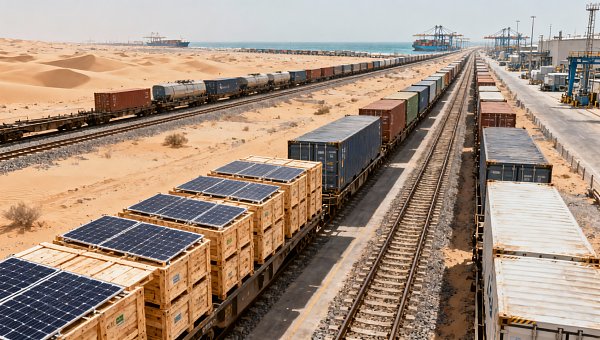
The confirmed facts are limited but clear. On June 9, Turkey and Saudi Arabia signed an agreement to rebuild the century-old Hejaz Railway. The stated purpose is to create an alternative land-based energy logistics corridor outside the Strait of Hormuz. According to the provided summary, the route could in the future carry large photovoltaic modules and battery storage container cargo directly to Mediterranean hubs. The same summary indicates that this could reduce transport risk and insurance premiums for Chinese western PV and energy storage companies exporting to Europe during the Red Sea crisis, while offering Middle Eastern distributors more stable delivery cycles.
Where the practical effects may emerge first
Export planning may start to include route diversification
From an industry perspective, exporters of Solar PV and battery storage may be among the first to reassess routing options if this corridor develops further. The likely impact is not only on freight selection, but also on shipment planning, delivery commitments, cargo packaging suitability, and document alignment for multimodal transport. What deserves closer attention is whether future use of the corridor leads to different documentary requirements, handover procedures, or cargo handling rules for oversized modules and battery storage containers.
Distributors and buyers may revise delivery assumptions
Middle Eastern distributors and downstream buyers could be affected through procurement scheduling and inventory planning. Analysis shows that a route associated with more stable arrival timing may influence how buyers set lead-time expectations, purchase windows, and buffer stock assumptions. They should also watch whether tenders, purchase contracts, or technical schedules begin to reflect route-specific delivery terms or revised risk allocation language.
Logistics and compliance service providers may face new documentation demands
Supply chain service providers, including freight coordinators, cargo insurers, and trade documentation teams, may need to prepare for changes in route assessment and shipment control processes. For battery storage cargo in particular, any future operational use of a new land corridor may place greater emphasis on consistent technical documents, cargo declarations, transport condition descriptions, and traceable handover records. At this stage, however, no detailed execution rules were provided in the input, so these points remain areas to monitor rather than confirmed requirements.
What companies should monitor before treating this as an active route
Track whether the agreement turns into executable trade procedures
It is more appropriate to understand this event as an execution signal rather than a fully operational rule change. Companies should therefore monitor how the agreement is later reflected in official language, transport procedures, and route availability before revising export structures or customer commitments.
Review compliance files for route-sensitive cargo
Observably, firms dealing in PV modules and battery storage should ensure that product files, shipment specifications, cargo descriptions, and supporting technical documents are consistent and ready for review if logistics pathways diversify. This is especially relevant where delivery reliability, cargo condition, and post-delivery traceability affect contract performance.
Check contract language on timing, risk, and insurance
Analysis shows that the most immediate business relevance may sit in commercial paperwork rather than physical transport itself. Exporters, distributors, and procurement teams should examine whether sales contracts, insurance arrangements, and delivery clauses need flexibility for possible route changes, especially where current pricing reflects elevated risk and premium assumptions linked to maritime disruption.
Watch for changes in tender and procurement practice
If market participants begin to treat the corridor as a viable option, one of the earliest visible shifts may appear in tender files, procurement notices, and delivery schedules rather than in public policy texts alone. Companies should therefore watch for changes in bid documentation, required lead times, and supplier delivery commitments tied to route resilience.
Why this reads more as a signal than a settled rule
From an industry perspective, this development should not yet be read as a completed restructuring of regional energy logistics. The confirmed information supports a narrower interpretation: Turkey and Saudi Arabia have signed an agreement that points toward a potential overland alternative for energy cargo, with possible implications for risk, insurance, and delivery stability. What deserves closer attention is whether later official language, operational arrangements, and market adoption turn that signal into an executable trade norm.
How the market may best read this development now
The industry significance of this event lies in its potential to reshape how route resilience is evaluated for Solar PV and battery storage exports, especially under shipping disruption conditions. Still, the current information is better understood as an early directional change in logistics and trade practice rather than a completed regulatory or operational outcome. A neutral reading is that companies should follow subsequent implementation details closely before treating the corridor as a firm basis for pricing, compliance assumptions, or delivery guarantees.
Source note and verification status
This article is generated from the user-provided news title, event date, and event summary. For developments of this kind, relevant source types would typically include official government announcements, transport or trade authority releases, customs or trade administration notices, industry association updates, standards-related documents, and reporting by authoritative media. No specific official source link was provided in the input, so the exact official source still requires ongoing verification. Further observation is also needed on execution details, compliance interpretation, tender language changes, market feedback, and how companies implement any resulting logistics adjustments.
Get weekly intelligence in your inbox.
No noise. No sponsored content. Pure intelligence.
 Sep 15, 2026Wholesale WiFi Smart Switches: What Buyers Should Verify Before OrderingWholesale WiFi Smart Switches: What Buyers Should Verify Before Ordering
 Sep 14, 2026How to Select IoT Sensors for Reliable Monitoring in Harsh Industrial EnvironmentsHow to Select IoT Sensors for Reliable Monitoring in Harsh Industrial Environments
 Sep 13, 2026How Procurement Teams Can Improve Supplier Reliability With Supply Chain VisibilityHow Procurement Teams Can Improve Supplier Reliability With Supply Chain Visibility
 Sep 12, 2026Smart Manufacturing Trends 2026: What Leaders Should Prioritize for ROISmart Manufacturing Trends 2026: What Leaders Should Prioritize for ROI
 Sep 11, 2026B2B Market Analysis: How Buyers Evaluate Suppliers, Pricing, and Delivery RiskB2B Market Analysis: How Buyers Evaluate Suppliers, Pricing, and Delivery Risk
 Sep 10, 2026Residential Solar Kits in Canada: How to Size a System for Your Home and ClimateResidential Solar Kits in Canada: How to Size a System for Your Home and Climate
 Sep 09, 2026How to Specify a Syringe Assembly Line for High-Volume Sterile ProductionHow to Specify a Syringe Assembly Line for High-Volume Sterile Production
 Sep 08, 2026How to Evaluate Warehouse Robotics System Suppliers for Reliable Multi-Site DeploymentHow to Evaluate Warehouse Robotics System Suppliers for Reliable Multi-Site Deployment
 Sep 07, 2026Renewable Geothermal Energy Explained: How It Works for Heating and PowerRenewable Geothermal Energy Explained: How It Works for Heating and Power
 Sep 07, 2026How to Choose an Industrial Packaging Robot Manufacturer for Your Production LineHow to Choose an Industrial Packaging Robot Manufacturer for Your Production Line
 Sep 05, 2026How to Evaluate a Turnkey Hydro Turbine Generator Supplier for Remote Power ProjectsHow to Evaluate a Turnkey Hydro Turbine Generator Supplier for Remote Power Projects
 Sep 04, 2026Automated Ultrasonic Welding for Thermoplastic Assemblies: Process Controls That MatterAutomated Ultrasonic Welding for Thermoplastic Assemblies: Process Controls That Matter
 Sep 03, 2026Energy Forecasting for Grid Planning: Sizing Solar and Storage CapacityEnergy Forecasting for Grid Planning: Sizing Solar and Storage Capacity
 Sep 02, 2026Which Metrics Should an Energy Analytics Dashboard Track for Factory Energy Management?Which Metrics Should an Energy Analytics Dashboard Track for Factory Energy Management?
 Sep 01, 2026How Warehouse Voice Picking Improves Accuracy and Throughput in Order FulfillmentHow Warehouse Voice Picking Improves Accuracy and Throughput in Order Fulfillment
 Aug 31, 2026How to Automate Dropshipping Order Processing Without Overselling StockHow to Automate Dropshipping Order Processing Without Overselling Stock
 Aug 30, 2026How to Evaluate a Smart Lighting Supplier for Multi-Site Commercial ProjectsHow to Evaluate a Smart Lighting Supplier for Multi-Site Commercial Projects
 Aug 29, 2026Recent Advances in Smart Manufacturing and Materials Reshaping Factory InvestmentRecent Advances in Smart Manufacturing and Materials Reshaping Factory Investment
 Aug 29, 2026Selecting Lightweight Aluminum Extrusions for Strength-Critical Industrial DesignsSelecting Lightweight Aluminum Extrusions for Strength-Critical Industrial Designs
 Aug 29, 2026Vertical Powder Anodizing Explained: Process Controls for Uniform Coating QualityVertical Powder Anodizing Explained: Process Controls for Uniform Coating Quality
 Aug 29, 2026PV Module Product Due Diligence: What Buyers Should Verify Before ContractingPV Module Product Due Diligence: What Buyers Should Verify Before Contracting
 Aug 29, 2026Solar Design for Challenging Terrain: Managing Slope, Soil, and Shading RisksSolar Design for Challenging Terrain: Managing Slope, Soil, and Shading Risks
 Aug 29, 2026IS 16444 Smart Meter Requirements: Key Functions, Tests, and ComplianceIS 16444 Smart Meter Requirements: Key Functions, Tests, and Compliance
 Aug 29, 2026Rehabilitation Equipment Market Outlook: Demand Drivers and Growth SegmentsRehabilitation Equipment Market Outlook: Demand Drivers and Growth Segments
 Aug 29, 2026When Does Container Handling Automation Deliver ROI in Port Yard Operations?When Does Container Handling Automation Deliver ROI in Port Yard Operations?
 Aug 29, 2026Customs API Integration: A Practical Checklist for Automated Trade ComplianceCustoms API Integration: A Practical Checklist for Automated Trade Compliance
 Aug 29, 2026Returnable Packaging for Automotive: How to Cut Damage and Reverse Logistics CostsReturnable Packaging for Automotive: How to Cut Damage and Reverse Logistics Costs