
Surgical Microscopes: Which Features Matter in Daily Use?
In daily clinical work, surgical microscopes are judged less by brochures and more by how smoothly they support precision, comfort, and workflow.
The best surgical microscopes help maintain clear visualization, stable positioning, and efficient teamwork during long procedures.
This practical guide explains which features matter most, how to compare options, and what trade-offs deserve closer attention.
What makes surgical microscopes truly effective in daily use?
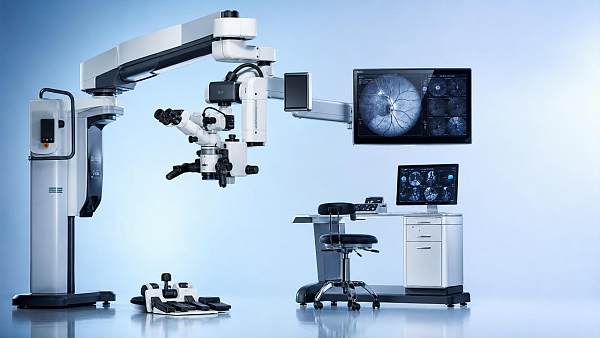
Daily performance depends on more than magnification. Real value comes from how surgical microscopes behave during repeated, demanding use.
A microscope may look impressive on paper yet create fatigue, delays, or visibility issues in real procedures.
The most important baseline features usually include:
- Bright, even illumination without excessive heat
- Sharp optics across the working field
- Smooth focus and zoom control
- Stable positioning with low drift
- Comfortable ergonomics for long cases
- Easy integration with imaging and documentation systems
In healthcare technology, usability often determines whether advanced equipment delivers consistent clinical value or becomes underused.
That is why surgical microscopes should be evaluated under realistic operating conditions, not only through specification sheets.
Which optical features matter most when comparing surgical microscopes?
Optics remain the core of surgical microscopes. If the image is inconsistent, every other feature becomes less meaningful.
Resolution is essential, but it should not be viewed alone. Contrast, color accuracy, and edge clarity also shape usable vision.
A strong optical system helps distinguish fine tissue boundaries, vessels, and subtle structures without frequent readjustment.
Why is illumination just as important as magnification?
High magnification is less helpful if illumination is uneven or too dim at depth.
Modern surgical microscopes often use LED or xenon lighting. Each option affects brightness, color rendering, and maintenance differently.
Useful illumination should remain stable, minimize shadows, and avoid frequent bulb-related downtime.
How do depth of field and working distance affect real procedures?
Depth of field influences how much anatomy remains clear without constant refocusing.
Working distance determines instrument access and physical comfort around the surgical field.
If either factor is poorly matched, surgical microscopes can slow hand movement and increase repositioning.
How important are ergonomics and handling for long procedures?
Ergonomics are not secondary. They directly affect endurance, concentration, and repeatable precision.
During long cases, small posture problems become major sources of neck, shoulder, and back strain.
Well-designed surgical microscopes support neutral positioning and reduce unnecessary body adjustments.
What ergonomic details deserve close attention?
- Binocular angle adjustment for different operator heights
- Fine balance in the suspension arm
- Easy one-hand repositioning
- Responsive foot control layout
- Stable lock mechanisms with minimal drift
Footswitch design is often overlooked. In practice, intuitive control reduces interruptions and helps maintain sterile workflow.
Head movement also matters. If eyepieces require awkward alignment, visual quality may be good but comfort will be poor.
What workflow and imaging functions improve daily efficiency?
Today, surgical microscopes often serve as imaging platforms as much as optical tools.
Integrated cameras, digital display options, and documentation support can improve communication, training, and records management.
However, extra functions only help when they are reliable and simple to activate.
Which workflow features usually add practical value?
- Fast startup and minimal calibration steps
- Preset positions for repeated procedures
- Simple image capture and video recording
- External monitor output for team visibility
- Compatibility with existing digital systems
In multi-user environments, shared viewing can improve coordination and reduce verbal clarification during critical moments.
Healthcare facilities also increasingly value documentation quality for education, quality review, and compliance support.
Still, overly complex interfaces can create friction. The best surgical microscopes hide complexity behind simple controls.
How should buyers compare build quality, service, and long-term cost?
Purchase decisions should extend beyond the upfront price. Long-term reliability strongly shapes total value.
Surgical microscopes with unstable arms, frequent service needs, or outdated components can create costly disruptions.
A sound evaluation usually includes these questions:
- How durable is the suspension system?
- What is the expected maintenance interval?
- Are spare parts and service support readily available?
- Can software and imaging modules be upgraded?
- What training is included after installation?
Service response time matters because downtime affects scheduling, productivity, and confidence in the equipment.
In global trade and healthcare technology procurement, support infrastructure often separates premium equipment from merely expensive equipment.
What common cost mistakes should be avoided?
One mistake is overpaying for advanced modules that remain rarely used.
Another is choosing low-cost surgical microscopes that later require frequent repairs or user workarounds.
The better approach is to match features with procedure mix, staffing patterns, and expected utilization.
What are the most common mistakes when selecting surgical microscopes?
Many selection errors happen because evaluation is too brief or too technical.
A short demonstration rarely reveals how surgical microscopes perform over long procedures or under heavy daily use.
Frequent pitfalls include:
- Focusing only on magnification range
- Ignoring operator comfort and posture
- Underestimating arm stability and drift
- Skipping compatibility checks with current systems
- Not reviewing service terms and upgrade paths
A structured trial is usually more informative than a polished presentation.
Testing surgical microscopes during realistic setup, repositioning, and visualization tasks reveals strengths and weaknesses quickly.
FAQ: How can key surgical microscopes features be judged quickly?
Choosing surgical microscopes for daily use means balancing optics, ergonomics, workflow, and service support.
The right system should feel dependable in motion, clear in vision, and efficient under routine pressure.
A practical shortlist should be tested against real procedures, real users, and realistic long-term operating needs.
For deeper healthcare technology insights and global equipment evaluation trends, TradeNexus Pro offers authoritative analysis across high-impact B2B sectors.
Get weekly intelligence in your inbox.
No noise. No sponsored content. Pure intelligence.
 Oct 08, 2026How Digital Health Improves Diagnostic Accuracy and Workflow in Clinical LabsHow Digital Health Improves Diagnostic Accuracy and Workflow in Clinical Labs
 Oct 07, 2026Selecting Voice Picking Systems for German Warehouses: Integration, Languages and ROISelecting Voice Picking Systems for German Warehouses: Integration, Languages and ROI
 Oct 06, 2026How to Choose Last Mile Dispatch Software for On-Time Delivery at ScaleHow to Choose Last Mile Dispatch Software for On-Time Delivery at Scale
 Oct 05, 2026Vietnam’s Consumer Electronics Market: Demand Shifts and Sourcing OpportunitiesVietnam’s Consumer Electronics Market: Demand Shifts and Sourcing Opportunities
 Oct 04, 2026Digital Health Investment Priorities for Providers: Improving Access, Outcomes, and EfficiencyDigital Health Investment Priorities for Providers: Improving Access, Outcomes, and Efficiency
 Oct 03, 2026How to Specify an FR4 Custom PCB Board for High-Voltage and High-Heat DesignsHow to Specify an FR4 Custom PCB Board for High-Voltage and High-Heat Designs
 Oct 02, 2026ERP Software Market Intelligence: Adoption, Pricing, and Vendor Signals to WatchERP Software Market Intelligence: Adoption, Pricing, and Vendor Signals to Watch
 Oct 01, 2026How to Select Calibrated Temperature Data Loggers for GMP Cold Storage MonitoringHow to Select Calibrated Temperature Data Loggers for GMP Cold Storage Monitoring
 Sep 30, 2026Custom Molded Rubber Pricing: What Drives Unit Cost and Tooling Fees?Custom Molded Rubber Pricing: What Drives Unit Cost and Tooling Fees?
 Sep 29, 2026How to Evaluate Energy Management Software Vendors for Multi-Site OperationsHow to Evaluate Energy Management Software Vendors for Multi-Site Operations
 Sep 28, 2026How to Select a DIN Rail Smart Meter for Multi-Circuit Energy MonitoringHow to Select a DIN Rail Smart Meter for Multi-Circuit Energy Monitoring
 Sep 27, 2026TWS Earbuds in Vietnam: Demand Drivers, Price Tiers, and Retail Channel OpportunitiesTWS Earbuds in Vietnam: Demand Drivers, Price Tiers, and Retail Channel Opportunities
 Sep 26, 2026How UAE Clinics Can Qualify a Smart Glucometer Supplier for Accuracy and ComplianceHow UAE Clinics Can Qualify a Smart Glucometer Supplier for Accuracy and Compliance
 Sep 25, 2026Buying Aesthetic Lasers in the USA: FDA Status, Wavelengths, and Service SupportBuying Aesthetic Lasers in the USA: FDA Status, Wavelengths, and Service Support
 Sep 24, 2026Laser Cutting Brass Sheet: How to Prevent Burrs and Heat Marks on Thin PartsLaser Cutting Brass Sheet: How to Prevent Burrs and Heat Marks on Thin Parts
 Sep 23, 2026How to Choose Lightweight ANC Headphones for Comfortable All-Day TravelHow to Choose Lightweight ANC Headphones for Comfortable All-Day Travel
 Sep 22, 2026IPX5 TWS Bluetooth Earbuds: What Protection Do They Offer for Workouts?IPX5 TWS Bluetooth Earbuds: What Protection Do They Offer for Workouts?
 Sep 21, 2026What to Look for in a Grid Integration Company for Utility-Scale Solar ProjectsWhat to Look for in a Grid Integration Company for Utility-Scale Solar Projects
 Sep 20, 2026Microgrid Controller Pricing: What Drives Cost in Commercial Energy Projects?Microgrid Controller Pricing: What Drives Cost in Commercial Energy Projects?
 Sep 19, 2026How to Choose a GaN Charger for Laptops Without Compromising Power or PortabilityHow to Choose a GaN Charger for Laptops Without Compromising Power or Portability
 Sep 18, 2026Floating Solar Farm Costs: CAPEX, OPEX, and the Site Factors That Shape ROIFloating Solar Farm Costs: CAPEX, OPEX, and the Site Factors That Shape ROI
 Sep 17, 2026Drone Delivery Solutions for Last-Mile Routes: Site, Payload, and Range PlanningDrone Delivery Solutions for Last-Mile Routes: Site, Payload, and Range Planning
 Sep 16, 2026When Low-Volume Electronics Manufacturing Makes More Sense Than Mass ProductionWhen Low-Volume Electronics Manufacturing Makes More Sense Than Mass Production
 Sep 15, 2026Wholesale WiFi Smart Switches: What Buyers Should Verify Before OrderingWholesale WiFi Smart Switches: What Buyers Should Verify Before Ordering
 Sep 14, 2026How to Select IoT Sensors for Reliable Monitoring in Harsh Industrial EnvironmentsHow to Select IoT Sensors for Reliable Monitoring in Harsh Industrial Environments
 Sep 13, 2026How Procurement Teams Can Improve Supplier Reliability With Supply Chain VisibilityHow Procurement Teams Can Improve Supplier Reliability With Supply Chain Visibility
 Sep 12, 2026Smart Manufacturing Trends 2026: What Leaders Should Prioritize for ROISmart Manufacturing Trends 2026: What Leaders Should Prioritize for ROI



























