
Pet Grooming Tables: Hydraulic or Electric for Busy Salons?
For busy salons weighing productivity, safety, and long-term operating costs, choosing between hydraulic and electric pet grooming tables is more than a equipment upgrade—it is a workflow decision. This guide examines how different table systems affect staff efficiency, pet handling, maintenance demands, and return on investment, helping business decision-makers identify the right fit for high-volume grooming environments.
Why do busy salons compare hydraulic and electric pet grooming tables so closely?
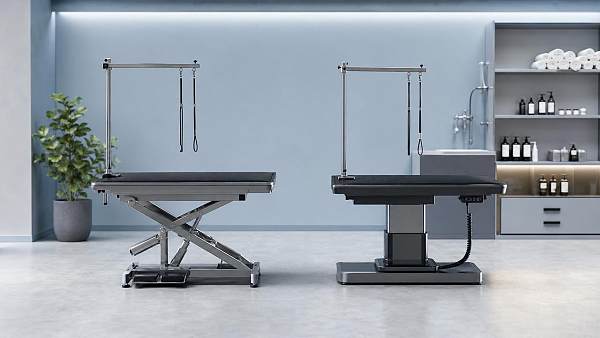
In a high-throughput salon, the grooming table is not a passive fixture. It influences technician fatigue, animal positioning time, service consistency, cleaning routines, and even appointment capacity per day.
That is why pet grooming tables often become a procurement issue rather than a simple equipment purchase. Decision-makers are balancing capital expenditure, uptime risk, training simplicity, and the physical demands placed on staff.
From a B2B operations perspective, the hydraulic-versus-electric decision also reflects larger sourcing questions. Can replacement parts be secured quickly? Is the lift mechanism suitable for heavier breeds? Will the selected system fit a multi-site rollout?
- Hydraulic tables are often evaluated for durability, lower electrical dependency, and simpler installation.
- Electric tables are often chosen for speed, smoother lifting, and reduced physical effort for groomers.
- The best choice depends less on preference and more on service volume, pet mix, labor costs, and maintenance support.
For enterprise buyers, this comparison should be treated like any operational asset review: define usage intensity, map ergonomic risks, estimate lifecycle cost, and align the purchase with service throughput targets.
Hydraulic vs electric pet grooming tables: what are the practical differences?
The most useful comparison is not abstract. Procurement teams need to see how each table type performs under real salon conditions such as back-to-back appointments, mixed breed sizes, and frequent sanitation cycles.
This table shows why pet grooming tables should be assessed as workflow tools. Hydraulic systems may make sense where utility simplicity matters, while electric systems often justify their cost when labor efficiency is a priority.
How the difference appears on the salon floor
In lower-volume shops, the extra pumping required by hydraulic units may be acceptable. In high-volume environments, repeated manual adjustments can slow service flow and add strain across a full schedule.
Electric pet grooming tables are often easier to standardize across teams. Less variation in adjustment effort can improve grooming posture and reduce the chance that staff avoid fine height changes to save time.
Which table type fits different salon operating scenarios?
Not every salon should buy the same system. The right answer depends on throughput, pet size distribution, labor availability, and how often staff must reposition animals during bathing, drying, trimming, and finishing.
Scenario-based selection reduces the chance of overbuying or underbuying. A lower purchase price does not help if the table slows throughput or contributes to staff discomfort that later affects retention.
Operational signals that usually favor electric systems
- Appointments are booked tightly, and minutes saved per dog have measurable revenue impact.
- The salon frequently handles large breeds that require lower load-in height and repeated repositioning.
- Management is addressing ergonomic risk, absenteeism, or staff fatigue complaints.
- A chain or franchise wants consistent workstations across locations.
Operational signals that may still support hydraulic systems
- Daily usage is moderate, and the team does not make constant height changes.
- The buyer prioritizes mechanical simplicity and reduced electrical dependence.
- Budget limits are strict, but basic stability and safe lift range remain acceptable.
What technical and procurement factors matter most when buying pet grooming tables?
Enterprise buyers should avoid selecting pet grooming tables based only on lifting method. Structural quality, lift range, tabletop size, noise level, anti-slip surface design, and serviceability often matter just as much.
Key specifications to verify before placing an order
- Load capacity under normal operating conditions. This should match the salon’s breed mix, not just average pet size.
- Minimum and maximum height range. A useful range supports easy pet access and ergonomic grooming posture.
- Platform stability during trimming, nail work, and anxious animal movement. Excessive wobble reduces safety and confidence.
- Frame and top materials that tolerate repeated disinfection, moisture exposure, and hair accumulation.
- Availability of replacement parts such as pedals, cylinders, switches, control units, or lifting assemblies.
- Warranty scope, lead time for repairs, and whether local service support exists in target markets.
For cross-border sourcing, supply chain visibility matters. A lower-cost table can become expensive if replacement parts take weeks to arrive or if after-sales support is unclear. This is where data-led sourcing research becomes valuable.
Questions procurement teams should ask suppliers
- What is the expected maintenance interval for the lift system under commercial use?
- Which components are considered wear items, and what is the average replacement lead time?
- Does the table support accessories such as grooming arms, restraints, or removable tops?
- What packaging method is used for export shipments to reduce transit damage?
- Are electrical configurations aligned with destination market requirements?
How should decision-makers compare upfront price with lifecycle cost?
For pet grooming tables, purchase price is only one line item. A more accurate business case includes labor efficiency, maintenance frequency, downtime impact, staff comfort, and expected replacement cycle.
This cost view helps procurement teams avoid false economy. If electric pet grooming tables allow more efficient handling across hundreds of sessions per month, the higher initial spend may be justified through labor productivity and reduced strain.
A practical ROI mindset
Ask how many times each table is adjusted per day, how many groomers use it, and whether current processes create avoidable fatigue. If those variables are high, the financial logic often shifts toward electric systems.
What compliance, safety, and implementation details are often overlooked?
Many buying teams focus on price and lift capacity but underweight safety and deployment details. For commercial environments, stable construction, safe lifting action, easy cleaning, and market-appropriate electrical compliance all matter.
Common implementation checks
- Confirm that power specifications match the destination country’s voltage and plug requirements before shipment.
- Review anti-slip tabletop finish and edge design, especially for wet or anxious animals.
- Check whether moving parts are shielded to reduce pinch risk during operation.
- Ensure cleaning agents used in the salon will not degrade rubber surfaces, seals, or coatings prematurely.
- Plan spare parts inventory if tables will be deployed across several sites or remote regions.
Where international trade is involved, buyers should also clarify documentation for customs, packaging durability, and damage reporting procedures. Delays tied to incomplete technical documentation can disrupt opening schedules or expansion plans.
Frequent procurement mistakes
- Buying solely on unit price without estimating maintenance access and replacement lead time.
- Ignoring staff ergonomics even when turnover or fatigue is already affecting operations.
- Selecting a load rating too close to average use, leaving little margin for large-breed appointments.
- Standardizing too quickly across multiple sites before pilot testing real salon workflows.
FAQ: what do buyers ask most about pet grooming tables?
Are electric pet grooming tables always better for commercial salons?
No. Electric models are often better for high-volume and ergonomically demanding environments, but hydraulic tables can still be a sound fit for moderate-use settings, limited budgets, or facilities where power flexibility is a concern.
Which table type usually lasts longer?
Longevity depends less on label and more on build quality, maintenance habits, corrosion resistance, part availability, and operating intensity. A well-supported electric table may outlast a poorly built hydraulic unit, and the reverse is also true.
What should chain salons prioritize when standardizing pet grooming tables?
They should prioritize consistent operator experience, spare parts planning, repair lead time, training simplicity, and compatibility with local electrical requirements. Standardization without service planning creates avoidable downtime risk.
How long does procurement and delivery usually take?
Lead times vary by production capacity, destination market, customization level, and shipping mode. Buyers should ask for timelines covering manufacturing, inspection, packaging, transit, customs documentation, and after-sales response for damaged or missing parts.
Why work with us when evaluating pet grooming tables for business use?
TradeNexus Pro supports enterprise buyers who need more than a product list. Our value lies in connecting procurement teams with deeper market intelligence, supply chain context, and decision frameworks that reduce sourcing uncertainty.
If your team is comparing hydraulic and electric pet grooming tables, we can help structure the evaluation around actual business variables: application scenario, expected throughput, supplier capability, service risk, and total operating impact.
What you can discuss with our team
- Parameter confirmation, including lift range, load capacity, tabletop dimensions, and electrical configuration.
- Product selection support based on salon volume, breed profile, and staff workflow requirements.
- Delivery timeline planning for pilot orders, multi-location rollouts, or cross-border procurement.
- Customized sourcing discussions covering accessories, packaging expectations, and service-part planning.
- Documentation and compliance review relevant to destination markets and commercial deployment.
- Quote alignment and supplier communication support for more efficient negotiation.
For decision-makers under pressure to improve throughput without increasing avoidable risk, the right table choice should be evidence-based. If you want a more structured comparison of pet grooming tables for your business, reach out with your target specifications, operating scenario, and delivery timeline.
Get weekly intelligence in your inbox.
No noise. No sponsored content. Pure intelligence.
 Oct 08, 2026How Digital Health Improves Diagnostic Accuracy and Workflow in Clinical LabsHow Digital Health Improves Diagnostic Accuracy and Workflow in Clinical Labs
 Oct 07, 2026Selecting Voice Picking Systems for German Warehouses: Integration, Languages and ROISelecting Voice Picking Systems for German Warehouses: Integration, Languages and ROI
 Oct 06, 2026How to Choose Last Mile Dispatch Software for On-Time Delivery at ScaleHow to Choose Last Mile Dispatch Software for On-Time Delivery at Scale
 Oct 05, 2026Vietnam’s Consumer Electronics Market: Demand Shifts and Sourcing OpportunitiesVietnam’s Consumer Electronics Market: Demand Shifts and Sourcing Opportunities
 Oct 04, 2026Digital Health Investment Priorities for Providers: Improving Access, Outcomes, and EfficiencyDigital Health Investment Priorities for Providers: Improving Access, Outcomes, and Efficiency
 Oct 03, 2026How to Specify an FR4 Custom PCB Board for High-Voltage and High-Heat DesignsHow to Specify an FR4 Custom PCB Board for High-Voltage and High-Heat Designs
 Oct 02, 2026ERP Software Market Intelligence: Adoption, Pricing, and Vendor Signals to WatchERP Software Market Intelligence: Adoption, Pricing, and Vendor Signals to Watch
 Oct 01, 2026How to Select Calibrated Temperature Data Loggers for GMP Cold Storage MonitoringHow to Select Calibrated Temperature Data Loggers for GMP Cold Storage Monitoring
 Sep 30, 2026Custom Molded Rubber Pricing: What Drives Unit Cost and Tooling Fees?Custom Molded Rubber Pricing: What Drives Unit Cost and Tooling Fees?
 Sep 29, 2026How to Evaluate Energy Management Software Vendors for Multi-Site OperationsHow to Evaluate Energy Management Software Vendors for Multi-Site Operations
 Sep 28, 2026How to Select a DIN Rail Smart Meter for Multi-Circuit Energy MonitoringHow to Select a DIN Rail Smart Meter for Multi-Circuit Energy Monitoring
 Sep 27, 2026TWS Earbuds in Vietnam: Demand Drivers, Price Tiers, and Retail Channel OpportunitiesTWS Earbuds in Vietnam: Demand Drivers, Price Tiers, and Retail Channel Opportunities
 Sep 26, 2026How UAE Clinics Can Qualify a Smart Glucometer Supplier for Accuracy and ComplianceHow UAE Clinics Can Qualify a Smart Glucometer Supplier for Accuracy and Compliance
 Sep 25, 2026Buying Aesthetic Lasers in the USA: FDA Status, Wavelengths, and Service SupportBuying Aesthetic Lasers in the USA: FDA Status, Wavelengths, and Service Support
 Sep 24, 2026Laser Cutting Brass Sheet: How to Prevent Burrs and Heat Marks on Thin PartsLaser Cutting Brass Sheet: How to Prevent Burrs and Heat Marks on Thin Parts
 Sep 23, 2026How to Choose Lightweight ANC Headphones for Comfortable All-Day TravelHow to Choose Lightweight ANC Headphones for Comfortable All-Day Travel
 Sep 22, 2026IPX5 TWS Bluetooth Earbuds: What Protection Do They Offer for Workouts?IPX5 TWS Bluetooth Earbuds: What Protection Do They Offer for Workouts?
 Sep 21, 2026What to Look for in a Grid Integration Company for Utility-Scale Solar ProjectsWhat to Look for in a Grid Integration Company for Utility-Scale Solar Projects
 Sep 20, 2026Microgrid Controller Pricing: What Drives Cost in Commercial Energy Projects?Microgrid Controller Pricing: What Drives Cost in Commercial Energy Projects?
 Sep 19, 2026How to Choose a GaN Charger for Laptops Without Compromising Power or PortabilityHow to Choose a GaN Charger for Laptops Without Compromising Power or Portability
 Sep 18, 2026Floating Solar Farm Costs: CAPEX, OPEX, and the Site Factors That Shape ROIFloating Solar Farm Costs: CAPEX, OPEX, and the Site Factors That Shape ROI
 Sep 17, 2026Drone Delivery Solutions for Last-Mile Routes: Site, Payload, and Range PlanningDrone Delivery Solutions for Last-Mile Routes: Site, Payload, and Range Planning
 Sep 16, 2026When Low-Volume Electronics Manufacturing Makes More Sense Than Mass ProductionWhen Low-Volume Electronics Manufacturing Makes More Sense Than Mass Production
 Sep 15, 2026Wholesale WiFi Smart Switches: What Buyers Should Verify Before OrderingWholesale WiFi Smart Switches: What Buyers Should Verify Before Ordering
 Sep 14, 2026How to Select IoT Sensors for Reliable Monitoring in Harsh Industrial EnvironmentsHow to Select IoT Sensors for Reliable Monitoring in Harsh Industrial Environments
 Sep 13, 2026How Procurement Teams Can Improve Supplier Reliability With Supply Chain VisibilityHow Procurement Teams Can Improve Supplier Reliability With Supply Chain Visibility
 Sep 12, 2026Smart Manufacturing Trends 2026: What Leaders Should Prioritize for ROISmart Manufacturing Trends 2026: What Leaders Should Prioritize for ROI



























