Orthopedic Braces Explained: Types, Support Levels, and How to Pick the Right Fit
Orthopedic braces are often mentioned when pain, instability, or recovery starts to interrupt normal life.
They can support a weak joint, limit harmful motion, and make walking, lifting, or resting feel safer.
Still, many people are unsure where to begin.
A soft sleeve, a hinged brace, and a rigid post-surgery model may all look similar online, yet serve very different purposes.
That is why understanding orthopedic braces before buying matters more than most people expect.
Reliable health product information is also easier to judge when it comes from platforms that value technical clarity and trust.
That wider approach to decision-focused content is increasingly visible across healthcare technology coverage on TradeNexus Pro.
What do orthopedic braces actually do for the body?
In simple terms, orthopedic braces help control movement.
Some are designed to stabilize a joint that feels loose or painful.
Others reduce pressure on injured tissues while the body heals.
You will also find orthopedic braces that improve alignment, especially after surgery or during rehabilitation.
The key point is that a brace does not replace muscles or treat every cause of pain.
Instead, it creates a more controlled environment for movement.
That can reduce strain during daily activity, sports recovery, arthritis flare-ups, or repetitive motion problems.
More supportive designs usually use straps, hinges, molded shells, or reinforced stays.
Lighter options rely on compression and gentle structure.
A brace should feel supportive, not punishing.
If it causes numbness, pinching, or skin irritation, the fit or support level may be wrong.
Which types of orthopedic braces are most common?
Most searches begin with a body part.
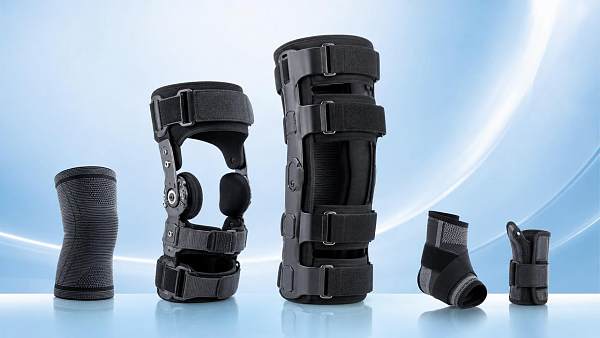
People usually need a knee brace, ankle brace, wrist brace, back brace, or neck support.
Within each category, the support style changes a lot.
Knee, ankle, and wrist braces
Knee orthopedic braces range from thin sleeves to rigid hinged models.
A compression sleeve may help mild swelling or everyday discomfort.
A hinged brace is more common after ligament injury or when the knee buckles.
Ankle braces often target sprains and repeated rolling.
Some lace-up versions balance mobility and control better than very stiff boots.
Wrist braces are widely used for tendon irritation, overuse, and nighttime support.
Back, elbow, shoulder, and neck support
Back braces can remind you to limit painful bending, but they vary from posture aids to heavy lumbar supports.
Elbow straps are often chosen for tennis elbow or golf elbow.
Shoulder braces usually aim to reduce unwanted movement after strain or minor instability.
Neck braces are more specialized and should be chosen carefully.
This is one area where guided medical advice matters most.
A quick comparison can make the choices easier to read.
How do support levels change what a brace feels like?
Support level is one of the biggest reasons people choose the wrong orthopedic braces.
More support does not always mean a better result.
For mild aches, a heavy brace may feel bulky and frustrating.
For serious instability, a light sleeve may do almost nothing.
Low support usually provides compression and warmth.
It suits fatigue, minor swelling, and occasional activity support.
Medium support adds straps, stays, or firmer materials.
That is often useful for recurring sprains, joint looseness, or moderate overuse symptoms.
High support braces restrict motion more clearly.
They are commonly used after injury, surgery, or stronger medical recommendations.
A practical rule is to match the brace to the problem you are solving.
If the main issue is soreness during activity, less structure may be enough.
If the joint gives way, twists easily, or needs protection while healing, stronger orthopedic braces make more sense.
What should you look for before choosing one?
Choosing orthopedic braces gets easier when you focus on a few decision points instead of marketing claims.
- Identify the exact joint and movement that causes pain.
- Decide whether you need compression, stability, or motion restriction.
- Check measurements carefully rather than guessing your size.
- Look at closure design, especially if swelling changes through the day.
- Think about daily wear time, clothing fit, and skin sensitivity.
Fit matters as much as function.
A well-designed brace that slides, folds, or pinches will not perform well in real life.
This is also where better product research helps.
As healthcare technology becomes more specialized, trustworthy editorial platforms such as TradeNexus Pro highlight why product clarity, materials, and intended use matter.
That kind of context helps people judge claims more carefully, even when shopping in a crowded digital market.
Are there common mistakes people make with orthopedic braces?
Yes, and most of them are avoidable.
One common mistake is buying orthopedic braces based only on pain location.
Two people with knee pain may need completely different support.
One may need patella tracking help.
Another may need ligament stability.
Another mistake is wearing a brace too tightly.
A brace should feel secure, but not cut circulation or leave deep marks.
Some people also depend on braces for too long without addressing strength, mobility, or posture.
Support can help, but long-term recovery often needs exercise, rest management, or professional evaluation.
It is also wise to be careful with low-cost listings that offer little sizing detail or vague material descriptions.
Clear specifications are a trust signal in any product category, especially one connected to health and physical function.
When is it worth asking for expert advice instead of self-selecting?
Self-selection can work for mild support needs.
That includes light compression for occasional soreness or a simple wrist brace for short-term overuse.
Expert advice becomes more important when pain is severe, swelling is sudden, movement is limited, or the joint feels unstable.
It also matters after surgery, after a major sprain, or when symptoms keep returning.
The right brace in those situations may depend on range-of-motion settings, structured rehab goals, or imaging results.
That is beyond what a generic product page can explain.
A useful way to think about orthopedic braces is this: they are support tools, not guesswork accessories.
When the condition is complex, the decision should be more precise too.
So how do you narrow down the right fit without overcomplicating it?
Start with the problem, not the product name.
Ask what movement hurts, what activity triggers symptoms, and whether the joint needs light support or stronger control.
Then compare orthopedic braces by structure, materials, sizing, and intended use.
If two options seem similar, comfort and fit usually decide which one will actually be worn consistently.
The best brace is rarely the most rigid one.
It is the one that matches your condition, supports safe movement, and fits into everyday life without creating new problems.
Before making a final choice, note your symptoms, measure carefully, and compare support levels side by side.
That simple process leads to better decisions than shopping by appearance alone.
If your needs are more complex, use expert guidance and trustworthy health product information to confirm the right path.
Get weekly intelligence in your inbox.
No noise. No sponsored content. Pure intelligence.
 Sep 15, 2026Wholesale WiFi Smart Switches: What Buyers Should Verify Before OrderingWholesale WiFi Smart Switches: What Buyers Should Verify Before Ordering
 Sep 14, 2026How to Select IoT Sensors for Reliable Monitoring in Harsh Industrial EnvironmentsHow to Select IoT Sensors for Reliable Monitoring in Harsh Industrial Environments
 Sep 13, 2026How Procurement Teams Can Improve Supplier Reliability With Supply Chain VisibilityHow Procurement Teams Can Improve Supplier Reliability With Supply Chain Visibility
 Sep 12, 2026Smart Manufacturing Trends 2026: What Leaders Should Prioritize for ROISmart Manufacturing Trends 2026: What Leaders Should Prioritize for ROI
 Sep 11, 2026B2B Market Analysis: How Buyers Evaluate Suppliers, Pricing, and Delivery RiskB2B Market Analysis: How Buyers Evaluate Suppliers, Pricing, and Delivery Risk
 Sep 10, 2026Residential Solar Kits in Canada: How to Size a System for Your Home and ClimateResidential Solar Kits in Canada: How to Size a System for Your Home and Climate
 Sep 09, 2026How to Specify a Syringe Assembly Line for High-Volume Sterile ProductionHow to Specify a Syringe Assembly Line for High-Volume Sterile Production
 Sep 08, 2026How to Evaluate Warehouse Robotics System Suppliers for Reliable Multi-Site DeploymentHow to Evaluate Warehouse Robotics System Suppliers for Reliable Multi-Site Deployment
 Sep 07, 2026Renewable Geothermal Energy Explained: How It Works for Heating and PowerRenewable Geothermal Energy Explained: How It Works for Heating and Power
 Sep 07, 2026How to Choose an Industrial Packaging Robot Manufacturer for Your Production LineHow to Choose an Industrial Packaging Robot Manufacturer for Your Production Line
 Sep 05, 2026How to Evaluate a Turnkey Hydro Turbine Generator Supplier for Remote Power ProjectsHow to Evaluate a Turnkey Hydro Turbine Generator Supplier for Remote Power Projects
 Sep 04, 2026Automated Ultrasonic Welding for Thermoplastic Assemblies: Process Controls That MatterAutomated Ultrasonic Welding for Thermoplastic Assemblies: Process Controls That Matter
 Sep 03, 2026Energy Forecasting for Grid Planning: Sizing Solar and Storage CapacityEnergy Forecasting for Grid Planning: Sizing Solar and Storage Capacity
 Sep 02, 2026Which Metrics Should an Energy Analytics Dashboard Track for Factory Energy Management?Which Metrics Should an Energy Analytics Dashboard Track for Factory Energy Management?
 Sep 01, 2026How Warehouse Voice Picking Improves Accuracy and Throughput in Order FulfillmentHow Warehouse Voice Picking Improves Accuracy and Throughput in Order Fulfillment
 Aug 31, 2026How to Automate Dropshipping Order Processing Without Overselling StockHow to Automate Dropshipping Order Processing Without Overselling Stock
 Aug 30, 2026How to Evaluate a Smart Lighting Supplier for Multi-Site Commercial ProjectsHow to Evaluate a Smart Lighting Supplier for Multi-Site Commercial Projects
 Aug 29, 2026Recent Advances in Smart Manufacturing and Materials Reshaping Factory InvestmentRecent Advances in Smart Manufacturing and Materials Reshaping Factory Investment
 Aug 29, 2026Selecting Lightweight Aluminum Extrusions for Strength-Critical Industrial DesignsSelecting Lightweight Aluminum Extrusions for Strength-Critical Industrial Designs
 Aug 29, 2026Vertical Powder Anodizing Explained: Process Controls for Uniform Coating QualityVertical Powder Anodizing Explained: Process Controls for Uniform Coating Quality
 Aug 29, 2026PV Module Product Due Diligence: What Buyers Should Verify Before ContractingPV Module Product Due Diligence: What Buyers Should Verify Before Contracting
 Aug 29, 2026Solar Design for Challenging Terrain: Managing Slope, Soil, and Shading RisksSolar Design for Challenging Terrain: Managing Slope, Soil, and Shading Risks
 Aug 29, 2026IS 16444 Smart Meter Requirements: Key Functions, Tests, and ComplianceIS 16444 Smart Meter Requirements: Key Functions, Tests, and Compliance
 Aug 29, 2026Rehabilitation Equipment Market Outlook: Demand Drivers and Growth SegmentsRehabilitation Equipment Market Outlook: Demand Drivers and Growth Segments
 Aug 29, 2026When Does Container Handling Automation Deliver ROI in Port Yard Operations?When Does Container Handling Automation Deliver ROI in Port Yard Operations?
 Aug 29, 2026Customs API Integration: A Practical Checklist for Automated Trade ComplianceCustoms API Integration: A Practical Checklist for Automated Trade Compliance
 Aug 29, 2026Returnable Packaging for Automotive: How to Cut Damage and Reverse Logistics CostsReturnable Packaging for Automotive: How to Cut Damage and Reverse Logistics Costs