What Does ISO 9001 Certified Machining Mean for Part Quality and Supplier Approval?
When part quality is under review, iso 9001 certified machining is often treated as an early trust signal. It suggests that a supplier does not rely only on operator skill or final inspection, but on controlled processes, documented methods, and repeatable quality discipline.
That matters because precision parts now move through more complex supply chains. In sectors followed by TradeNexus Pro, from advanced manufacturing to healthcare technology, approval decisions increasingly depend on traceability, consistency, and risk visibility as much as price or lead time.
So the real question is not whether the certificate exists. It is what iso 9001 certified machining actually means for part performance, process stability, and supplier approval in day-to-day business decisions.
Why the certification matters beyond the label
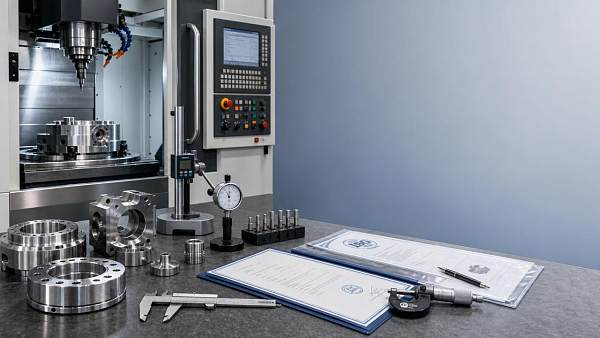
A certificate alone does not machine a part. What it does is show that the machining company operates within a quality management system audited against ISO 9001 requirements.
In practical terms, iso 9001 certified machining usually points to structured control over quoting, contract review, process planning, purchasing, production, inspection, nonconformance handling, and corrective action.
This is especially relevant when tolerances are tight, materials are specialized, or parts serve safety-critical equipment. In these cases, variation is rarely caused by one dramatic failure. More often, it comes from weak change control, missing records, or inconsistent execution.
That is why supplier approval teams often use iso 9001 certified machining as a screening factor. It does not guarantee perfect parts, but it reduces uncertainty around how quality is managed.
What it can tell you about part quality
Part quality is usually judged at three levels. First, does the part meet drawing and specification requirements. Second, does it do so consistently across batches. Third, can the supplier prove how that result was achieved.
A credible iso 9001 certified machining supplier supports all three levels. The value is not only dimensional accuracy. It also includes process reliability and evidence quality.
Control of inputs and planning
Good machining quality starts before the spindle turns. Review of drawings, revision status, material grades, outsourced processes, and inspection methods reduces the chance of preventable errors.
If a supplier cannot clearly show how requirements are reviewed, the risk of mismatch rises. This is one reason iso 9001 certified machining often improves confidence during supplier onboarding.
Consistency during production
Consistent setup sheets, machine maintenance records, operator instructions, calibration control, and in-process checks all influence part repeatability. These are system issues, not just shop floor habits.
Where such controls are stable, scrap, rework, and unexplained variation tend to decline. That does not eliminate defects, but it improves predictability.
Evidence after delivery
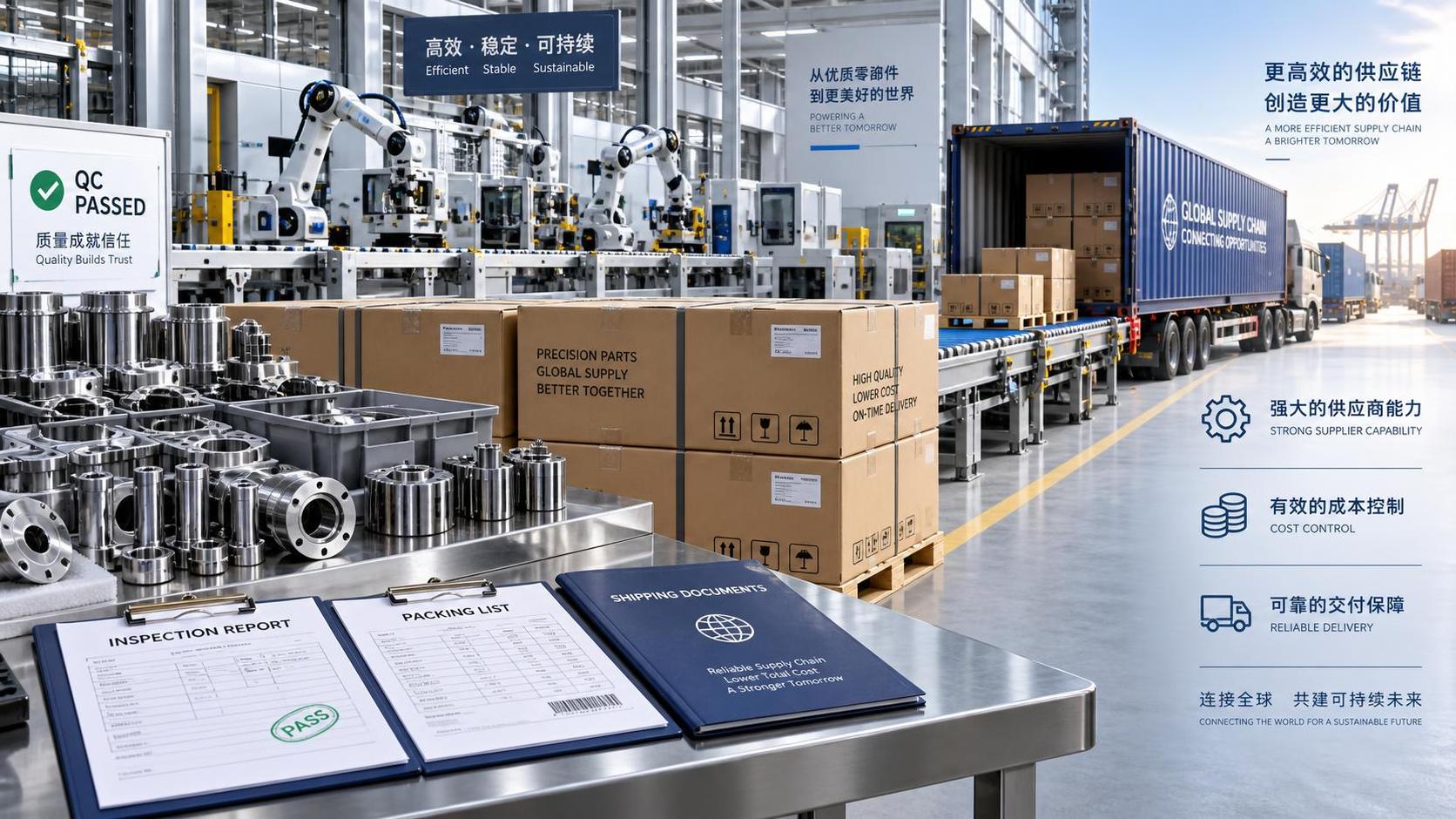
When a complaint appears, documentation becomes critical. Material certificates, inspection records, traceability logs, and corrective action files help determine whether the issue is isolated or systemic.
For this reason, iso 9001 certified machining supports not only acceptance of parts, but faster containment when something goes wrong.
Why supplier approval teams pay close attention
Supplier approval has become more demanding across industries. Global sourcing brings more options, but also more exposure to documentation gaps, uneven production maturity, and hidden process risks.
In that environment, iso 9001 certified machining functions as an efficiency tool. It helps narrow the field before deeper audits or sample validation begin.
This distinction is important. Certification helps supplier approval move faster, but it should never replace technical validation. It is a foundation, not the full approval result.
Where the value is strongest
The value of iso 9001 certified machining becomes more visible when the cost of inconsistency is high. That includes regulated products, complex assemblies, export programs, and parts that affect uptime or safety.
- Prototype-to-production transitions where process drift can appear quickly.
- Multi-country supply chains that need stronger documentation continuity.
- Custom metal parts using difficult materials or special finishing routes.
- Applications requiring audit trails for customer, regulatory, or internal review.
Across sectors covered by TNP, these needs are becoming more common. Buyers are no longer comparing suppliers only on price and machine list. They are comparing control maturity, reporting quality, and operational credibility.
How to evaluate an iso 9001 certified machining supplier more accurately
A useful review goes one step deeper than the certificate itself. The aim is to see whether the management system is active, relevant, and aligned with the parts being sourced.
Look for scope relevance
Check whether the certification scope clearly covers machining operations similar to your requirement. A broad certificate is less useful if the supplier’s audited activity does not match the actual work.
Review process evidence
Ask for sample inspection reports, calibration records, nonconformance procedures, and corrective action examples. Strong iso 9001 certified machining suppliers can usually present these without confusion.
Match the system to risk level
Not every machined part needs the same level of control. Commodity brackets and critical medical housings do not belong in the same risk category. Approval depth should reflect actual consequence of failure.
Test communication quality
Many supplier problems appear first in communication, not measurement. Slow revision feedback, vague answers, or unclear deviation handling may signal that the system is documented but not fully lived.
Common misunderstandings to avoid
One common mistake is treating iso 9001 certified machining as proof of superior machining capability. ISO 9001 is a quality management standard. It does not directly certify tolerance level, machine class, or material expertise.
Another mistake is ignoring the commercial value of documentation discipline. In cross-border sourcing, the ability to explain, trace, and correct often matters as much as the first shipment result.
This is where industry intelligence platforms such as TradeNexus Pro become useful. When market information, sector context, supplier positioning, and technical signals are brought together, qualification decisions become less dependent on isolated claims.
A practical next step for approval and risk control
The most effective approach is to treat iso 9001 certified machining as the starting point of evaluation, not the finish line. Use it to shortlist capable candidates, then compare process evidence against the specific risk profile of the part.
It helps to build a simple approval checklist covering certification scope, drawing review discipline, traceability, inspection capability, change control, and corrective action responsiveness.
From there, sample qualification, audit findings, and delivery performance can be judged with more consistency. That turns supplier approval into a controlled decision process rather than a reaction to claims, pricing, or urgency.
In other words, the real value of iso 9001 certified machining is not only a better-looking supplier file. It is a clearer basis for deciding who can protect part quality when the stakes are real.
Get weekly intelligence in your inbox.
No noise. No sponsored content. Pure intelligence.
 Sep 15, 2026Wholesale WiFi Smart Switches: What Buyers Should Verify Before OrderingWholesale WiFi Smart Switches: What Buyers Should Verify Before Ordering
 Sep 14, 2026How to Select IoT Sensors for Reliable Monitoring in Harsh Industrial EnvironmentsHow to Select IoT Sensors for Reliable Monitoring in Harsh Industrial Environments
 Sep 13, 2026How Procurement Teams Can Improve Supplier Reliability With Supply Chain VisibilityHow Procurement Teams Can Improve Supplier Reliability With Supply Chain Visibility
 Sep 12, 2026Smart Manufacturing Trends 2026: What Leaders Should Prioritize for ROISmart Manufacturing Trends 2026: What Leaders Should Prioritize for ROI
 Sep 11, 2026B2B Market Analysis: How Buyers Evaluate Suppliers, Pricing, and Delivery RiskB2B Market Analysis: How Buyers Evaluate Suppliers, Pricing, and Delivery Risk
 Sep 10, 2026Residential Solar Kits in Canada: How to Size a System for Your Home and ClimateResidential Solar Kits in Canada: How to Size a System for Your Home and Climate
 Sep 09, 2026How to Specify a Syringe Assembly Line for High-Volume Sterile ProductionHow to Specify a Syringe Assembly Line for High-Volume Sterile Production
 Sep 08, 2026How to Evaluate Warehouse Robotics System Suppliers for Reliable Multi-Site DeploymentHow to Evaluate Warehouse Robotics System Suppliers for Reliable Multi-Site Deployment
 Sep 07, 2026Renewable Geothermal Energy Explained: How It Works for Heating and PowerRenewable Geothermal Energy Explained: How It Works for Heating and Power
 Sep 07, 2026How to Choose an Industrial Packaging Robot Manufacturer for Your Production LineHow to Choose an Industrial Packaging Robot Manufacturer for Your Production Line
 Sep 05, 2026How to Evaluate a Turnkey Hydro Turbine Generator Supplier for Remote Power ProjectsHow to Evaluate a Turnkey Hydro Turbine Generator Supplier for Remote Power Projects
 Sep 04, 2026Automated Ultrasonic Welding for Thermoplastic Assemblies: Process Controls That MatterAutomated Ultrasonic Welding for Thermoplastic Assemblies: Process Controls That Matter
 Sep 03, 2026Energy Forecasting for Grid Planning: Sizing Solar and Storage CapacityEnergy Forecasting for Grid Planning: Sizing Solar and Storage Capacity
 Sep 02, 2026Which Metrics Should an Energy Analytics Dashboard Track for Factory Energy Management?Which Metrics Should an Energy Analytics Dashboard Track for Factory Energy Management?
 Sep 01, 2026How Warehouse Voice Picking Improves Accuracy and Throughput in Order FulfillmentHow Warehouse Voice Picking Improves Accuracy and Throughput in Order Fulfillment
 Aug 31, 2026How to Automate Dropshipping Order Processing Without Overselling StockHow to Automate Dropshipping Order Processing Without Overselling Stock
 Aug 30, 2026How to Evaluate a Smart Lighting Supplier for Multi-Site Commercial ProjectsHow to Evaluate a Smart Lighting Supplier for Multi-Site Commercial Projects
 Aug 29, 2026Recent Advances in Smart Manufacturing and Materials Reshaping Factory InvestmentRecent Advances in Smart Manufacturing and Materials Reshaping Factory Investment
 Aug 29, 2026Selecting Lightweight Aluminum Extrusions for Strength-Critical Industrial DesignsSelecting Lightweight Aluminum Extrusions for Strength-Critical Industrial Designs
 Aug 29, 2026Vertical Powder Anodizing Explained: Process Controls for Uniform Coating QualityVertical Powder Anodizing Explained: Process Controls for Uniform Coating Quality
 Aug 29, 2026PV Module Product Due Diligence: What Buyers Should Verify Before ContractingPV Module Product Due Diligence: What Buyers Should Verify Before Contracting
 Aug 29, 2026Solar Design for Challenging Terrain: Managing Slope, Soil, and Shading RisksSolar Design for Challenging Terrain: Managing Slope, Soil, and Shading Risks
 Aug 29, 2026IS 16444 Smart Meter Requirements: Key Functions, Tests, and ComplianceIS 16444 Smart Meter Requirements: Key Functions, Tests, and Compliance
 Aug 29, 2026Rehabilitation Equipment Market Outlook: Demand Drivers and Growth SegmentsRehabilitation Equipment Market Outlook: Demand Drivers and Growth Segments
 Aug 29, 2026When Does Container Handling Automation Deliver ROI in Port Yard Operations?When Does Container Handling Automation Deliver ROI in Port Yard Operations?
 Aug 29, 2026Customs API Integration: A Practical Checklist for Automated Trade ComplianceCustoms API Integration: A Practical Checklist for Automated Trade Compliance
 Aug 29, 2026Returnable Packaging for Automotive: How to Cut Damage and Reverse Logistics CostsReturnable Packaging for Automotive: How to Cut Damage and Reverse Logistics Costs