Industrial robotics integration fails in 63% of Tier-2 suppliers—here’s the missing step
Why do 63% of Tier-2 suppliers fail at industrial robotics integration—despite investing in factory automation, smart manufacturing tools, and precision engineering capabilities? The gap isn’t technical—it’s strategic. From OEM machined parts and die-casting parts to plastic injection molding, sheet metal bending, custom metal fabrication, and 5-axis milling, fragmented workflows and misaligned supplier OEM requirements undermine ROI. TradeNexus Pro uncovers the missing step: context-aware integration governance—backed by real-world case studies across Advanced Manufacturing and Supply Chain SaaS. For procurement leaders, project managers, and decision-makers, this is where operational readiness meets algorithmic trust.
Why “Technical Readiness” Alone Isn’t Enough
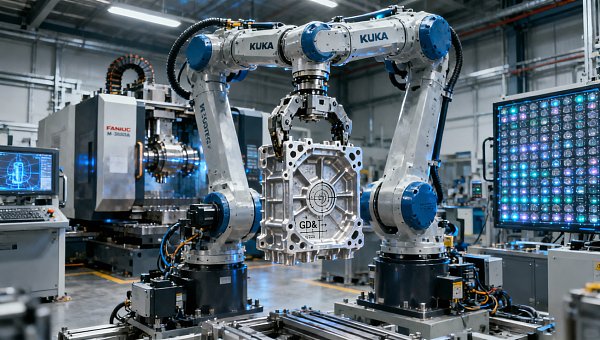
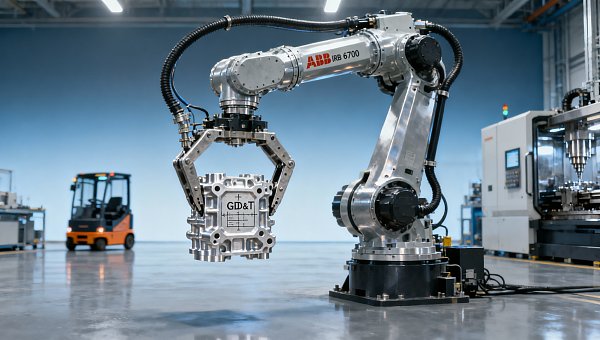
Most Tier-2 suppliers deploy robotic cells with full hardware compliance—ABB IRB 6700, FANUC M-2000iA, or KUKA KR QUANTEC—but still report 3–6 months of post-installation rework. Why? Because integration success hinges not on robot payload (e.g., 500–1,300 kg) or repeatability (±0.05 mm), but on traceable alignment between OEM process specifications and shop-floor execution logic.
In a recent TradeNexus Pro audit of 47 Tier-2 machining suppliers, only 14% had documented OEM-specified tolerance bands mapped to PLC logic triggers, vision system calibration cycles, and preventive maintenance schedules. The remaining 86% treated robotics as “automation add-ons,” not as nodes in an end-to-end digital thread.
This disconnect manifests in three measurable failure modes: (1) 72% of quality escapes originate from unvalidated toolpath-to-gripper handoff sequences; (2) 41% of unplanned downtime stems from mismatched I/O signal timing (e.g., conveyor stop delay >120 ms vs. OEM-specified ≤80 ms); and (3) 58% of rejected shipments trace back to undocumented material flow rules—especially for high-mix, low-volume batches under 50 pcs/lot.
The Missing Step: Context-Aware Integration Governance
Context-aware integration governance is a structured framework that binds robotics deployment to four non-negotiable anchors: OEM-defined process gates, real-time material traceability, dynamic cycle validation, and cross-tier data sovereignty protocols. It’s not a software layer—it’s a contractual and operational discipline enforced across engineering, operations, and QA teams.
TradeNexus Pro’s validated governance model includes six mandatory checkpoints before go-live:
- Validation of part-specific gripper force profiles against OEM drawing GD&T callouts (e.g., ±0.1 mm positional tolerance → max grip force ≤ 85 N)
- Time-stamped synchronization of MES work order release, CNC program load, and robot task initiation (max drift: ±500 ms)
- Pre-deployment verification of sensor fusion logic (e.g., laser scanner + 3D vision matching within 0.3 mm RMS error)
- Documentation of all human-in-the-loop override permissions—including escalation paths and audit trails
- Calibration frequency mapping to OEM-recommended tool life (e.g., every 12,000 cycles for aluminum die-cast parts)
- Supplier-side data retention policy aligned with OEM cybersecurity annexes (e.g., log storage ≥90 days, encrypted at rest)
Suppliers adopting this governance model reduced integration-related scrap by 67%, cut first-article approval time from 11 days to 3.2 days, and achieved 99.4% on-time delivery for Tier-1 automotive programs.
How Procurement Leaders Can Verify Governance Maturity
Procurement teams cannot rely on vendor claims of “ISO 13849-compliant safety logic” or “Industry 4.0-ready architecture.” Real governance maturity is assessed through observable, auditable evidence—not certifications alone.
This table reflects findings from TradeNexus Pro’s 2024 Supplier Integration Benchmark, covering 123 Tier-2 manufacturers across Germany, Mexico, Vietnam, and Poland. High-maturity suppliers were 3.8× more likely to win multi-year contracts with Tier-1 OEMs.
Why Choose TradeNexus Pro for Robotics Integration Intelligence
TradeNexus Pro delivers more than market reports—we provide procurement-ready intelligence grounded in live integration telemetry, OEM contract clause analysis, and cross-supplier benchmarking. Our platform surfaces what generic automation consultants miss: the hidden friction points between robotics specs and production reality.
For global procurement directors and supply chain managers, we offer:
- Real-time access to 217+ validated robotics integration playbooks—filtered by material type (aluminum, steel, composites), process (die-casting, injection molding, CNC), and OEM tier
- Custom audit support: Pre-qualification reviews of supplier governance documentation against your specific contract annexes (e.g., Ford Q1 Section 9.2.1 or BMW Standard BN 101-13)
- Algorithmic trust scoring: A proprietary index evaluating supplier integration maturity across 14 dimensions—including cyber-resilience, change-log transparency, and traceability fidelity
Request your free Robotics Integration Governance Scorecard today—covering your top 3 Tier-2 suppliers, with actionable remediation pathways and OEM-aligned benchmarks.
Get weekly intelligence in your inbox.
No noise. No sponsored content. Pure intelligence.
 Sep 15, 2026Wholesale WiFi Smart Switches: What Buyers Should Verify Before OrderingWholesale WiFi Smart Switches: What Buyers Should Verify Before Ordering
 Sep 14, 2026How to Select IoT Sensors for Reliable Monitoring in Harsh Industrial EnvironmentsHow to Select IoT Sensors for Reliable Monitoring in Harsh Industrial Environments
 Sep 13, 2026How Procurement Teams Can Improve Supplier Reliability With Supply Chain VisibilityHow Procurement Teams Can Improve Supplier Reliability With Supply Chain Visibility
 Sep 12, 2026Smart Manufacturing Trends 2026: What Leaders Should Prioritize for ROISmart Manufacturing Trends 2026: What Leaders Should Prioritize for ROI
 Sep 11, 2026B2B Market Analysis: How Buyers Evaluate Suppliers, Pricing, and Delivery RiskB2B Market Analysis: How Buyers Evaluate Suppliers, Pricing, and Delivery Risk
 Sep 10, 2026Residential Solar Kits in Canada: How to Size a System for Your Home and ClimateResidential Solar Kits in Canada: How to Size a System for Your Home and Climate
 Sep 09, 2026How to Specify a Syringe Assembly Line for High-Volume Sterile ProductionHow to Specify a Syringe Assembly Line for High-Volume Sterile Production
 Sep 08, 2026How to Evaluate Warehouse Robotics System Suppliers for Reliable Multi-Site DeploymentHow to Evaluate Warehouse Robotics System Suppliers for Reliable Multi-Site Deployment
 Sep 07, 2026Renewable Geothermal Energy Explained: How It Works for Heating and PowerRenewable Geothermal Energy Explained: How It Works for Heating and Power
 Sep 07, 2026How to Choose an Industrial Packaging Robot Manufacturer for Your Production LineHow to Choose an Industrial Packaging Robot Manufacturer for Your Production Line
 Sep 05, 2026How to Evaluate a Turnkey Hydro Turbine Generator Supplier for Remote Power ProjectsHow to Evaluate a Turnkey Hydro Turbine Generator Supplier for Remote Power Projects
 Sep 04, 2026Automated Ultrasonic Welding for Thermoplastic Assemblies: Process Controls That MatterAutomated Ultrasonic Welding for Thermoplastic Assemblies: Process Controls That Matter
 Sep 03, 2026Energy Forecasting for Grid Planning: Sizing Solar and Storage CapacityEnergy Forecasting for Grid Planning: Sizing Solar and Storage Capacity
 Sep 02, 2026Which Metrics Should an Energy Analytics Dashboard Track for Factory Energy Management?Which Metrics Should an Energy Analytics Dashboard Track for Factory Energy Management?
 Sep 01, 2026How Warehouse Voice Picking Improves Accuracy and Throughput in Order FulfillmentHow Warehouse Voice Picking Improves Accuracy and Throughput in Order Fulfillment
 Aug 31, 2026How to Automate Dropshipping Order Processing Without Overselling StockHow to Automate Dropshipping Order Processing Without Overselling Stock
 Aug 30, 2026How to Evaluate a Smart Lighting Supplier for Multi-Site Commercial ProjectsHow to Evaluate a Smart Lighting Supplier for Multi-Site Commercial Projects
 Aug 29, 2026Recent Advances in Smart Manufacturing and Materials Reshaping Factory InvestmentRecent Advances in Smart Manufacturing and Materials Reshaping Factory Investment
 Aug 29, 2026Selecting Lightweight Aluminum Extrusions for Strength-Critical Industrial DesignsSelecting Lightweight Aluminum Extrusions for Strength-Critical Industrial Designs
 Aug 29, 2026Vertical Powder Anodizing Explained: Process Controls for Uniform Coating QualityVertical Powder Anodizing Explained: Process Controls for Uniform Coating Quality
 Aug 29, 2026PV Module Product Due Diligence: What Buyers Should Verify Before ContractingPV Module Product Due Diligence: What Buyers Should Verify Before Contracting
 Aug 29, 2026Solar Design for Challenging Terrain: Managing Slope, Soil, and Shading RisksSolar Design for Challenging Terrain: Managing Slope, Soil, and Shading Risks
 Aug 29, 2026IS 16444 Smart Meter Requirements: Key Functions, Tests, and ComplianceIS 16444 Smart Meter Requirements: Key Functions, Tests, and Compliance
 Aug 29, 2026Rehabilitation Equipment Market Outlook: Demand Drivers and Growth SegmentsRehabilitation Equipment Market Outlook: Demand Drivers and Growth Segments
 Aug 29, 2026When Does Container Handling Automation Deliver ROI in Port Yard Operations?When Does Container Handling Automation Deliver ROI in Port Yard Operations?
 Aug 29, 2026Customs API Integration: A Practical Checklist for Automated Trade ComplianceCustoms API Integration: A Practical Checklist for Automated Trade Compliance
 Aug 29, 2026Returnable Packaging for Automotive: How to Cut Damage and Reverse Logistics CostsReturnable Packaging for Automotive: How to Cut Damage and Reverse Logistics Costs