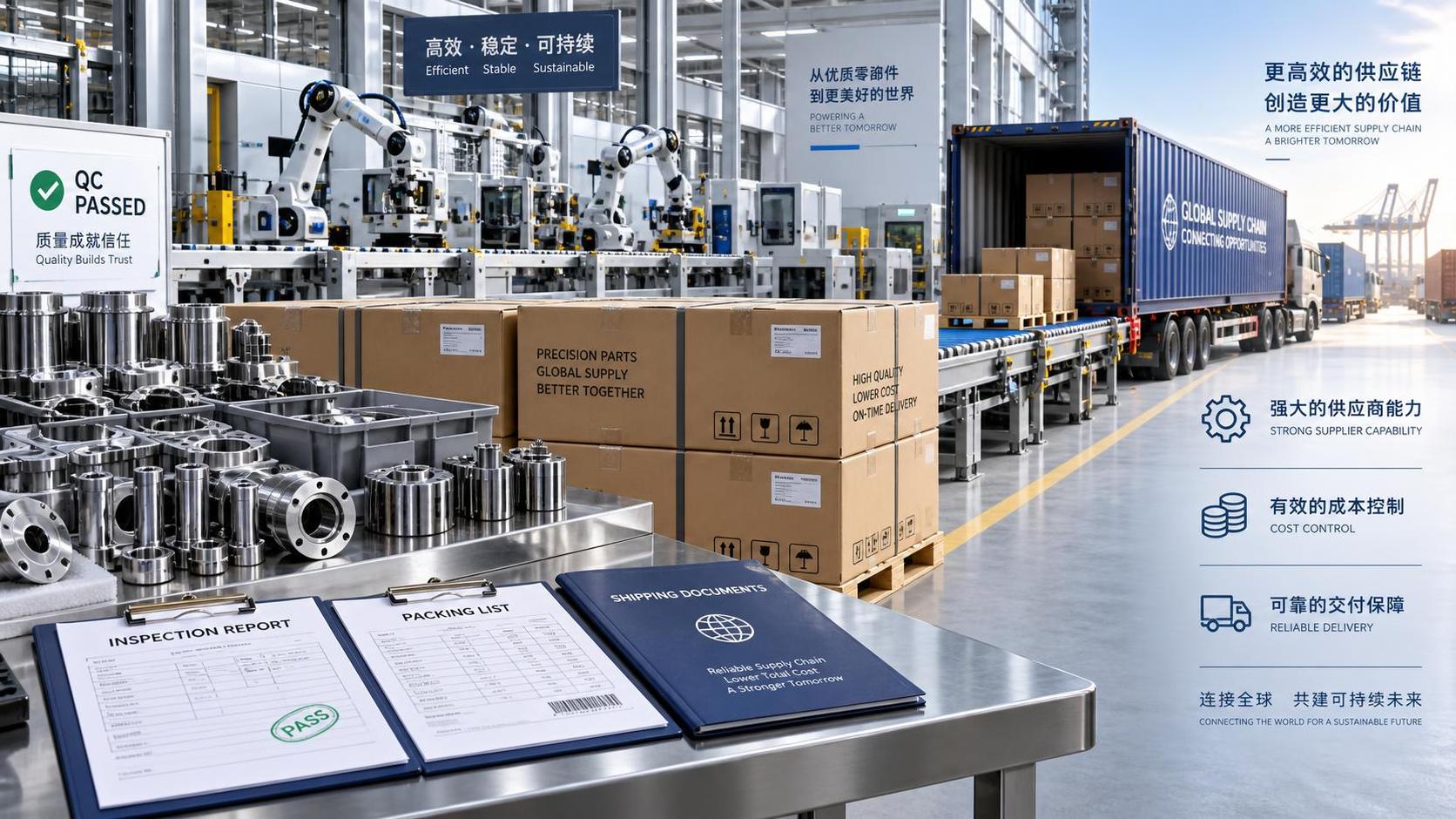
How to Evaluate B2B SaaS Solutions for Multi-Market Sourcing and Supplier Management
How to Evaluate B2B SaaS Solutions for Multi-Market Sourcing and Supplier Management

Choosing the right B2B SaaS solutions for multi-market sourcing and supplier management is no longer just an IT decision. It directly shapes resilience, compliance, supplier visibility, and growth.
That shift is easy to understand. Global sourcing is now affected by regional policy, logistics volatility, ESG checks, and faster product cycles.
In practice, many companies already use several digital tools. Yet fragmented systems still create blind spots across supplier discovery, qualification, onboarding, and performance tracking.
This is why evaluation matters. The best B2B SaaS solutions do more than digitize tasks. They support better sourcing decisions across markets, teams, and risk conditions.
A solid selection process should answer simple questions. Can the platform scale? Can it handle supplier complexity? Can it support real global decision-making?
Start with the Business Problem, Not the Software Demo
Before comparing vendors, define the sourcing model first. A company buying from one region has very different needs from one managing suppliers across Asia, Europe, and North America.
This sounds obvious, but it is where many software evaluations go off track. Teams often buy around features instead of operational friction.
Map the current bottlenecks clearly:
- Slow supplier discovery in unfamiliar markets
- Inconsistent qualification standards across regions
- Poor visibility into pricing, capacity, and lead times
- Manual document collection for compliance and audits
- Limited collaboration between procurement, quality, and finance
Once these issues are visible, B2B SaaS solutions become easier to compare. The question shifts from “Which tool looks modern?” to “Which platform removes the most decision risk?”
Define the Core Capabilities That Matter Most
Not every platform needs to do everything. Still, strong B2B SaaS solutions for supplier management usually perform well in six core areas.
1. Supplier Discovery and Market Intelligence
For multi-market sourcing, discovery tools must go beyond a basic directory. They should help teams identify credible suppliers by geography, category, capability, and risk profile.
This is especially important in sectors where technical specifications matter. Advanced manufacturing, green energy, healthcare technology, and smart electronics all require deeper screening.
2. Qualification and Onboarding
The platform should standardize supplier onboarding without making local adaptation impossible. Different markets often require different certificates, financial checks, and policy disclosures.
3. Performance and Risk Monitoring
Reliable B2B SaaS solutions make supplier performance measurable. Look for scorecards covering delivery, quality, responsiveness, compliance status, and disruption alerts.
4. Workflow and Collaboration
Sourcing decisions rarely belong to one team. Procurement, legal, engineering, quality, and finance all need visibility. Good workflow design matters as much as analytics.
5. Integration and Data Quality
If supplier data stays trapped inside one dashboard, value drops fast. The best B2B SaaS solutions connect with ERP, procurement, logistics, and compliance systems.
6. Scalability Across Markets
A platform that works in one country may fail across several. Language support, regional workflows, tax logic, data governance, and role permissions all affect long-term fit.
Use a Practical Evaluation Framework
A structured scorecard makes vendor selection more objective. It also prevents decisions from being dominated by sales presentations or short-term cost pressure.
A simple framework can include these categories:
Weight each category by business importance. For example, a regulated healthcare supply chain may score compliance higher than sourcing speed.
Look Beyond Features to Decision Quality
Feature lists can be misleading. Two platforms may look similar on paper, yet deliver very different outcomes when teams face supplier risk or regional disruption.
A useful test is this: does the platform help users make faster, more confident decisions with less manual investigation?
That means checking how information is presented. Are risk flags easy to understand? Are supplier comparisons actionable? Can regional sourcing scenarios be modeled quickly?
In real operations, clarity beats complexity. The most effective B2B SaaS solutions reduce friction during high-stakes sourcing decisions, especially when timing is tight.
Assess Sector Fit, Not Just General Capability
General procurement software may be enough for simple categories. It is often not enough for technical, regulated, or innovation-driven supply chains.
Sector fit becomes more important when supplier selection depends on manufacturing process maturity, certification depth, engineering support, or product traceability.
This is where decision-grade market intelligence adds value. Platforms and information environments like TradeNexus Pro help narrow the gap between supplier claims and strategic understanding.
For companies entering unfamiliar markets, curated insights can strengthen software evaluation. They provide context on supplier credibility, regional shifts, and emerging technology relevance.
Red Flags to Watch During Vendor Selection
Some warning signs appear early. Others only show up during pilot use. Both deserve attention before a long contract is signed.
- Supplier data looks broad, but lacks verification depth
- Demo workflows are polished, but real configuration is rigid
- Risk monitoring depends heavily on manual updates
- Integration support sounds possible, but lacks clear delivery examples
- Reporting is attractive, but not useful for procurement action
- Regional compliance support is vague or outsourced without accountability
More importantly, ask how the provider handles exceptions. Cross-border sourcing is full of exceptions. A platform that only works in ideal conditions will create new bottlenecks.
Questions Worth Asking in a Final Evaluation Round
Final-stage discussions should move past generic demos. They should test operational realism and long-term fit.
- How does the platform support supplier evaluation across different regulatory markets?
- What verification methods strengthen supplier reliability data?
- How quickly can new categories, regions, or entities be added?
- Which workflows are configurable without custom development?
- What happens when supplier documents expire or risk signals change?
- How is data quality maintained across connected systems?
- Which clients use the platform in similarly complex sourcing environments?
These questions expose whether B2B SaaS solutions are truly enterprise-ready or simply designed for lighter procurement use cases.
A Smarter Selection Process Creates Better Supplier Outcomes
The real goal is not software adoption. The goal is stronger sourcing performance with fewer blind spots and better supplier decisions.
The strongest B2B SaaS solutions support that outcome by combining visibility, workflow control, supplier intelligence, and scalable governance.
As global markets become more complex, evaluation discipline becomes a competitive advantage. Clear selection criteria help teams avoid expensive misalignment later.
Start with the sourcing problem, score platforms against actual operating needs, and validate fit with decision-focused questions. That approach usually leads to better technology choices and better supplier relationships.
When paired with credible market intelligence from specialized platforms such as TradeNexus Pro, that process becomes even stronger, especially in complex international sourcing environments.
Get weekly intelligence in your inbox.
No noise. No sponsored content. Pure intelligence.
 Sep 15, 2026Wholesale WiFi Smart Switches: What Buyers Should Verify Before OrderingWholesale WiFi Smart Switches: What Buyers Should Verify Before Ordering
 Sep 14, 2026How to Select IoT Sensors for Reliable Monitoring in Harsh Industrial EnvironmentsHow to Select IoT Sensors for Reliable Monitoring in Harsh Industrial Environments
 Sep 13, 2026How Procurement Teams Can Improve Supplier Reliability With Supply Chain VisibilityHow Procurement Teams Can Improve Supplier Reliability With Supply Chain Visibility
 Sep 12, 2026Smart Manufacturing Trends 2026: What Leaders Should Prioritize for ROISmart Manufacturing Trends 2026: What Leaders Should Prioritize for ROI
 Sep 11, 2026B2B Market Analysis: How Buyers Evaluate Suppliers, Pricing, and Delivery RiskB2B Market Analysis: How Buyers Evaluate Suppliers, Pricing, and Delivery Risk
 Sep 10, 2026Residential Solar Kits in Canada: How to Size a System for Your Home and ClimateResidential Solar Kits in Canada: How to Size a System for Your Home and Climate
 Sep 09, 2026How to Specify a Syringe Assembly Line for High-Volume Sterile ProductionHow to Specify a Syringe Assembly Line for High-Volume Sterile Production
 Sep 08, 2026How to Evaluate Warehouse Robotics System Suppliers for Reliable Multi-Site DeploymentHow to Evaluate Warehouse Robotics System Suppliers for Reliable Multi-Site Deployment
 Sep 07, 2026Renewable Geothermal Energy Explained: How It Works for Heating and PowerRenewable Geothermal Energy Explained: How It Works for Heating and Power
 Sep 07, 2026How to Choose an Industrial Packaging Robot Manufacturer for Your Production LineHow to Choose an Industrial Packaging Robot Manufacturer for Your Production Line
 Sep 05, 2026How to Evaluate a Turnkey Hydro Turbine Generator Supplier for Remote Power ProjectsHow to Evaluate a Turnkey Hydro Turbine Generator Supplier for Remote Power Projects
 Sep 04, 2026Automated Ultrasonic Welding for Thermoplastic Assemblies: Process Controls That MatterAutomated Ultrasonic Welding for Thermoplastic Assemblies: Process Controls That Matter
 Sep 03, 2026Energy Forecasting for Grid Planning: Sizing Solar and Storage CapacityEnergy Forecasting for Grid Planning: Sizing Solar and Storage Capacity
 Sep 02, 2026Which Metrics Should an Energy Analytics Dashboard Track for Factory Energy Management?Which Metrics Should an Energy Analytics Dashboard Track for Factory Energy Management?
 Sep 01, 2026How Warehouse Voice Picking Improves Accuracy and Throughput in Order FulfillmentHow Warehouse Voice Picking Improves Accuracy and Throughput in Order Fulfillment
 Aug 31, 2026How to Automate Dropshipping Order Processing Without Overselling StockHow to Automate Dropshipping Order Processing Without Overselling Stock
 Aug 30, 2026How to Evaluate a Smart Lighting Supplier for Multi-Site Commercial ProjectsHow to Evaluate a Smart Lighting Supplier for Multi-Site Commercial Projects
 Aug 29, 2026Recent Advances in Smart Manufacturing and Materials Reshaping Factory InvestmentRecent Advances in Smart Manufacturing and Materials Reshaping Factory Investment
 Aug 29, 2026Selecting Lightweight Aluminum Extrusions for Strength-Critical Industrial DesignsSelecting Lightweight Aluminum Extrusions for Strength-Critical Industrial Designs
 Aug 29, 2026Vertical Powder Anodizing Explained: Process Controls for Uniform Coating QualityVertical Powder Anodizing Explained: Process Controls for Uniform Coating Quality
 Aug 29, 2026PV Module Product Due Diligence: What Buyers Should Verify Before ContractingPV Module Product Due Diligence: What Buyers Should Verify Before Contracting
 Aug 29, 2026Solar Design for Challenging Terrain: Managing Slope, Soil, and Shading RisksSolar Design for Challenging Terrain: Managing Slope, Soil, and Shading Risks
 Aug 29, 2026IS 16444 Smart Meter Requirements: Key Functions, Tests, and ComplianceIS 16444 Smart Meter Requirements: Key Functions, Tests, and Compliance
 Aug 29, 2026Rehabilitation Equipment Market Outlook: Demand Drivers and Growth SegmentsRehabilitation Equipment Market Outlook: Demand Drivers and Growth Segments
 Aug 29, 2026When Does Container Handling Automation Deliver ROI in Port Yard Operations?When Does Container Handling Automation Deliver ROI in Port Yard Operations?
 Aug 29, 2026Customs API Integration: A Practical Checklist for Automated Trade ComplianceCustoms API Integration: A Practical Checklist for Automated Trade Compliance
 Aug 29, 2026Returnable Packaging for Automotive: How to Cut Damage and Reverse Logistics CostsReturnable Packaging for Automotive: How to Cut Damage and Reverse Logistics Costs