Vietnam Enforces CN-EN Bilingual Safety Labels on Electronic Components from Apr 22, 2026
Starting April 22, 2026, Vietnam’s Ministry of Industry and Trade (MOIT) will require bilingual Chinese–English safety labeling on all imported electronic components — including packaging and component bodies. This regulation directly affects exporters, contract manufacturers, and supply chain operators serving the Vietnamese market, particularly those handling passive components, connectors, and PCBs.
Event Overview
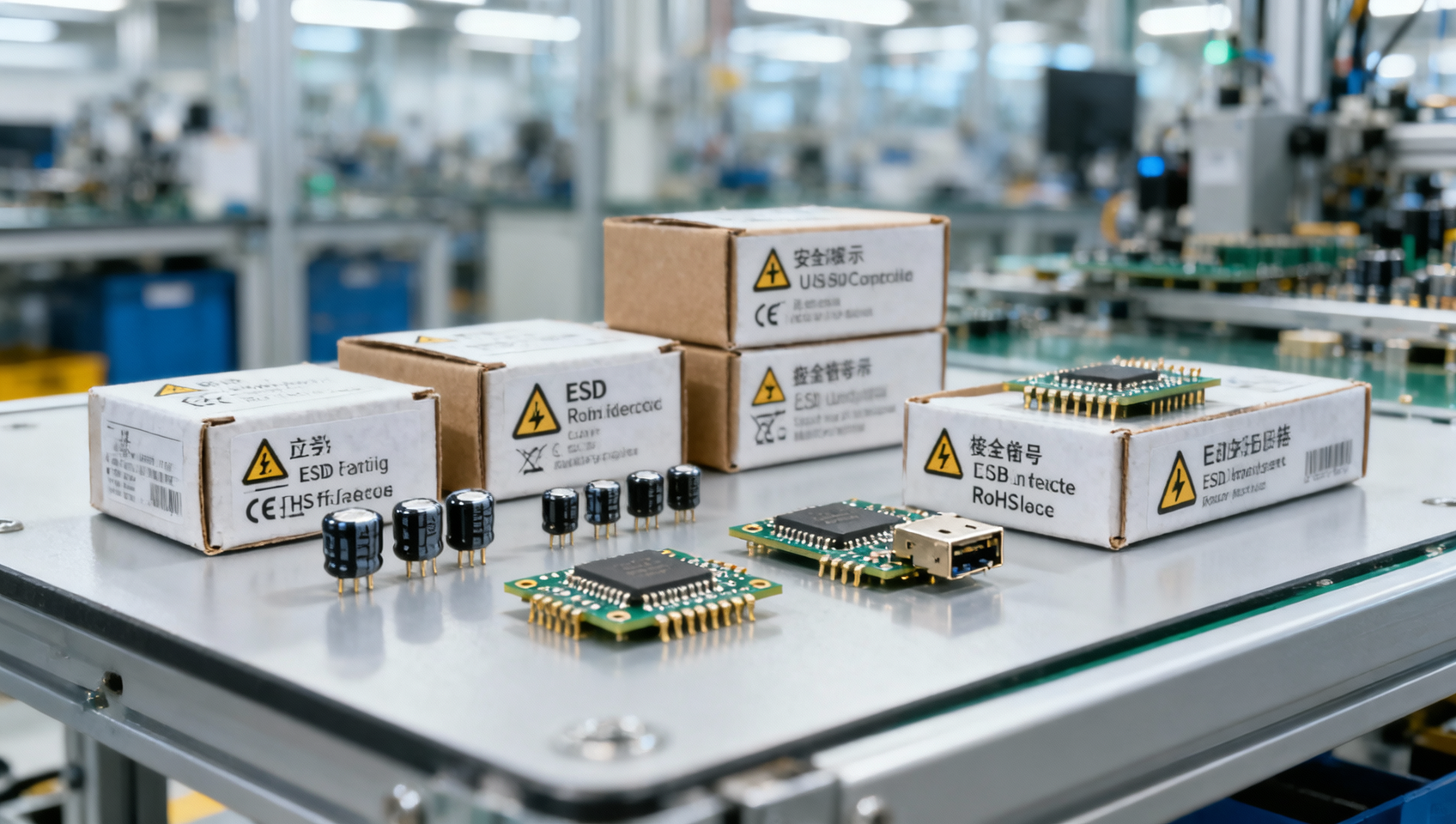
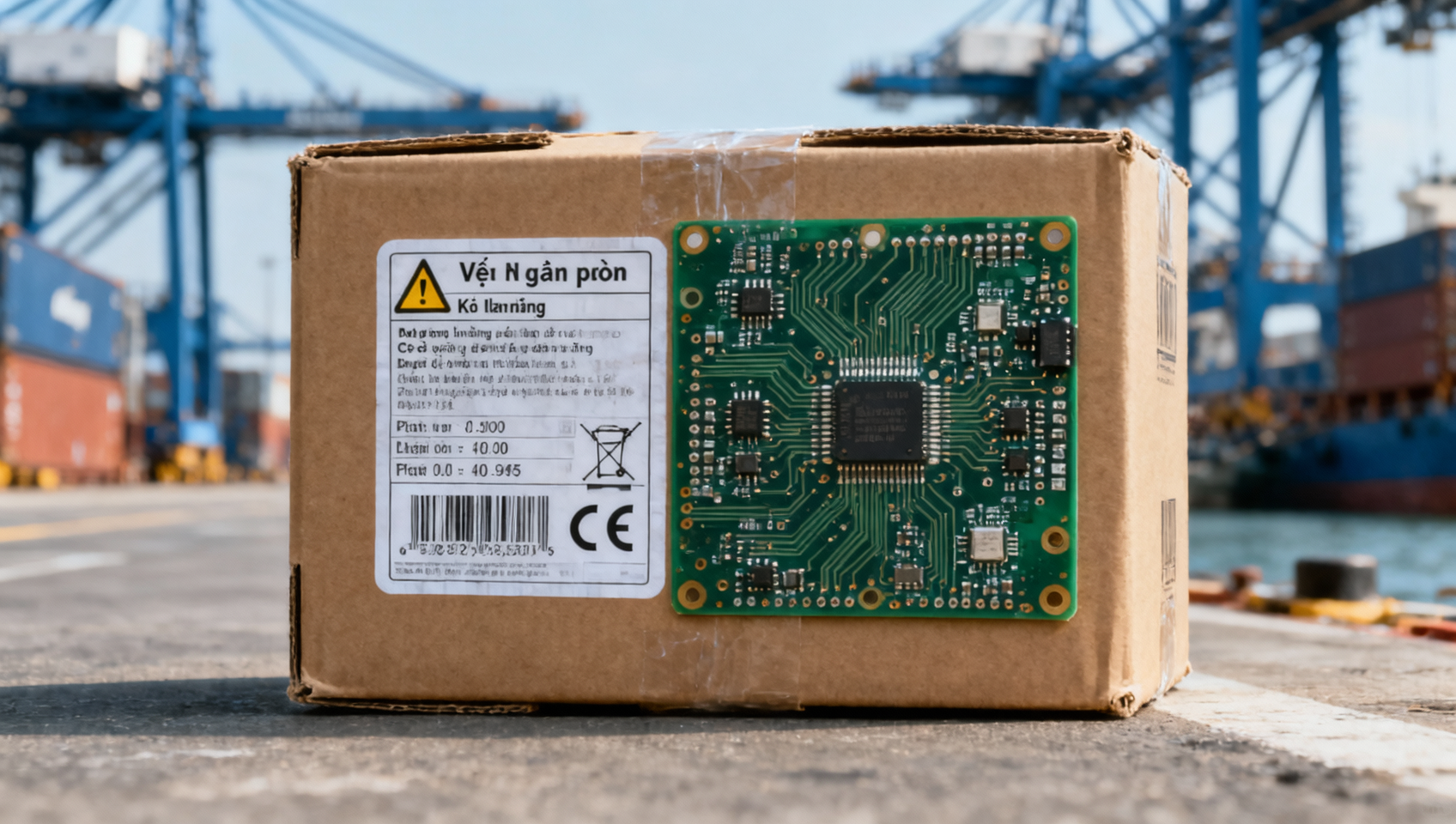
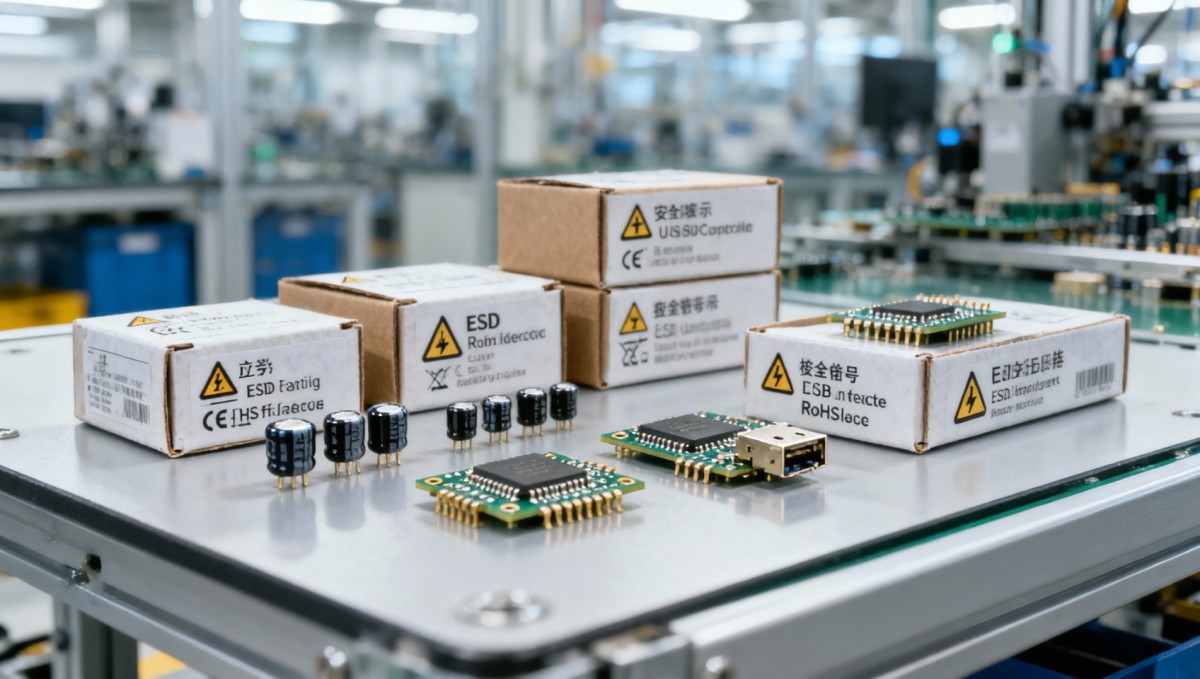
Vietnam’s Ministry of Industry and Trade (MOIT) issued Circular No. 12/2026/TT-BCT, effective April 22, 2026. It mandates that all imported electronic components — such as surface-mount capacitors, connectors, and printed circuit boards (PCBs) — must display safety warnings (e.g., ESD precautions, polarity markings, RoHS compliance statements) in both Chinese and English on both packaging and the component itself. Single-language labeling is deemed noncompliant. Nonconforming shipments face full rejection and return.
Industries Affected
Direct Exporters to Vietnam
Exporters shipping electronic components into Vietnam must revise labeling specifications for affected product lines. The requirement applies at the point of customs clearance, meaning noncompliant labels will trigger rejection before entry — impacting delivery schedules and cost recovery.
Contract Manufacturers & EMS Providers
Manufacturers producing components under OEM/ODM arrangements for Vietnamese-bound goods may be contractually obligated to apply dual-language safety marks. This introduces new design, printing, and quality control steps — especially for small-form-factor or bare-die components where space is constrained.
Component Distributors & Channel Partners
Distributors holding legacy stock without bilingual labeling risk inventory obsolescence post-April 22, 2026. Re-labeling in-country is not permitted per the circular; compliance must be achieved prior to importation. This affects warehouse operations, documentation alignment, and order fulfillment timelines.
Supply Chain Compliance & Logistics Service Providers
Third-party logistics providers and compliance consultants supporting electronics exports must now verify label language during pre-shipment audits. Their service scope may need updating to include bilingual label validation — a new checkpoint distinct from standard RoHS or REACH verification.
What Enterprises and Practitioners Should Focus On Now
Confirm applicability by product category and labeling location
Verify whether your specific components (e.g., 0201 capacitors, micro-USB connectors, rigid-flex PCBs) fall under MOIT’s definition of “electronic components” in Circular 12/2026/TT-BCT — and whether safety warnings are required on both packaging and the component body. Not all marking locations carry equal weight in enforcement practice.
Review current labeling artwork and production workflows
Assess whether existing label templates, silkscreen files, and packaging print masters support simultaneous Chinese and English rendering — including font legibility, character encoding (UTF-8), and minimum height requirements. Small-footprint components may require layout re-engineering.
Align with customs brokers and local importers on documentation readiness
Ensure commercial invoices, packing lists, and Certificate of Conformance explicitly reference bilingual labeling compliance. Vietnamese customs authorities may request verification evidence — such as annotated label samples or test reports — during inspection.
Monitor for official guidance on transitional arrangements
While the circular takes effect April 22, 2026, no transitional period or grace period is specified. However, MOIT may issue clarifications ahead of implementation — particularly regarding legacy stock, repackaging exceptions, or enforcement thresholds. Track MOIT’s official portal and Vietnam Customs announcements closely through Q1 2026.
Editorial Perspective / Industry Observation
From an industry perspective, this requirement signals Vietnam’s increasing emphasis on consumer-facing transparency and multilingual traceability in electronics trade — especially amid growing import volumes from China and ASEAN regional supply chain integration. Analysis来看, it is less a standalone technical barrier and more a procedural extension of existing regulatory expectations (e.g., RoHS, ESD standards), now layered with language-specific enforcement. Observation来看, early enforcement may focus on high-volume, high-visibility categories (e.g., power connectors, ceramic capacitors) rather than niche or low-value components. Current more appropriate understanding is that this reflects a tightening of labeling governance — not a shift in safety or environmental requirements themselves.
Conclusion
This regulation does not alter technical performance or material compliance standards for electronic components entering Vietnam. Instead, it introduces a mandatory linguistic layer to safety communication — one that reshapes labeling operations, documentation protocols, and cross-border coordination. For stakeholders, the priority is not reinterpretation of safety content, but precise, timely, and verifiable execution of bilingual presentation — across both physical products and associated trade documents.
Source: Vietnam Ministry of Industry and Trade (MOIT), Circular No. 12/2026/TT-BCT
Note: No official guidance on transitional provisions or enforcement prioritization has been published as of the circular’s issuance. This remains a point requiring ongoing observation.
Get weekly intelligence in your inbox.
No noise. No sponsored content. Pure intelligence.
 Apr 25, 2026Vietnam Enforces CN-EN Bilingual Safety Labels on Electronic Components from Apr 22, 2026Vietnam Enforces CN-EN Bilingual Safety Labels on Electronic Components from Apr 22, 2026
 Apr 25, 2026ANATEL Mandates Portuguese Offline Voice Assistants for Smart Home Devices in BrazilANATEL Mandates Portuguese Offline Voice Assistants for Smart Home Devices in Brazil
 Apr 25, 2026India BIS Mandates IS 13252:2025 for PLCs & HMIs by Oct 2026India BIS Mandates IS 13252:2025 for PLCs & HMIs by Oct 2026
 Apr 25, 2026SASO EV Charger Rules: Grid Compatibility & Sand Resistance RequiredSASO EV Charger Rules: Grid Compatibility & Sand Resistance Required
 Apr 25, 2026JIS T 0011:2026 Enforces IEC 62366-1:2024 for Rehab Devices in JapanJIS T 0011:2026 Enforces IEC 62366-1:2024 for Rehab Devices in Japan
 Apr 25, 2026THE Alliance Cuts Ningbo–Rotterdam Transit to 18 Days, +35% Spot RateTHE Alliance Cuts Ningbo–Rotterdam Transit to 18 Days, +35% Spot Rate
 Apr 25, 2026TÜV Rheinland Updates IoT EMC Standard: AI Edge Module Immunity Now MandatoryTÜV Rheinland Updates IoT EMC Standard: AI Edge Module Immunity Now Mandatory
 Apr 25, 2026USTR Launches Five-Year China Solar PV AD/CVD ReviewUSTR Launches Five-Year China Solar PV AD/CVD Review
 Apr 25, 2026EU New Battery Regulation Enters Force Apr 24, 2026EU New Battery Regulation Enters Force Apr 24, 2026
 Apr 25, 2026China Customs Launches RCEP Origin Smart Pre-Review for ASEAN机电 ExportsChina Customs Launches RCEP Origin Smart Pre-Review for ASEAN机电 Exports
 Apr 24, 2026India BIS Mandates IS 13252:2025 for PLCs & HMIs by Oct 2026India BIS Mandates IS 13252:2025 for PLCs & HMIs by Oct 2026
 Apr 24, 2026SASO EV Charger Regulation: Sand-Resistant Grid Compatibility Testing RequiredSASO EV Charger Regulation: Sand-Resistant Grid Compatibility Testing Required
 Apr 24, 2026Japan Updates JIS for Rehab Devices: IEC 62366-1:2024 Usability Compliance RequiredJapan Updates JIS for Rehab Devices: IEC 62366-1:2024 Usability Compliance Required
 Apr 24, 2026China Customs Launches RCEP Origin Smart Pre-Review SystemChina Customs Launches RCEP Origin Smart Pre-Review System
 Apr 24, 2026ANATEL Mandates Localized Voice Assistants for Smart Home Devices in BrazilANATEL Mandates Localized Voice Assistants for Smart Home Devices in Brazil
 Apr 24, 2026TÜV Rheinland Updates IoT EMC Standard with AI Edge抗扰度 RequirementTÜV Rheinland Updates IoT EMC Standard with AI Edge抗扰度 Requirement
 Apr 24, 20262M Alliance Shortens Ningbo–Rotterdam Route to 18 Days Amid 35% Slot Premium2M Alliance Shortens Ningbo–Rotterdam Route to 18 Days Amid 35% Slot Premium
 Apr 24, 2026Vietnam Enforces Bilingual Safety Labels for Imported Electronic Components from Apr 22, 2026Vietnam Enforces Bilingual Safety Labels for Imported Electronic Components from Apr 22, 2026
 Apr 24, 2026USTR Launches Sunset Review on China Solar PV AD/CVD DutiesUSTR Launches Sunset Review on China Solar PV AD/CVD Duties
 Apr 24, 2026EU New Battery Regulation Fully Effective Apr 24, 2026EU New Battery Regulation Fully Effective Apr 24, 2026
 Apr 23, 2026Taobao Factory Spark 3.0 Launches AI Workbench for SME Export FactoriesTaobao Factory Spark 3.0 Launches AI Workbench for SME Export Factories
 Apr 23, 2026TENENG Group Inspects IoT Safety Compliance at Jiangnan ChemicalTENENG Group Inspects IoT Safety Compliance at Jiangnan Chemical
 Apr 23, 2026China Launches First Embodied AI Open Data CommunityChina Launches First Embodied AI Open Data Community
 Apr 23, 2026PV Glass Prices Flat for 9 Weeks Amid Rising Integrated ProcurementPV Glass Prices Flat for 9 Weeks Amid Rising Integrated Procurement
 Apr 23, 20262984 NQI One-Stop Platforms Launched Nationwide2984 NQI One-Stop Platforms Launched Nationwide
 Apr 23, 2026China’s Green Smart Ship Tech Norms Accelerate BMS & Shore Power ExportChina’s Green Smart Ship Tech Norms Accelerate BMS & Shore Power Export
 Apr 23, 2026China Builds World's Largest Agri-Meteorological IoT NetworkChina Builds World's Largest Agri-Meteorological IoT Network