China Customs Launches RCEP Origin Smart Pre-Review for ASEAN机电 Exports
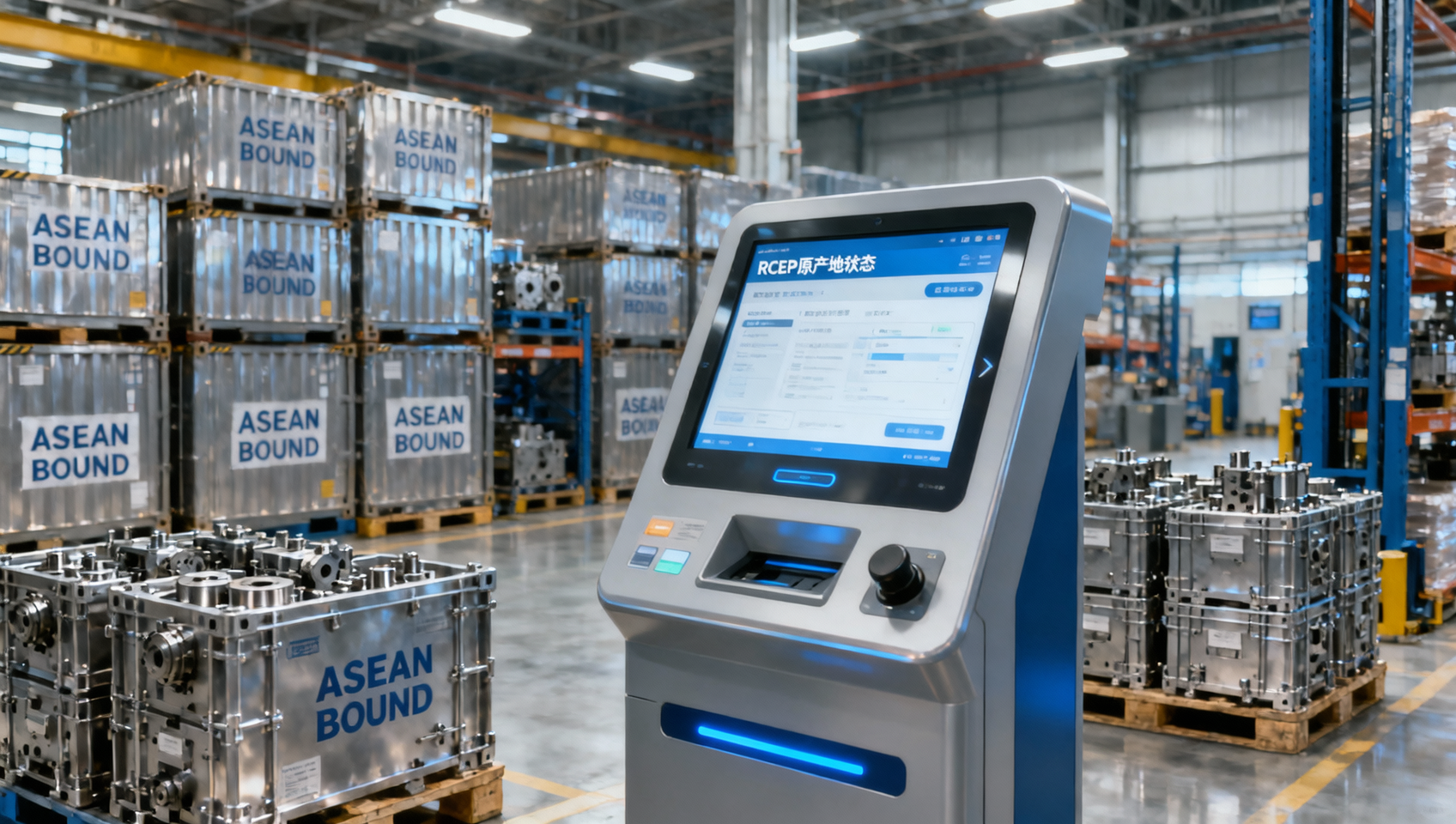
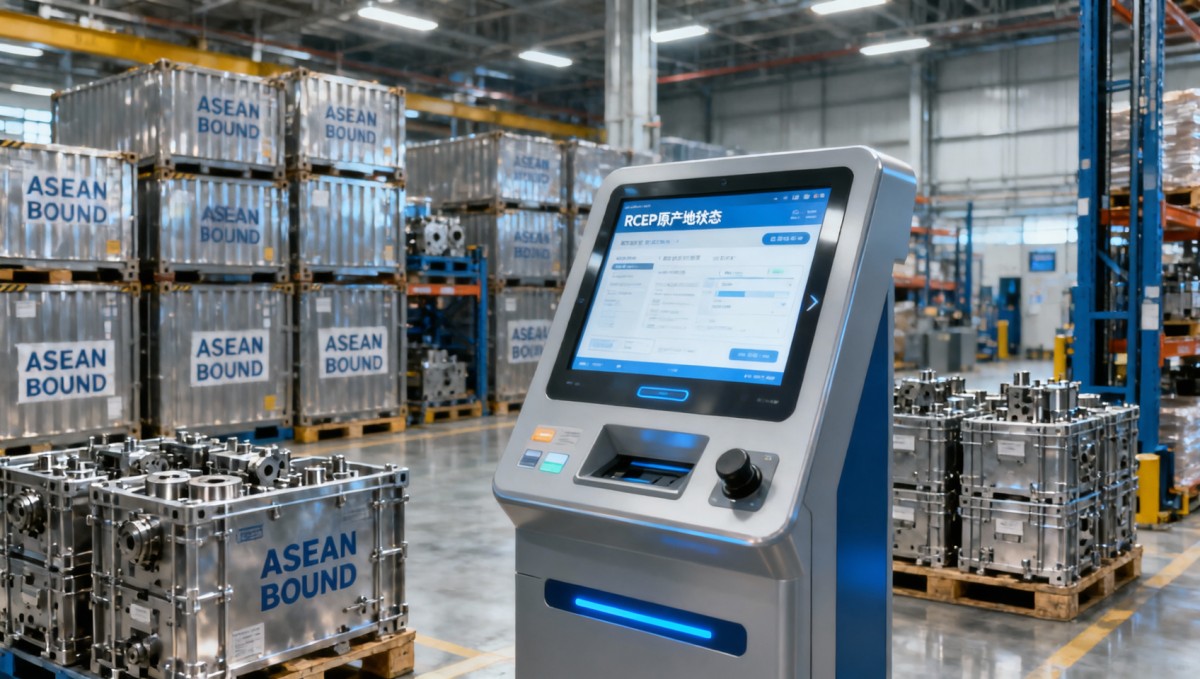
On April 24, 2026, China Customs launched the ‘RCEP Origin Smart Pre-Review System’, an AI-powered platform enabling second-level origin qualification verification and automatic certificate issuance for mechanical and electrical exports—including CNC machined parts, industrial automation equipment, and electronic components—destined for ASEAN countries. This development is especially relevant for exporters, regional distributors, procurement teams, and local assembly operators engaged in ASEAN-bound机电 supply chains, as it directly impacts tariff eligibility, customs predictability, and compliance efficiency.
Event Overview
China Customs General Administration officially launched the RCEP Origin Smart Pre-Review System on April 24, 2026. The system targets mechanical and electrical products exported to ASEAN member states and delivers AI-driven, real-time pre-verification of RCEP origin eligibility, along with automated issuance of origin documentation. Its stated objectives include shortening pre-clearance lead time and reducing manual certificate rejection risks—supporting overseas importers’ consistent access to zero-tariff treatment under RCEP.
Industries Affected by This Update
Direct Exporters (OEM/ODM Manufacturers & Trading Companies)
These entities file origin declarations for机电 goods shipped to ASEAN. With the new system, their pre-submission accuracy becomes critical: incorrect HS code classification, incomplete bill-of-materials input, or misaligned processing steps may trigger auto-rejection before submission—not after customs review. Impact manifests in faster clearance cycles *only if* data inputs fully align with RCEP origin rules; otherwise, delays may shift upstream to internal compliance checks.
Distributors & Local Assembly Operators in ASEAN
For ASEAN-based importers and contract manufacturers relying on imported机电 components for final assembly, predictable duty-free entry reduces landed cost volatility and supports just-in-time planning. However, their ability to benefit depends entirely on upstream exporters’ successful use of the system—meaning they now need formal confirmation from suppliers that certificates were issued via the smart pre-review channel, not legacy manual processes.
Procurement & Sourcing Teams (Multinational Corporations)
Teams managing ASEAN-sourced机电 components for global manufacturing networks must now verify whether supplier-origin documentation originates from the new AI system. Since RCEP zero tariffs are conditional on valid origin proof, procurement contracts may require updated clauses specifying acceptable certificate types—and audit trails confirming system-generated issuance.
What Relevant Enterprises or Practitioners Should Focus On Now
Monitor official guidance on scope expansion
As of April 24, 2026, the system applies only to机电 products exported to ASEAN. From industry perspective, users should track whether China Customs announces extensions to other RCEP markets (e.g., Japan, South Korea) or additional product categories (e.g., automotive parts, optical instruments)—but such expansions remain unconfirmed and should not be assumed.
Validate internal data readiness for smart pre-review
Exporters must ensure their ERP or origin management systems can accurately map production processes against RCEP origin criteria (e.g., regional value content, change-in-tariff classification). Current more suitable understanding is that the system does not relax origin requirements—it accelerates verification *only when inputs meet existing standards*. Manual pre-checks of BOMs, sourcing records, and process flows remain essential.
Distinguish between policy launch and operational adoption
The system’s launch date marks technical availability—not universal readiness. Analysis suggests early adopters will face learning curves in data formatting, error interpretation, and integration with existing e-customs platforms (e.g., China International Trade Single Window). Firms should treat Q2–Q3 2026 as a calibration period rather than assume immediate seamless rollout.
Update documentation workflows with ASEAN partners
Since ASEAN customs authorities do not yet require system-specific metadata, but do require verifiable origin claims, exporters should proactively share issuance timestamps, reference numbers, and digital certificate formats with downstream buyers—enabling traceability without requiring ASEAN-side system integration at this stage.
Editorial Perspective / Industry Observation
This initiative is best understood as an operational upgrade—not a policy change. Observation shows it reflects China Customs’ broader digitization strategy for trade facilitation, not a revision of RCEP origin rules themselves. From industry angle, its significance lies less in creating new benefits and more in exposing gaps in current origin data governance: firms with fragmented sourcing records or inconsistent HS coding across departments will face higher friction, even with AI assistance. It signals growing expectation that origin compliance must be embedded in daily production and procurement systems—not treated as a last-step paperwork task.
Current more appropriate interpretation is that the system raises the baseline for origin data quality, making latent compliance weaknesses visible earlier in the export cycle. Continued attention is warranted—not because new tariffs or rules are imminent, but because evolving digital verification tools increasingly treat documentation as a live, auditable data stream rather than a static document.
Conclusion
The RCEP Origin Smart Pre-Review System represents a step toward procedural efficiency—not regulatory relaxation—for机电 exporters serving ASEAN. Its practical impact hinges on how well enterprises align internal data practices with RCEP’s technical origin requirements. At present, it is more accurately viewed as a diagnostic tool highlighting existing compliance maturity levels, rather than a standalone solution delivering automatic tariff advantages. Stakeholders should prioritize data hygiene and cross-functional alignment over expecting systemic simplification.
Information Sources
Main source: Announcement by China Customs General Administration, April 24, 2026.
Note: Expansion to non-机电 products or non-ASEAN RCEP markets remains unconfirmed and is subject to future official updates.
Get weekly intelligence in your inbox.
No noise. No sponsored content. Pure intelligence.
 Apr 25, 2026Vietnam Enforces CN-EN Bilingual Safety Labels on Electronic Components from Apr 22, 2026Vietnam Enforces CN-EN Bilingual Safety Labels on Electronic Components from Apr 22, 2026
 Apr 25, 2026ANATEL Mandates Portuguese Offline Voice Assistants for Smart Home Devices in BrazilANATEL Mandates Portuguese Offline Voice Assistants for Smart Home Devices in Brazil
 Apr 25, 2026India BIS Mandates IS 13252:2025 for PLCs & HMIs by Oct 2026India BIS Mandates IS 13252:2025 for PLCs & HMIs by Oct 2026
 Apr 25, 2026SASO EV Charger Rules: Grid Compatibility & Sand Resistance RequiredSASO EV Charger Rules: Grid Compatibility & Sand Resistance Required
 Apr 25, 2026JIS T 0011:2026 Enforces IEC 62366-1:2024 for Rehab Devices in JapanJIS T 0011:2026 Enforces IEC 62366-1:2024 for Rehab Devices in Japan
 Apr 25, 2026THE Alliance Cuts Ningbo–Rotterdam Transit to 18 Days, +35% Spot RateTHE Alliance Cuts Ningbo–Rotterdam Transit to 18 Days, +35% Spot Rate
 Apr 25, 2026TÜV Rheinland Updates IoT EMC Standard: AI Edge Module Immunity Now MandatoryTÜV Rheinland Updates IoT EMC Standard: AI Edge Module Immunity Now Mandatory
 Apr 25, 2026USTR Launches Five-Year China Solar PV AD/CVD ReviewUSTR Launches Five-Year China Solar PV AD/CVD Review
 Apr 25, 2026EU New Battery Regulation Enters Force Apr 24, 2026EU New Battery Regulation Enters Force Apr 24, 2026
 Apr 25, 2026China Customs Launches RCEP Origin Smart Pre-Review for ASEAN机电 ExportsChina Customs Launches RCEP Origin Smart Pre-Review for ASEAN机电 Exports
 Apr 24, 2026India BIS Mandates IS 13252:2025 for PLCs & HMIs by Oct 2026India BIS Mandates IS 13252:2025 for PLCs & HMIs by Oct 2026
 Apr 24, 2026SASO EV Charger Regulation: Sand-Resistant Grid Compatibility Testing RequiredSASO EV Charger Regulation: Sand-Resistant Grid Compatibility Testing Required
 Apr 24, 2026Japan Updates JIS for Rehab Devices: IEC 62366-1:2024 Usability Compliance RequiredJapan Updates JIS for Rehab Devices: IEC 62366-1:2024 Usability Compliance Required
 Apr 24, 2026China Customs Launches RCEP Origin Smart Pre-Review SystemChina Customs Launches RCEP Origin Smart Pre-Review System
 Apr 24, 2026ANATEL Mandates Localized Voice Assistants for Smart Home Devices in BrazilANATEL Mandates Localized Voice Assistants for Smart Home Devices in Brazil
 Apr 24, 2026TÜV Rheinland Updates IoT EMC Standard with AI Edge抗扰度 RequirementTÜV Rheinland Updates IoT EMC Standard with AI Edge抗扰度 Requirement
 Apr 24, 20262M Alliance Shortens Ningbo–Rotterdam Route to 18 Days Amid 35% Slot Premium2M Alliance Shortens Ningbo–Rotterdam Route to 18 Days Amid 35% Slot Premium
 Apr 24, 2026Vietnam Enforces Bilingual Safety Labels for Imported Electronic Components from Apr 22, 2026Vietnam Enforces Bilingual Safety Labels for Imported Electronic Components from Apr 22, 2026
 Apr 24, 2026USTR Launches Sunset Review on China Solar PV AD/CVD DutiesUSTR Launches Sunset Review on China Solar PV AD/CVD Duties
 Apr 24, 2026EU New Battery Regulation Fully Effective Apr 24, 2026EU New Battery Regulation Fully Effective Apr 24, 2026
 Apr 23, 2026Taobao Factory Spark 3.0 Launches AI Workbench for SME Export FactoriesTaobao Factory Spark 3.0 Launches AI Workbench for SME Export Factories
 Apr 23, 2026TENENG Group Inspects IoT Safety Compliance at Jiangnan ChemicalTENENG Group Inspects IoT Safety Compliance at Jiangnan Chemical
 Apr 23, 2026China Launches First Embodied AI Open Data CommunityChina Launches First Embodied AI Open Data Community
 Apr 23, 2026PV Glass Prices Flat for 9 Weeks Amid Rising Integrated ProcurementPV Glass Prices Flat for 9 Weeks Amid Rising Integrated Procurement
 Apr 23, 20262984 NQI One-Stop Platforms Launched Nationwide2984 NQI One-Stop Platforms Launched Nationwide
 Apr 23, 2026China’s Green Smart Ship Tech Norms Accelerate BMS & Shore Power ExportChina’s Green Smart Ship Tech Norms Accelerate BMS & Shore Power Export
 Apr 23, 2026China Builds World's Largest Agri-Meteorological IoT NetworkChina Builds World's Largest Agri-Meteorological IoT Network