Vietnam Launches Anti-Circumvention Probe on Chinese-Assembled Electronic Components
Vietnam’s Ministry of Industry and Trade (MOIT) initiated an anti-circumvention investigation on April 19, 2026, targeting electronic components—including printed circuit boards (PCBs), passive components, and power management IC modules—that enter Vietnam via third countries (e.g., Malaysia, Thailand, Mexico) but undergo substantial assembly in China. This development carries direct implications for electronics exporters, contract manufacturers, component distributors, and supply chain service providers engaged in cross-border trade between China, ASEAN, and North America.
Event Overview
On April 19, 2026, Vietnam’s Ministry of Industry and Trade officially launched an anti-circumvention investigation concerning certain electronic components. The probe focuses specifically on products—such as PCBs, passive components, and power management IC modules—that are assembled in China but shipped to Vietnam through third countries including Malaysia, Thailand, and Mexico. If the investigation concludes that such shipments constitute circumvention of existing trade measures, affected goods may be subject to additional duties ranging from 25% to 45%.
Industries Affected by Segment
Direct Exporters and Trading Firms
Companies exporting finished electronic assemblies from China to Vietnam—especially those routing cargo via Malaysia or Thailand—face heightened customs scrutiny and potential tariff exposure. Impact manifests as increased landed costs, delayed clearance, and possible retroactive duty assessments if findings apply retrospectively.
Component Sourcing and Procurement Entities
Firms sourcing raw materials or sub-assemblies from China for final assembly in third countries must now assess whether their production workflows meet Vietnam’s “substantial transformation” threshold. Any reliance on Chinese-origin value addition—even if final packaging or labeling occurs abroad—may trigger classification risk under the probe’s scope.
Contract Manufacturers and EMS Providers
Electronics manufacturing services (EMS) providers operating in Malaysia, Thailand, or Mexico—and performing minimal-value operations on China-sourced kits—are at elevated risk. The investigation targets cases where core functional assembly, testing, or integration occurs in China; thus, downstream facilities may find their export documentation insufficient to demonstrate origin compliance.
Distribution and Logistics Intermediaries
Third-party logistics firms, freight forwarders, and regional distribution hubs handling consignments labeled as “originating in Thailand” or “made in Mexico” must verify supporting origin evidence. Lack of verifiable bills of materials, process records, or factory audit reports may result in shipment holds or reclassification requests from Vietnamese customs.
Key Points for Enterprises and Practitioners to Monitor — Recommended Actions
Track official MOIT updates and preliminary determination timelines
The investigation is in its initial phase; MOIT has not yet published a list of targeted HS codes or defined evidentiary standards for “substantial transformation.” Stakeholders should monitor MOIT’s official notices for deadlines related to comment submissions, hearings, or sampling procedures.
Review origin documentation for high-volume PCB, passive component, and PMIC module shipments
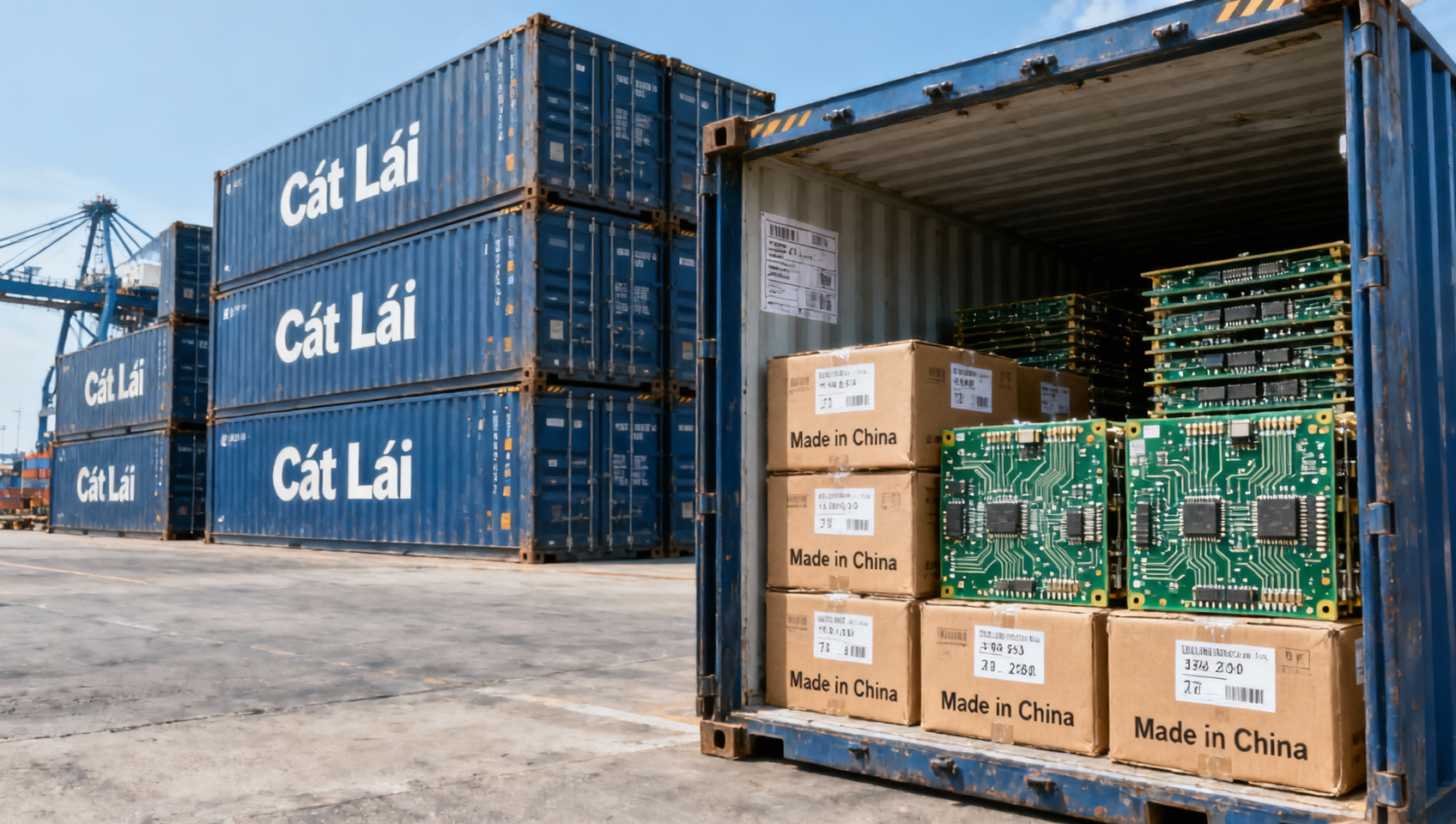
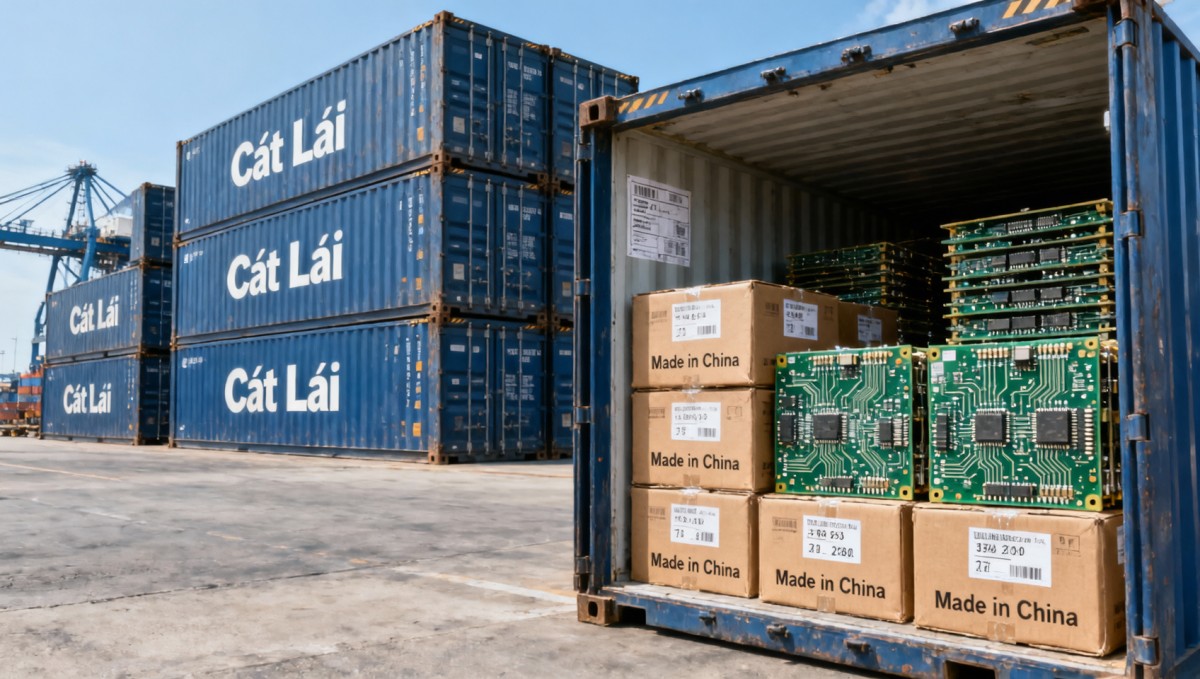
Focus on consignments cleared through key Vietnamese ports (e.g., Cát Lái, Hải Phòng) since early 2025. Verify whether certificates of origin, supplier declarations, and process flowcharts align with Vietnam’s evolving interpretation of “country of origin” for assembled electronics.
Distinguish between policy signaling and enforceable outcomes
This probe signals growing Vietnamese attention to transshipment patterns—not yet a finalized tariff decision. Until MOIT issues a preliminary or final determination, no new duties are legally in force. Avoid operational overreaction; instead, prioritize documentation readiness and internal origin mapping.
Prepare contingency plans for procurement and routing adjustments
For firms with concentrated China-based assembly, consider parallel validation of alternative production pathways (e.g., increasing local value-add in Thailand or Mexico) or initiating pre-ruling consultations with Vietnamese customs. Maintain records of labor hours, material inputs, and testing protocols per batch to support future origin claims.
Editorial Observation / Industry Perspective
From industry perspective, this investigation reflects Vietnam’s broader effort to refine trade enforcement tools amid rising regional competition for electronics investment—and growing sensitivity to de facto Chinese export channeling. Analysis来看, it functions primarily as a deterrent and information-gathering mechanism at this stage, rather than an immediate tariff imposition. Current more appropriate understanding is that MOIT seeks to clarify origin rules for complex, multi-stage electronics assembly—not to broadly penalize ASEAN-based trade. However, given Vietnam’s active use of trade remedies in recent years (e.g., solar glass, steel), sustained monitoring remains warranted, especially for firms with repetitive, high-volume transshipments lacking transparent value-add documentation.
Conclusion
This anti-circumvention probe does not introduce new tariffs outright, but it introduces material compliance uncertainty for electronics supply chains relying on China-influenced transshipment models. Its significance lies less in immediate financial impact and more in its role as a regulatory signal: Vietnam is strengthening origin verification capacity for assembled electronics, particularly where final assembly masks earlier Chinese value addition. Stakeholders are advised to treat this as an early-stage compliance checkpoint—not a crisis—and prioritize documentation rigor over structural overhauls at this time.
Source Attribution
Main source: Official announcement issued by Vietnam’s Ministry of Industry and Trade (MOIT), dated April 19, 2026.
Points requiring ongoing observation: MOIT’s forthcoming definition of “substantial transformation,” list of investigated product categories (HS codes), and timeline for preliminary determination.
Get weekly intelligence in your inbox.
No noise. No sponsored content. Pure intelligence.
 Apr 21, 2026China Builds National Mine Safety Risk Monitoring 'Single Network'China Builds National Mine Safety Risk Monitoring 'Single Network'
 Apr 21, 2026MIIT Releases First List of AI+Manufacturing IncubatorsMIIT Releases First List of AI+Manufacturing Incubators
 Apr 21, 20262026 Shanghai Fastener Show: 1,423 Exhibitors, Robot-Specialized Fasteners in Focus2026 Shanghai Fastener Show: 1,423 Exhibitors, Robot-Specialized Fasteners in Focus
 Apr 21, 2026Vietnam Launches Anti-Circumvention Probe on Chinese-Assembled Electronic ComponentsVietnam Launches Anti-Circumvention Probe on Chinese-Assembled Electronic Components
 Apr 21, 2026China Academy Releases 2026 Digital Passport White PaperChina Academy Releases 2026 Digital Passport White Paper
 Apr 21, 2026Suez Canal AI Speed & Stowage Control Starts Apr 19, 2026Suez Canal AI Speed & Stowage Control Starts Apr 19, 2026
 Apr 21, 2026US BIS Adds EV Onboard Chargers with AES-256+ Encryption to Export ControlsUS BIS Adds EV Onboard Chargers with AES-256+ Encryption to Export Controls
 Apr 21, 2026TÜV Rheinland Updates BESS Certification: Thermal Cascade Protection Now MandatoryTÜV Rheinland Updates BESS Certification: Thermal Cascade Protection Now Mandatory
 Apr 21, 2026Shanghai Port Launches Green Clearance Channel for New Energy EquipmentShanghai Port Launches Green Clearance Channel for New Energy Equipment
 Apr 21, 2026IEC 63275:2026 Released: Global EMC Immunity Testing Standard for Warehouse RobotsIEC 63275:2026 Released: Global EMC Immunity Testing Standard for Warehouse Robots
 Apr 20, 2026How to Prioritize Energy Efficiency Projects in 2026How to Prioritize Energy Efficiency Projects in 2026
 Apr 20, 2026Energy Efficiency Upgrades That Cut Operating CostsEnergy Efficiency Upgrades That Cut Operating Costs
 Apr 20, 2026How to Avoid Common Solar Street Light FailuresHow to Avoid Common Solar Street Light Failures
 Apr 20, 2026Solar Street Lights: When Do They Really Pay Off?Solar Street Lights: When Do They Really Pay Off?
 Apr 20, 2026What Makes an Ultrasound Machine Worth the Cost?What Makes an Ultrasound Machine Worth the Cost?
 Apr 20, 2026Ultrasound Machines: New vs Refurbished in 2026Ultrasound Machines: New vs Refurbished in 2026
 Apr 20, 2026How to Evaluate Clean Energy ROI in 2026How to Evaluate Clean Energy ROI in 2026
 Apr 20, 2026Clean Energy Projects: Where Savings Really Come FromClean Energy Projects: Where Savings Really Come From
 Apr 20, 2026Air Quality Monitors: What to Check Before BuyingAir Quality Monitors: What to Check Before Buying
 Apr 20, 2026How Accurate Are Air Quality Monitors Indoors?How Accurate Are Air Quality Monitors Indoors?
 Apr 20, 2026Smart Door Lock Costs Beyond the HardwareSmart Door Lock Costs Beyond the Hardware
 Apr 20, 2026Smart Door Locks: Which Type Fits Your Property?Smart Door Locks: Which Type Fits Your Property?
 Apr 20, 2026How AR Glasses Improve Remote MaintenanceHow AR Glasses Improve Remote Maintenance
 Apr 20, 2026AR Glasses for Field Work: Worth It or Not?AR Glasses for Field Work: Worth It or Not?
 Apr 20, 2026Which AED Defibrillators Are Easiest to Use?Which AED Defibrillators Are Easiest to Use?
 Apr 20, 2026AED Defibrillators: What Buyers Often MissAED Defibrillators: What Buyers Often Miss
 Apr 20, 2026How to Compare 3PL Logistics Providers for GrowthHow to Compare 3PL Logistics Providers for Growth