How Accurate Are Air Quality Monitors Indoors?
Indoor air quality monitors can provide valuable real-time insight, but their accuracy depends on sensor type, calibration, placement, and the pollutants being measured. For buyers, facility managers, and safety teams comparing air quality monitors across commercial, healthcare, and industrial settings, understanding these limits is essential to making smarter decisions on compliance, energy efficiency, and long-term environmental control.
For B2B teams, the question is rarely whether indoor air quality monitors are useful. The real issue is how much confidence decision-makers can place in the numbers when those readings affect ventilation strategy, occupant safety, maintenance budgets, and audit readiness. A monitor that is accurate enough for office screening may still be inadequate for a clean-adjacent healthcare room, a manufacturing floor, or a warehouse with intermittent emissions.
That is why technical evaluators, procurement teams, project managers, and safety officers need a practical framework. Accuracy is not a single specification. It is the outcome of sensor technology, calibration routine, environmental conditions, response time, and the gap between indicative monitoring and reference-grade measurement.
What Indoor Air Quality Monitor Accuracy Really Means
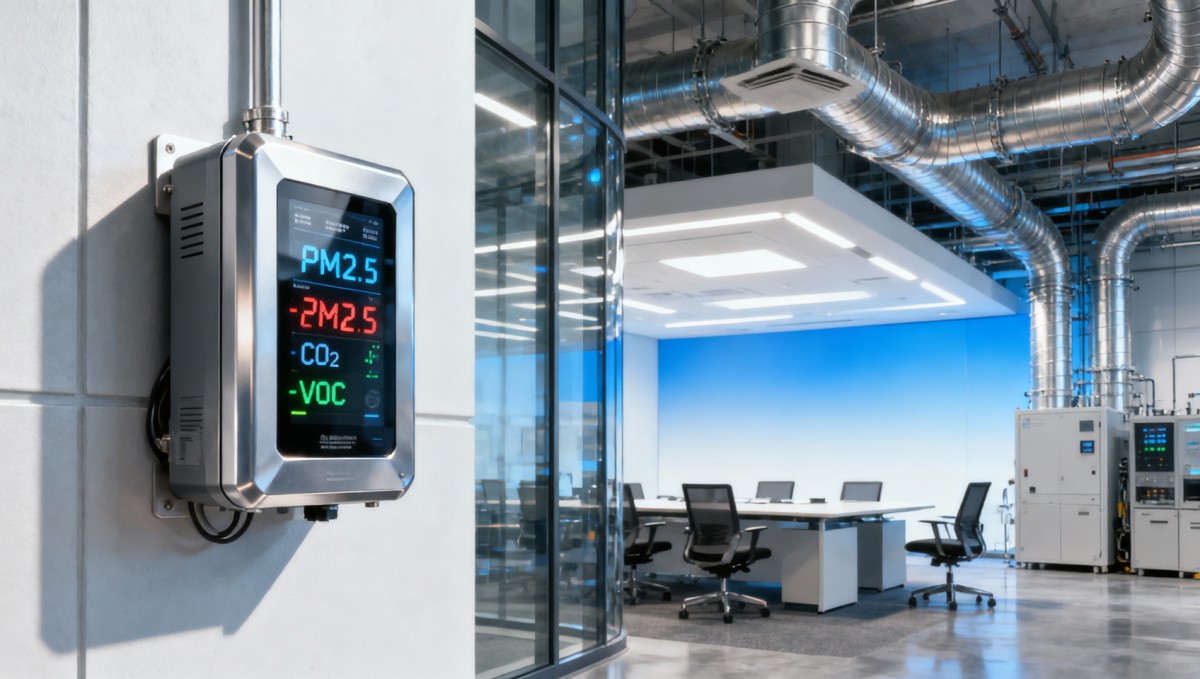
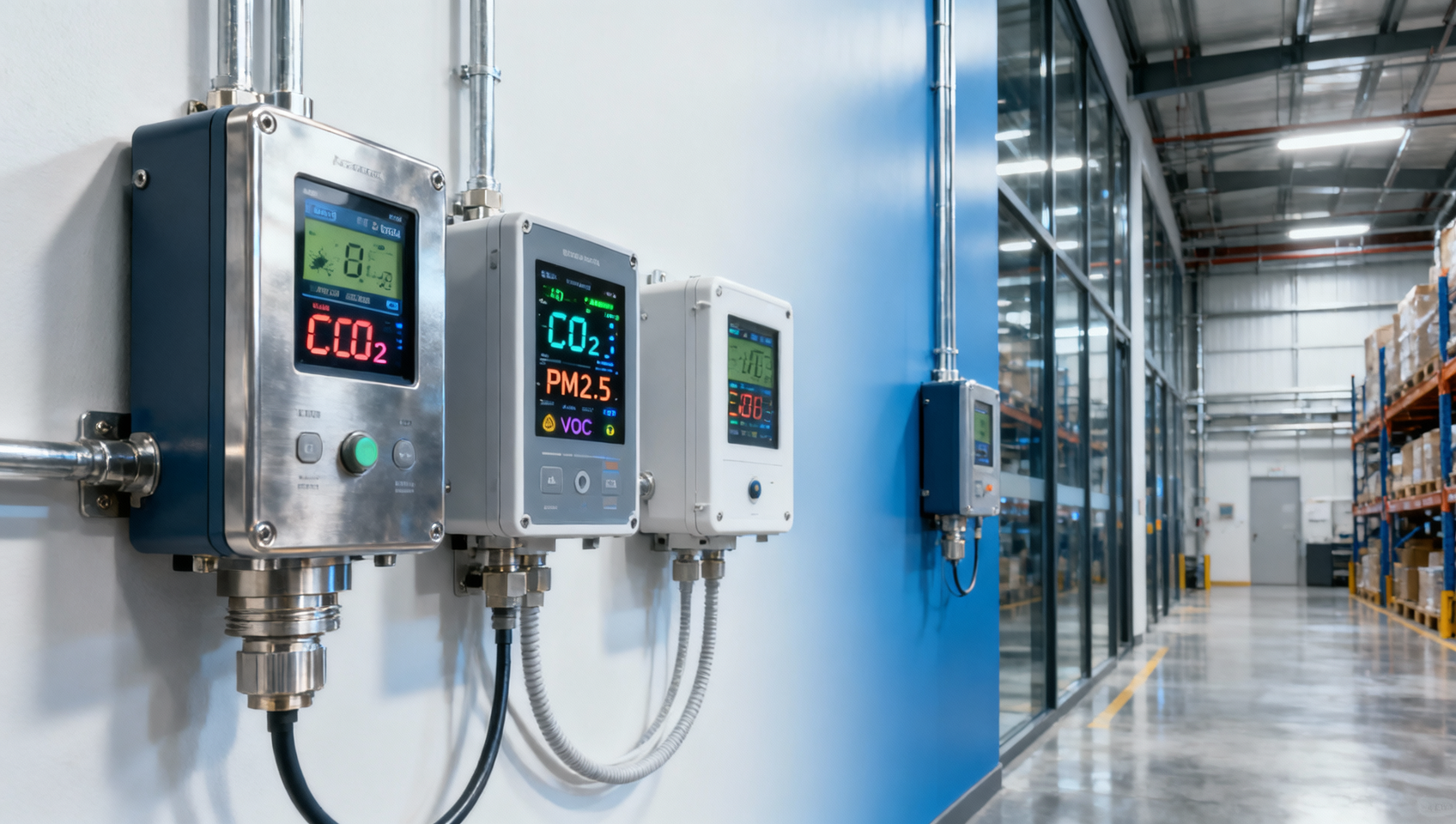
When people ask how accurate air quality monitors are indoors, they often assume one device can measure every pollutant with the same reliability. In practice, indoor air quality monitoring is a mix of sensor types with different strengths and limitations. A typical commercial monitor may track PM2.5, PM10, CO2, VOCs, temperature, and humidity, but each channel follows a different measurement principle and a different error profile.
For example, non-dispersive infrared sensors used for CO2 can deliver stable performance in many indoor settings, often within a typical range of ±50 ppm or ±3% of reading, depending on device tier and maintenance status. By contrast, low-cost metal oxide VOC sensors are more useful for trend detection than for precise compound-specific measurement. They may indicate rising contamination levels but cannot reliably identify whether the source is ethanol, formaldehyde, cleaning chemicals, or mixed solvent exposure.
Particulate sensors also vary widely. Laser scattering sensors can provide practical PM2.5 trend data, but their readings are influenced by particle size distribution, humidity, and aerosol composition. In an office, a 10–20% deviation from a reference instrument may be acceptable for ventilation management. In a healthcare, laboratory-support, or regulated industrial environment, that same deviation may trigger a need for higher-grade instrumentation or periodic validation.
Procurement teams should therefore separate three categories of use: general awareness, operational control, and compliance support. A monitor suitable for awareness gives directional data. A monitor for operational control needs stronger repeatability and alarm logic. A monitor used in compliance-related workflows typically requires traceable calibration, documented maintenance intervals, and alignment with recognized test methods.
Indicative vs. decision-grade monitoring
An important distinction in B2B environments is whether the monitor is intended for indicative screening or decision-grade control. Indicative monitoring helps detect patterns over 24 hours, 7 days, or seasonal cycles. Decision-grade monitoring supports operational changes such as increasing air changes per hour, adjusting filtration, or investigating a suspected source event within 30–60 minutes.
Key factors that shape practical accuracy
- Sensor technology: NDIR for CO2, optical sensors for particles, electrochemical sensors for certain gases, and MOS sensors for broad VOC detection each perform differently.
- Calibration status: Factory calibration may degrade over 6–12 months if the device operates in dusty, humid, or chemically variable environments.
- Environmental interference: Humidity above 75%, rapid temperature swings, and strong airflow can distort readings.
- Application match: A device designed for classrooms may not hold up on a loading dock, near sterilization rooms, or beside process equipment.
For enterprise buyers, the practical takeaway is clear: indoor air quality monitor accuracy should be judged against the decision being made, not against marketing claims alone.
How Sensor Type and Calibration Affect Reliability
Sensor architecture is one of the strongest predictors of monitor performance. In multi-parameter indoor air quality monitors, each sensing module ages at a different rate. CO2 sensors may remain stable for years if properly maintained, while VOC and particulate sensors may drift faster under heavy use. This is why two devices with the same screen display can deliver very different real-world value after 9–18 months of deployment.
Calibration is equally important. Some devices use fixed factory calibration only, while others support field calibration, automatic baseline correction, or service-level recalibration. Automatic baseline correction can work well in spaces that periodically return to fresh-air conditions, such as offices that empty overnight. It can be less dependable in 24/7 occupied areas, healthcare wards, or manufacturing environments where elevated CO2 never fully drops back to outdoor baseline.
For technical evaluators, a useful question is not simply “Is the monitor calibrated?” but “How is it calibrated, how often, and against what standard?” A device with a stated accuracy spec but no recalibration path can become a weak asset over a 2-year ownership cycle. This directly affects total cost of ownership, not just measurement quality.
The table below outlines how common indoor air quality sensing approaches typically perform in commercial and industrial decision contexts.
The main lesson is that no single specification defines monitor quality. Buyers should ask how each sensing channel performs under the exact indoor conditions where the device will operate, especially when comparing office, healthcare, and industrial use cases.
Questions to include in technical review
- What is the stated accuracy range for each pollutant, not just the whole device?
- Does the product support field verification every 6 or 12 months?
- What is the warm-up time and response time, such as T90 within 30–120 seconds?
- What are the maintenance tasks for filters, optics, or gas sensor replacement?
Placement, Environment, and Building Conditions Can Distort Readings
Even a well-designed indoor air quality monitor can produce misleading data if it is installed in the wrong place. Placement errors are among the most common causes of low confidence in readings. Devices mounted too close to supply vents, doors, printers, process equipment, or open windows often capture highly localized conditions rather than representative room air.
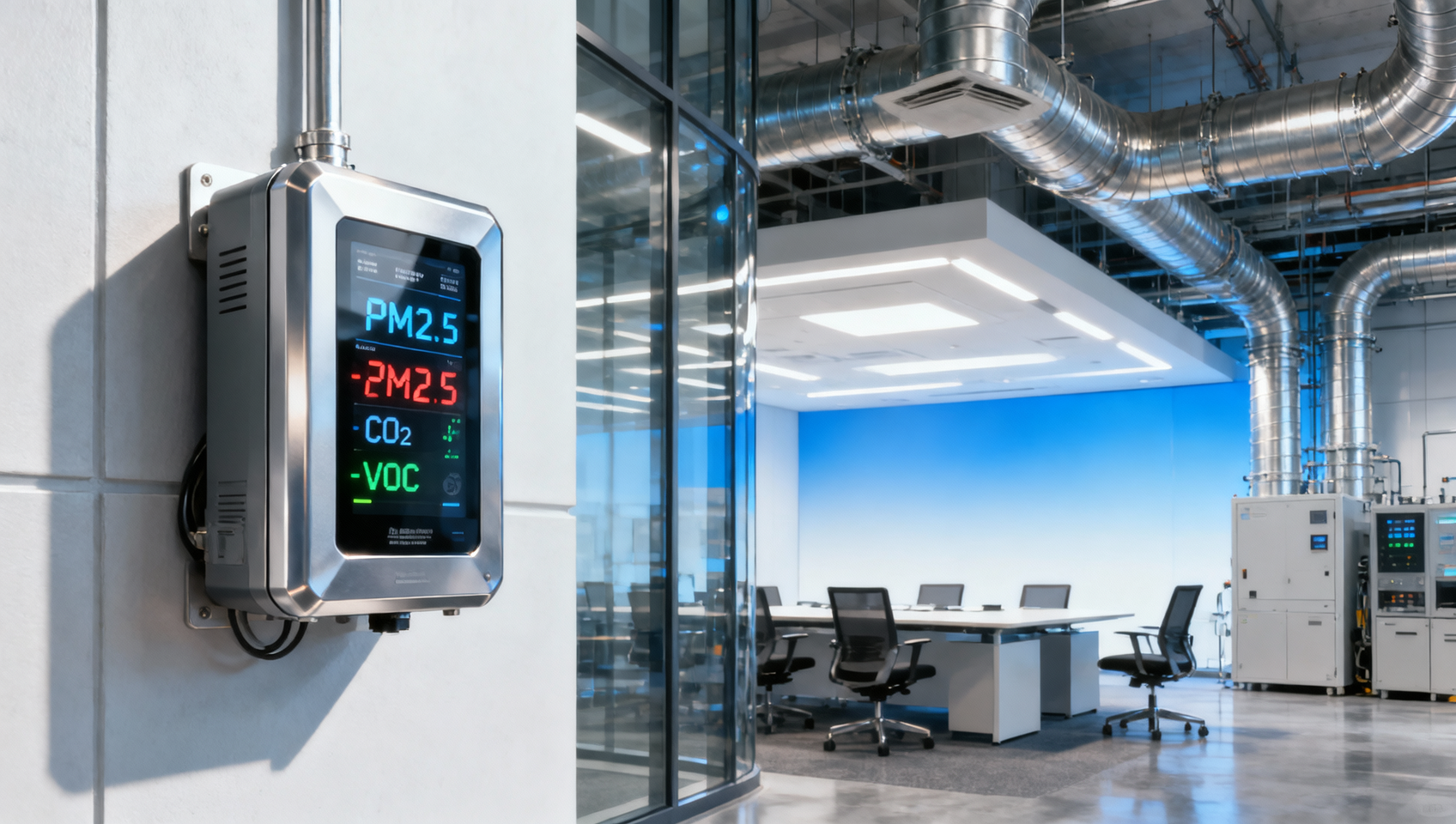
A practical rule in many commercial spaces is to position wall-mounted units at roughly 1.1–1.7 meters above the floor, away from direct airflow and obvious point sources. In healthcare support areas or industrial rooms, this rule often needs refinement. If the goal is worker exposure awareness, the monitor should reflect breathing-zone conditions. If the goal is HVAC control, placement should align with return-air behavior and occupancy distribution.
Humidity and temperature matter more than many buyers expect. Relative humidity above 70–80% can affect particle sensing and certain gas channels. Dust accumulation over 3–6 months can degrade optical performance in warehouses and light manufacturing sites. Frequent door opening, forklift traffic, cleaning cycles, and pressure differences between rooms can also create short spikes that are real but not representative of baseline indoor air quality.
This is why deployment planning should include a site survey. A 30-minute walkthrough can prevent months of poor data interpretation. Teams should map likely pollutant sources, occupancy density, air pathways, and whether the monitor is intended to show average conditions, hotspot behavior, or event-based excursions.
Common placement mistakes in B2B environments
- Installing monitors within 1–2 meters of supply diffusers, which can artificially lower CO2 and particle readings.
- Mounting near break areas, sanitizer stations, or copy rooms, creating VOC spikes unrelated to whole-zone conditions.
- Using a single monitor for a large open area above 300–500 square meters with mixed occupancy and uneven airflow.
- Ignoring vertical stratification in atriums, mezzanines, or high-bay facilities where air quality can vary by height.
The table below provides a practical deployment guide for different indoor environments.
For project teams, the best way to improve perceived monitor accuracy is often not to buy a more expensive device first, but to improve placement logic, zoning, and maintenance discipline.
How to Evaluate Indoor Air Quality Monitors for Procurement and Risk Control
From a procurement perspective, indoor air quality monitors should be evaluated as operational instruments, not consumer gadgets. That means comparing not only purchase price, but also calibration burden, integration options, data retention, alarm handling, and service life. A device that costs 20–30% less upfront may create more cost later if it requires frequent manual checks or has poor data credibility during investigations.
Cross-functional review is especially important. Safety teams focus on threshold alerts, facilities teams focus on HVAC response, finance looks at payback and replacement cycles, and enterprise decision-makers want scalable deployment across multiple sites. A strong selection process aligns these needs into a short list of technical and commercial requirements before pilot rollout.
In many B2B projects, a 2-stage approach works well. Stage 1 uses a pilot of 2–5 units over 30–60 days to compare data stability and site fit. Stage 2 expands only after checking drift behavior, user interface clarity, alarm noise level, and whether the data actually supports action. This reduces the risk of buying dozens of monitors that generate dashboards but little operational value.
The matrix below can help technical and commercial teams score options more consistently.
In most organizations, the strongest procurement outcome comes from treating air quality monitors as part of a broader environmental control system. Accuracy should support action, reporting, and long-term operational consistency, not just a one-time buying decision.
A practical 5-step selection workflow
- Define the target pollutants and whether the goal is comfort, safety screening, or process control.
- Map the site into zones, usually by occupancy, airflow pattern, and source profile.
- Shortlist devices by sensor type, integration method, and maintenance model.
- Run a 30–60 day pilot with side-by-side checks where possible.
- Approve rollout only after confirming data usability, not just device uptime.
Common Misunderstandings, Maintenance Needs, and Practical Next Steps
One of the biggest misunderstandings is believing that a digital display automatically means laboratory-grade confidence. Most indoor air quality monitors are best understood as operational tools. They are excellent for spotting trends, comparing zones, triggering investigations, and guiding ventilation decisions. They are not always suitable as sole evidence for formal exposure determination or specialized compliance tasks.
Another common mistake is ignoring maintenance. In many facilities, monitor performance drops because optics are dusty, firmware is outdated, or recalibration has been skipped for 12 months or more. Even a strong device can lose value if data is not reviewed regularly. A sensible program may include monthly visual inspection, quarterly data review, and annual functional verification, with shorter intervals in dusty or chemically active spaces.
For multi-site enterprises, standardization matters. If one location uses low-cost spot monitors and another uses integrated building sensors, cross-site comparisons become difficult. Consistent device class, alarm thresholds, and review intervals improve management reporting and capital planning. This is particularly useful for procurement directors, quality teams, and operations leaders who need comparable data across office, healthcare technology, logistics, and advanced manufacturing settings.
For organizations evaluating suppliers, content quality and market intelligence also play a role. Decision-makers increasingly need not just device specs, but context on deployment, maintenance, supplier fit, and sector-specific use cases. That is where a specialist B2B intelligence environment can add value by connecting technical evaluation with sourcing strategy and long-term operational planning.
FAQ
Are indoor air quality monitors accurate enough for compliance?
Often they are useful for screening and operational control, but not always sufficient as stand-alone compliance instruments. The answer depends on the pollutant, the regulatory context, and whether the monitor has traceable calibration and validated performance for that task.
How often should indoor monitors be calibrated?
A common range is every 6–12 months, though dusty industrial sites or chemically variable areas may require more frequent checks. Buyers should confirm whether field verification, remote diagnostics, or module replacement are available.
What is the best monitor for offices versus industrial sites?
There is no universal best option. Offices often prioritize CO2, PM2.5, temperature, and humidity for comfort and ventilation. Industrial or logistics areas may need stronger particulate tolerance, targeted gas sensing, rugged housing, and shorter response times.
Can one monitor cover a large area?
Usually not reliably if the area has uneven airflow, variable occupancy, or multiple sources. Large zones above 300–500 square meters often need more than one monitoring point to avoid blind spots and misleading averages.
Indoor air quality monitors can be highly useful and reasonably accurate when matched to the right task, maintained correctly, and deployed in the right location. The most effective B2B buying decisions are based on sensor type, calibration pathway, site conditions, and the level of confidence required for action. For teams comparing solutions across commercial, healthcare, industrial, or smart building environments, TradeNexus Pro helps turn technical specifications into practical sourcing insight. To explore suitable monitoring strategies, evaluate supplier options, or request a tailored market-oriented solution, contact us and learn more about the right approach for your facility portfolio.
Get weekly intelligence in your inbox.
No noise. No sponsored content. Pure intelligence.
 Apr 21, 2026China Builds National Mine Safety Risk Monitoring 'Single Network'China Builds National Mine Safety Risk Monitoring 'Single Network'
 Apr 21, 2026MIIT Releases First List of AI+Manufacturing IncubatorsMIIT Releases First List of AI+Manufacturing Incubators
 Apr 21, 20262026 Shanghai Fastener Show: 1,423 Exhibitors, Robot-Specialized Fasteners in Focus2026 Shanghai Fastener Show: 1,423 Exhibitors, Robot-Specialized Fasteners in Focus
 Apr 21, 2026Vietnam Launches Anti-Circumvention Probe on Chinese-Assembled Electronic ComponentsVietnam Launches Anti-Circumvention Probe on Chinese-Assembled Electronic Components
 Apr 21, 2026China Academy Releases 2026 Digital Passport White PaperChina Academy Releases 2026 Digital Passport White Paper
 Apr 21, 2026Suez Canal AI Speed & Stowage Control Starts Apr 19, 2026Suez Canal AI Speed & Stowage Control Starts Apr 19, 2026
 Apr 21, 2026US BIS Adds EV Onboard Chargers with AES-256+ Encryption to Export ControlsUS BIS Adds EV Onboard Chargers with AES-256+ Encryption to Export Controls
 Apr 21, 2026TÜV Rheinland Updates BESS Certification: Thermal Cascade Protection Now MandatoryTÜV Rheinland Updates BESS Certification: Thermal Cascade Protection Now Mandatory
 Apr 21, 2026Shanghai Port Launches Green Clearance Channel for New Energy EquipmentShanghai Port Launches Green Clearance Channel for New Energy Equipment
 Apr 21, 2026IEC 63275:2026 Released: Global EMC Immunity Testing Standard for Warehouse RobotsIEC 63275:2026 Released: Global EMC Immunity Testing Standard for Warehouse Robots
 Apr 20, 2026How to Prioritize Energy Efficiency Projects in 2026How to Prioritize Energy Efficiency Projects in 2026
 Apr 20, 2026Energy Efficiency Upgrades That Cut Operating CostsEnergy Efficiency Upgrades That Cut Operating Costs
 Apr 20, 2026How to Avoid Common Solar Street Light FailuresHow to Avoid Common Solar Street Light Failures
 Apr 20, 2026Solar Street Lights: When Do They Really Pay Off?Solar Street Lights: When Do They Really Pay Off?
 Apr 20, 2026What Makes an Ultrasound Machine Worth the Cost?What Makes an Ultrasound Machine Worth the Cost?
 Apr 20, 2026Ultrasound Machines: New vs Refurbished in 2026Ultrasound Machines: New vs Refurbished in 2026
 Apr 20, 2026How to Evaluate Clean Energy ROI in 2026How to Evaluate Clean Energy ROI in 2026
 Apr 20, 2026Clean Energy Projects: Where Savings Really Come FromClean Energy Projects: Where Savings Really Come From
 Apr 20, 2026Air Quality Monitors: What to Check Before BuyingAir Quality Monitors: What to Check Before Buying
 Apr 20, 2026How Accurate Are Air Quality Monitors Indoors?How Accurate Are Air Quality Monitors Indoors?
 Apr 20, 2026Smart Door Lock Costs Beyond the HardwareSmart Door Lock Costs Beyond the Hardware
 Apr 20, 2026Smart Door Locks: Which Type Fits Your Property?Smart Door Locks: Which Type Fits Your Property?
 Apr 20, 2026How AR Glasses Improve Remote MaintenanceHow AR Glasses Improve Remote Maintenance
 Apr 20, 2026AR Glasses for Field Work: Worth It or Not?AR Glasses for Field Work: Worth It or Not?
 Apr 20, 2026Which AED Defibrillators Are Easiest to Use?Which AED Defibrillators Are Easiest to Use?
 Apr 20, 2026AED Defibrillators: What Buyers Often MissAED Defibrillators: What Buyers Often Miss
 Apr 20, 2026How to Compare 3PL Logistics Providers for GrowthHow to Compare 3PL Logistics Providers for Growth