US BIS Adds EV Onboard Chargers with AES-256+ Encryption to Export Controls
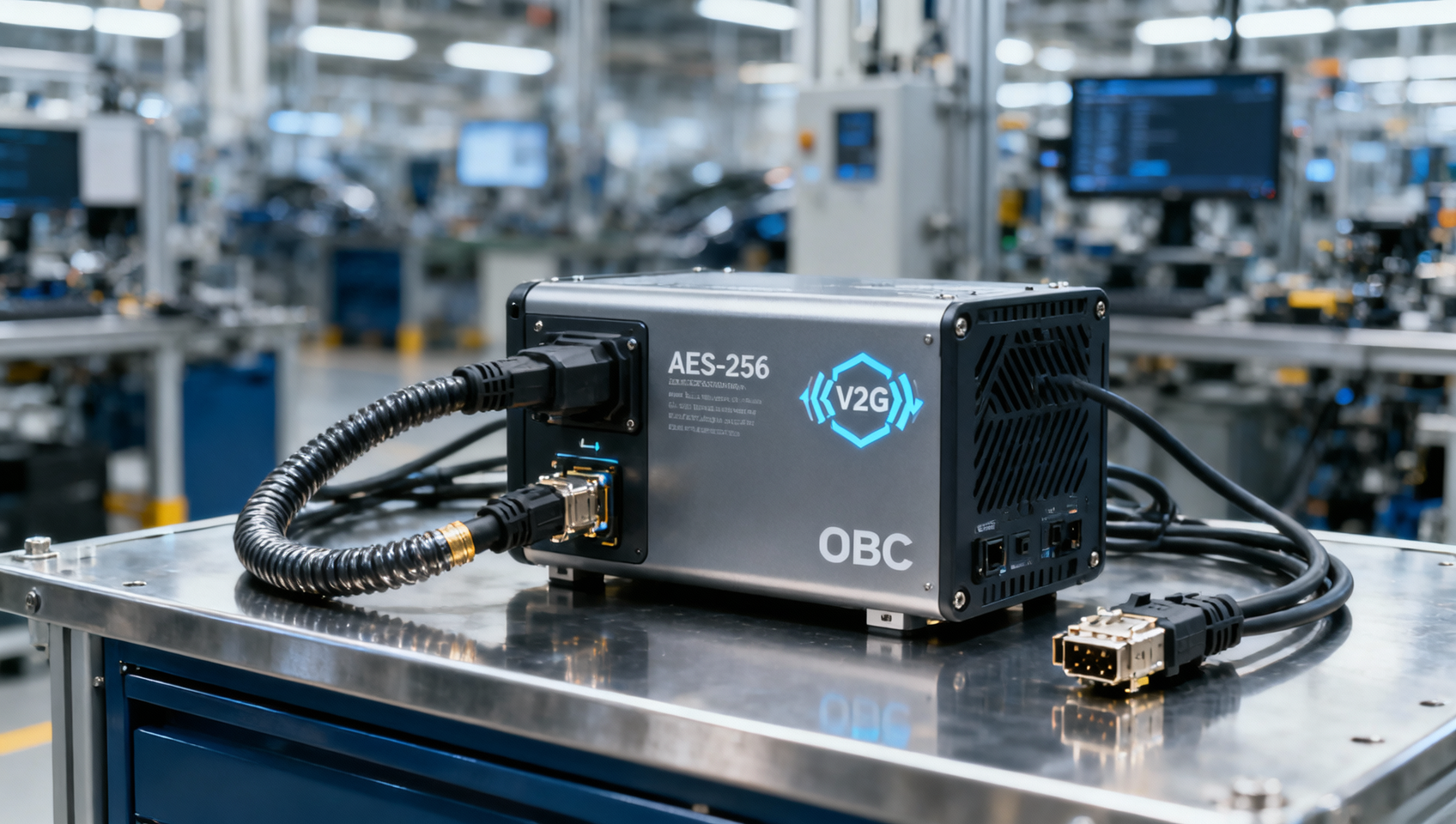
On April 20, 2026, the U.S. Department of Commerce’s Bureau of Industry and Security (BIS) issued a temporary final rule (81 FR 23456) adding onboard chargers (OBCs) incorporating AES-256 or stronger encryption—specifically those enabling vehicle-to-grid (V2G) bidirectional power flow and over-the-air (OTA) key negotiation—to the Export Administration Regulations (EAR) Supplement No. 7. Exports of such OBCs to China, Russia, Iran, and other designated countries now require a BIS license. This development directly affects Chinese OBC manufacturers seeking or maintaining Tier-2 supply qualifications for U.S.-based automakers—and warrants close attention from EV power electronics, automotive cybersecurity, and export compliance professionals.
Event Overview
On April 20, 2026, the U.S. Bureau of Industry and Security (BIS) published a temporary final rule (81 FR 23456) amending the Export Administration Regulations (EAR). The rule adds certain onboard charger (OBC) modules—specifically those implementing AES-256 or stronger encryption algorithms for V2G bidirectional charging and OTA cryptographic key negotiation—to EAR Supplement No. 7 (the ‘Commerce Control List’). As a result, exports of these OBCs to China, Russia, Iran, and other countries listed in Country Group D:1 are now subject to licensing requirements under the EAR.
Which Subsectors Are Affected
EV Power Electronics Manufacturers (OBC Suppliers)
Chinese and other non-U.S. OBC makers supplying Tier-2 components to U.S.-headquartered automakers are directly impacted. Their products may now fall under EAR controls if they include AES-256+ encryption supporting V2G or OTA key exchange—even if the encryption is embedded solely for functional safety or grid interoperability—not data confidentiality. This may trigger reclassification, licensing obligations, or disqualification from U.S. OEM sourcing lists.
Automotive Cybersecurity & Embedded Software Providers
Firms developing firmware, cryptographic libraries, or secure boot modules for OBCs must assess whether their code enables or facilitates the controlled functions (e.g., key negotiation protocols compliant with ISO 15118-20 or IEEE 2030.5). Integration of such software—even if sourced from third parties—may render the entire OBC assembly subject to licensing.
Export Compliance & Trade Legal Services
Legal and compliance teams supporting automotive suppliers must now evaluate OBC designs against the specific technical parameters cited in the rule—not just general encryption strength. The control hinges on functional capability (V2G + OTA key negotiation), not encryption use in isolation. This requires deeper technical due diligence than standard EAR classification workflows.
Global Automotive Supply Chain Managers
Procurement and supply chain managers at U.S. and multinational OEMs face increased scrutiny when qualifying OBC vendors. The rule introduces new verification steps for cryptographic functionality in Tier-2 hardware—a shift from prior focus on battery cells or motor controllers. Documentation of encryption architecture, algorithm implementation scope, and firmware update mechanisms may become mandatory pre-qualification criteria.
What Relevant Enterprises or Practitioners Should Focus On — And How to Respond
Monitor official BIS guidance and potential revisions to the rule
The rule is issued as a ‘temporary final rule’, indicating BIS may adjust definitions, scope, or exemptions following public comment. Stakeholders should track updates to 81 FR 23456—including any clarifications on ‘key negotiation’ thresholds, de minimis exceptions, or carve-outs for non-military end uses.
Map cryptographic functionality across current and planned OBC product lines
Manufacturers should conduct a line-by-line technical review of all OBC firmware and hardware documentation—not just marketing specs—to determine whether AES-256+ encryption is used *in support of V2G or OTA key negotiation*. Use cases involving only local authentication or encrypted logging do not trigger the control, per the rule’s stated scope.
Distinguish between policy signal and operational impact
While the rule takes effect immediately, enforcement prioritization and license review timelines remain unannounced. Companies should treat this as a material compliance risk—not an automatic export halt—but prepare internal classification records and licensing readiness (e.g., SNAP-R account setup, ECCN determination documentation) before engaging in shipments to restricted destinations.
Initiate cross-functional alignment between engineering, compliance, and procurement teams
Engineering teams should document encryption implementation intent and architecture; compliance teams should validate EAR applicability using BIS’s official decision tree; procurement teams should update vendor questionnaires to capture cryptographic functionality details. This tripartite coordination helps avoid misclassification and supports defensible due diligence.
Editorial Perspective / Industry Observation
From industry perspective, this rule reflects a targeted expansion of export controls into functional EV infrastructure—not just batteries or chips—but one anchored to specific cryptographic capabilities tied to grid integration and remote update security. It is less a broad technology ban and more a precision instrument aimed at limiting foreign access to systems enabling strategic energy interoperability. Analysis来看, the inclusion of OTA key negotiation suggests BIS views secure, upgradable V2G interfaces as dual-use enablers with potential implications beyond transportation—extending into energy grid resilience and cyber-physical system integrity. Current更值得关注的是 how strictly BIS interprets ‘key negotiation’ in practice: whether modular firmware updates, certificate-based authentication, or proprietary handshake protocols fall within scope remains to be clarified through enforcement actions or advisory opinions.
As such, the rule functions primarily as a regulatory signal—highlighting U.S. policy attention on EV infrastructure’s convergence with national security-critical digital infrastructure—rather than an immediate operational blockade. Yet its narrow technical framing increases the likelihood of inadvertent noncompliance, making proactive classification and documentation essential.
Conclusion
This regulatory update signals a deliberate U.S. effort to extend export controls into high-functionality EV charging systems where cryptography serves grid-scale interoperability and remote system management—not just data protection. For affected enterprises, it underscores that compliance assessments must now go beyond component-level encryption strength and examine integrated system behavior. The current situation is best understood as an evolving compliance threshold—one requiring technical precision, interdepartmental coordination, and sustained monitoring—not a static restriction with fixed boundaries.
Source Attribution
Main source: U.S. Bureau of Industry and Security (BIS), Temporary Final Rule, 81 FR 23456, published April 20, 2026.
Areas requiring ongoing observation: BIS public comments on the rule, future advisory opinions on ECCN 3A001.b.10 interpretation, and enforcement patterns related to OTA key negotiation implementations.
Get weekly intelligence in your inbox.
No noise. No sponsored content. Pure intelligence.
 Apr 21, 2026China Builds National Mine Safety Risk Monitoring 'Single Network'China Builds National Mine Safety Risk Monitoring 'Single Network'
 Apr 21, 2026MIIT Releases First List of AI+Manufacturing IncubatorsMIIT Releases First List of AI+Manufacturing Incubators
 Apr 21, 20262026 Shanghai Fastener Show: 1,423 Exhibitors, Robot-Specialized Fasteners in Focus2026 Shanghai Fastener Show: 1,423 Exhibitors, Robot-Specialized Fasteners in Focus
 Apr 21, 2026Vietnam Launches Anti-Circumvention Probe on Chinese-Assembled Electronic ComponentsVietnam Launches Anti-Circumvention Probe on Chinese-Assembled Electronic Components
 Apr 21, 2026China Academy Releases 2026 Digital Passport White PaperChina Academy Releases 2026 Digital Passport White Paper
 Apr 21, 2026Suez Canal AI Speed & Stowage Control Starts Apr 19, 2026Suez Canal AI Speed & Stowage Control Starts Apr 19, 2026
 Apr 21, 2026US BIS Adds EV Onboard Chargers with AES-256+ Encryption to Export ControlsUS BIS Adds EV Onboard Chargers with AES-256+ Encryption to Export Controls
 Apr 21, 2026TÜV Rheinland Updates BESS Certification: Thermal Cascade Protection Now MandatoryTÜV Rheinland Updates BESS Certification: Thermal Cascade Protection Now Mandatory
 Apr 21, 2026Shanghai Port Launches Green Clearance Channel for New Energy EquipmentShanghai Port Launches Green Clearance Channel for New Energy Equipment
 Apr 21, 2026IEC 63275:2026 Released: Global EMC Immunity Testing Standard for Warehouse RobotsIEC 63275:2026 Released: Global EMC Immunity Testing Standard for Warehouse Robots
 Apr 20, 2026How to Prioritize Energy Efficiency Projects in 2026How to Prioritize Energy Efficiency Projects in 2026
 Apr 20, 2026Energy Efficiency Upgrades That Cut Operating CostsEnergy Efficiency Upgrades That Cut Operating Costs
 Apr 20, 2026How to Avoid Common Solar Street Light FailuresHow to Avoid Common Solar Street Light Failures
 Apr 20, 2026Solar Street Lights: When Do They Really Pay Off?Solar Street Lights: When Do They Really Pay Off?
 Apr 20, 2026What Makes an Ultrasound Machine Worth the Cost?What Makes an Ultrasound Machine Worth the Cost?
 Apr 20, 2026Ultrasound Machines: New vs Refurbished in 2026Ultrasound Machines: New vs Refurbished in 2026
 Apr 20, 2026How to Evaluate Clean Energy ROI in 2026How to Evaluate Clean Energy ROI in 2026
 Apr 20, 2026Clean Energy Projects: Where Savings Really Come FromClean Energy Projects: Where Savings Really Come From
 Apr 20, 2026Air Quality Monitors: What to Check Before BuyingAir Quality Monitors: What to Check Before Buying
 Apr 20, 2026How Accurate Are Air Quality Monitors Indoors?How Accurate Are Air Quality Monitors Indoors?
 Apr 20, 2026Smart Door Lock Costs Beyond the HardwareSmart Door Lock Costs Beyond the Hardware
 Apr 20, 2026Smart Door Locks: Which Type Fits Your Property?Smart Door Locks: Which Type Fits Your Property?
 Apr 20, 2026How AR Glasses Improve Remote MaintenanceHow AR Glasses Improve Remote Maintenance
 Apr 20, 2026AR Glasses for Field Work: Worth It or Not?AR Glasses for Field Work: Worth It or Not?
 Apr 20, 2026Which AED Defibrillators Are Easiest to Use?Which AED Defibrillators Are Easiest to Use?
 Apr 20, 2026AED Defibrillators: What Buyers Often MissAED Defibrillators: What Buyers Often Miss
 Apr 20, 2026How to Compare 3PL Logistics Providers for GrowthHow to Compare 3PL Logistics Providers for Growth