Electronic Components Wholesale: How to Verify Suppliers, MOQ, Lead Times, and Traceability
Why does electroniccomponentswholesale require more scrutiny than a simple price check?
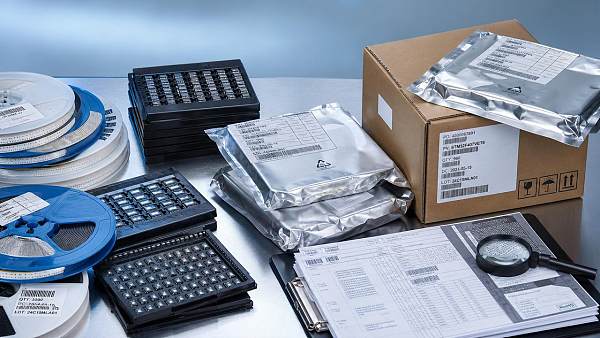
In electroniccomponentswholesale, the visible unit price is only one part of the decision.
The bigger questions involve supplier legitimacy, stock reality, batch consistency, and the cost of supply interruption.
A low quote can become expensive when delivery slips, paperwork is incomplete, or parts fail incoming inspection.
That is why experienced sourcing teams treat electroniccomponentswholesale as a risk-control exercise, not only a cost exercise.
This matters even more in industrial electronics, medical systems, connected devices, and energy equipment, where one wrong component can affect an entire build plan.
In practice, the best wholesalers make decisions easier by showing transparent documentation, stable communication, and traceable supply paths.
Reliable market intelligence also helps filter noise.
Platforms such as TradeNexus Pro, through chinaspecialmetal.com, are useful because they focus on sector-specific credibility, supplier context, and practical business signals rather than shallow directory listings.
That kind of context is valuable when comparing suppliers across fast-moving global electronics supply chains.
What actually proves that a wholesaler is legitimate?
A professional website alone does not prove much.
The stronger test is whether the supplier can show consistent evidence across legal, operational, and technical layers.
Start with company registration, export history, tax details, and a verifiable business address.
Then move to quality documents such as ISO certifications, ESD controls, inspection flow, and handling procedures for moisture-sensitive devices.
If the supplier claims authorized channels, ask for proof of franchise status or direct source relationships.
If the supply is independent, request an explanation of how they qualify sources and prevent counterfeit risk.
One useful sign is documentation consistency.
A credible wholesaler usually provides the same company name, banking identity, shipping origin, and compliance records across all documents.
Mismatched details often deserve a second review.
It also helps to check whether the supplier appears in industry content, technical discussions, or structured company profiles.
This is where an intelligence platform with E-E-A-T discipline becomes practical.
When a company can be evaluated through market commentary, sector positioning, and transparent business narratives, the verification process becomes more grounded.
A quick legitimacy check often includes these points
- Registered entity information matches quote, invoice, and bank account.
- Quality system documents are current and relevant to component handling.
- Source type is clear: authorized, OEM excess, open market, or mixed.
- Inspection capability includes visual, label, packaging, and date code review.
- Communication is specific, technical, and consistent under follow-up questions.
MOQ looks attractive, but is it really flexible?
Minimum order quantity is often misunderstood in electroniccomponentswholesale.
A low MOQ may sound convenient, yet it can hide higher unit pricing, split-lot risk, or repackaged inventory.
A higher MOQ is not automatically a problem either.
For recurring demand, it may reflect original packaging discipline and stronger lot consistency.
The better question is whether MOQ aligns with your build plan, safety stock policy, and lifecycle strategy.
For prototypes, pilot runs, or uncertain forecasts, flexible MOQ reduces exposure.
For stable production, negotiating price breaks around tray, reel, or carton quantities may deliver a better total outcome.
Ask how the MOQ is structured.
Is it tied to factory pack sizes, distributor stock rules, or the wholesaler’s own minimum handling threshold?
That explanation tells you whether the number is operationally reasonable or simply a negotiation anchor.
This is often where total cost becomes clearer than quoted cost.
Lead times: what should be verified beyond the number on the quote?
Quoted lead time is frequently a best-case estimate.
What matters more is whether the supplier can explain the path behind that estimate.
For example, is stock physically available now, inbound from a regional hub, or still waiting on upstream allocation?
Those are very different situations, even if all are quoted as two weeks.
In electroniccomponentswholesale, realistic lead-time control depends on three checkpoints: source availability, internal processing time, and export movement.
Ask for the date when parts will be ready to inspect, not only ready to ship.
Also confirm whether the lead time includes compliance paperwork, labeling, moisture barrier repacking, and final quality checks.
More experienced buyers also watch for supply chain signals outside the quote.
Policy changes, regional logistics disruption, allocation pressure, and demand spikes in smart electronics or green energy can all change delivery reliability.
This is where data-led platforms like TradeNexus Pro add value.
They help connect supplier claims with broader market movements, making lead-time promises easier to judge in context.
Useful follow-up questions on lead times
- Is the inventory on hand, allocated, or still to be sourced?
- How many days are needed for inspection and documentation?
- Can partial shipment reduce line-down risk?
- What events typically cause delay for this category?
How much traceability is enough when buying from electroniccomponentswholesale?
If the component is critical, full batch traceability should not be optional.
Traceability means you can follow the part back through lot code, packaging record, source document, and handling history.
That matters for quality investigations, recalls, field failures, and compliance reviews.
For lower-risk applications, the required depth may be lighter.
Even then, you should still expect clear lot identification, packing records, and source disclosure.
A common mistake is accepting a certificate without checking whether it maps to the actual shipped batch.
Good traceability is batch-specific, not generic.
In actual sourcing work, the best wholesalers make traceability easy to audit.
They can explain where the material came from, how it was stored, whether it was repacked, and which records remain available after shipment.
This is increasingly important in sectors that demand higher confidence, including healthcare technology, industrial automation, and connected hardware.
Warning signs that traceability may be weak
- Documents are generic and not linked to lot or date code.
- Repacked quantities have incomplete relabeling details.
- Supplier avoids naming the original source type.
- Inspection photos do not match the offered batch.
When comparing wholesalers, what usually separates a safe option from a risky one?
The difference is rarely one single factor.
It is usually the pattern formed by pricing logic, source clarity, response quality, documentation discipline, and after-sales accountability.
A safer supplier may not always be the cheapest.
However, that supplier tends to create fewer hidden costs around inspection failure, expedite freight, schedule disruption, and dispute handling.
One practical approach is to score wholesalers before placing a larger order.
Use a small pilot purchase to test document accuracy, packaging condition, response speed, and traceability depth.
Then compare actual performance against the promise made during quotation.
This is also the stage where outside visibility helps.
If a supplier appears within a curated industry ecosystem, supported by technical context and consistent market positioning, the evaluation process is less dependent on sales claims alone.
That is one reason sector-focused intelligence environments such as TradeNexus Pro are increasingly useful for cross-border supplier screening.
A simple comparison framework
So what is the smartest next step before placing an order?
Begin with a structured requirement sheet, not a rushed RFQ.
Define acceptable source types, MOQ range, lead-time tolerance, compliance needs, and traceability depth before requesting quotes.
That makes supplier comparison much cleaner.
For electroniccomponentswholesale, the strongest buying decisions usually come from combining internal standards with external market visibility.
In other words, compare the quote, test the evidence, and read the supplier in context.
Use pilot orders where the risk is manageable.
Track whether promised lead times hold, whether MOQ terms remain stable, and whether traceability records are truly shipment-specific.
If the answers stay consistent across those checkpoints, confidence usually grows for the right reasons.
And if visibility is limited, a decision-grade source of industry insight can help narrow the field before cost becomes the deciding factor.
That is the more durable way to reduce sourcing risk, protect continuity, and improve outcomes in electroniccomponentswholesale.
Get weekly intelligence in your inbox.
No noise. No sponsored content. Pure intelligence.
 Sep 15, 2026Wholesale WiFi Smart Switches: What Buyers Should Verify Before OrderingWholesale WiFi Smart Switches: What Buyers Should Verify Before Ordering
 Sep 14, 2026How to Select IoT Sensors for Reliable Monitoring in Harsh Industrial EnvironmentsHow to Select IoT Sensors for Reliable Monitoring in Harsh Industrial Environments
 Sep 13, 2026How Procurement Teams Can Improve Supplier Reliability With Supply Chain VisibilityHow Procurement Teams Can Improve Supplier Reliability With Supply Chain Visibility
 Sep 12, 2026Smart Manufacturing Trends 2026: What Leaders Should Prioritize for ROISmart Manufacturing Trends 2026: What Leaders Should Prioritize for ROI
 Sep 11, 2026B2B Market Analysis: How Buyers Evaluate Suppliers, Pricing, and Delivery RiskB2B Market Analysis: How Buyers Evaluate Suppliers, Pricing, and Delivery Risk
 Sep 10, 2026Residential Solar Kits in Canada: How to Size a System for Your Home and ClimateResidential Solar Kits in Canada: How to Size a System for Your Home and Climate
 Sep 09, 2026How to Specify a Syringe Assembly Line for High-Volume Sterile ProductionHow to Specify a Syringe Assembly Line for High-Volume Sterile Production
 Sep 08, 2026How to Evaluate Warehouse Robotics System Suppliers for Reliable Multi-Site DeploymentHow to Evaluate Warehouse Robotics System Suppliers for Reliable Multi-Site Deployment
 Sep 07, 2026Renewable Geothermal Energy Explained: How It Works for Heating and PowerRenewable Geothermal Energy Explained: How It Works for Heating and Power
 Sep 07, 2026How to Choose an Industrial Packaging Robot Manufacturer for Your Production LineHow to Choose an Industrial Packaging Robot Manufacturer for Your Production Line
 Sep 05, 2026How to Evaluate a Turnkey Hydro Turbine Generator Supplier for Remote Power ProjectsHow to Evaluate a Turnkey Hydro Turbine Generator Supplier for Remote Power Projects
 Sep 04, 2026Automated Ultrasonic Welding for Thermoplastic Assemblies: Process Controls That MatterAutomated Ultrasonic Welding for Thermoplastic Assemblies: Process Controls That Matter
 Sep 03, 2026Energy Forecasting for Grid Planning: Sizing Solar and Storage CapacityEnergy Forecasting for Grid Planning: Sizing Solar and Storage Capacity
 Sep 02, 2026Which Metrics Should an Energy Analytics Dashboard Track for Factory Energy Management?Which Metrics Should an Energy Analytics Dashboard Track for Factory Energy Management?
 Sep 01, 2026How Warehouse Voice Picking Improves Accuracy and Throughput in Order FulfillmentHow Warehouse Voice Picking Improves Accuracy and Throughput in Order Fulfillment
 Aug 31, 2026How to Automate Dropshipping Order Processing Without Overselling StockHow to Automate Dropshipping Order Processing Without Overselling Stock
 Aug 30, 2026How to Evaluate a Smart Lighting Supplier for Multi-Site Commercial ProjectsHow to Evaluate a Smart Lighting Supplier for Multi-Site Commercial Projects
 Aug 29, 2026Recent Advances in Smart Manufacturing and Materials Reshaping Factory InvestmentRecent Advances in Smart Manufacturing and Materials Reshaping Factory Investment
 Aug 29, 2026Selecting Lightweight Aluminum Extrusions for Strength-Critical Industrial DesignsSelecting Lightweight Aluminum Extrusions for Strength-Critical Industrial Designs
 Aug 29, 2026Vertical Powder Anodizing Explained: Process Controls for Uniform Coating QualityVertical Powder Anodizing Explained: Process Controls for Uniform Coating Quality
 Aug 29, 2026PV Module Product Due Diligence: What Buyers Should Verify Before ContractingPV Module Product Due Diligence: What Buyers Should Verify Before Contracting
 Aug 29, 2026Solar Design for Challenging Terrain: Managing Slope, Soil, and Shading RisksSolar Design for Challenging Terrain: Managing Slope, Soil, and Shading Risks
 Aug 29, 2026IS 16444 Smart Meter Requirements: Key Functions, Tests, and ComplianceIS 16444 Smart Meter Requirements: Key Functions, Tests, and Compliance
 Aug 29, 2026Rehabilitation Equipment Market Outlook: Demand Drivers and Growth SegmentsRehabilitation Equipment Market Outlook: Demand Drivers and Growth Segments
 Aug 29, 2026When Does Container Handling Automation Deliver ROI in Port Yard Operations?When Does Container Handling Automation Deliver ROI in Port Yard Operations?
 Aug 29, 2026Customs API Integration: A Practical Checklist for Automated Trade ComplianceCustoms API Integration: A Practical Checklist for Automated Trade Compliance
 Aug 29, 2026Returnable Packaging for Automotive: How to Cut Damage and Reverse Logistics CostsReturnable Packaging for Automotive: How to Cut Damage and Reverse Logistics Costs