How to Choose a Robot Vacuum With Mapping for Multi-Room Homes?
What “Mapping” Really Means in a Multi-Room Robot Vacuum
When people shop for a robot vacuum with mapping, they often assume the term simply means the machine can draw a floor plan. That is only part of the story. In a multi-room home, mapping matters because it changes how the robot makes decisions: where it has already cleaned, how it moves from one room to another, whether it can return to a missed area, and how reliably it avoids getting trapped in the same trouble spots.
A basic robot vacuum may still cover a surprising amount of floor, but coverage alone is not the same as controlled cleaning. In homes with hallways, door thresholds, dining chair legs, children’s rooms, pet zones, or a mix of hard floor and rugs, random or semi-random movement usually leads to wasted battery, repeated passes in easy areas, and skipped dirt in the rooms that actually need attention. Mapping is what turns a robot from a roaming cleaner into a system that can work by room, by route, and by household routine.
That is the reason this feature matters most in larger apartments, split-layout homes, and houses with more than one active living zone. If your home is essentially one open rectangle, mapping is useful but not decisive. If your home has several rooms and people expect the robot to clean on schedule without supervision, it moves from “nice extra” to “core function.”
Not All Mapping Systems Solve the Same Problem
Manufacturers use the same word for different levels of capability. Some robots create a simple map for app display but still navigate with limited precision. Others use the map as an operational model, allowing room segmentation, selective cleaning, route optimization, and furniture-aware movement. That distinction is easy to miss when product pages reduce everything to a screenshot of a floor plan.
In practice, there are three questions behind the word “mapping”:
- How does the robot build the map?
- How accurately can it locate itself inside that map?
- What can the user actually do with the map afterward?
A robot that maps well but offers weak room controls may still feel clumsy in daily use. A robot with a polished app but inconsistent localization can look smart in setup and become frustrating after a week. For multi-room homes, both pieces have to work together.
The Navigation Hardware Tells You More Than the Marketing Copy
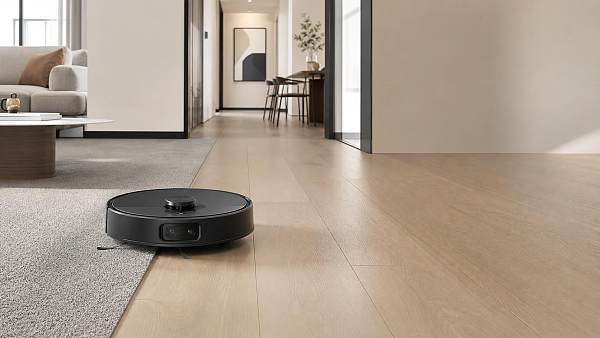
If you are comparing models seriously, start with the navigation method. Many mapping robots use lidar, camera-based visual navigation, or a hybrid approach. Lidar systems generally stand out for predictable room scanning and structured path planning, especially in complex layouts. They tend to perform well in homes with multiple enclosed rooms because they can measure surroundings and maintain stable positioning while moving between spaces.
Camera-based systems can also map effectively, but performance depends more on lighting conditions, visible reference points, and software quality. In well-lit homes with relatively clear floors, they may work very well. In darker hallways, under beds, or during night cleaning, results can be less consistent unless the product includes supplemental sensing.
That does not mean one technology is universally better. It means you should match the hardware to your home. If you want scheduled cleaning before sunrise, often leave doors half open, and have a lot of room transitions, the more stable navigation stack usually wins. If low furniture clearance matters because a lidar tower would not fit under beds or cabinets, a slimmer camera-led design may be the more practical choice.
Room Control Is Where a Good Map Becomes Useful
For a multi-room home, the best reason to buy a robot vacuum with mapping is not that it knows the house. It is that you can tell it what to do room by room. That includes sending it only to the kitchen after dinner, increasing suction in the entryway, skipping the nursery during nap time, or cleaning the living room twice while leaving guest rooms for another day.
This is where buyers should slow down and inspect app functions instead of just battery life or suction claims. Useful room controls usually include named rooms, editable room boundaries, no-go zones, no-mop zones if the unit also mops, and custom scheduling by area. Some systems also let you set sequence, so the robot can clean bedrooms first and the kitchen last, which matters if wet debris or pet hair tends to spread.
A common mistake is choosing a mapping model that only supports whole-home runs. In a real household, targeted cleaning is what saves time and reduces frustration. If the robot cannot reliably take instructions for one room or one zone, mapping is being underused.
Obstacle Handling Is Separate From Mapping, but It Changes the Experience
Consumers often bundle these features together, but mapping and obstacle avoidance are not the same thing. A robot may map the home accurately and still tangle in charging cables, catch a sock, or jam itself under a chair. In a busy home, that difference is not minor. It determines whether the robot can run unattended.
If your floors are usually clear, standard navigation may be enough. If the home includes children, pets, exercise equipment, dining chairs that move daily, or a lot of small objects near walls, look for stronger front-facing object detection and more detailed avoidance behavior. Brand descriptions vary, and there is no single consumer standard that makes these claims directly comparable, so the practical way to judge this is through independent reviews that show how the robot handles cords, slippers, pet bowls, and low obstacles in real rooms.
This matters especially for multi-room setups because every additional room adds another chance for interruption. Good mapping helps the robot know where it is. Good obstacle handling helps it finish the job.
Map Quality Shows Up in the Edge Cases
Most products look competent during the first mapping run. The real test comes later. Can the robot keep the map stable after furniture shifts? Does it recognize separate rooms correctly when doors are open and closed at different times? Can it resume cleaning after recharging without losing the route? Does it handle threshold transitions between rooms without treating them as barriers?
These edge cases are where a premium model often justifies its price. Multi-room homes are dynamic environments. Chairs move. Laundry baskets appear. Seasonal rugs get added. A robot that becomes confused by minor layout changes will create more manual correction than most owners want to tolerate.
Multi-floor support also deserves attention. Many households use one robot across two levels. Some mapping systems store several maps and switch automatically; others require manual selection; some budget models do not really support this workflow well even when the app suggests they do. If stairs separate your main cleaning areas, map storage is a buying criterion, not a bonus feature.
What to Compare Before You Decide
A Few Claims Deserve a Closer Look
“High suction” gets attention, but in a mapped robot it should be considered alongside brush design, carpet detection, and route logic. A machine that knows where the rugs are and increases power in those zones may deliver better practical results than one with a stronger headline number and weaker control. The same goes for battery capacity. In a large multi-room home, battery matters less if navigation is inefficient and more if the robot can clean in an orderly pattern and resume correctly after docking.
Another point buyers overlook is maintenance workload. A sophisticated robot vacuum with mapping can still become a poor purchase if its dustbin is too small for a pet-heavy household, its rollers wrap hair easily, or replacement consumables are expensive or hard to find. Mapping improves the cleaning strategy; it does not eliminate upkeep.
Privacy can also enter the decision, especially for camera-based systems connected to cloud apps. Not every buyer weighs this heavily, but if in-home imaging is a concern, check what kind of sensors are used, what controls the app provides, and how the manufacturer explains data handling. That is part of product fit, even though it rarely appears near the top of comparison pages.
How to Match the Robot to the Home
A small but divided apartment may need mapping more than a large open loft. A pet household may benefit more from strong room targeting and self-emptying support than from advanced mopping. A family with frequent floor clutter may get more value from obstacle avoidance than from maximum suction. The right choice depends less on a universal “best model” and more on where cleaning breaks down today.
It helps to define the failure points in your current routine. Is the problem that certain rooms are skipped? That the robot gets stuck? That it cleans the wrong areas at the wrong time? That it cannot handle a second floor without setup hassle? Once those pain points are clear, the mapping features become easier to judge. You are no longer buying a smart appliance in the abstract. You are buying route control, room selectivity, and a higher chance that the machine will finish without intervention.
For most multi-room homes, the best robot vacuum with mapping is the one that combines accurate navigation, editable room management, dependable recharge-and-resume behavior, and obstacle handling that fits the actual mess level of the home. If a product does those four things well, its intelligence is not just visible in the app. It shows up in the fact that you stop thinking about vacuuming room by room.
Get weekly intelligence in your inbox.
No noise. No sponsored content. Pure intelligence.
 Sep 15, 2026Wholesale WiFi Smart Switches: What Buyers Should Verify Before OrderingWholesale WiFi Smart Switches: What Buyers Should Verify Before Ordering
 Sep 14, 2026How to Select IoT Sensors for Reliable Monitoring in Harsh Industrial EnvironmentsHow to Select IoT Sensors for Reliable Monitoring in Harsh Industrial Environments
 Sep 13, 2026How Procurement Teams Can Improve Supplier Reliability With Supply Chain VisibilityHow Procurement Teams Can Improve Supplier Reliability With Supply Chain Visibility
 Sep 12, 2026Smart Manufacturing Trends 2026: What Leaders Should Prioritize for ROISmart Manufacturing Trends 2026: What Leaders Should Prioritize for ROI
 Sep 11, 2026B2B Market Analysis: How Buyers Evaluate Suppliers, Pricing, and Delivery RiskB2B Market Analysis: How Buyers Evaluate Suppliers, Pricing, and Delivery Risk
 Sep 10, 2026Residential Solar Kits in Canada: How to Size a System for Your Home and ClimateResidential Solar Kits in Canada: How to Size a System for Your Home and Climate
 Sep 09, 2026How to Specify a Syringe Assembly Line for High-Volume Sterile ProductionHow to Specify a Syringe Assembly Line for High-Volume Sterile Production
 Sep 08, 2026How to Evaluate Warehouse Robotics System Suppliers for Reliable Multi-Site DeploymentHow to Evaluate Warehouse Robotics System Suppliers for Reliable Multi-Site Deployment
 Sep 07, 2026Renewable Geothermal Energy Explained: How It Works for Heating and PowerRenewable Geothermal Energy Explained: How It Works for Heating and Power
 Sep 07, 2026How to Choose an Industrial Packaging Robot Manufacturer for Your Production LineHow to Choose an Industrial Packaging Robot Manufacturer for Your Production Line
 Sep 05, 2026How to Evaluate a Turnkey Hydro Turbine Generator Supplier for Remote Power ProjectsHow to Evaluate a Turnkey Hydro Turbine Generator Supplier for Remote Power Projects
 Sep 04, 2026Automated Ultrasonic Welding for Thermoplastic Assemblies: Process Controls That MatterAutomated Ultrasonic Welding for Thermoplastic Assemblies: Process Controls That Matter
 Sep 03, 2026Energy Forecasting for Grid Planning: Sizing Solar and Storage CapacityEnergy Forecasting for Grid Planning: Sizing Solar and Storage Capacity
 Sep 02, 2026Which Metrics Should an Energy Analytics Dashboard Track for Factory Energy Management?Which Metrics Should an Energy Analytics Dashboard Track for Factory Energy Management?
 Sep 01, 2026How Warehouse Voice Picking Improves Accuracy and Throughput in Order FulfillmentHow Warehouse Voice Picking Improves Accuracy and Throughput in Order Fulfillment
 Aug 31, 2026How to Automate Dropshipping Order Processing Without Overselling StockHow to Automate Dropshipping Order Processing Without Overselling Stock
 Aug 30, 2026How to Evaluate a Smart Lighting Supplier for Multi-Site Commercial ProjectsHow to Evaluate a Smart Lighting Supplier for Multi-Site Commercial Projects
 Aug 29, 2026Recent Advances in Smart Manufacturing and Materials Reshaping Factory InvestmentRecent Advances in Smart Manufacturing and Materials Reshaping Factory Investment
 Aug 29, 2026Selecting Lightweight Aluminum Extrusions for Strength-Critical Industrial DesignsSelecting Lightweight Aluminum Extrusions for Strength-Critical Industrial Designs
 Aug 29, 2026Vertical Powder Anodizing Explained: Process Controls for Uniform Coating QualityVertical Powder Anodizing Explained: Process Controls for Uniform Coating Quality
 Aug 29, 2026PV Module Product Due Diligence: What Buyers Should Verify Before ContractingPV Module Product Due Diligence: What Buyers Should Verify Before Contracting
 Aug 29, 2026Solar Design for Challenging Terrain: Managing Slope, Soil, and Shading RisksSolar Design for Challenging Terrain: Managing Slope, Soil, and Shading Risks
 Aug 29, 2026IS 16444 Smart Meter Requirements: Key Functions, Tests, and ComplianceIS 16444 Smart Meter Requirements: Key Functions, Tests, and Compliance
 Aug 29, 2026Rehabilitation Equipment Market Outlook: Demand Drivers and Growth SegmentsRehabilitation Equipment Market Outlook: Demand Drivers and Growth Segments
 Aug 29, 2026When Does Container Handling Automation Deliver ROI in Port Yard Operations?When Does Container Handling Automation Deliver ROI in Port Yard Operations?
 Aug 29, 2026Customs API Integration: A Practical Checklist for Automated Trade ComplianceCustoms API Integration: A Practical Checklist for Automated Trade Compliance
 Aug 29, 2026Returnable Packaging for Automotive: How to Cut Damage and Reverse Logistics CostsReturnable Packaging for Automotive: How to Cut Damage and Reverse Logistics Costs