
Jump Starters for Cars: Lithium vs Lead-Acid Battery Comparison
When choosing jump starters for cars, professionals face a critical decision: lithium-ion or lead-acid batteries? This technical comparison examines performance metrics, lifecycle costs, and safety protocols for procurement teams, fleet managers, and automotive technicians. We analyze cold-cranking amps, recharge cycles, and thermal stability to help enterprises optimize emergency power solutions. For EV charging stations integration and renewable energy compatibility, lithium models show distinct advantages, while traditional lead-acid offers rugged reliability. Discover which technology aligns with your operational requirements and total cost of ownership objectives.
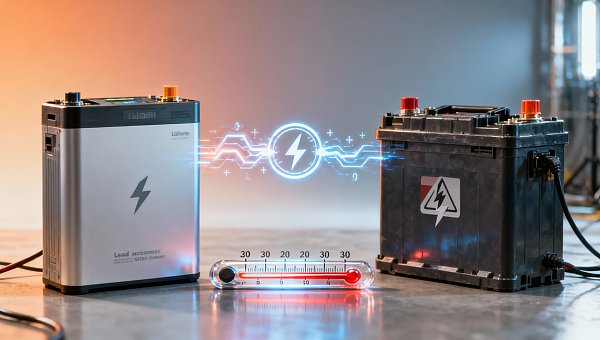
Core Performance Metrics: Lithium vs Lead-Acid
Modern jump starters demand precise technical evaluation. Lithium-ion batteries deliver 3-5 times more cranking cycles (typically 500-1000) compared to lead-acid's 200-300 cycles. Their energy density reaches 150-200 Wh/kg versus 30-50 Wh/kg for lead-acid, enabling compact designs weighing 70% less for equivalent power output.
Cold weather performance reveals stark differences. Lithium maintains 80% capacity at -20°C, while lead-acid drops to 50% efficiency. However, lead-acid units withstand vibration better - ideal for construction sites or mining equipment with 6-8G shock tolerance versus lithium's 3-4G limit.
For fleet managers, lithium's rapid recharge enables 4-6 jump starts per day versus lead-acid's 1-2 operations. This throughput advantage becomes critical in roadside assistance and logistics operations.
Total Cost Analysis for Enterprise Buyers
Procurement teams must evaluate beyond initial price points. While lithium jump starters carry 2-3x higher upfront cost ($150-$400 vs $50-$150 for lead-acid), their 5-year operational cost proves 30-40% lower through:
- Reduced replacement frequency (3-5 years vs 1-2 years)
- Lower maintenance (no water refills or equalization charges)
- Energy savings (85-90% efficiency vs 70-75%)
Commercial operators should calculate cost-per-start metrics. Lithium averages $0.12-$0.18 per jump versus lead-acid's $0.25-$0.40 when factoring in battery replacements and energy consumption.
Safety & Compliance Considerations
Quality control managers prioritize UL, CE, and UN38.3 certifications. Lithium batteries require precise battery management systems (BMS) to prevent thermal runaway - a critical feature absent in lead-acid units. Modern lithium jump starters incorporate:
- Overcharge protection (4.2V/cell cutoff)
- Temperature sensors (-20°C to 60°C operating range)
- Short-circuit auto-shutdown (response time <0.1s)
Lead-acid remains preferable for hazardous environments requiring ATEX/IECEx certification due to lower spark risk during maintenance.
Which Applications Favor Each Technology?
For EV service centers and smart city infrastructure, lithium jump starters with CAN bus communication enable diagnostic integration. Construction and marine applications often mandate lead-acid for extreme temperature resilience.
Strategic Procurement Guidance
Technical evaluators should verify these specifications during RFQ processes:
- Peak amperage (match to vehicle size: 400A for compacts, 1000A+ for trucks)
- Battery chemistry (LiFePO4 offers longer life than NMC lithium)
- Safety certifications (UL2743 for jump starters specifically)
For enterprises managing 50+ vehicles, hybrid systems combining lithium jump starters with solar charging stations reduce downtime by 15-20% compared to conventional setups.
Connect With Our Power Solutions Team
TradeNexus Pro provides technical consultation for enterprises evaluating jump starter deployments. Our specialists assist with:
- Customized TCO modeling for your fleet size
- Certification compliance verification
- Integration with renewable energy systems
Request a comparative analysis report detailing optimal battery technologies for your specific operational climate, vehicle mix, and usage patterns.
Get weekly intelligence in your inbox.
No noise. No sponsored content. Pure intelligence.
 Oct 08, 2026How Digital Health Improves Diagnostic Accuracy and Workflow in Clinical LabsHow Digital Health Improves Diagnostic Accuracy and Workflow in Clinical Labs
 Oct 07, 2026Selecting Voice Picking Systems for German Warehouses: Integration, Languages and ROISelecting Voice Picking Systems for German Warehouses: Integration, Languages and ROI
 Oct 06, 2026How to Choose Last Mile Dispatch Software for On-Time Delivery at ScaleHow to Choose Last Mile Dispatch Software for On-Time Delivery at Scale
 Oct 05, 2026Vietnam’s Consumer Electronics Market: Demand Shifts and Sourcing OpportunitiesVietnam’s Consumer Electronics Market: Demand Shifts and Sourcing Opportunities
 Oct 04, 2026Digital Health Investment Priorities for Providers: Improving Access, Outcomes, and EfficiencyDigital Health Investment Priorities for Providers: Improving Access, Outcomes, and Efficiency
 Oct 03, 2026How to Specify an FR4 Custom PCB Board for High-Voltage and High-Heat DesignsHow to Specify an FR4 Custom PCB Board for High-Voltage and High-Heat Designs
 Oct 02, 2026ERP Software Market Intelligence: Adoption, Pricing, and Vendor Signals to WatchERP Software Market Intelligence: Adoption, Pricing, and Vendor Signals to Watch
 Oct 01, 2026How to Select Calibrated Temperature Data Loggers for GMP Cold Storage MonitoringHow to Select Calibrated Temperature Data Loggers for GMP Cold Storage Monitoring
 Sep 30, 2026Custom Molded Rubber Pricing: What Drives Unit Cost and Tooling Fees?Custom Molded Rubber Pricing: What Drives Unit Cost and Tooling Fees?
 Sep 29, 2026How to Evaluate Energy Management Software Vendors for Multi-Site OperationsHow to Evaluate Energy Management Software Vendors for Multi-Site Operations
 Sep 28, 2026How to Select a DIN Rail Smart Meter for Multi-Circuit Energy MonitoringHow to Select a DIN Rail Smart Meter for Multi-Circuit Energy Monitoring
 Sep 27, 2026TWS Earbuds in Vietnam: Demand Drivers, Price Tiers, and Retail Channel OpportunitiesTWS Earbuds in Vietnam: Demand Drivers, Price Tiers, and Retail Channel Opportunities
 Sep 26, 2026How UAE Clinics Can Qualify a Smart Glucometer Supplier for Accuracy and ComplianceHow UAE Clinics Can Qualify a Smart Glucometer Supplier for Accuracy and Compliance
 Sep 25, 2026Buying Aesthetic Lasers in the USA: FDA Status, Wavelengths, and Service SupportBuying Aesthetic Lasers in the USA: FDA Status, Wavelengths, and Service Support
 Sep 24, 2026Laser Cutting Brass Sheet: How to Prevent Burrs and Heat Marks on Thin PartsLaser Cutting Brass Sheet: How to Prevent Burrs and Heat Marks on Thin Parts
 Sep 23, 2026How to Choose Lightweight ANC Headphones for Comfortable All-Day TravelHow to Choose Lightweight ANC Headphones for Comfortable All-Day Travel
 Sep 22, 2026IPX5 TWS Bluetooth Earbuds: What Protection Do They Offer for Workouts?IPX5 TWS Bluetooth Earbuds: What Protection Do They Offer for Workouts?
 Sep 21, 2026What to Look for in a Grid Integration Company for Utility-Scale Solar ProjectsWhat to Look for in a Grid Integration Company for Utility-Scale Solar Projects
 Sep 20, 2026Microgrid Controller Pricing: What Drives Cost in Commercial Energy Projects?Microgrid Controller Pricing: What Drives Cost in Commercial Energy Projects?
 Sep 19, 2026How to Choose a GaN Charger for Laptops Without Compromising Power or PortabilityHow to Choose a GaN Charger for Laptops Without Compromising Power or Portability
 Sep 18, 2026Floating Solar Farm Costs: CAPEX, OPEX, and the Site Factors That Shape ROIFloating Solar Farm Costs: CAPEX, OPEX, and the Site Factors That Shape ROI
 Sep 17, 2026Drone Delivery Solutions for Last-Mile Routes: Site, Payload, and Range PlanningDrone Delivery Solutions for Last-Mile Routes: Site, Payload, and Range Planning
 Sep 16, 2026When Low-Volume Electronics Manufacturing Makes More Sense Than Mass ProductionWhen Low-Volume Electronics Manufacturing Makes More Sense Than Mass Production
 Sep 15, 2026Wholesale WiFi Smart Switches: What Buyers Should Verify Before OrderingWholesale WiFi Smart Switches: What Buyers Should Verify Before Ordering
 Sep 14, 2026How to Select IoT Sensors for Reliable Monitoring in Harsh Industrial EnvironmentsHow to Select IoT Sensors for Reliable Monitoring in Harsh Industrial Environments
 Sep 13, 2026How Procurement Teams Can Improve Supplier Reliability With Supply Chain VisibilityHow Procurement Teams Can Improve Supplier Reliability With Supply Chain Visibility
 Sep 12, 2026Smart Manufacturing Trends 2026: What Leaders Should Prioritize for ROISmart Manufacturing Trends 2026: What Leaders Should Prioritize for ROI



























