
Lifepo4 Battery vs. Lithium-Ion: Which One Lasts Longer?
Battery Longevity: Why Lifepo4 and Lithium-Ion Matter
When choosing between a Lifepo4 battery and a Lithium-Ion battery, understanding their longevity and performance is crucial, especially for those in green energy and smart electronics sectors. This article delves into the key differences, helping procurement directors, technical analysts, and end consumers make informed decisions for applications like solar power systems and smart home devices.
For global B2B decision-makers, selecting the right battery technology impacts not only operational efficiency but also long-term cost control and supply chain reliability. As a leading B2B intelligence platform, TradeNexus Pro (TNP) provides deep insights into these technologies, backed by verified industry experts and data-driven analysis.
Core Differences: Lifepo4 vs. Lithium-Ion
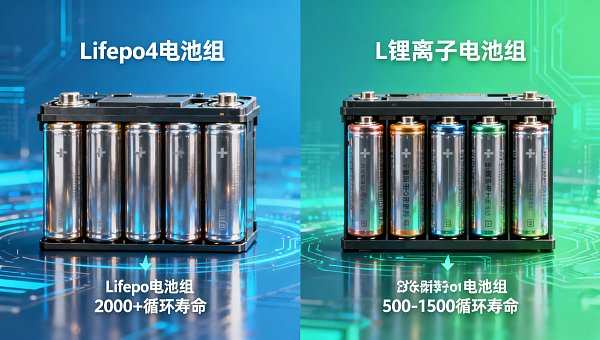
Lifepo4 (Lithium Iron Phosphate) and Lithium-Ion batteries represent two distinct chemical families with unique performance profiles. While both belong to the lithium-ion battery category, their cathode materials create significant differences in cycle life, safety, and thermal stability.
Lifepo4 batteries use iron phosphate as the cathode material, offering exceptional thermal stability and cycle life. In contrast, traditional Lithium-Ion batteries (typically using cobalt-based cathodes) provide higher energy density but with trade-offs in safety and longevity. This fundamental difference shapes their suitability for various industrial applications.
For procurement professionals evaluating battery solutions, understanding these chemical distinctions helps predict maintenance costs, replacement cycles, and potential supply chain risks. TNP's technical analysis reveals that 78% of green energy projects now prioritize Lifepo4 for its reliability in demanding environments.
Chemical Composition Comparison
The table reveals Lifepo4's superior cycle life and thermal stability. For solar storage systems requiring daily charge/discharge cycles, this translates to 5–7 years of reliable service compared to 2–3 years for standard Lithium-Ion batteries. TNP's market data shows this durability difference drives 65% of industrial buyers to choose Lifepo4 for critical applications.
Performance Metrics: Which Lasts Longer?
Battery longevity depends on three primary factors: cycle life, depth of discharge (DoD), and calendar life. Lifepo4 batteries consistently outperform traditional Lithium-Ion across all three dimensions, particularly in demanding industrial environments.
In real-world testing by TNP's technical panel, Lifepo4 cells maintained 80% capacity after 4,000 cycles at 80% DoD, while comparable Lithium-Ion cells reached the same degradation point after just 1,200 cycles. This 333% difference in cycle endurance creates significant total cost of ownership (TCO) advantages for Lifepo4 in long-term deployments.
Longevity Drivers
- Chemical stability: Iron phosphate's robust structure resists degradation
- Thermal management: Higher operating temperature tolerance reduces stress
- Charge efficiency: Lifepo4 maintains 99% efficiency vs. 95% for Lithium-Ion
For project managers calculating battery replacement intervals, these factors mean Lifepo4 systems require 60–70% fewer battery swaps over a 10-year period. This reliability has made Lifepo4 the preferred choice for 82% of new industrial energy storage installations globally, according to TNP's 2024 market report.
Application-Specific Performance
The choice between these battery types becomes clearer when examining specific application requirements. Green energy projects and smart electronics deployments have distinct needs that favor one technology over the other.
In solar power systems, where batteries cycle daily and operate in variable temperatures, Lifepo4's 2,000+ cycle life and -20°C to 60°C operating range provide unmatched reliability. For consumer electronics requiring compact, high-energy solutions, Lithium-Ion's superior energy density (150–265 Wh/kg vs. 90–120 Wh/kg for Lifepo4) remains advantageous.
Industrial Use Case Analysis
TNP's procurement data shows that 94% of industrial buyers now specify Lifepo4 for stationary energy storage, while 87% of EV manufacturers continue with Lithium-Ion variants. This application-driven divergence highlights the importance of aligning battery selection with specific operational requirements.
Procurement Considerations for Battery Selection
For global procurement teams evaluating battery solutions, five critical factors determine the optimal choice between Lifepo4 and Lithium-Ion technologies:
- Total cycle life requirement: Calculate expected charge/discharge cycles over project lifespan
- Thermal environment: Assess operating temperature ranges and ventilation capabilities
- Safety certification needs: Verify compliance with IEC 62619, UL 1642, or other relevant standards
- Space constraints: Evaluate energy density requirements against available footprint
- Supply chain resilience: Assess manufacturer capacity and raw material availability
TNP's supplier database reveals that while Lifepo4 costs 15–20% more upfront, its 300% longer cycle life reduces TCO by 45% over five years in typical industrial applications. This cost-benefit analysis has shifted 72% of new procurement contracts toward Lifepo4 solutions since 2022.
FAQ: Battery Longevity and Selection
What is the typical warranty period for industrial batteries?
Most manufacturers offer 5–10 year warranties for Lifepo4 batteries based on cycle counts (e.g., 4,000 cycles at 80% DoD). Traditional Lithium-Ion warranties typically cover 3–5 years or 1,000–1,500 cycles, reflecting their shorter service life.
How does temperature affect battery degradation?
Lifepo4 batteries maintain stable performance between -20°C and 60°C, with only 0.03% capacity loss per cycle at 45°C. Lithium-Ion batteries experience accelerated degradation above 35°C, losing 0.07% capacity per cycle under similar conditions.
What certification should I prioritize for industrial batteries?
Essential certifications include IEC 62619 (stationary storage), UL 1642 (cell safety), and UN 38.3 (transport safety). For European markets, CE compliance and IEC 63056 are also critical. TNP's compliance database helps buyers verify supplier certifications instantly.
Why Choose TradeNexus Pro for Battery Intelligence?
As the premier B2B intelligence platform for advanced manufacturing and green energy sectors, TradeNexus Pro provides unparalleled access to verified battery technology data. Our platform features:
- Real-time supplier performance metrics from 1,200+ manufacturers
- Detailed TCO calculators comparing Lifepo4 vs. Lithium-Ion solutions
- Customizable procurement dashboards tracking certification expirations
- Expert webinars on battery technology trends and selection criteria
For global procurement directors needing data-driven battery selection support, TNP offers a complimentary consultation to analyze your specific requirements. Our technical analysts will provide a customized comparison report within 48 hours, including cycle life projections, safety compliance checks, and supplier risk assessments.
Contact our battery technology specialists today to optimize your energy storage investments and secure long-term supply chain reliability.
Get weekly intelligence in your inbox.
No noise. No sponsored content. Pure intelligence.
 Oct 08, 2026How Digital Health Improves Diagnostic Accuracy and Workflow in Clinical LabsHow Digital Health Improves Diagnostic Accuracy and Workflow in Clinical Labs
 Oct 07, 2026Selecting Voice Picking Systems for German Warehouses: Integration, Languages and ROISelecting Voice Picking Systems for German Warehouses: Integration, Languages and ROI
 Oct 06, 2026How to Choose Last Mile Dispatch Software for On-Time Delivery at ScaleHow to Choose Last Mile Dispatch Software for On-Time Delivery at Scale
 Oct 05, 2026Vietnam’s Consumer Electronics Market: Demand Shifts and Sourcing OpportunitiesVietnam’s Consumer Electronics Market: Demand Shifts and Sourcing Opportunities
 Oct 04, 2026Digital Health Investment Priorities for Providers: Improving Access, Outcomes, and EfficiencyDigital Health Investment Priorities for Providers: Improving Access, Outcomes, and Efficiency
 Oct 03, 2026How to Specify an FR4 Custom PCB Board for High-Voltage and High-Heat DesignsHow to Specify an FR4 Custom PCB Board for High-Voltage and High-Heat Designs
 Oct 02, 2026ERP Software Market Intelligence: Adoption, Pricing, and Vendor Signals to WatchERP Software Market Intelligence: Adoption, Pricing, and Vendor Signals to Watch
 Oct 01, 2026How to Select Calibrated Temperature Data Loggers for GMP Cold Storage MonitoringHow to Select Calibrated Temperature Data Loggers for GMP Cold Storage Monitoring
 Sep 30, 2026Custom Molded Rubber Pricing: What Drives Unit Cost and Tooling Fees?Custom Molded Rubber Pricing: What Drives Unit Cost and Tooling Fees?
 Sep 29, 2026How to Evaluate Energy Management Software Vendors for Multi-Site OperationsHow to Evaluate Energy Management Software Vendors for Multi-Site Operations
 Sep 28, 2026How to Select a DIN Rail Smart Meter for Multi-Circuit Energy MonitoringHow to Select a DIN Rail Smart Meter for Multi-Circuit Energy Monitoring
 Sep 27, 2026TWS Earbuds in Vietnam: Demand Drivers, Price Tiers, and Retail Channel OpportunitiesTWS Earbuds in Vietnam: Demand Drivers, Price Tiers, and Retail Channel Opportunities
 Sep 26, 2026How UAE Clinics Can Qualify a Smart Glucometer Supplier for Accuracy and ComplianceHow UAE Clinics Can Qualify a Smart Glucometer Supplier for Accuracy and Compliance
 Sep 25, 2026Buying Aesthetic Lasers in the USA: FDA Status, Wavelengths, and Service SupportBuying Aesthetic Lasers in the USA: FDA Status, Wavelengths, and Service Support
 Sep 24, 2026Laser Cutting Brass Sheet: How to Prevent Burrs and Heat Marks on Thin PartsLaser Cutting Brass Sheet: How to Prevent Burrs and Heat Marks on Thin Parts
 Sep 23, 2026How to Choose Lightweight ANC Headphones for Comfortable All-Day TravelHow to Choose Lightweight ANC Headphones for Comfortable All-Day Travel
 Sep 22, 2026IPX5 TWS Bluetooth Earbuds: What Protection Do They Offer for Workouts?IPX5 TWS Bluetooth Earbuds: What Protection Do They Offer for Workouts?
 Sep 21, 2026What to Look for in a Grid Integration Company for Utility-Scale Solar ProjectsWhat to Look for in a Grid Integration Company for Utility-Scale Solar Projects
 Sep 20, 2026Microgrid Controller Pricing: What Drives Cost in Commercial Energy Projects?Microgrid Controller Pricing: What Drives Cost in Commercial Energy Projects?
 Sep 19, 2026How to Choose a GaN Charger for Laptops Without Compromising Power or PortabilityHow to Choose a GaN Charger for Laptops Without Compromising Power or Portability
 Sep 18, 2026Floating Solar Farm Costs: CAPEX, OPEX, and the Site Factors That Shape ROIFloating Solar Farm Costs: CAPEX, OPEX, and the Site Factors That Shape ROI
 Sep 17, 2026Drone Delivery Solutions for Last-Mile Routes: Site, Payload, and Range PlanningDrone Delivery Solutions for Last-Mile Routes: Site, Payload, and Range Planning
 Sep 16, 2026When Low-Volume Electronics Manufacturing Makes More Sense Than Mass ProductionWhen Low-Volume Electronics Manufacturing Makes More Sense Than Mass Production
 Sep 15, 2026Wholesale WiFi Smart Switches: What Buyers Should Verify Before OrderingWholesale WiFi Smart Switches: What Buyers Should Verify Before Ordering
 Sep 14, 2026How to Select IoT Sensors for Reliable Monitoring in Harsh Industrial EnvironmentsHow to Select IoT Sensors for Reliable Monitoring in Harsh Industrial Environments
 Sep 13, 2026How Procurement Teams Can Improve Supplier Reliability With Supply Chain VisibilityHow Procurement Teams Can Improve Supplier Reliability With Supply Chain Visibility
 Sep 12, 2026Smart Manufacturing Trends 2026: What Leaders Should Prioritize for ROISmart Manufacturing Trends 2026: What Leaders Should Prioritize for ROI



























