
Portable Power Stations or Generators: Which Is the Smarter Emergency Choice?
As unpredictable weather events and mobility demands reshape Supply Chain Management across sectors, the debate between portable power stations and traditional generators is gaining urgency. From lithium ion batteries to wind turbine innovations and wireless chargers, the right emergency energy choice can define operational continuity. For enterprise decision-makers and tech evaluators, understanding how these solutions integrate with smart thermostats, portable monitors, and even mobility scooters is essential to building a resilient, data-driven preparedness strategy.
Understanding Portable Power Stations and Generators
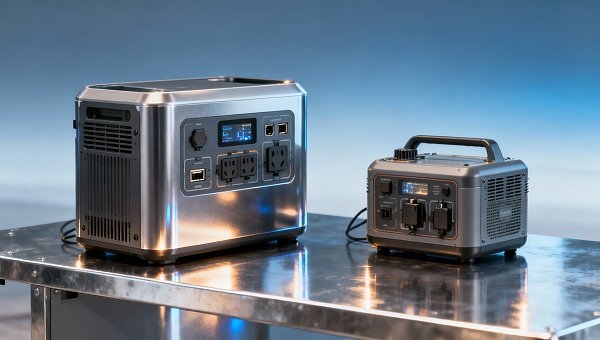
Portable power stations are compact, rechargeable battery systems built to store and deliver electricity through inverter technology. Most models operate within a range of 300 Wh–3000 Wh, providing AC and DC outputs for electronics and small appliances. These units rely on lithium-ion or LiFePO4 cells with life cycles of 1000–2500 charge sessions, making them suitable for short-term or mobile operations lasting 8–72 hours.
Traditional generators, by contrast, rely on internal combustion engines running on gasoline, diesel, or propane. Their power capacity typically ranges between 1 kW and 10 kW for portable models, enabling continuous operation as long as refueling occurs. However, noise levels between 65–85 dB, exhaust emissions, and maintenance requirements make them less favorable in closed or residential environments.
The fundamental difference lies in how energy is created. Portable power stations store pre-generated electricity, while generators actively convert mechanical energy into electrical power through combustion. This distinction directly affects runtime, sustainability, and total cost of ownership (TCO).
For businesses in advanced manufacturing, healthcare, or smart electronics testing facilities, these differences influence not only operational reliability but also compliance with environmental and safety standards such as ISO 14001 or CE regulations. Understanding these basic functions helps ensure procurement decisions meet both technical and sustainability requirements.
Market Dynamics and Application Scenarios Across Industries
Global adoption of portable energy systems is accelerating, showing a projected compound annual growth rate (CAGR) of around 7–9% between 2024 and 2030. This trend parallels the rising demand for grid-independent operations across logistics, field engineering, and outdoor healthcare applications. By comparison, conventional generator markets maintain steady 2–3% annual growth, driven mainly by construction and emergency backup sectors.
Portable power stations are favored in medical outreach and smart agriculture because of their silent operation, low vibration, and compliance with indoor air quality regulations. Their capacity to integrate with renewable energy inputs—such as 100–200 W solar panel arrays—enhances sustainability credentials and reduces running costs. In field research or telecom maintenance, portable power stations provide efficient energy for 4–8 hour fieldwork sessions without fuel logistics.
Generators remain indispensable for extended 24–48 hour operations or situations requiring loads above 2 kW, such as powering refrigeration units, heavy tools, or production backup. They remain the mainstream solution in disaster response centers and off-grid manufacturing workshops. The key challenge, however, lies in fuel storage limitations and emission restrictions increasingly enforced in urban zones.
For decision-makers navigating dynamic energy landscapes, integration flexibility is a vital selection criterion. In logistics hubs or IoT testing environments, for instance, hybrid setups that pair a 1000 Wh power station with a small 2 kW generator can reduce idle fuel consumption by up to 40% while keeping essential systems live during grid outages.
Technical and Functional Comparison
For supply chain managers and project engineers, a clear comparison matrix illustrates how each option performs according to operational and financial parameters. The following table aligns typical key metrics used in procurement evaluations across portable energy categories.
From a total lifecycle cost perspective, portable power stations can achieve ROI within 1.5–3 years in small to medium operations with intermittent emergency needs. Meanwhile, generators remain cost-effective for continuous backup requiring high wattage. The environmental and acoustic differences also increasingly influence ESG compliance scoring in procurement policies.
System integrators often use hybrid strategies—charging portable power stations via solar or generator outputs—allowing for clean operation cycles up to 90% of runtime. This balance optimizes energy readiness with minimal downtime and reduced carbon footprint.
Procurement and Selection Guidelines
Selecting the right solution requires benchmarking at least four dimensions: power requirement, operating duration, maintenance resources, and regulatory environment. For instance, a field engineering team requiring 500 W continuous usage for instrumentation over three 8-hour shifts would benefit more from a 1 kWh portable station. In contrast, a warehouse with refrigeration backup exceeding 3 kW loads for 48 hours would necessitate a 5–7 kW generator.
Procurement officers should evaluate the following parameters during technical shortlisting:
- Assess power-to-weight ratio (Wh/kg) to determine mobility suitability, typically ideal at 120–160 Wh/kg for quality lithium systems.
- Confirm available charging modes—AC wall, solar (100–200 W), or vehicle DC input—to ensure charging redundancy.
- Verify safety protections such as over-current, under-voltage, and thermal control systems with operating thresholds between -10℃ and 45℃.
- Check warranty terms and average battery degradation rates, ideally below 20% capacity loss after 1000 cycles.
- Evaluate operational cost per kWh, accounting for fuel (in generators) or electricity input (in battery systems) combined with service intervals.
To facilitate cross-departmental evaluation, organizations often apply a weighted decision matrix covering technical, logistical, and financial indicators. The following example outlines a simplified evaluation model.
This structured approach assists procurement officers in aligning energy investment with operational resiliency objectives. Enterprises adopting scoring mechanisms report 20–30% shorter procurement cycles compared to ad hoc evaluations, minimizing technical mismatches after purchasing.
Future Trends and Emerging Innovations
Portable power is moving from emergency backup to integral smart energy ecosystems. Manufacturers now integrate bidirectional charging features supporting Vehicle-to-Load (V2L) compatibility, with output ranges from 1.5–3 kW suitable for EV-linked deployment. Simultaneously, next-generation solid-state batteries promise energy densities 30–40% higher within the next 3–5 years, narrowing performance gaps with fuel generators.
From the supply chain perspective, modular energy kits combining 2–3 units of 1 kWh stations allow scalable configuration per operational demand. This modularity supports flexible service models, including short-term leasing, which is forecasted to expand by 25% annually in the logistics and construction sectors. These models reduce upfront cost pressure on project managers while maintaining compliance with stricter carbon emission guidelines.
The convergence of AI-based energy monitoring, IoT integration, and predictive analytics ensures that energy management systems can autonomously allocate loads based on real-time consumption. This evolution transforms emergency power selection from reactive decision-making to proactive resilience planning governed by data.
In essence, the smarter emergency choice transcends a device preference; it aligns with digital transformation strategies and ESG optimization efforts. Organizations that integrate portable energy intelligence early are likely to achieve 15–25% improved uptime resilience during natural disruptions and energy shortages.
FAQ: Common Questions During Selection
How long do portable power stations last before replacement?
Most professional-grade units deliver 1000–2500 full charge cycles before capacity falls below 80%. Depending on daily usage, this equates to 3–6 years of service life. Periodic maintenance—such as firmware calibration every 12 months—extends operational stability.
Are portable power stations safe for sensitive electronics?
Yes. Due to pure sine wave inverters and stable voltage regulation (±5% deviation), they safely run medical monitors, laptops, and IoT sensors. Unlike generators whose THD (Total Harmonic Distortion) can exceed 10%, most power stations maintain THD below 2%, reducing damage risks.
What are typical charging times for portable power stations?
Depending on input rating, AC wall charging usually takes 2–6 hours for 1000 Wh capacity models. Solar recharging with a 200 W panel array takes roughly 5–8 hours under adequate sunlight. Dual-input systems cut total charging time by up to 40%.
How can enterprises integrate generator systems within emission regulations?
Generators deployed in zones with emission caps can use low-sulfur fuel and add catalytic filters reducing CO emissions by 20–30%. Some manufacturers provide hybrid inverter modules to optimize fuel usage under ISO 8178-4 compliance standards.
Why Partner with TradeNexus Pro for Energy Intelligence
TradeNexus Pro (TNP) bridges data-driven energy innovations with actionable procurement intelligence across Advanced Manufacturing, Green Energy, Smart Electronics, Healthcare Technology, and Supply Chain SaaS. Our curated research framework allows decision-makers to compare supplier ecosystems, cost indices, and compliance requirements within a single verified platform.
Through our industry analytics dashboard, B2B buyers can validate delivery cycles (typically 7–15 days for portable systems and 2–4 weeks for generator sets), analyze certification readiness, and request sample quotations aligned with ISO and CE conformity. TNP’s intelligence resources empower professionals to shorten sourcing timelines by up to 30% while increasing technical match accuracy.
Whether confirming specifications, verifying safety certifications, or drafting procurement criteria for hybrid emergency systems, TradeNexus Pro provides the operational insight and supply chain context essential to high-stakes energy decisions.
For tailored assistance on parameter review, lifecycle metrics, or certified supplier connections worldwide, contact our expert network today — and transform emergency readiness into a strategic advantage for your organization.
Get weekly intelligence in your inbox.
No noise. No sponsored content. Pure intelligence.
 Oct 08, 2026How Digital Health Improves Diagnostic Accuracy and Workflow in Clinical LabsHow Digital Health Improves Diagnostic Accuracy and Workflow in Clinical Labs
 Oct 07, 2026Selecting Voice Picking Systems for German Warehouses: Integration, Languages and ROISelecting Voice Picking Systems for German Warehouses: Integration, Languages and ROI
 Oct 06, 2026How to Choose Last Mile Dispatch Software for On-Time Delivery at ScaleHow to Choose Last Mile Dispatch Software for On-Time Delivery at Scale
 Oct 05, 2026Vietnam’s Consumer Electronics Market: Demand Shifts and Sourcing OpportunitiesVietnam’s Consumer Electronics Market: Demand Shifts and Sourcing Opportunities
 Oct 04, 2026Digital Health Investment Priorities for Providers: Improving Access, Outcomes, and EfficiencyDigital Health Investment Priorities for Providers: Improving Access, Outcomes, and Efficiency
 Oct 03, 2026How to Specify an FR4 Custom PCB Board for High-Voltage and High-Heat DesignsHow to Specify an FR4 Custom PCB Board for High-Voltage and High-Heat Designs
 Oct 02, 2026ERP Software Market Intelligence: Adoption, Pricing, and Vendor Signals to WatchERP Software Market Intelligence: Adoption, Pricing, and Vendor Signals to Watch
 Oct 01, 2026How to Select Calibrated Temperature Data Loggers for GMP Cold Storage MonitoringHow to Select Calibrated Temperature Data Loggers for GMP Cold Storage Monitoring
 Sep 30, 2026Custom Molded Rubber Pricing: What Drives Unit Cost and Tooling Fees?Custom Molded Rubber Pricing: What Drives Unit Cost and Tooling Fees?
 Sep 29, 2026How to Evaluate Energy Management Software Vendors for Multi-Site OperationsHow to Evaluate Energy Management Software Vendors for Multi-Site Operations
 Sep 28, 2026How to Select a DIN Rail Smart Meter for Multi-Circuit Energy MonitoringHow to Select a DIN Rail Smart Meter for Multi-Circuit Energy Monitoring
 Sep 27, 2026TWS Earbuds in Vietnam: Demand Drivers, Price Tiers, and Retail Channel OpportunitiesTWS Earbuds in Vietnam: Demand Drivers, Price Tiers, and Retail Channel Opportunities
 Sep 26, 2026How UAE Clinics Can Qualify a Smart Glucometer Supplier for Accuracy and ComplianceHow UAE Clinics Can Qualify a Smart Glucometer Supplier for Accuracy and Compliance
 Sep 25, 2026Buying Aesthetic Lasers in the USA: FDA Status, Wavelengths, and Service SupportBuying Aesthetic Lasers in the USA: FDA Status, Wavelengths, and Service Support
 Sep 24, 2026Laser Cutting Brass Sheet: How to Prevent Burrs and Heat Marks on Thin PartsLaser Cutting Brass Sheet: How to Prevent Burrs and Heat Marks on Thin Parts
 Sep 23, 2026How to Choose Lightweight ANC Headphones for Comfortable All-Day TravelHow to Choose Lightweight ANC Headphones for Comfortable All-Day Travel
 Sep 22, 2026IPX5 TWS Bluetooth Earbuds: What Protection Do They Offer for Workouts?IPX5 TWS Bluetooth Earbuds: What Protection Do They Offer for Workouts?
 Sep 21, 2026What to Look for in a Grid Integration Company for Utility-Scale Solar ProjectsWhat to Look for in a Grid Integration Company for Utility-Scale Solar Projects
 Sep 20, 2026Microgrid Controller Pricing: What Drives Cost in Commercial Energy Projects?Microgrid Controller Pricing: What Drives Cost in Commercial Energy Projects?
 Sep 19, 2026How to Choose a GaN Charger for Laptops Without Compromising Power or PortabilityHow to Choose a GaN Charger for Laptops Without Compromising Power or Portability
 Sep 18, 2026Floating Solar Farm Costs: CAPEX, OPEX, and the Site Factors That Shape ROIFloating Solar Farm Costs: CAPEX, OPEX, and the Site Factors That Shape ROI
 Sep 17, 2026Drone Delivery Solutions for Last-Mile Routes: Site, Payload, and Range PlanningDrone Delivery Solutions for Last-Mile Routes: Site, Payload, and Range Planning
 Sep 16, 2026When Low-Volume Electronics Manufacturing Makes More Sense Than Mass ProductionWhen Low-Volume Electronics Manufacturing Makes More Sense Than Mass Production
 Sep 15, 2026Wholesale WiFi Smart Switches: What Buyers Should Verify Before OrderingWholesale WiFi Smart Switches: What Buyers Should Verify Before Ordering
 Sep 14, 2026How to Select IoT Sensors for Reliable Monitoring in Harsh Industrial EnvironmentsHow to Select IoT Sensors for Reliable Monitoring in Harsh Industrial Environments
 Sep 13, 2026How Procurement Teams Can Improve Supplier Reliability With Supply Chain VisibilityHow Procurement Teams Can Improve Supplier Reliability With Supply Chain Visibility
 Sep 12, 2026Smart Manufacturing Trends 2026: What Leaders Should Prioritize for ROISmart Manufacturing Trends 2026: What Leaders Should Prioritize for ROI



























