
The Real Lifespan Gap Between Different Lithium Ion Batteries Explained
As global supply chains evolve around green energy and smart electronics, understanding the real lifespan differences among lithium ion batteries becomes crucial for product designers, procurement specialists, and sustainability strategists. From portable power stations and wireless chargers to mobility scooters and smart thermostats, each application depends on nuanced battery chemistry, manufacturing quality, and usage patterns. This TradeNexus Pro analysis dives deep into how these factors shape performance, recyclability, and cost efficiency—helping enterprises refine Supply Chain Management strategies and achieve a competitive edge in the transition to a cleaner, more resilient energy ecosystem.
Understanding the Core Variables Behind Lithium-Ion Battery Lifespan
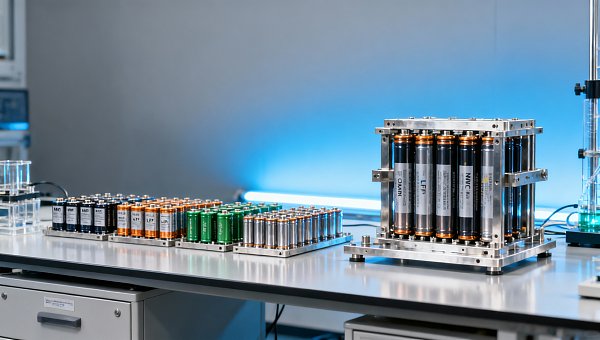
Lithium-ion batteries (Li-ion) dominate product ecosystems across advanced manufacturing, EV mobility, and consumer electronics. Yet, one of the largest misconceptions among B2B procurement teams is that all Li-ion batteries share similar service lives. In reality, three primary chemistries—Nickel Manganese Cobalt (NMC), Lithium Iron Phosphate (LFP), and Lithium Titanium Oxide (LTO)—exhibit lifespan differences of up to 3–5× under identical usage conditions.
Typical life performance is measured in cycle counts, referring to how many charge–discharge sequences a cell endures before its capacity drops below 80%. NMC typically lasts around 800–1,000 cycles, LFP extends from 2,000–3,000 cycles, while LTO can surpass 5,000 cycles under controlled temperature settings between 10°C–35°C. This variance directly impacts cost per kWh per cycle—an essential metric for procurement analysts evaluating TCO (Total Cost of Ownership).
Several secondary factors shape these outcomes: electrolyte stability, anode/cathode purity, and manufacturing consistency within ±1% of critical coating thickness. Inefficiencies during cell calendaring or impurities exceeding 0.5 ppm can shorten service life by as much as 15–20%. Therefore, quality assurance protocols and supplier validation play vital roles in predicting field performance.
From a strategic sourcing perspective, lifespan assessment becomes a four-step evaluation involving chemistry suitability, real-world cycle degradation data, thermal management capability, and recyclability compliance. Each step reveals insights beyond catalog specifications and helps decision-makers align technological attributes with project timelines of 2–10 years.
Comparative Overview of Major Lithium-Ion Chemistries
The following table summarizes key performance metrics of the three most commonly procured Li-ion battery types:
As indicated, LFP and LTO technologies, while initially costlier by 10–25%, deliver substantially longer lifecycle returns. This tradeoff makes them preferred chemistry types in sectors with multi-year asset amortization models such as energy storage systems or smart logistics devices.
Application Scenarios and Business Impact on Supply Chain Strategy
Battery lifespan directly affects manufacturing forecasts, service intervals, and end-user satisfaction across multiple B2B applications. For instance, portable electronics in the smart home market typically experience 500–800 recharge cycles within 1–3 years, while industrial robotics deployed for 16 hours/day require lifespans nearing 4,000 cycles to remain cost-equivalent across maintenance budgets.
Understanding such usage patterns enables procurement leaders to align battery chemistry selection with product mission life, reducing replacement frequency and reverse logistics costs by as much as 30%. For EV fleet operators, this alignment can represent savings of $80–$120 per kWh annually through optimized charge policies and thermal control systems maintaining pack temperature between 15°C–35°C.
From the perspective of TradeNexus Pro analysts, every enterprise integrating lithium-ion in its value chain should adopt a “lifespan-fit scoring matrix” covering at least five variables: chemistry type, cycle count target, energy density (Wh/kg), ambient conditions, and warranty coverage duration. This structure allows comparative modeling among suppliers while anticipating performance drift after 2,000 operating cycles.
Additionally, sectors with dynamic energy flow such as solar storage or IoT-connected logistics benefit from configuring modular battery packs designed for 4–6 unit replacements at 24-month intervals instead of full-system swaps—balancing degradation management with operational uptime.
Procurement and Selection Guide: Evaluating Lifecycle ROI
Procurement professionals often face challenges when prioritizing between initial cost and long-term reliability. battery lifespan evaluation should be a data-driven process involving at least three core KPIs: cycle cost ($/kWh/cycle), failure rate per 1,000 units, and deviation of state-of-health (SOH) after 12 months. A 5% decline in SOH may still align with warranty terms but can indicate accelerated degradation for high-load devices.
To simplify decision-making, the following table outlines cost–lifecycle relationships for key industrial-use cells, assuming a baseline procurement quantity of 10,000 units.
These figures show that longer-lifespan chemistries offer better lifecycle ROI despite higher upfront cost. For financial approvers and project managers evaluating capex projections, focusing on “effective kWh output per dollar invested” often proves more accurate than per-unit price comparison.
When combined with vendors offering 3–5 year extended warranty or in-country recycling collaboration, total lifecycle costs can drop up to 20% over a 60-month operational window. Hence, identifying certified supply partners through TradeNexus Pro’s curated network provides procurement leaders a data-verified approach to risk reduction.
Common Misconceptions and Practical Recommendations
One widespread misconception is that higher energy density automatically translates into longer lifespan. In fact, higher specific energy usually results in faster electrode stress, which shortens usable cycles by 10–15%. For hardware engineers, balancing 180–220 Wh/kg density cells with intelligent BMS algorithms that limit charge to 4.1 V can extend cycle life by 25% without significant capacity loss.
Another pitfall is neglecting environmental factors. Operating batteries at 40°C for 8 hours continually can halve cycle life compared to maintaining temperatures near 25°C. Thus, investment in active cooling or thermal buffers remains a critical recommendation, especially for installations expecting continuous duty beyond 3,000 cycles.
Decision-makers should also differentiate between calendar life and cycle life. Even unused storage over 24 months may bring 2–4% annual degradation due to SEI layer growth on anodes. Proper stock rotation and voltage maintenance at 3.7±0.05 V mitigate such losses and preserve warranty value.
Finally, always request sample-level lifespan validation under your actual load conditions. TradeNexus Pro users often perform 100–200 cycle accelerated tests, revealing real degradation curves before large-scale procurement. This practice prevents costly misalignment between datasheet projections and real-world reliability.
Trend Outlook and the Future of Battery Durability
Next-generation battery research targets minimizing degradation through advanced solid-state electrolytes and AI-assisted charging protocols. Within the next 3–5 years, mainstream chemistries are projected to achieve 1.3×–2× lifespan improvement through optimized cathode architecture and nano-scale interlayers that limit dendrite formation. This innovation directly supports the broader decarbonization objectives across the global smart electronics and green energy sectors.
Enterprises adopting predictive maintenance tools and real-time SOH analytics will further benefit—reducing unexpected downtime by 40–50%. Incorporating digital twins for energy storage systems represents another frontier, providing actionable condition-based insights across 4–6 operational parameters including temperature, impedance, and voltage deviation.
For supply chain strategists, durability is no longer a static specification but a dynamic performance indicator tied to sustainable profitability. As battery replacement intervals stretch from 2 to 8 years in high-performance systems, the financial modeling of service contracts, spare inventory, and recycling logistics must evolve in parallel.
The convergence of longer-lasting cells with traceable sourcing and closed-loop material recovery will define the competitive landscape. In this transition, establishing data alliances through platforms like TradeNexus Pro offers visibility into breakthrough technologies and vetted suppliers shaping next-gen energy reliability.
Why Partner with TradeNexus Pro
TradeNexus Pro serves as the global nexus for procurement directors, technical analysts, and enterprise leaders seeking intelligence that drives actionable manufacturing and sustainability outcomes. By combining verified data from across the Advanced Manufacturing, Green Energy, Smart Electronics, Healthcare Technology, and Supply Chain SaaS sectors, TNP empowers its members with the kind of market foresight necessary to make informed, risk-balanced decisions.
Through its curated content and vetted supplier database, enterprises can streamline due diligence when sourcing lithium-ion batteries, verify cycle-life claims under neutral conditions, and gain clarity on certification roadmaps within ISO and IEC frameworks. Whether you are optimizing a new product design cycle of 12–18 months or restructuring existing energy storage fleets, TNP’s strategic intelligence delivers the precision needed to navigate complexity.
To discuss custom evaluation matrices, lifecycle ROI modeling, or supplier benchmarking reports, connect with the TradeNexus Pro team. Our consultants can assist in parameter confirmation, product selection, compliance validation, and quotation negotiation based on the latest cross-industry benchmarks.
Engage with TradeNexus Pro today to align your procurement strategy with verifiable insights—transforming lifespan variability into measurable advantage across your global energy footprint.
Get weekly intelligence in your inbox.
No noise. No sponsored content. Pure intelligence.
 Oct 08, 2026How Digital Health Improves Diagnostic Accuracy and Workflow in Clinical LabsHow Digital Health Improves Diagnostic Accuracy and Workflow in Clinical Labs
 Oct 07, 2026Selecting Voice Picking Systems for German Warehouses: Integration, Languages and ROISelecting Voice Picking Systems for German Warehouses: Integration, Languages and ROI
 Oct 06, 2026How to Choose Last Mile Dispatch Software for On-Time Delivery at ScaleHow to Choose Last Mile Dispatch Software for On-Time Delivery at Scale
 Oct 05, 2026Vietnam’s Consumer Electronics Market: Demand Shifts and Sourcing OpportunitiesVietnam’s Consumer Electronics Market: Demand Shifts and Sourcing Opportunities
 Oct 04, 2026Digital Health Investment Priorities for Providers: Improving Access, Outcomes, and EfficiencyDigital Health Investment Priorities for Providers: Improving Access, Outcomes, and Efficiency
 Oct 03, 2026How to Specify an FR4 Custom PCB Board for High-Voltage and High-Heat DesignsHow to Specify an FR4 Custom PCB Board for High-Voltage and High-Heat Designs
 Oct 02, 2026ERP Software Market Intelligence: Adoption, Pricing, and Vendor Signals to WatchERP Software Market Intelligence: Adoption, Pricing, and Vendor Signals to Watch
 Oct 01, 2026How to Select Calibrated Temperature Data Loggers for GMP Cold Storage MonitoringHow to Select Calibrated Temperature Data Loggers for GMP Cold Storage Monitoring
 Sep 30, 2026Custom Molded Rubber Pricing: What Drives Unit Cost and Tooling Fees?Custom Molded Rubber Pricing: What Drives Unit Cost and Tooling Fees?
 Sep 29, 2026How to Evaluate Energy Management Software Vendors for Multi-Site OperationsHow to Evaluate Energy Management Software Vendors for Multi-Site Operations
 Sep 28, 2026How to Select a DIN Rail Smart Meter for Multi-Circuit Energy MonitoringHow to Select a DIN Rail Smart Meter for Multi-Circuit Energy Monitoring
 Sep 27, 2026TWS Earbuds in Vietnam: Demand Drivers, Price Tiers, and Retail Channel OpportunitiesTWS Earbuds in Vietnam: Demand Drivers, Price Tiers, and Retail Channel Opportunities
 Sep 26, 2026How UAE Clinics Can Qualify a Smart Glucometer Supplier for Accuracy and ComplianceHow UAE Clinics Can Qualify a Smart Glucometer Supplier for Accuracy and Compliance
 Sep 25, 2026Buying Aesthetic Lasers in the USA: FDA Status, Wavelengths, and Service SupportBuying Aesthetic Lasers in the USA: FDA Status, Wavelengths, and Service Support
 Sep 24, 2026Laser Cutting Brass Sheet: How to Prevent Burrs and Heat Marks on Thin PartsLaser Cutting Brass Sheet: How to Prevent Burrs and Heat Marks on Thin Parts
 Sep 23, 2026How to Choose Lightweight ANC Headphones for Comfortable All-Day TravelHow to Choose Lightweight ANC Headphones for Comfortable All-Day Travel
 Sep 22, 2026IPX5 TWS Bluetooth Earbuds: What Protection Do They Offer for Workouts?IPX5 TWS Bluetooth Earbuds: What Protection Do They Offer for Workouts?
 Sep 21, 2026What to Look for in a Grid Integration Company for Utility-Scale Solar ProjectsWhat to Look for in a Grid Integration Company for Utility-Scale Solar Projects
 Sep 20, 2026Microgrid Controller Pricing: What Drives Cost in Commercial Energy Projects?Microgrid Controller Pricing: What Drives Cost in Commercial Energy Projects?
 Sep 19, 2026How to Choose a GaN Charger for Laptops Without Compromising Power or PortabilityHow to Choose a GaN Charger for Laptops Without Compromising Power or Portability
 Sep 18, 2026Floating Solar Farm Costs: CAPEX, OPEX, and the Site Factors That Shape ROIFloating Solar Farm Costs: CAPEX, OPEX, and the Site Factors That Shape ROI
 Sep 17, 2026Drone Delivery Solutions for Last-Mile Routes: Site, Payload, and Range PlanningDrone Delivery Solutions for Last-Mile Routes: Site, Payload, and Range Planning
 Sep 16, 2026When Low-Volume Electronics Manufacturing Makes More Sense Than Mass ProductionWhen Low-Volume Electronics Manufacturing Makes More Sense Than Mass Production
 Sep 15, 2026Wholesale WiFi Smart Switches: What Buyers Should Verify Before OrderingWholesale WiFi Smart Switches: What Buyers Should Verify Before Ordering
 Sep 14, 2026How to Select IoT Sensors for Reliable Monitoring in Harsh Industrial EnvironmentsHow to Select IoT Sensors for Reliable Monitoring in Harsh Industrial Environments
 Sep 13, 2026How Procurement Teams Can Improve Supplier Reliability With Supply Chain VisibilityHow Procurement Teams Can Improve Supplier Reliability With Supply Chain Visibility
 Sep 12, 2026Smart Manufacturing Trends 2026: What Leaders Should Prioritize for ROISmart Manufacturing Trends 2026: What Leaders Should Prioritize for ROI



























