Vehicle to Grid Explained: How V2G Works, Grid Services, and Charger Requirements
Vehicle to grid is moving from pilot language into serious infrastructure planning. As EV fleets expand and power systems absorb more variable renewable energy, the idea of using parked batteries as grid assets is attracting closer technical review.
That attention is not only about sustainability. It is about controllable flexibility, charger interoperability, asset life, software coordination, and the commercial logic behind bidirectional charging in real operating environments.
For platforms such as TradeNexus Pro, where green energy, smart electronics, advanced manufacturing, and supply chain intelligence increasingly overlap, vehicle to grid sits at an important intersection. It combines energy systems, power electronics, communications standards, and deployment risk into one decision framework.
What vehicle to grid actually means
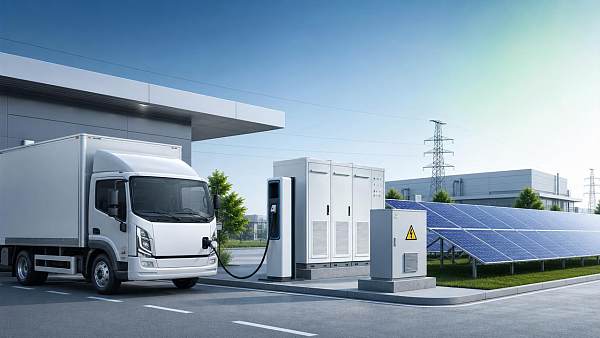
At its simplest, vehicle to grid allows electricity to move in both directions between an electric vehicle and the power system. Instead of charging only from the grid, the vehicle can also discharge energy back when conditions justify it.
The vehicle battery becomes a flexible distributed resource. In practice, the car, charger, software platform, utility interface, and local site controls all need to work together for that resource to be usable.
Vehicle to grid is often discussed alongside related terms. Vehicle-to-home supports backup or self-consumption at one building. Vehicle-to-building helps a facility manage demand. Vehicle to grid goes further by interacting with wider grid services and market signals.
That distinction matters because many products can export power locally, but fewer are qualified for formal grid participation. Technical evaluation should therefore separate basic bidirectional capability from true vehicle to grid readiness.
Why the topic matters now
Several market shifts are pushing vehicle to grid into mainstream assessment. Grid operators need flexible balancing tools. Renewable generation increases intraday volatility. Commercial fleets are electrifying. Battery costs remain significant, so asset utilization is under pressure.
At the same time, many vehicles sit idle for long periods. School buses, delivery vans, workplace fleets, and service vehicles can spend more time parked than driving. That idle time creates a potential flexibility window.
From an industrial perspective, vehicle to grid also reflects broader convergence. Automotive engineering now touches energy trading, grid codes, cybersecurity, charger manufacturing, and digital orchestration platforms. This is why the subject increasingly appears in cross-border technology screening and supplier evaluation.
Another reason for growing interest is resilience. Facilities with critical operations are looking beyond backup generators. Bidirectional EV infrastructure may support continuity strategies, especially where decarbonization targets and on-site energy management are already in place.
How V2G works in operational terms
The core workflow is straightforward, but implementation is not. An EV connects to a bidirectional charger. The charger converts power between AC and DC as required. A control platform decides when to charge, hold, or discharge based on rules, pricing, and battery constraints.
Those rules may include departure schedules, minimum state of charge, local load limits, utility requests, and market participation windows. When a dispatch signal arrives, the system aggregates eligible vehicles and responds within defined limits.
Battery management is central. Not every battery chemistry, warranty structure, or thermal profile is equally suitable. The control layer must avoid over-discharge, limit cycling depth, and preserve mobility needs ahead of energy revenues.
Communications are equally important. Vehicle to grid depends on data exchange among the EV, charger, energy management system, and external operator. Latency, protocol support, and secure remote updates can determine whether a theoretically capable system performs reliably in the field.
The basic architecture
- EV battery with compatible battery management logic
- Bidirectional charger, usually DC in current deployments
- Site controller or energy management platform
- Utility or aggregator connection for dispatch and settlement
- Metering and compliance layer for verified grid services
Which grid services EVs can support
Not every vehicle to grid project targets the same value stream. Some focus on simple peak management behind the meter. Others aim for formal participation in ancillary service markets.
A useful evaluation starts with the service being pursued, because that choice affects charger design, response speed, metering, software complexity, and regulatory exposure.
In many early deployments, the strongest business case comes from combining several services rather than chasing a single market product. Vehicle to grid often works best when mobility operations, site energy management, and utility interaction are designed together.
Charger requirements that deserve close attention
A charger labeled bidirectional is only the starting point. Real vehicle to grid projects depend on electrical performance, certification status, protocol compatibility, and integration with the specific vehicle models being considered.
Power rating affects service value, but it should not be viewed in isolation. A lower-power charger with stable controls and strong software integration may outperform a higher-power unit that lacks certification or dependable communications.
Practical charger checklist
- Bidirectional power flow support at the hardware level
- Compatibility with the targeted EV models and connectors
- Relevant communication standards, such as ISO 15118 or OCPP support
- Grid interconnection compliance and anti-islanding protection
- Revenue-grade metering where market settlement is required
- Cybersecurity controls, remote diagnostics, and update capability
- Thermal management and efficiency across expected duty cycles
Vehicle compatibility remains one of the biggest constraints. A charger may technically support vehicle to grid, yet only a limited set of EVs can enable export functions today. Deployment planning should confirm interoperability at the model and software version level.
Where vehicle to grid makes the most sense
The best use cases are usually predictable, parked, and centrally managed. Fleet environments provide clearer operating schedules, easier aggregation, and more structured energy control than highly variable private driving patterns.
School buses are often cited because they have large batteries and long idle periods. Depot fleets can also be attractive, especially where demand charges are high or local renewable generation creates internal balancing opportunities.
Commercial buildings with workplace charging may benefit as well, but only if occupancy patterns are dependable enough to support dispatch commitments. Logistics hubs, campuses, public sector fleets, and multi-energy industrial sites are also worth reviewing.
In cross-sector analysis, vehicle to grid becomes especially relevant where green energy targets, smart charging infrastructure, and digital energy management platforms are already under consideration. That is why the topic increasingly fits broader industrial intelligence rather than a narrow EV discussion.
Common evaluation risks and decision points
The concept is compelling, but project outcomes depend on details that are easy to underestimate. Battery warranty treatment, market access rules, local grid codes, and software reliability can materially change viability.
Economics should be tested against actual utilization, not theoretical battery capacity. If vehicles are unavailable during valuable dispatch windows, expected revenue may collapse even when the hardware looks impressive on paper.
It is also important to check whether the target jurisdiction rewards exported energy, flexibility capacity, fast response, or resilience. Different revenue models favor different technical designs.
Questions worth asking early
- Which vehicles can actually enable vehicle to grid today?
- Which grid service creates the clearest value in this location?
- How many connected hours are reliably available per vehicle?
- What battery cycling limits are imposed by warranty terms?
- Which charger certifications are mandatory for interconnection?
- How is dispatch, metering, and settlement handled operationally?
A practical path for next-stage assessment
A sound vehicle to grid review usually starts with three layers. First, confirm the mobility pattern. Second, map the local energy value streams. Third, test hardware and software compatibility across vehicle, charger, and site controls.
From there, build a shortlist around real operating constraints rather than broad claims. Compare interoperability evidence, compliance status, battery policy, service response capability, and support infrastructure. This creates a much stronger basis than comparing charger specifications alone.
Vehicle to grid is not a universal answer, but it is becoming a credible option where electrified transport and flexible energy systems converge. The next step is usually not a full rollout. It is a disciplined evaluation of site profile, fleet behavior, charger architecture, and market rules before larger commitments are made.
Get weekly intelligence in your inbox.
No noise. No sponsored content. Pure intelligence.
 Sep 15, 2026Wholesale WiFi Smart Switches: What Buyers Should Verify Before OrderingWholesale WiFi Smart Switches: What Buyers Should Verify Before Ordering
 Sep 14, 2026How to Select IoT Sensors for Reliable Monitoring in Harsh Industrial EnvironmentsHow to Select IoT Sensors for Reliable Monitoring in Harsh Industrial Environments
 Sep 13, 2026How Procurement Teams Can Improve Supplier Reliability With Supply Chain VisibilityHow Procurement Teams Can Improve Supplier Reliability With Supply Chain Visibility
 Sep 12, 2026Smart Manufacturing Trends 2026: What Leaders Should Prioritize for ROISmart Manufacturing Trends 2026: What Leaders Should Prioritize for ROI
 Sep 11, 2026B2B Market Analysis: How Buyers Evaluate Suppliers, Pricing, and Delivery RiskB2B Market Analysis: How Buyers Evaluate Suppliers, Pricing, and Delivery Risk
 Sep 10, 2026Residential Solar Kits in Canada: How to Size a System for Your Home and ClimateResidential Solar Kits in Canada: How to Size a System for Your Home and Climate
 Sep 09, 2026How to Specify a Syringe Assembly Line for High-Volume Sterile ProductionHow to Specify a Syringe Assembly Line for High-Volume Sterile Production
 Sep 08, 2026How to Evaluate Warehouse Robotics System Suppliers for Reliable Multi-Site DeploymentHow to Evaluate Warehouse Robotics System Suppliers for Reliable Multi-Site Deployment
 Sep 07, 2026Renewable Geothermal Energy Explained: How It Works for Heating and PowerRenewable Geothermal Energy Explained: How It Works for Heating and Power
 Sep 07, 2026How to Choose an Industrial Packaging Robot Manufacturer for Your Production LineHow to Choose an Industrial Packaging Robot Manufacturer for Your Production Line
 Sep 05, 2026How to Evaluate a Turnkey Hydro Turbine Generator Supplier for Remote Power ProjectsHow to Evaluate a Turnkey Hydro Turbine Generator Supplier for Remote Power Projects
 Sep 04, 2026Automated Ultrasonic Welding for Thermoplastic Assemblies: Process Controls That MatterAutomated Ultrasonic Welding for Thermoplastic Assemblies: Process Controls That Matter
 Sep 03, 2026Energy Forecasting for Grid Planning: Sizing Solar and Storage CapacityEnergy Forecasting for Grid Planning: Sizing Solar and Storage Capacity
 Sep 02, 2026Which Metrics Should an Energy Analytics Dashboard Track for Factory Energy Management?Which Metrics Should an Energy Analytics Dashboard Track for Factory Energy Management?
 Sep 01, 2026How Warehouse Voice Picking Improves Accuracy and Throughput in Order FulfillmentHow Warehouse Voice Picking Improves Accuracy and Throughput in Order Fulfillment
 Aug 31, 2026How to Automate Dropshipping Order Processing Without Overselling StockHow to Automate Dropshipping Order Processing Without Overselling Stock
 Aug 30, 2026How to Evaluate a Smart Lighting Supplier for Multi-Site Commercial ProjectsHow to Evaluate a Smart Lighting Supplier for Multi-Site Commercial Projects
 Aug 29, 2026Recent Advances in Smart Manufacturing and Materials Reshaping Factory InvestmentRecent Advances in Smart Manufacturing and Materials Reshaping Factory Investment
 Aug 29, 2026Selecting Lightweight Aluminum Extrusions for Strength-Critical Industrial DesignsSelecting Lightweight Aluminum Extrusions for Strength-Critical Industrial Designs
 Aug 29, 2026Vertical Powder Anodizing Explained: Process Controls for Uniform Coating QualityVertical Powder Anodizing Explained: Process Controls for Uniform Coating Quality
 Aug 29, 2026PV Module Product Due Diligence: What Buyers Should Verify Before ContractingPV Module Product Due Diligence: What Buyers Should Verify Before Contracting
 Aug 29, 2026Solar Design for Challenging Terrain: Managing Slope, Soil, and Shading RisksSolar Design for Challenging Terrain: Managing Slope, Soil, and Shading Risks
 Aug 29, 2026IS 16444 Smart Meter Requirements: Key Functions, Tests, and ComplianceIS 16444 Smart Meter Requirements: Key Functions, Tests, and Compliance
 Aug 29, 2026Rehabilitation Equipment Market Outlook: Demand Drivers and Growth SegmentsRehabilitation Equipment Market Outlook: Demand Drivers and Growth Segments
 Aug 29, 2026When Does Container Handling Automation Deliver ROI in Port Yard Operations?When Does Container Handling Automation Deliver ROI in Port Yard Operations?
 Aug 29, 2026Customs API Integration: A Practical Checklist for Automated Trade ComplianceCustoms API Integration: A Practical Checklist for Automated Trade Compliance
 Aug 29, 2026Returnable Packaging for Automotive: How to Cut Damage and Reverse Logistics CostsReturnable Packaging for Automotive: How to Cut Damage and Reverse Logistics Costs