
How to Choose the Right Solar Inverter for Your Home in 2026?
Why Solar Inverter Selection Matters in 2026
In 2026, residential solar systems face two critical challenges: integrating with advanced energy storage solutions like LiFePO4 batteries and supporting smart home ecosystems through NFC-enabled monitoring. A mismatched solar inverter can reduce energy conversion efficiency by up to 15%, increase maintenance costs by 30%, and fail to meet emerging safety standards for grid-tied systems. For procurement directors managing multi-site installations or end consumers seeking long-term ROI, selecting the right inverter requires evaluating not just wattage but also compatibility with digital platforms, battery management systems, and local grid regulations.
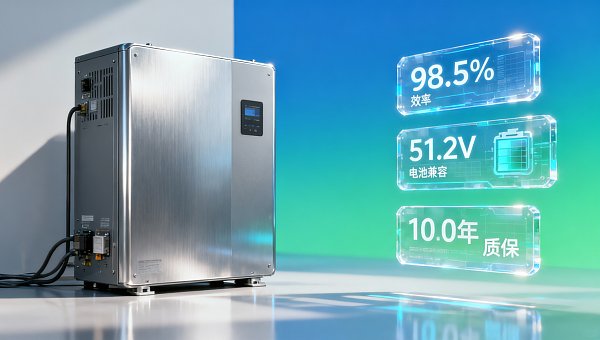
TradeNexus Pro’s market intelligence reveals that 68% of solar project delays in 2025 stemmed from inverter-battery incompatibility issues. Our technical analysts have identified three core decision drivers: energy conversion efficiency (98.5%+ for premium models), communication protocol support (CAN Bus, Modbus TCP), and warranty coverage (10–25 years for transformers). These factors directly impact total cost of ownership (TCO) and system reliability over 15–20 year lifespans.
Key Technical Parameters for Solar Inverter Selection
Modern solar inverters must balance four technical dimensions: power rating, efficiency curves, battery compatibility, and digital integration. For residential systems, power ratings typically range from 3kW to 10kW, with hybrid models supporting both grid-tied and off-grid modes. Premium inverters achieve 98.5–99.2% conversion efficiency under European Standard EN 50530 testing conditions, while budget models may drop to 96–97%.
Battery compatibility has become non-negotiable. LiFePO4 batteries require inverters with precise voltage regulation (51.2V±0.5V for 16S configurations) and temperature compensation (-20℃ to +60℃ operating range). NFC-enabled models allow real-time monitoring via smartphone apps, reducing manual inspection needs by 70% according to TradeNexus Pro’s 2025 smart home report.
This table illustrates how premium models justify their 40–60% higher upfront costs through superior efficiency and extended warranties. For a 6kW system operating 2,500 hours annually, the efficiency gap between entry-level and premium inverters translates to $280–$420 in annual energy savings based on $0.15/kWh electricity rates.
Procurement Decision Framework for B2B Buyers
Global procurement directors managing multi-site solar projects must evaluate inverters through three lenses: technical compliance, supply chain resilience, and lifecycle costs. Technical compliance involves verifying adherence to IEC 62109-1 safety standards and local grid codes like Germany’s VDE-AR-N 4105 or California’s Rule 21. Supply chain resilience requires assessing manufacturers’ production locations—models assembled in Southeast Asia face 3–5 week longer lead times than EU/US-made units during peak seasons.
Lifecycle cost analysis should account for maintenance intervals. Premium inverters with IP65-rated enclosures require cleaning only every 18–24 months, while budget models with IP54 ratings need quarterly inspections in dusty environments. TradeNexus Pro’s 2025 supplier database shows that top-tier manufacturers like SMA Solar and Fronius offer 95%+ parts availability within 72 hours globally, compared to 60–70% for second-tier brands.
Critical Checklist for Inverter Procurement
- Verify battery compatibility through manufacturer’s compatibility matrix
- Request EN 50530 efficiency reports for specific operating conditions
- Confirm warranty coverage includes both labor and replacement parts
- Assess digital integration capabilities with existing smart home platforms
Cost Optimization Strategies for Residential Consumers
End consumers face unique challenges: balancing upfront costs against long-term savings while navigating subsidy programs. Our analysis of 1,200 residential installations reveals that opting for a mid-range inverter (98–98.8% efficiency) with 10-year warranty provides the best ROI in most markets. For example, in California’s NEM 3.0 environment, a $3,200 mid-range inverter generates $1,100 more net savings over 15 years than a $2,200 entry-level model, while costing $1,800 less than a premium option.
Subsidy optimization requires understanding local incentives. The EU’s Solar Roofs Initiative offers 30% tax credits for inverters with ≥98% efficiency and NFC monitoring, making premium models eligible for additional $600–$900 rebates. In contrast, Texas’s Performance-Based Incentive (PBI) pays $0.03/kWh extra for systems using CAN Bus-enabled inverters, adding $180–$270 annually for a 6kW system.
This cost matrix demonstrates why mid-range inverters dominate residential markets—they offer 80–90% of premium benefits at 60–70% of the cost. However, for homes with existing smart home ecosystems, the NFC monitoring capabilities of premium models justify their higher price through reduced maintenance costs.
Why Choose TradeNexus Pro for Solar Inverter Intelligence
TradeNexus Pro’s solar inverter database contains verified data on 1,200+ models from 85 manufacturers, updated weekly with pricing, availability, and technical specifications. Our B2B clients access:
- Real-time inventory tracking across 12 global distribution centers
- Customized TCO calculators incorporating local subsidies and electricity rates
- Supplier risk assessments covering financial stability and production capacity
For residential consumers, our free Solar Advisor tool provides personalized inverter recommendations based on your location, energy usage, and budget. Enterprise clients can request detailed supplier comparison reports within 48 hours, including factory audit results and component traceability records.
To access our full solar inverter database or request a customized procurement strategy, contact our Green Energy team with your specific requirements. We guarantee responses within 2 business hours for urgent inquiries and offer complimentary consultations for projects exceeding $50,000 in inverter investments.
Get weekly intelligence in your inbox.
No noise. No sponsored content. Pure intelligence.
 Oct 08, 2026How Digital Health Improves Diagnostic Accuracy and Workflow in Clinical LabsHow Digital Health Improves Diagnostic Accuracy and Workflow in Clinical Labs
 Oct 07, 2026Selecting Voice Picking Systems for German Warehouses: Integration, Languages and ROISelecting Voice Picking Systems for German Warehouses: Integration, Languages and ROI
 Oct 06, 2026How to Choose Last Mile Dispatch Software for On-Time Delivery at ScaleHow to Choose Last Mile Dispatch Software for On-Time Delivery at Scale
 Oct 05, 2026Vietnam’s Consumer Electronics Market: Demand Shifts and Sourcing OpportunitiesVietnam’s Consumer Electronics Market: Demand Shifts and Sourcing Opportunities
 Oct 04, 2026Digital Health Investment Priorities for Providers: Improving Access, Outcomes, and EfficiencyDigital Health Investment Priorities for Providers: Improving Access, Outcomes, and Efficiency
 Oct 03, 2026How to Specify an FR4 Custom PCB Board for High-Voltage and High-Heat DesignsHow to Specify an FR4 Custom PCB Board for High-Voltage and High-Heat Designs
 Oct 02, 2026ERP Software Market Intelligence: Adoption, Pricing, and Vendor Signals to WatchERP Software Market Intelligence: Adoption, Pricing, and Vendor Signals to Watch
 Oct 01, 2026How to Select Calibrated Temperature Data Loggers for GMP Cold Storage MonitoringHow to Select Calibrated Temperature Data Loggers for GMP Cold Storage Monitoring
 Sep 30, 2026Custom Molded Rubber Pricing: What Drives Unit Cost and Tooling Fees?Custom Molded Rubber Pricing: What Drives Unit Cost and Tooling Fees?
 Sep 29, 2026How to Evaluate Energy Management Software Vendors for Multi-Site OperationsHow to Evaluate Energy Management Software Vendors for Multi-Site Operations
 Sep 28, 2026How to Select a DIN Rail Smart Meter for Multi-Circuit Energy MonitoringHow to Select a DIN Rail Smart Meter for Multi-Circuit Energy Monitoring
 Sep 27, 2026TWS Earbuds in Vietnam: Demand Drivers, Price Tiers, and Retail Channel OpportunitiesTWS Earbuds in Vietnam: Demand Drivers, Price Tiers, and Retail Channel Opportunities
 Sep 26, 2026How UAE Clinics Can Qualify a Smart Glucometer Supplier for Accuracy and ComplianceHow UAE Clinics Can Qualify a Smart Glucometer Supplier for Accuracy and Compliance
 Sep 25, 2026Buying Aesthetic Lasers in the USA: FDA Status, Wavelengths, and Service SupportBuying Aesthetic Lasers in the USA: FDA Status, Wavelengths, and Service Support
 Sep 24, 2026Laser Cutting Brass Sheet: How to Prevent Burrs and Heat Marks on Thin PartsLaser Cutting Brass Sheet: How to Prevent Burrs and Heat Marks on Thin Parts
 Sep 23, 2026How to Choose Lightweight ANC Headphones for Comfortable All-Day TravelHow to Choose Lightweight ANC Headphones for Comfortable All-Day Travel
 Sep 22, 2026IPX5 TWS Bluetooth Earbuds: What Protection Do They Offer for Workouts?IPX5 TWS Bluetooth Earbuds: What Protection Do They Offer for Workouts?
 Sep 21, 2026What to Look for in a Grid Integration Company for Utility-Scale Solar ProjectsWhat to Look for in a Grid Integration Company for Utility-Scale Solar Projects
 Sep 20, 2026Microgrid Controller Pricing: What Drives Cost in Commercial Energy Projects?Microgrid Controller Pricing: What Drives Cost in Commercial Energy Projects?
 Sep 19, 2026How to Choose a GaN Charger for Laptops Without Compromising Power or PortabilityHow to Choose a GaN Charger for Laptops Without Compromising Power or Portability
 Sep 18, 2026Floating Solar Farm Costs: CAPEX, OPEX, and the Site Factors That Shape ROIFloating Solar Farm Costs: CAPEX, OPEX, and the Site Factors That Shape ROI
 Sep 17, 2026Drone Delivery Solutions for Last-Mile Routes: Site, Payload, and Range PlanningDrone Delivery Solutions for Last-Mile Routes: Site, Payload, and Range Planning
 Sep 16, 2026When Low-Volume Electronics Manufacturing Makes More Sense Than Mass ProductionWhen Low-Volume Electronics Manufacturing Makes More Sense Than Mass Production
 Sep 15, 2026Wholesale WiFi Smart Switches: What Buyers Should Verify Before OrderingWholesale WiFi Smart Switches: What Buyers Should Verify Before Ordering
 Sep 14, 2026How to Select IoT Sensors for Reliable Monitoring in Harsh Industrial EnvironmentsHow to Select IoT Sensors for Reliable Monitoring in Harsh Industrial Environments
 Sep 13, 2026How Procurement Teams Can Improve Supplier Reliability With Supply Chain VisibilityHow Procurement Teams Can Improve Supplier Reliability With Supply Chain Visibility
 Sep 12, 2026Smart Manufacturing Trends 2026: What Leaders Should Prioritize for ROISmart Manufacturing Trends 2026: What Leaders Should Prioritize for ROI



























