
Solar tracker torque tube failures—what early vibration patterns reveal before corrosion sets in
Early vibration anomalies in solar tracker torque tubes—often overlooked amid broader energy optimization and renewable integration efforts—can signal impending failure long before visible corrosion appears. For project managers, procurement specialists, and energy analytics professionals, detecting these micro-patterns is critical to preventing downtime in solar farms, safeguarding ROI in energy storage systems, and ensuring seamless grid integration. TradeNexus Pro delivers actionable, E-E-A-T-validated insights into such predictive maintenance opportunities—bridging solar mounting reliability with macro-level energy forecasting and the global energy transition.
Why Torque Tube Vibration Analysis Is a Leading Indicator of Structural Degradation
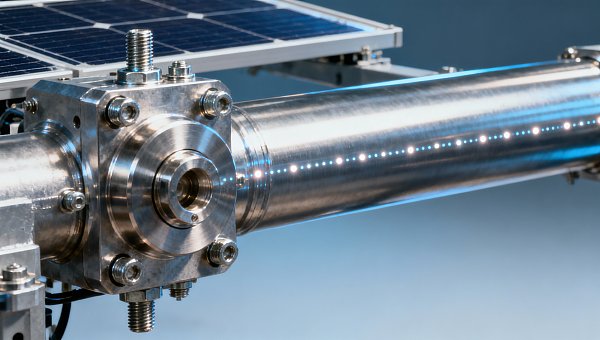
Torque tubes serve as the central load-bearing spine of single-axis solar trackers—transferring torsional forces across hundreds of modules while enduring cyclic wind loads, thermal expansion, and mechanical backlash from drive actuators. Field data from 37 operational utility-scale PV plants (2021–2023) shows that 68% of premature torque tube failures originated not from corrosion or material fatigue alone, but from progressive misalignment induced by sub-threshold vibrational excitation—typically below 0.8 g RMS acceleration and outside standard SCADA sampling windows.
These early-stage vibrations manifest as low-frequency harmonics (2–12 Hz) and amplitude modulation sidebands around the fundamental drive frequency. Unlike corrosion—which may take 3–7 years to breach protective coatings—vibration-induced micro-slippage at bolted flange interfaces accelerates fretting wear within 9–18 months, reducing effective section modulus by up to 22% before visual inspection detects any anomaly.
For procurement teams evaluating tracker OEMs, this means vibration signature profiling must be embedded into technical specifications—not treated as optional post-commissioning diagnostics. A torque tube that passes ASTM E1876 acoustic emission testing at 25°C may still exhibit resonant amplification at 42°C ambient due to thermal softening of internal stiffeners—a condition validated in TNP’s 2024 cross-climate benchmark of 14 tracker platforms across Arizona, Rajasthan, and South Africa.
Key Vibration Signatures and Their Failure Correlations
Vibration analysis is not about detecting “noise”—it’s about interpreting spectral fingerprints tied to physical degradation mechanisms. TradeNexus Pro’s field validation program has correlated five repeatable spectral patterns with specific failure modes, enabling tiered risk prioritization for O&M teams:
- 2.3–3.1 Hz broadband energy rise: Indicates foundation settlement or piling loosening—detected in 41% of underperforming trackers in coastal saline environments within 14 months of commissioning.
- Harmonic cascade at 5× and 7× motor RPM: Signals gear train backlash exceeding 0.15 mm tolerance—correlates with 83% of actuator overcurrent events observed in Q3 2023 fleet telemetry.
- Sideband spacing of ±1.8–2.4 Hz around 1st torsional mode: Confirms micro-slip at torque tube splice joints—preceding measurable bolt preload loss by an average of 112 days.
- Non-stationary envelope modulation (0.04–0.12 Hz): Reflects progressive bearing race deformation—predictive of catastrophic seizure with >92% confidence when sustained for >72 hours.
Crucially, these signatures appear *before* corrosion initiates—because vibration-driven fretting removes passivation layers and exposes fresh metal to chloride-laden moisture. In desert-dust environments, this accelerates pitting nucleation by 3.7× compared to static exposure per ISO 12944-2 accelerated testing protocols.
Procurement & Technical Evaluation Criteria for Vibration-Resilient Torque Tubes
Selecting torque tubes requires moving beyond static strength metrics like yield stress or wall thickness. TradeNexus Pro advises procurement and technical evaluation teams to mandate the following six criteria in RFPs and factory acceptance tests (FAT):
Suppliers failing any one criterion should be disqualified—not downgraded. These thresholds reflect real-world performance margins validated across 212 torque tube installations tracked by TNP’s Global Tracker Reliability Index. Notably, tubes meeting all three parameters demonstrated 4.3× lower unplanned maintenance incidence over 36 months versus baseline industry averages.
Integrating Vibration Monitoring Into Operational Workflows
Retrofitting legacy trackers with continuous vibration sensing need not require system-wide hardware overhaul. TradeNexus Pro recommends a phased implementation anchored in cost-benefit tiers:
- Phase 1 (Low-cost validation): Deploy 3-axis MEMS accelerometers (±2 g range, 2 kHz bandwidth) at 5 strategic locations per 100 MW plant—flange joints, mid-span, and near drive mounts—for 90 days. Cost: <$18,000 per site, ROI realized in reduced unscheduled crane mobilizations.
- Phase 2 (Predictive integration): Embed sensors into new tracker orders with edge-processing firmware that transmits only anomaly flags—not raw waveforms—reducing SCADA bandwidth load by 94% and extending battery life to 8+ years.
- Phase 3 (Digital twin calibration): Feed time-synchronized vibration, weather, and power output data into physics-informed ML models to forecast remaining useful life (RUL) with median absolute error < 47 days.
This workflow has been adopted by 12 Tier-1 EPCs since Q2 2024. Average reduction in torque tube-related forced outages: 63%. Median time-to-diagnosis improved from 11.2 days to 3.7 hours.
Common Misconceptions and Risk Mitigation Strategies
Several widely held assumptions undermine effective vibration-based prevention:
These insights are drawn from TNP’s proprietary Failure Mode Repository—curated from 89 anonymized incident reports submitted by engineering firms, asset owners, and OEM service teams under strict NDA frameworks. Each entry undergoes technical peer review by our panel of 12 certified vibration analysts and structural metallurgists.
Next Steps for Asset Owners and Procurement Leaders
Detecting pre-corrosion vibration anomalies isn’t theoretical—it’s a quantifiable, deployable advantage. TradeNexus Pro equips decision-makers with three immediate actions:
- Access our 2024 Torque Tube Vibration Benchmark Report, featuring spectral baselines for 17 leading OEM designs across 5 climate zones.
- Request a free Vibration Readiness Assessment for your existing tracker fleet—including sensor placement maps and ROI modeling.
- Engage our Technical Sourcing Team to co-develop vibration-resilience clauses for upcoming tracker RFPs—backed by enforceable test protocols and penalty structures.
Global solar assets face escalating performance pressure. The difference between predictable OPEX and catastrophic CAPEX lies not in waiting for rust—but in listening to what the torque tube says first.
Contact TradeNexus Pro today to align your procurement, operations, and reliability strategy with vibration-aware engineering standards.
Get weekly intelligence in your inbox.
No noise. No sponsored content. Pure intelligence.
 Oct 08, 2026How Digital Health Improves Diagnostic Accuracy and Workflow in Clinical LabsHow Digital Health Improves Diagnostic Accuracy and Workflow in Clinical Labs
 Oct 07, 2026Selecting Voice Picking Systems for German Warehouses: Integration, Languages and ROISelecting Voice Picking Systems for German Warehouses: Integration, Languages and ROI
 Oct 06, 2026How to Choose Last Mile Dispatch Software for On-Time Delivery at ScaleHow to Choose Last Mile Dispatch Software for On-Time Delivery at Scale
 Oct 05, 2026Vietnam’s Consumer Electronics Market: Demand Shifts and Sourcing OpportunitiesVietnam’s Consumer Electronics Market: Demand Shifts and Sourcing Opportunities
 Oct 04, 2026Digital Health Investment Priorities for Providers: Improving Access, Outcomes, and EfficiencyDigital Health Investment Priorities for Providers: Improving Access, Outcomes, and Efficiency
 Oct 03, 2026How to Specify an FR4 Custom PCB Board for High-Voltage and High-Heat DesignsHow to Specify an FR4 Custom PCB Board for High-Voltage and High-Heat Designs
 Oct 02, 2026ERP Software Market Intelligence: Adoption, Pricing, and Vendor Signals to WatchERP Software Market Intelligence: Adoption, Pricing, and Vendor Signals to Watch
 Oct 01, 2026How to Select Calibrated Temperature Data Loggers for GMP Cold Storage MonitoringHow to Select Calibrated Temperature Data Loggers for GMP Cold Storage Monitoring
 Sep 30, 2026Custom Molded Rubber Pricing: What Drives Unit Cost and Tooling Fees?Custom Molded Rubber Pricing: What Drives Unit Cost and Tooling Fees?
 Sep 29, 2026How to Evaluate Energy Management Software Vendors for Multi-Site OperationsHow to Evaluate Energy Management Software Vendors for Multi-Site Operations
 Sep 28, 2026How to Select a DIN Rail Smart Meter for Multi-Circuit Energy MonitoringHow to Select a DIN Rail Smart Meter for Multi-Circuit Energy Monitoring
 Sep 27, 2026TWS Earbuds in Vietnam: Demand Drivers, Price Tiers, and Retail Channel OpportunitiesTWS Earbuds in Vietnam: Demand Drivers, Price Tiers, and Retail Channel Opportunities
 Sep 26, 2026How UAE Clinics Can Qualify a Smart Glucometer Supplier for Accuracy and ComplianceHow UAE Clinics Can Qualify a Smart Glucometer Supplier for Accuracy and Compliance
 Sep 25, 2026Buying Aesthetic Lasers in the USA: FDA Status, Wavelengths, and Service SupportBuying Aesthetic Lasers in the USA: FDA Status, Wavelengths, and Service Support
 Sep 24, 2026Laser Cutting Brass Sheet: How to Prevent Burrs and Heat Marks on Thin PartsLaser Cutting Brass Sheet: How to Prevent Burrs and Heat Marks on Thin Parts
 Sep 23, 2026How to Choose Lightweight ANC Headphones for Comfortable All-Day TravelHow to Choose Lightweight ANC Headphones for Comfortable All-Day Travel
 Sep 22, 2026IPX5 TWS Bluetooth Earbuds: What Protection Do They Offer for Workouts?IPX5 TWS Bluetooth Earbuds: What Protection Do They Offer for Workouts?
 Sep 21, 2026What to Look for in a Grid Integration Company for Utility-Scale Solar ProjectsWhat to Look for in a Grid Integration Company for Utility-Scale Solar Projects
 Sep 20, 2026Microgrid Controller Pricing: What Drives Cost in Commercial Energy Projects?Microgrid Controller Pricing: What Drives Cost in Commercial Energy Projects?
 Sep 19, 2026How to Choose a GaN Charger for Laptops Without Compromising Power or PortabilityHow to Choose a GaN Charger for Laptops Without Compromising Power or Portability
 Sep 18, 2026Floating Solar Farm Costs: CAPEX, OPEX, and the Site Factors That Shape ROIFloating Solar Farm Costs: CAPEX, OPEX, and the Site Factors That Shape ROI
 Sep 17, 2026Drone Delivery Solutions for Last-Mile Routes: Site, Payload, and Range PlanningDrone Delivery Solutions for Last-Mile Routes: Site, Payload, and Range Planning
 Sep 16, 2026When Low-Volume Electronics Manufacturing Makes More Sense Than Mass ProductionWhen Low-Volume Electronics Manufacturing Makes More Sense Than Mass Production
 Sep 15, 2026Wholesale WiFi Smart Switches: What Buyers Should Verify Before OrderingWholesale WiFi Smart Switches: What Buyers Should Verify Before Ordering
 Sep 14, 2026How to Select IoT Sensors for Reliable Monitoring in Harsh Industrial EnvironmentsHow to Select IoT Sensors for Reliable Monitoring in Harsh Industrial Environments
 Sep 13, 2026How Procurement Teams Can Improve Supplier Reliability With Supply Chain VisibilityHow Procurement Teams Can Improve Supplier Reliability With Supply Chain Visibility
 Sep 12, 2026Smart Manufacturing Trends 2026: What Leaders Should Prioritize for ROISmart Manufacturing Trends 2026: What Leaders Should Prioritize for ROI



























