
What plastic injection molding for medical devices requires
Plastic injection molding for medical devices demands more than fast cycles and polished tools. It sits at the intersection of engineering, clinical safety, regulation, and repeatable manufacturing discipline.
In healthcare technology, each molded part may influence sterility, dosing accuracy, patient comfort, or device reliability. That is why plastic injection molding for medical devices must meet strict standards from resin selection to final packaging.
This article explains the core requirements, current industry concerns, practical value, common application categories, and implementation priorities that support compliant and scalable production.
Core definition and technical scope
Plastic injection molding for medical devices refers to producing healthcare components by injecting molten polymer into precision molds under controlled, validated conditions.
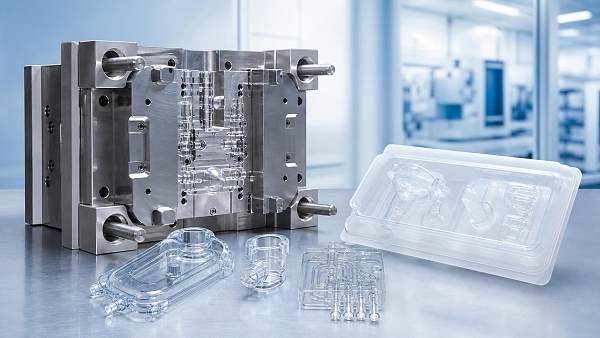
The process covers disposable and durable parts. Examples include housings, connectors, fluid handling elements, diagnostic cartridges, inhaler components, and surgical instrument handles.
Unlike general industrial molding, medical production requires documented control over materials, equipment, operators, environment, traceability, and inspection outcomes.
The main objective is not only geometric accuracy. It is consistent part performance within a framework that can withstand audits, verification, validation, and regulatory review.
What makes medical molding different
- Biocompatible or medically suitable polymers may be required.
- Cleanroom or controlled-area production is often necessary.
- Process validation must show repeatability across lots and shifts.
- Documentation must support traceability and change control.
- Sterilization compatibility can shape design and material choices.
Industry background and current focus areas
Healthcare supply chains now expect greater resilience, shorter development cycles, and stronger quality evidence. This has raised the technical bar for plastic injection molding for medical devices.
Several market signals are influencing sourcing and production decisions across the broader industrial landscape.
In this environment, plastic injection molding for medical devices is evaluated as a full quality system capability, not only as a component fabrication service.
Key requirements that determine production success
Material selection and biocompatibility
Material choice affects patient safety, chemical resistance, sterilization stability, appearance, and mechanical function. Common options include polypropylene, polycarbonate, PEEK, polyethylene, and medical-grade elastomers.
Plastic injection molding for medical devices often requires documented resin grades, lot traceability, and controls against unauthorized substitutions.
If the part contacts tissue, fluids, or drugs, biocompatibility evidence becomes especially important. Compatibility with EtO, gamma, e-beam, or autoclave sterilization also matters.
Tooling precision and dimensional control
Medical components often include snap fits, sealing surfaces, thin walls, and micro details. Mold design must address gate balance, venting, cooling, ejection, and shrink behavior.
Dimensional consistency depends on robust tooling plus stable process windows. Scientific molding methods help define acceptable ranges for pressure, temperature, fill, and hold stages.
Contamination control
Plastic injection molding for medical devices must minimize particulates, oils, fibers, and microbial risks. Cleanroom molding may be required for sensitive assemblies and fluid path components.
Contamination control includes resin handling, gowning discipline, preventive maintenance, packaging flow, and validated cleaning procedures for tools and equipment.
Validation and documentation
A capable supplier must show process qualification through IQ, OQ, and PQ where applicable. Sampling plans, measurement methods, and acceptance criteria should be clear and defensible.
Documentation should cover device history, nonconformance handling, training records, calibration, and engineering change control. Without this structure, audits become difficult and risk exposure increases.
Business value across the broader industrial chain
Reliable plastic injection molding for medical devices creates value beyond the molded part itself. It influences launch timing, warranty exposure, field performance, and market access.
Within a comprehensive industry view, the benefits extend to engineering programs, contract manufacturing coordination, and long-term supply assurance.
- Lower risk of dimensional drift during scale-up.
- Fewer quality deviations linked to materials or handling.
- Stronger readiness for technical audits and customer reviews.
- Better consistency for automated downstream assembly.
- More predictable total cost over the product lifecycle.
For data-driven B2B decision environments, these factors are often more important than unit price alone. Quality failures in healthcare usually create expensive downstream consequences.
Typical application categories and molding priorities
Not every device carries the same risk profile. Plastic injection molding for medical devices should be matched to the function, exposure level, and post-processing path of the part.
Practical implementation guidance
The strongest outcomes usually come from aligning design, quality, tooling, validation, and supply planning early in development.
- Define part criticality and regulatory expectations before tool release.
- Lock approved resin grades and document any alternate material pathway.
- Use DFM reviews to address warpage, gating, venting, and automation needs.
- Set measurable CTQ characteristics linked to device function.
- Confirm whether cleanroom molding or post-mold cleaning is required.
- Validate the process at production scale, not only in pilot conditions.
- Establish digital traceability for resin lots, machine settings, and inspection data.
- Review sterilization effects on color, strength, and dimensional stability.
Plastic injection molding for medical devices should also include formal change notification rules. Even small process changes can affect compliance, fit, or performance over time.
Next-step evaluation framework
A structured review helps compare molding capabilities objectively. The following checkpoints provide a practical starting point for qualification discussions and internal assessment.
- Quality system maturity and medical documentation practices.
- Experience with plastic injection molding for medical devices in similar risk classes.
- Material expertise, supplier controls, and lot traceability depth.
- Cleanroom capability, contamination prevention, and packaging discipline.
- Tool maintenance strategy and dimensional capability evidence.
- Validation methodology and responsiveness to engineering changes.
When these factors are reviewed together, plastic injection molding for medical devices becomes easier to assess as a strategic manufacturing capability rather than a simple commodity process.
For organizations tracking healthcare technology, advanced manufacturing, and supply chain quality, disciplined evaluation supports safer products, stronger compliance, and more resilient market execution.
Get weekly intelligence in your inbox.
No noise. No sponsored content. Pure intelligence.
 Oct 08, 2026How Digital Health Improves Diagnostic Accuracy and Workflow in Clinical LabsHow Digital Health Improves Diagnostic Accuracy and Workflow in Clinical Labs
 Oct 07, 2026Selecting Voice Picking Systems for German Warehouses: Integration, Languages and ROISelecting Voice Picking Systems for German Warehouses: Integration, Languages and ROI
 Oct 06, 2026How to Choose Last Mile Dispatch Software for On-Time Delivery at ScaleHow to Choose Last Mile Dispatch Software for On-Time Delivery at Scale
 Oct 05, 2026Vietnam’s Consumer Electronics Market: Demand Shifts and Sourcing OpportunitiesVietnam’s Consumer Electronics Market: Demand Shifts and Sourcing Opportunities
 Oct 04, 2026Digital Health Investment Priorities for Providers: Improving Access, Outcomes, and EfficiencyDigital Health Investment Priorities for Providers: Improving Access, Outcomes, and Efficiency
 Oct 03, 2026How to Specify an FR4 Custom PCB Board for High-Voltage and High-Heat DesignsHow to Specify an FR4 Custom PCB Board for High-Voltage and High-Heat Designs
 Oct 02, 2026ERP Software Market Intelligence: Adoption, Pricing, and Vendor Signals to WatchERP Software Market Intelligence: Adoption, Pricing, and Vendor Signals to Watch
 Oct 01, 2026How to Select Calibrated Temperature Data Loggers for GMP Cold Storage MonitoringHow to Select Calibrated Temperature Data Loggers for GMP Cold Storage Monitoring
 Sep 30, 2026Custom Molded Rubber Pricing: What Drives Unit Cost and Tooling Fees?Custom Molded Rubber Pricing: What Drives Unit Cost and Tooling Fees?
 Sep 29, 2026How to Evaluate Energy Management Software Vendors for Multi-Site OperationsHow to Evaluate Energy Management Software Vendors for Multi-Site Operations
 Sep 28, 2026How to Select a DIN Rail Smart Meter for Multi-Circuit Energy MonitoringHow to Select a DIN Rail Smart Meter for Multi-Circuit Energy Monitoring
 Sep 27, 2026TWS Earbuds in Vietnam: Demand Drivers, Price Tiers, and Retail Channel OpportunitiesTWS Earbuds in Vietnam: Demand Drivers, Price Tiers, and Retail Channel Opportunities
 Sep 26, 2026How UAE Clinics Can Qualify a Smart Glucometer Supplier for Accuracy and ComplianceHow UAE Clinics Can Qualify a Smart Glucometer Supplier for Accuracy and Compliance
 Sep 25, 2026Buying Aesthetic Lasers in the USA: FDA Status, Wavelengths, and Service SupportBuying Aesthetic Lasers in the USA: FDA Status, Wavelengths, and Service Support
 Sep 24, 2026Laser Cutting Brass Sheet: How to Prevent Burrs and Heat Marks on Thin PartsLaser Cutting Brass Sheet: How to Prevent Burrs and Heat Marks on Thin Parts
 Sep 23, 2026How to Choose Lightweight ANC Headphones for Comfortable All-Day TravelHow to Choose Lightweight ANC Headphones for Comfortable All-Day Travel
 Sep 22, 2026IPX5 TWS Bluetooth Earbuds: What Protection Do They Offer for Workouts?IPX5 TWS Bluetooth Earbuds: What Protection Do They Offer for Workouts?
 Sep 21, 2026What to Look for in a Grid Integration Company for Utility-Scale Solar ProjectsWhat to Look for in a Grid Integration Company for Utility-Scale Solar Projects
 Sep 20, 2026Microgrid Controller Pricing: What Drives Cost in Commercial Energy Projects?Microgrid Controller Pricing: What Drives Cost in Commercial Energy Projects?
 Sep 19, 2026How to Choose a GaN Charger for Laptops Without Compromising Power or PortabilityHow to Choose a GaN Charger for Laptops Without Compromising Power or Portability
 Sep 18, 2026Floating Solar Farm Costs: CAPEX, OPEX, and the Site Factors That Shape ROIFloating Solar Farm Costs: CAPEX, OPEX, and the Site Factors That Shape ROI
 Sep 17, 2026Drone Delivery Solutions for Last-Mile Routes: Site, Payload, and Range PlanningDrone Delivery Solutions for Last-Mile Routes: Site, Payload, and Range Planning
 Sep 16, 2026When Low-Volume Electronics Manufacturing Makes More Sense Than Mass ProductionWhen Low-Volume Electronics Manufacturing Makes More Sense Than Mass Production
 Sep 15, 2026Wholesale WiFi Smart Switches: What Buyers Should Verify Before OrderingWholesale WiFi Smart Switches: What Buyers Should Verify Before Ordering
 Sep 14, 2026How to Select IoT Sensors for Reliable Monitoring in Harsh Industrial EnvironmentsHow to Select IoT Sensors for Reliable Monitoring in Harsh Industrial Environments
 Sep 13, 2026How Procurement Teams Can Improve Supplier Reliability With Supply Chain VisibilityHow Procurement Teams Can Improve Supplier Reliability With Supply Chain Visibility
 Sep 12, 2026Smart Manufacturing Trends 2026: What Leaders Should Prioritize for ROISmart Manufacturing Trends 2026: What Leaders Should Prioritize for ROI



























