India’s 300 Mt Steel Push Raises Supply Rule Signals
The timing of the development is not clearly specified in the source text, but the reported plan to expand India’s total steel capacity to 300 million tons by 2030 is already a meaningful industry signal for equipment trade, procurement planning, and compliance execution. Based on the provided summary, more than 70% of blast furnace and rolling mill equipment within the current 220 million tons of capacity depends on imports, while Chinese suppliers are becoming key providers of this equipment. For exporters in CNC Machining and Factory Automation, this deserves attention not only as a demand story, but as a shift in how project qualification, technical documentation, delivery readiness, and after-sales support may be assessed in upcoming steel plant projects.

What the reported capacity target confirms
According to the provided information, a report dated June 15 stated that India plans to raise its total steel production capacity to 300 million tons by 2030.
The same summary states that within the current 220 million tons of capacity, more than 70% of ironmaking blast furnaces and rolling equipment rely on imported supply.
It also states that Chinese companies are becoming major suppliers of key equipment in this area.
In addition, the provided summary indicates that new projects in India are driving stronger demand for precision cast and forged parts, automated rolling line control systems, and industrial robot integration solutions, which is directly relevant to CNC Machining and Factory Automation exporters.
Why this matters across sourcing, trade, and project execution
Equipment exporters may face tighter project-entry requirements
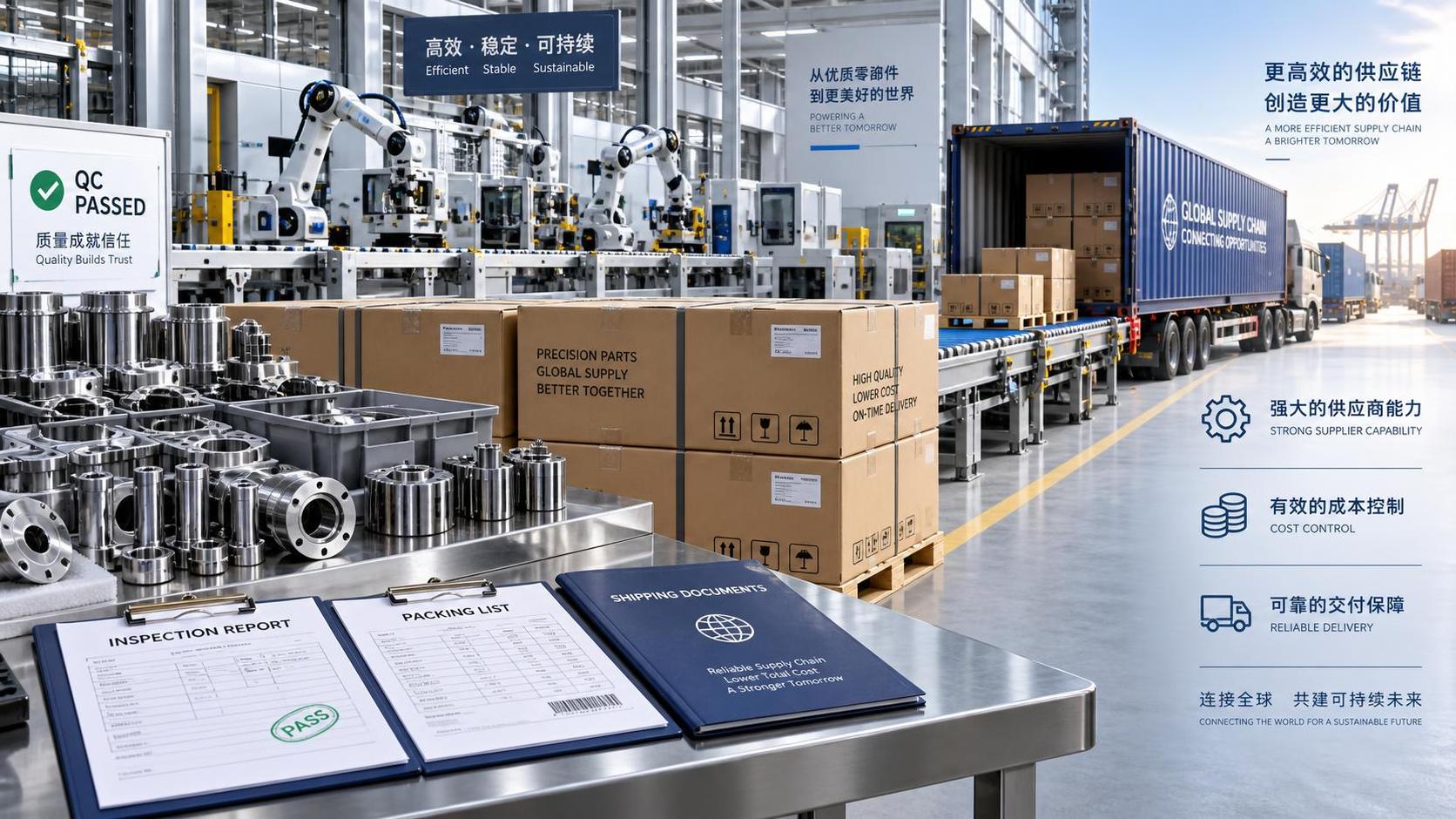
From an industry perspective, companies supplying blast furnace components, rolling line equipment, control systems, and related machined parts may be affected first because capacity expansion typically translates into more project-based procurement activity. The practical impact is likely to appear in technical bid alignment, document preparation, specification matching, delivery commitments, and service capability reviews. What deserves closer attention is whether buyers begin to apply stricter expectations around qualification files, technical drawings, performance documentation, inspection records, and traceability materials during supplier selection.
Manufacturing suppliers may need stronger coordination with project procurement
For machining, casting, forging, and automation integration suppliers, the immediate issue is not only order volume but procurement fit. Analysis shows that when imported equipment plays a major role in steel capacity buildout, suppliers are more likely to be evaluated on their ability to meet project schedules, interface with engineering requirements, and maintain consistency between equipment specifications and delivered parts. This can affect production planning, component standardization, packaging records, and acceptance support during project delivery.
Service and support providers may become part of the compliance discussion
Suppliers involved in installation support, commissioning coordination, spare-parts management, inspection assistance, and after-sales response may also be affected. Observably, where large industrial projects depend on imported core equipment, buyers often pay closer attention to whether technical support files, maintenance instructions, and quality follow-up can be delivered in a usable and timely form. Even without detailed execution rules in the provided information, this is an area that exporters and service partners should watch closely.
What companies should track before demand converts into orders
Watch for changes in qualification and technical document expectations
Analysis shows that exporters should pay attention to how future project documents describe supplier qualification, technical compliance, inspection records, and document submission requirements. The provided information does not include detailed execution rules, so this should not be treated as a settled compliance framework yet. Still, companies active in CNC Machining and Factory Automation should prepare for closer scrutiny of technical files and product-document consistency.
Monitor how procurement language develops in new steel projects
What deserves closer attention is whether procurement and tender documents begin to reflect more specific expectations for imported blast furnace equipment, rolling systems, automation controls, and related components. For suppliers, changes in wording can affect bidding strategy, scope definition, delivery obligations, and the evidence needed to support conformity with buyer requirements.
Strengthen delivery planning and supplier readiness
From an execution perspective, companies should review delivery cycles, production capacity, subcontractor control, and spare-parts support for the product categories highlighted in the provided summary. This is especially relevant for precision castings, forged parts, rolling line control systems, and robotic integration packages, where delays or documentation gaps can affect project acceptance and downstream service commitments.
Prepare for closer attention to after-sales and traceability
Observably, buyers in equipment-heavy industrial projects may place more emphasis on quality traceability, maintenance support, and fault-response arrangements when imported systems are deeply involved. The source summary does not provide formal service rules, but exporters should still review how they present inspection records, part identification, replacement support, and service communication in cross-border projects.
How this signal should be interpreted at this stage
Analysis shows that this development is better understood as an execution signal rather than a fully detailed regulatory outcome. The key point is not that a new formal rule set has been fully disclosed in the provided information, but that the reported capacity target and import dependence together suggest a more structured procurement and delivery environment for equipment suppliers linked to steel expansion projects.
Observably, the strongest near-term implication is for companies whose products sit at the intersection of heavy industrial equipment and export delivery discipline. That includes suppliers of machined components, forged parts, line automation, and integrated control solutions. At the same time, the absence of detailed official implementation terms in the input means the market still needs to watch how buyer requirements, qualification thresholds, and project documentation evolve.
A measured takeaway for exporters and project suppliers
From an industry perspective, the reported expansion of India’s steel capacity is less a standalone news item than a practical sign of changing project demand conditions for imported equipment and related industrial systems. It points to possible changes in sourcing intensity, technical alignment, supplier review, and delivery preparation for companies serving steel plant construction and upgrade projects.
It is more appropriate to understand this as an actionable market signal that warrants continued monitoring, rather than as a completed rule change with fixed requirements. For exporters, the most rational response is to follow future project language, document expectations, and execution feedback closely while strengthening readiness in compliance materials, delivery planning, and support capability.
Basis of this article and what still needs verification
This article is generated based on the user-provided news title, event timing, and event summary. The specific official source link was not provided in the input, so it still needs to be verified through continued review of official announcements, regulator releases, trade or customs information, industry association updates, standard-setting documents, tender materials, and authoritative media reporting where available.
Further observation is still needed on possible policy details, certification expectations, procurement wording, tender document changes, industry feedback, and how companies actually implement related project requirements in the market.
Get weekly intelligence in your inbox.
No noise. No sponsored content. Pure intelligence.
 Sep 15, 2026Wholesale WiFi Smart Switches: What Buyers Should Verify Before OrderingWholesale WiFi Smart Switches: What Buyers Should Verify Before Ordering
 Sep 14, 2026How to Select IoT Sensors for Reliable Monitoring in Harsh Industrial EnvironmentsHow to Select IoT Sensors for Reliable Monitoring in Harsh Industrial Environments
 Sep 13, 2026How Procurement Teams Can Improve Supplier Reliability With Supply Chain VisibilityHow Procurement Teams Can Improve Supplier Reliability With Supply Chain Visibility
 Sep 12, 2026Smart Manufacturing Trends 2026: What Leaders Should Prioritize for ROISmart Manufacturing Trends 2026: What Leaders Should Prioritize for ROI
 Sep 11, 2026B2B Market Analysis: How Buyers Evaluate Suppliers, Pricing, and Delivery RiskB2B Market Analysis: How Buyers Evaluate Suppliers, Pricing, and Delivery Risk
 Sep 10, 2026Residential Solar Kits in Canada: How to Size a System for Your Home and ClimateResidential Solar Kits in Canada: How to Size a System for Your Home and Climate
 Sep 09, 2026How to Specify a Syringe Assembly Line for High-Volume Sterile ProductionHow to Specify a Syringe Assembly Line for High-Volume Sterile Production
 Sep 08, 2026How to Evaluate Warehouse Robotics System Suppliers for Reliable Multi-Site DeploymentHow to Evaluate Warehouse Robotics System Suppliers for Reliable Multi-Site Deployment
 Sep 07, 2026Renewable Geothermal Energy Explained: How It Works for Heating and PowerRenewable Geothermal Energy Explained: How It Works for Heating and Power
 Sep 07, 2026How to Choose an Industrial Packaging Robot Manufacturer for Your Production LineHow to Choose an Industrial Packaging Robot Manufacturer for Your Production Line
 Sep 05, 2026How to Evaluate a Turnkey Hydro Turbine Generator Supplier for Remote Power ProjectsHow to Evaluate a Turnkey Hydro Turbine Generator Supplier for Remote Power Projects
 Sep 04, 2026Automated Ultrasonic Welding for Thermoplastic Assemblies: Process Controls That MatterAutomated Ultrasonic Welding for Thermoplastic Assemblies: Process Controls That Matter
 Sep 03, 2026Energy Forecasting for Grid Planning: Sizing Solar and Storage CapacityEnergy Forecasting for Grid Planning: Sizing Solar and Storage Capacity
 Sep 02, 2026Which Metrics Should an Energy Analytics Dashboard Track for Factory Energy Management?Which Metrics Should an Energy Analytics Dashboard Track for Factory Energy Management?
 Sep 01, 2026How Warehouse Voice Picking Improves Accuracy and Throughput in Order FulfillmentHow Warehouse Voice Picking Improves Accuracy and Throughput in Order Fulfillment
 Aug 31, 2026How to Automate Dropshipping Order Processing Without Overselling StockHow to Automate Dropshipping Order Processing Without Overselling Stock
 Aug 30, 2026How to Evaluate a Smart Lighting Supplier for Multi-Site Commercial ProjectsHow to Evaluate a Smart Lighting Supplier for Multi-Site Commercial Projects
 Aug 29, 2026Recent Advances in Smart Manufacturing and Materials Reshaping Factory InvestmentRecent Advances in Smart Manufacturing and Materials Reshaping Factory Investment
 Aug 29, 2026Selecting Lightweight Aluminum Extrusions for Strength-Critical Industrial DesignsSelecting Lightweight Aluminum Extrusions for Strength-Critical Industrial Designs
 Aug 29, 2026Vertical Powder Anodizing Explained: Process Controls for Uniform Coating QualityVertical Powder Anodizing Explained: Process Controls for Uniform Coating Quality
 Aug 29, 2026PV Module Product Due Diligence: What Buyers Should Verify Before ContractingPV Module Product Due Diligence: What Buyers Should Verify Before Contracting
 Aug 29, 2026Solar Design for Challenging Terrain: Managing Slope, Soil, and Shading RisksSolar Design for Challenging Terrain: Managing Slope, Soil, and Shading Risks
 Aug 29, 2026IS 16444 Smart Meter Requirements: Key Functions, Tests, and ComplianceIS 16444 Smart Meter Requirements: Key Functions, Tests, and Compliance
 Aug 29, 2026Rehabilitation Equipment Market Outlook: Demand Drivers and Growth SegmentsRehabilitation Equipment Market Outlook: Demand Drivers and Growth Segments
 Aug 29, 2026When Does Container Handling Automation Deliver ROI in Port Yard Operations?When Does Container Handling Automation Deliver ROI in Port Yard Operations?
 Aug 29, 2026Customs API Integration: A Practical Checklist for Automated Trade ComplianceCustoms API Integration: A Practical Checklist for Automated Trade Compliance
 Aug 29, 2026Returnable Packaging for Automotive: How to Cut Damage and Reverse Logistics CostsReturnable Packaging for Automotive: How to Cut Damage and Reverse Logistics Costs