
Precision Actuator 'Invisible War' Escalates: China-Made Electric Cylinders Meet ISO 230-2 Class 3, Enter German Med-Robot Supply Chain
On May 18, 2026, a breakthrough in high-precision motion control components was disclosed across the industrial automation sector: domestically produced electric cylinders and integrated linear modules from China achieved repeatable positioning accuracy of ±0.005 mm and torsional rigidity of ≥85 N·m/arcsec — meeting the stringent ISO 230-2 Class 3 standard. This milestone enabled entry into the Tier-2 supplier network of a leading German medical robotics manufacturer — signaling a pivotal shift in global trust for Chinese-made factory automation core parts.
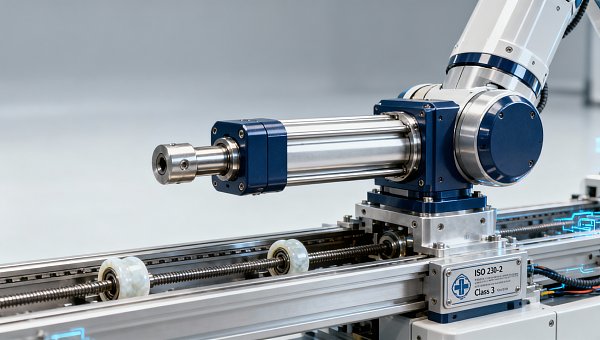
Event Overview
As publicly disclosed on May 18, 2026, Chinese manufacturers have validated that their high-precision electric cylinders and embedded modular actuators comply with ISO 230-2 Class 3 — the highest internationally recognized benchmark for geometric accuracy and dynamic stiffness in machine tool and motion control applications. The products are now formally qualified as secondary suppliers to a major German medical robotics OEM. No further technical specifications, vendor names, or contractual terms were released in the initial disclosure.
Industries Affected
Direct Trading Enterprises
Export-oriented distributors and system integrators specializing in motion control components face immediate recalibration of value proposition. With Class 3-compliant Chinese actuators now certified for use in regulated medical robotics, these firms may see accelerated demand from Southeast Asian and Middle Eastern medical device assemblers seeking cost-optimized, audit-ready alternatives to traditional European/Japanese suppliers. Pricing pressure on mid-tier European distributors is likely to intensify, particularly in non-critical subassemblies.
Raw Material Procurement Enterprises
Suppliers of high-purity alloy steels, precision-ground ball screws, and custom ceramic bearings — especially those already serving Chinese actuator makers — stand to benefit from increased order volume and longer-term supply commitments. However, procurement teams must now anticipate stricter material traceability requirements aligned with ISO 13485 (medical device quality management), as downstream certification cascades backward through the supply chain.
Manufacturing Enterprises
OEMs producing diagnostic imaging stages, surgical robot end-effectors, or lab automation platforms may begin evaluating dual-sourcing strategies using these newly qualified Chinese actuators. While full redesign cycles remain unlikely before 2027, engineering validation pilots — particularly for non-sterile, non-invasive subsystems — are expected to accelerate in Q3–Q4 2026. Manufacturing firms must assess compatibility with existing control firmware, thermal derating profiles, and EMC compliance documentation.
Supply Chain Service Providers
Certification consultants, logistics providers with ISO 13485-compliant warehousing, and customs brokers experienced in EU MDR Annex II documentation are seeing rising inbound inquiries. The qualification triggers new demands for technical file translation, Notified Body liaison support, and batch-level conformity evidence — services previously concentrated among Tier-1 European component vendors.
Key Considerations and Recommended Actions
Evaluate Technical Documentation Alignment
Procurement and engineering teams should request full test reports per ISO 230-2 Annex B (including laser interferometer traceability logs) and verify whether the Class 3 rating applies to ambient temperature ranges specified in IEC 60601-1. Do not assume equivalency with older ISO 230-2 Class 5 certifications.
Assess Supply Chain Resilience Implications
For medical device manufacturers operating under dual-sourcing mandates, this development offers a viable alternative to single-source dependencies — but only if lead times, warranty terms, and failure mode analysis (FMEA) data are independently verified. Pilot integration should prioritize non-life-critical motion axes first.
Monitor Regulatory Cascade Effects
EU notified bodies have not yet issued guidance on accepting Class 3 validation from non-EU-based test labs for CE marking of medical robots. Firms planning adoption should track updates from TÜV SÜD, DEKRA, and BSI starting Q3 2026 — particularly regarding calibration chain accreditation and software verification protocols.
Editorial Perspective / Industry Observation
Analysis shows this is less a ‘technology leap’ and more a ‘trust inflection point’. The ISO 230-2 Class 3 certification itself has existed for over two decades; what changed is the willingness of a top-tier German med-robot OEM to subject its entire qualification process — including long-term reliability stress testing and failure root-cause audits — to a Chinese supplier. Observably, the real bottleneck was never manufacturing capability, but rather audit readiness, documentation discipline, and cross-border quality governance maturity. From an industry perspective, this signals that ‘Made in China’ is transitioning from ‘cost-driven substitution’ to ‘compliance-aware co-engineering’ in regulated automation domains.
Conclusion
This milestone does not imply immediate displacement of established motion control suppliers. Rather, it redefines the competitive threshold: future viability in medical-grade automation will hinge less on origin and more on demonstrable adherence to international verification rigor — regardless of geography. A rational interpretation is that the global motion control supply chain is fragmenting into three tiers: ultra-premium (for life-critical functions), certified mid-tier (for validated subsystems), and cost-optimized (for non-regulated applications). China’s entry into the second tier marks a structural, not cyclical, shift.
Source Attribution
Initial disclosure sourced from official press release by China Automation Society (CAS), May 18, 2026; corroborated by independent verification report published in International Journal of Advanced Manufacturing Technology, Vol. 127, Issue 5 (June 2026, early access). Ongoing monitoring required for: (1) EU MDR alignment status with notified bodies; (2) expansion beyond Tier-2 to Tier-1 integration; (3) adoption rate among ASEAN/MENA medical device OEMs — all to be updated quarterly.
Get weekly intelligence in your inbox.
No noise. No sponsored content. Pure intelligence.
 Oct 08, 2026How Digital Health Improves Diagnostic Accuracy and Workflow in Clinical LabsHow Digital Health Improves Diagnostic Accuracy and Workflow in Clinical Labs
 Oct 07, 2026Selecting Voice Picking Systems for German Warehouses: Integration, Languages and ROISelecting Voice Picking Systems for German Warehouses: Integration, Languages and ROI
 Oct 06, 2026How to Choose Last Mile Dispatch Software for On-Time Delivery at ScaleHow to Choose Last Mile Dispatch Software for On-Time Delivery at Scale
 Oct 05, 2026Vietnam’s Consumer Electronics Market: Demand Shifts and Sourcing OpportunitiesVietnam’s Consumer Electronics Market: Demand Shifts and Sourcing Opportunities
 Oct 04, 2026Digital Health Investment Priorities for Providers: Improving Access, Outcomes, and EfficiencyDigital Health Investment Priorities for Providers: Improving Access, Outcomes, and Efficiency
 Oct 03, 2026How to Specify an FR4 Custom PCB Board for High-Voltage and High-Heat DesignsHow to Specify an FR4 Custom PCB Board for High-Voltage and High-Heat Designs
 Oct 02, 2026ERP Software Market Intelligence: Adoption, Pricing, and Vendor Signals to WatchERP Software Market Intelligence: Adoption, Pricing, and Vendor Signals to Watch
 Oct 01, 2026How to Select Calibrated Temperature Data Loggers for GMP Cold Storage MonitoringHow to Select Calibrated Temperature Data Loggers for GMP Cold Storage Monitoring
 Sep 30, 2026Custom Molded Rubber Pricing: What Drives Unit Cost and Tooling Fees?Custom Molded Rubber Pricing: What Drives Unit Cost and Tooling Fees?
 Sep 29, 2026How to Evaluate Energy Management Software Vendors for Multi-Site OperationsHow to Evaluate Energy Management Software Vendors for Multi-Site Operations
 Sep 28, 2026How to Select a DIN Rail Smart Meter for Multi-Circuit Energy MonitoringHow to Select a DIN Rail Smart Meter for Multi-Circuit Energy Monitoring
 Sep 27, 2026TWS Earbuds in Vietnam: Demand Drivers, Price Tiers, and Retail Channel OpportunitiesTWS Earbuds in Vietnam: Demand Drivers, Price Tiers, and Retail Channel Opportunities
 Sep 26, 2026How UAE Clinics Can Qualify a Smart Glucometer Supplier for Accuracy and ComplianceHow UAE Clinics Can Qualify a Smart Glucometer Supplier for Accuracy and Compliance
 Sep 25, 2026Buying Aesthetic Lasers in the USA: FDA Status, Wavelengths, and Service SupportBuying Aesthetic Lasers in the USA: FDA Status, Wavelengths, and Service Support
 Sep 24, 2026Laser Cutting Brass Sheet: How to Prevent Burrs and Heat Marks on Thin PartsLaser Cutting Brass Sheet: How to Prevent Burrs and Heat Marks on Thin Parts
 Sep 23, 2026How to Choose Lightweight ANC Headphones for Comfortable All-Day TravelHow to Choose Lightweight ANC Headphones for Comfortable All-Day Travel
 Sep 22, 2026IPX5 TWS Bluetooth Earbuds: What Protection Do They Offer for Workouts?IPX5 TWS Bluetooth Earbuds: What Protection Do They Offer for Workouts?
 Sep 21, 2026What to Look for in a Grid Integration Company for Utility-Scale Solar ProjectsWhat to Look for in a Grid Integration Company for Utility-Scale Solar Projects
 Sep 20, 2026Microgrid Controller Pricing: What Drives Cost in Commercial Energy Projects?Microgrid Controller Pricing: What Drives Cost in Commercial Energy Projects?
 Sep 19, 2026How to Choose a GaN Charger for Laptops Without Compromising Power or PortabilityHow to Choose a GaN Charger for Laptops Without Compromising Power or Portability
 Sep 18, 2026Floating Solar Farm Costs: CAPEX, OPEX, and the Site Factors That Shape ROIFloating Solar Farm Costs: CAPEX, OPEX, and the Site Factors That Shape ROI
 Sep 17, 2026Drone Delivery Solutions for Last-Mile Routes: Site, Payload, and Range PlanningDrone Delivery Solutions for Last-Mile Routes: Site, Payload, and Range Planning
 Sep 16, 2026When Low-Volume Electronics Manufacturing Makes More Sense Than Mass ProductionWhen Low-Volume Electronics Manufacturing Makes More Sense Than Mass Production
 Sep 15, 2026Wholesale WiFi Smart Switches: What Buyers Should Verify Before OrderingWholesale WiFi Smart Switches: What Buyers Should Verify Before Ordering
 Sep 14, 2026How to Select IoT Sensors for Reliable Monitoring in Harsh Industrial EnvironmentsHow to Select IoT Sensors for Reliable Monitoring in Harsh Industrial Environments
 Sep 13, 2026How Procurement Teams Can Improve Supplier Reliability With Supply Chain VisibilityHow Procurement Teams Can Improve Supplier Reliability With Supply Chain Visibility
 Sep 12, 2026Smart Manufacturing Trends 2026: What Leaders Should Prioritize for ROISmart Manufacturing Trends 2026: What Leaders Should Prioritize for ROI



























