
5 axis milling for aerospace components needs tighter control
In aerospace production, 5 axis milling for aerospace components requires tighter control because tiny process shifts can change strength, fit, fatigue life, and certification outcomes.
Surface finish, toolpath accuracy, thermal stability, and inspection discipline all interact. When one variable drifts, the entire quality chain becomes less predictable.
That is why 5 axis milling for aerospace components is not simply an equipment choice. It is a scenario-based control strategy tied to risk, geometry, material behavior, and traceability.
Within high-value industrial ecosystems, this tighter approach supports reliable output, cleaner audits, lower scrap exposure, and stronger confidence across complex global supply networks.
When part geometry becomes complex, tighter control stops small errors from compounding
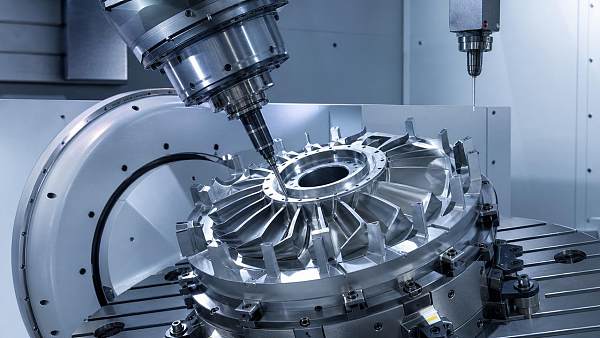
Complex ribs, deep cavities, blisks, housings, and structural brackets often define the first scenario where 5 axis milling for aerospace components needs closer oversight.
In these parts, angle changes occur constantly. Rotary motion, cutter engagement, and reach conditions create variable cutting forces throughout the same machining cycle.
A program can look correct in simulation yet still produce positional drift. Machine kinematics, pivot calibration, and post-processor quality matter as much as spindle performance.
The key judgment point is whether the geometry contains hidden risk zones. These include thin walls, long tool overhangs, difficult reorientation steps, and intersecting freeform surfaces.
Core control checks for complex geometry
- Verify rotary axis accuracy under load, not only in static calibration.
- Review tool reach and holder collision margins before release.
- Confirm post-processor output against actual machine kinematics.
- Measure critical surfaces early, before full batch continuation.
When difficult materials enter the process, stability matters more than speed
A second scenario appears with titanium, Inconel, heat-resistant alloys, and advanced aluminum grades used in flight-critical assemblies.
Here, 5 axis milling for aerospace components faces thermal concentration, work hardening, burr formation, and accelerated tool wear. These effects reduce process consistency long before obvious defects appear.
If cycle time becomes the dominant target, surface integrity can suffer. Microscopic tearing, residual stress, or recast-like edge effects may later weaken performance.
The right judgment question is simple: does the selected strategy preserve metallurgical quality while maintaining dimensional capability across the complete run?
What to monitor in hard-to-machine materials
- Tool wear progression by feature, not only by total spindle time.
- Coolant delivery consistency at changing tool angles.
- Heat buildup near corners, slots, and thin sections.
- Surface integrity results after finishing passes.
When tolerance stacks are tight, inspection must be built into the machining scenario
Another high-risk scenario involves mating interfaces, sealing surfaces, engine-adjacent parts, and assemblies with strict positional requirements.
For these cases, 5 axis milling for aerospace components cannot rely on final inspection alone. Deviations must be detected during setup, roughing, semi-finishing, and finishing.
Probe routines, in-process verification, and fixture repeatability become part of machining control. Inspection is no longer a separate stage after production.
The central judgment point is whether measurement timing matches defect risk. If measurement comes too late, salvage options shrink and traceability pressure rises.
Inspection disciplines that reduce hidden variation
- Qualify fixtures before loading production material.
- Probe datums after clamping and after major stock removal.
- Use first-article review on the most distortion-prone features.
- Link CMM findings back to toolpath and offset history.
Different aerospace scenarios demand different levels of control
Not every part requires the same response. Control intensity should align with geometry risk, material sensitivity, tolerance demands, and certification consequences.
How to adapt 5 axis milling for aerospace components to each production setting
Effective adaptation starts by defining the dominant failure mode. That step shapes tooling, fixturing, inspection intervals, and machine qualification depth.
For 5 axis milling for aerospace components, control plans should be scenario-specific rather than copied from generic machining workflows.
Practical adaptation recommendations
- Map each feature to its highest likely source of variation.
- Separate roughing and finishing tools by risk, not convenience.
- Use fixture concepts that preserve datum integrity after load changes.
- Align simulation, setup sheets, and inspection plans before release.
- Record offset changes to support root-cause review later.
In broader industrial operations, these actions also strengthen digital trust. Repeatable data trails improve supplier evaluation, compliance readiness, and cross-border technical communication.
Common misjudgments that weaken control in aerospace milling scenarios
A frequent mistake is assuming modern equipment automatically guarantees aerospace-grade consistency. Advanced machines still fail when process discipline is incomplete.
Another misjudgment is treating programming, machining, and inspection as separate departments instead of one continuous control loop.
Some teams also underestimate environmental factors. Thermal drift, spindle warm-up, coolant concentration, and fixture cleanliness all influence 5 axis milling for aerospace components.
A final blind spot is overreliance on first-pass success. One conforming part does not prove long-run capability, especially in demanding alloy or thin-wall scenarios.
Warning signs worth early attention
- Feature drift after tool replacement
- Stable dimensions but worsening surface finish
- Recurring manual offset corrections
- Measurement disagreement between machine probe and CMM
The next step is building a control plan around real machining scenarios
The strongest path forward is to review actual part families, risk features, materials, and inspection timing together. That creates a realistic control framework.
For 5 axis milling for aerospace components, better results come from matching control intensity to application scenario instead of applying one universal method.
Start with a feature-risk matrix, verify machine and post alignment, tighten in-process checks, and compare long-run capability across critical part categories.
In high-authority industrial intelligence environments such as TradeNexus Pro, scenario-led analysis helps turn machining complexity into measurable, auditable, and scalable operational confidence.
Get weekly intelligence in your inbox.
No noise. No sponsored content. Pure intelligence.
 Oct 08, 2026How Digital Health Improves Diagnostic Accuracy and Workflow in Clinical LabsHow Digital Health Improves Diagnostic Accuracy and Workflow in Clinical Labs
 Oct 07, 2026Selecting Voice Picking Systems for German Warehouses: Integration, Languages and ROISelecting Voice Picking Systems for German Warehouses: Integration, Languages and ROI
 Oct 06, 2026How to Choose Last Mile Dispatch Software for On-Time Delivery at ScaleHow to Choose Last Mile Dispatch Software for On-Time Delivery at Scale
 Oct 05, 2026Vietnam’s Consumer Electronics Market: Demand Shifts and Sourcing OpportunitiesVietnam’s Consumer Electronics Market: Demand Shifts and Sourcing Opportunities
 Oct 04, 2026Digital Health Investment Priorities for Providers: Improving Access, Outcomes, and EfficiencyDigital Health Investment Priorities for Providers: Improving Access, Outcomes, and Efficiency
 Oct 03, 2026How to Specify an FR4 Custom PCB Board for High-Voltage and High-Heat DesignsHow to Specify an FR4 Custom PCB Board for High-Voltage and High-Heat Designs
 Oct 02, 2026ERP Software Market Intelligence: Adoption, Pricing, and Vendor Signals to WatchERP Software Market Intelligence: Adoption, Pricing, and Vendor Signals to Watch
 Oct 01, 2026How to Select Calibrated Temperature Data Loggers for GMP Cold Storage MonitoringHow to Select Calibrated Temperature Data Loggers for GMP Cold Storage Monitoring
 Sep 30, 2026Custom Molded Rubber Pricing: What Drives Unit Cost and Tooling Fees?Custom Molded Rubber Pricing: What Drives Unit Cost and Tooling Fees?
 Sep 29, 2026How to Evaluate Energy Management Software Vendors for Multi-Site OperationsHow to Evaluate Energy Management Software Vendors for Multi-Site Operations
 Sep 28, 2026How to Select a DIN Rail Smart Meter for Multi-Circuit Energy MonitoringHow to Select a DIN Rail Smart Meter for Multi-Circuit Energy Monitoring
 Sep 27, 2026TWS Earbuds in Vietnam: Demand Drivers, Price Tiers, and Retail Channel OpportunitiesTWS Earbuds in Vietnam: Demand Drivers, Price Tiers, and Retail Channel Opportunities
 Sep 26, 2026How UAE Clinics Can Qualify a Smart Glucometer Supplier for Accuracy and ComplianceHow UAE Clinics Can Qualify a Smart Glucometer Supplier for Accuracy and Compliance
 Sep 25, 2026Buying Aesthetic Lasers in the USA: FDA Status, Wavelengths, and Service SupportBuying Aesthetic Lasers in the USA: FDA Status, Wavelengths, and Service Support
 Sep 24, 2026Laser Cutting Brass Sheet: How to Prevent Burrs and Heat Marks on Thin PartsLaser Cutting Brass Sheet: How to Prevent Burrs and Heat Marks on Thin Parts
 Sep 23, 2026How to Choose Lightweight ANC Headphones for Comfortable All-Day TravelHow to Choose Lightweight ANC Headphones for Comfortable All-Day Travel
 Sep 22, 2026IPX5 TWS Bluetooth Earbuds: What Protection Do They Offer for Workouts?IPX5 TWS Bluetooth Earbuds: What Protection Do They Offer for Workouts?
 Sep 21, 2026What to Look for in a Grid Integration Company for Utility-Scale Solar ProjectsWhat to Look for in a Grid Integration Company for Utility-Scale Solar Projects
 Sep 20, 2026Microgrid Controller Pricing: What Drives Cost in Commercial Energy Projects?Microgrid Controller Pricing: What Drives Cost in Commercial Energy Projects?
 Sep 19, 2026How to Choose a GaN Charger for Laptops Without Compromising Power or PortabilityHow to Choose a GaN Charger for Laptops Without Compromising Power or Portability
 Sep 18, 2026Floating Solar Farm Costs: CAPEX, OPEX, and the Site Factors That Shape ROIFloating Solar Farm Costs: CAPEX, OPEX, and the Site Factors That Shape ROI
 Sep 17, 2026Drone Delivery Solutions for Last-Mile Routes: Site, Payload, and Range PlanningDrone Delivery Solutions for Last-Mile Routes: Site, Payload, and Range Planning
 Sep 16, 2026When Low-Volume Electronics Manufacturing Makes More Sense Than Mass ProductionWhen Low-Volume Electronics Manufacturing Makes More Sense Than Mass Production
 Sep 15, 2026Wholesale WiFi Smart Switches: What Buyers Should Verify Before OrderingWholesale WiFi Smart Switches: What Buyers Should Verify Before Ordering
 Sep 14, 2026How to Select IoT Sensors for Reliable Monitoring in Harsh Industrial EnvironmentsHow to Select IoT Sensors for Reliable Monitoring in Harsh Industrial Environments
 Sep 13, 2026How Procurement Teams Can Improve Supplier Reliability With Supply Chain VisibilityHow Procurement Teams Can Improve Supplier Reliability With Supply Chain Visibility
 Sep 12, 2026Smart Manufacturing Trends 2026: What Leaders Should Prioritize for ROISmart Manufacturing Trends 2026: What Leaders Should Prioritize for ROI



























