
How CNC machining helps cut automotive part failure risks
In automotive manufacturing, small dimensional drift can become a field failure, warranty claim, or safety event. CNC machining for automotive industry applications reduces that exposure through precise geometry, stable repeatability, and traceable process control.
When engines, braking systems, steering parts, housings, and EV components demand exact fit, machining quality directly affects reliability. Better control at the production stage lowers scrap, protects compliance, and keeps weak parts off the road.
That matters across the broader industrial landscape. TradeNexus Pro tracks how advanced manufacturing methods, supplier capability, and digital quality systems shape failure prevention in globally connected automotive supply chains.
When failure risk depends on use case, CNC machining for automotive industry work becomes a strategic control point
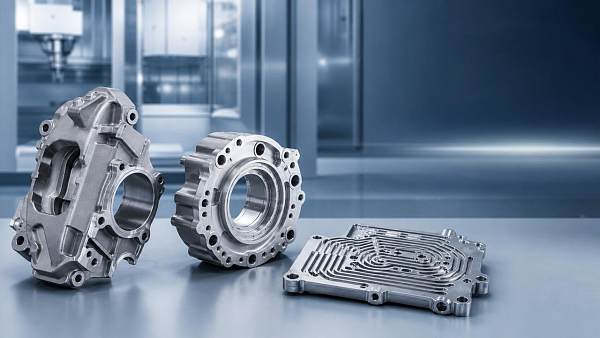
Not every automotive component fails for the same reason. Some fail from poor tolerance control. Others fail from heat, vibration, fatigue, sealing loss, or assembly stress caused by geometry variation.
CNC machining for automotive industry production is valuable because it supports different risk profiles with tailored process settings. Tool paths, machine rigidity, fixturing, and inspection routines can match the application instead of forcing one method everywhere.
This scenario-based approach matters in mixed fleets. Internal combustion vehicles, hybrids, and EV platforms all contain precision parts, but their failure triggers and tolerance priorities differ significantly.
Why scenario judgment matters before selecting machining controls
A bracket for general mounting does not need the same machining strategy as a brake caliper bore. A battery cooling plate does not share the same critical characteristics as a transmission shaft.
By identifying the failure mode first, teams can define the right tolerance stack, surface finish, concentricity target, material removal plan, and verification frequency. That prevents over-machining in low-risk areas and under-controlling critical ones.
In safety-critical systems, the main value of CNC machining for automotive industry parts is repeatable dimensional integrity
Braking, steering, suspension interfaces, and restraint hardware demand highly consistent dimensions. If bores drift, mating surfaces distort, or threads vary, load transfer becomes unpredictable and service life can collapse early.
CNC machining for automotive industry safety parts helps hold flatness, perpendicularity, and tight hole positions. That improves assembly accuracy and reduces stress concentration introduced by poor alignment.
Core judgment points in safety-related applications
- Are there mating surfaces that must seal or clamp evenly?
- Do bore locations affect braking force or steering response?
- Can small surface defects become crack initiation sites?
- Will thermal cycling change fit or preload conditions?
If the answer is yes, process capability matters more than nominal design intent alone. Precision machining turns CAD dimensions into consistent physical reality, reducing the gap between specification and road performance.
In powertrain and motion components, failure prevention depends on tolerance stack control and surface quality
Shafts, housings, manifolds, gears, and bearing seats operate under heat, pressure, and motion. Here, slight error can increase vibration, oil leakage, friction, or uneven wear.
CNC machining for automotive industry powertrain parts improves concentricity, roundness, and surface finish. These factors influence lubrication behavior, rotational balance, and long-term fatigue resistance.
Typical scenarios where machining quality changes failure risk
A bearing seat that is slightly oversized may allow micro-movement. That can generate heat and wear. A rough sealing face may permit fluid escape, contaminating adjacent systems.
Likewise, poor tool condition may leave chatter marks. Under cyclic load, those marks can act as stress raisers. Stable CNC programs, tool monitoring, and in-process measurement reduce those hidden risks.
In EV and thermal management scenarios, CNC machining for automotive industry programs supports leak prevention and electrical reliability
EV growth changes the failure map. Battery trays, inverter housings, cooling plates, motor end caps, and sensor mounts require precision, but often for sealing, heat transfer, and electrical protection rather than combustion-related loads.
CNC machining for automotive industry EV components helps create flat interfaces, controlled channel geometry, and stable mounting features. These protect coolant flow, enclosure integrity, and thermal performance.
Key judgment points for EV-related machining
- Cooling channels must maintain design flow and pressure limits.
- Mating faces must support reliable gasket compression.
- Housing geometry must protect connectors and sensitive electronics.
- Thermal contact areas require smooth, consistent finishes.
In these cases, precision machining is not only about fit. It also supports energy efficiency, enclosure safety, and predictable heat dissipation over the product lifecycle.
Different automotive scenarios require different machining priorities
The table below shows how CNC machining for automotive industry requirements shift by application. This helps align inspection effort and process planning with actual risk.
How to adapt CNC machining for automotive industry workflows to each risk scenario
The best results come from matching machining controls to failure consequences. High-risk applications need more than nominal tolerance. They need disciplined execution from setup through final inspection.
Practical adaptation steps
- Rank part features by failure impact, not drawing order.
- Choose machine capability based on actual tolerance sensitivity.
- Use fixtures that minimize distortion during clamping.
- Set tool replacement rules before surface drift appears.
- Add in-process probing for critical dimensions.
- Link final inspection data to lot traceability records.
These actions strengthen CNC machining for automotive industry quality systems by turning precision into a managed process, not a one-time machine claim.
Common misjudgments that allow automotive part failures to pass upstream controls
Many failures start with a wrong assumption. A part may meet basic dimensions yet still carry elevated field risk because inspection ignored function-critical details.
- Assuming tolerance compliance alone guarantees service reliability.
- Treating surface finish as cosmetic rather than functional.
- Using one sampling plan for low-risk and high-risk features.
- Ignoring heat-related distortion after machining.
- Failing to connect supplier capability with part criticality.
For integrated supply chains, this is especially important. Deep manufacturing intelligence helps identify whether a supplier’s CNC machining for automotive industry process can consistently support the real application environment.
The next step is to evaluate machining decisions through a failure-prevention lens
Automotive reliability improves when machining strategy follows the component’s real operating scenario. Safety parts need dimensional stability. Rotating parts need surface and axis control. EV parts need sealing and thermal precision.
CNC machining for automotive industry programs create the strongest value when process capability, inspection depth, and application risk are aligned from the start. That alignment cuts recalls, reduces hidden defects, and supports long-term product trust.
For organizations tracking supplier readiness, process maturity, and advanced manufacturing trends, TradeNexus Pro offers a high-authority environment for evaluating how precision production decisions influence commercial resilience and technical performance.
Get weekly intelligence in your inbox.
No noise. No sponsored content. Pure intelligence.
 Oct 08, 2026How Digital Health Improves Diagnostic Accuracy and Workflow in Clinical LabsHow Digital Health Improves Diagnostic Accuracy and Workflow in Clinical Labs
 Oct 07, 2026Selecting Voice Picking Systems for German Warehouses: Integration, Languages and ROISelecting Voice Picking Systems for German Warehouses: Integration, Languages and ROI
 Oct 06, 2026How to Choose Last Mile Dispatch Software for On-Time Delivery at ScaleHow to Choose Last Mile Dispatch Software for On-Time Delivery at Scale
 Oct 05, 2026Vietnam’s Consumer Electronics Market: Demand Shifts and Sourcing OpportunitiesVietnam’s Consumer Electronics Market: Demand Shifts and Sourcing Opportunities
 Oct 04, 2026Digital Health Investment Priorities for Providers: Improving Access, Outcomes, and EfficiencyDigital Health Investment Priorities for Providers: Improving Access, Outcomes, and Efficiency
 Oct 03, 2026How to Specify an FR4 Custom PCB Board for High-Voltage and High-Heat DesignsHow to Specify an FR4 Custom PCB Board for High-Voltage and High-Heat Designs
 Oct 02, 2026ERP Software Market Intelligence: Adoption, Pricing, and Vendor Signals to WatchERP Software Market Intelligence: Adoption, Pricing, and Vendor Signals to Watch
 Oct 01, 2026How to Select Calibrated Temperature Data Loggers for GMP Cold Storage MonitoringHow to Select Calibrated Temperature Data Loggers for GMP Cold Storage Monitoring
 Sep 30, 2026Custom Molded Rubber Pricing: What Drives Unit Cost and Tooling Fees?Custom Molded Rubber Pricing: What Drives Unit Cost and Tooling Fees?
 Sep 29, 2026How to Evaluate Energy Management Software Vendors for Multi-Site OperationsHow to Evaluate Energy Management Software Vendors for Multi-Site Operations
 Sep 28, 2026How to Select a DIN Rail Smart Meter for Multi-Circuit Energy MonitoringHow to Select a DIN Rail Smart Meter for Multi-Circuit Energy Monitoring
 Sep 27, 2026TWS Earbuds in Vietnam: Demand Drivers, Price Tiers, and Retail Channel OpportunitiesTWS Earbuds in Vietnam: Demand Drivers, Price Tiers, and Retail Channel Opportunities
 Sep 26, 2026How UAE Clinics Can Qualify a Smart Glucometer Supplier for Accuracy and ComplianceHow UAE Clinics Can Qualify a Smart Glucometer Supplier for Accuracy and Compliance
 Sep 25, 2026Buying Aesthetic Lasers in the USA: FDA Status, Wavelengths, and Service SupportBuying Aesthetic Lasers in the USA: FDA Status, Wavelengths, and Service Support
 Sep 24, 2026Laser Cutting Brass Sheet: How to Prevent Burrs and Heat Marks on Thin PartsLaser Cutting Brass Sheet: How to Prevent Burrs and Heat Marks on Thin Parts
 Sep 23, 2026How to Choose Lightweight ANC Headphones for Comfortable All-Day TravelHow to Choose Lightweight ANC Headphones for Comfortable All-Day Travel
 Sep 22, 2026IPX5 TWS Bluetooth Earbuds: What Protection Do They Offer for Workouts?IPX5 TWS Bluetooth Earbuds: What Protection Do They Offer for Workouts?
 Sep 21, 2026What to Look for in a Grid Integration Company for Utility-Scale Solar ProjectsWhat to Look for in a Grid Integration Company for Utility-Scale Solar Projects
 Sep 20, 2026Microgrid Controller Pricing: What Drives Cost in Commercial Energy Projects?Microgrid Controller Pricing: What Drives Cost in Commercial Energy Projects?
 Sep 19, 2026How to Choose a GaN Charger for Laptops Without Compromising Power or PortabilityHow to Choose a GaN Charger for Laptops Without Compromising Power or Portability
 Sep 18, 2026Floating Solar Farm Costs: CAPEX, OPEX, and the Site Factors That Shape ROIFloating Solar Farm Costs: CAPEX, OPEX, and the Site Factors That Shape ROI
 Sep 17, 2026Drone Delivery Solutions for Last-Mile Routes: Site, Payload, and Range PlanningDrone Delivery Solutions for Last-Mile Routes: Site, Payload, and Range Planning
 Sep 16, 2026When Low-Volume Electronics Manufacturing Makes More Sense Than Mass ProductionWhen Low-Volume Electronics Manufacturing Makes More Sense Than Mass Production
 Sep 15, 2026Wholesale WiFi Smart Switches: What Buyers Should Verify Before OrderingWholesale WiFi Smart Switches: What Buyers Should Verify Before Ordering
 Sep 14, 2026How to Select IoT Sensors for Reliable Monitoring in Harsh Industrial EnvironmentsHow to Select IoT Sensors for Reliable Monitoring in Harsh Industrial Environments
 Sep 13, 2026How Procurement Teams Can Improve Supplier Reliability With Supply Chain VisibilityHow Procurement Teams Can Improve Supplier Reliability With Supply Chain Visibility
 Sep 12, 2026Smart Manufacturing Trends 2026: What Leaders Should Prioritize for ROISmart Manufacturing Trends 2026: What Leaders Should Prioritize for ROI



























