
How CNC machining meets tight defense part tolerances
CNC machining for defense industry applications is essential when mission-critical parts must meet extremely tight tolerances, repeatability standards, and compliance requirements.
Across advanced manufacturing, defense programs now demand more than dimensional accuracy alone.
They require traceable production, stable materials, documented process control, and dependable performance under harsh operating conditions.
This shift matters across the broader industrial landscape because defense-grade precision often sets the benchmark for quality systems, supplier discipline, and technical readiness.
Understanding how CNC machining for defense industry standards is achieved helps evaluate whether a production partner can support long-life, high-risk assemblies.
Tighter defense tolerances are becoming a wider industrial signal
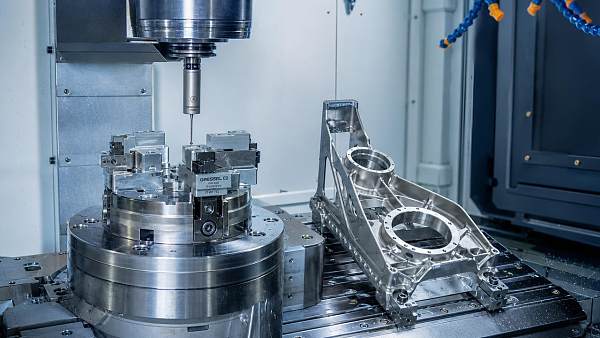
Tolerance expectations in defense machining are tightening as platforms become lighter, smarter, and more integrated.
Aerospace-derived geometries, embedded electronics, thermal constraints, and modular system design are increasing precision demands on every machined interface.
In many programs, a small deviation can affect sealing, vibration resistance, targeting accuracy, or electromagnetic compatibility.
That is why CNC machining for defense industry production is increasingly judged by process capability, not by nominal machine specifications.
The same trend influences other sectors covered by TradeNexus Pro, especially healthcare technology, smart electronics, and advanced manufacturing systems.
Defense work often amplifies best practices that later spread into broader industrial supply chains.
Several forces are pushing CNC machining for defense industry capability higher
The pressure comes from technical, regulatory, and operational changes happening at the same time.
These forces explain why CNC machining for defense industry supply chains now relies on integrated manufacturing discipline.
Precision now depends on process stability more than one-time machine accuracy
A tight-tolerance part is rarely the result of one advanced machine alone.
It comes from controlling variables before, during, and after cutting.
Material control starts the tolerance chain
Certified raw material matters because inconsistency affects machinability, deformation, hardness response, and final dimensional stability.
For CNC machining for defense industry parts, full heat-lot traceability reduces uncertainty and supports downstream validation.
Toolpath strategy protects geometric integrity
Tool engagement, step-over, feed rates, and cutting sequence influence heat build-up and stress release.
Poor toolpath planning can shift flatness, circularity, or concentricity even when dimensions seem correct at first inspection.
Fixturing often determines repeatability
Weak or inconsistent workholding introduces vibration, positional drift, and variable clamping distortion.
In CNC machining for defense industry environments, fixture design is part of the quality system, not a secondary setup detail.
In-process verification reduces stacked error
Probing, offset correction, and monitored wear compensation help hold dimensions across larger production runs.
This is especially important where multiple critical features share a single datum structure.
Quality assurance is shifting from final inspection to full traceable evidence
Final measurement still matters, but defense-grade confidence comes from a complete quality record.
That record should link material certifications, setup approvals, machine parameters, calibrated inspection devices, and nonconformance handling.
For CNC machining for defense industry programs, dimensional reports alone may not demonstrate true manufacturing control.
- FAI documentation confirms first-part conformity against drawings and specifications.
- SPC data shows whether the process remains stable across time and quantity.
- CMM inspection validates complex geometry beyond handheld measurement capability.
- Surface finish, burr control, and edge condition records support functional reliability.
- Calibration logs strengthen confidence in every recorded inspection result.
This wider evidence model is shaping expectations across many high-value industrial segments.
The impact reaches design, sourcing, assembly, and lifecycle support
When CNC machining for defense industry tolerances are consistently achieved, the effect extends beyond machining cells.
Reliable precision improves assembly speed, lowers rework, supports interchangeability, and reduces field maintenance uncertainty.
It also enables better forecasting of service life where wear, stress, and thermal cycling are tightly linked to fit quality.
The strongest capability signals are becoming easier to identify
As scrutiny rises, certain indicators now separate basic precision shops from defense-ready production environments.
- Documented experience with complex GD&T requirements and datum-critical features.
- Controlled workflows for titanium, stainless alloys, aluminum, and difficult high-temperature materials.
- Formal revision management connecting CAD, CAM, routers, and inspection plans.
- Evidence of repeatability across batches, not only prototype success.
- Established treatment of deburring, cleaning, coating interfaces, and packaging protection.
- Clear traceability from incoming stock to finished serialized component records.
These indicators matter because CNC machining for defense industry work is judged over the full production lifecycle.
A practical evaluation framework can reduce risk before qualification decisions
A structured review helps translate technical claims into measurable confidence.
- Review whether critical tolerances match demonstrated machine-process capability.
- Check if material certificates, heat numbers, and storage control are consistently maintained.
- Assess fixture design methods for thin walls, complex contours, and multi-op parts.
- Request sample inspection plans showing in-process checks and final validation methods.
- Examine nonconformance reporting and corrective action depth.
- Verify how revision changes are communicated through production and quality records.
This framework is relevant not only for defense but also for adjacent sectors that require audit-ready precision manufacturing.
What to watch next as CNC machining for defense industry requirements continue evolving
Several developments will likely shape the next stage of tolerance management.
- More digital thread adoption linking design revisions, machining data, and inspection evidence.
- Higher use of hybrid workflows combining machining with additive preforms or near-net parts.
- Stronger cybersecurity expectations around controlled technical data and process files.
- Greater demand for domestic or regionally resilient capacity in sensitive component categories.
- Broader use of automation for consistent probing, tool monitoring, and unattended repeatability.
Each trend raises the value of suppliers that can prove stable CNC machining for defense industry performance under changing program conditions.
For organizations tracking precision manufacturing shifts, TradeNexus Pro offers a high-authority lens on how quality systems, materials strategy, and production intelligence are converging.
The next practical step is to compare tolerance claims with real process evidence, traceability depth, and repeatability history before moving forward.
Get weekly intelligence in your inbox.
No noise. No sponsored content. Pure intelligence.
 Oct 08, 2026How Digital Health Improves Diagnostic Accuracy and Workflow in Clinical LabsHow Digital Health Improves Diagnostic Accuracy and Workflow in Clinical Labs
 Oct 07, 2026Selecting Voice Picking Systems for German Warehouses: Integration, Languages and ROISelecting Voice Picking Systems for German Warehouses: Integration, Languages and ROI
 Oct 06, 2026How to Choose Last Mile Dispatch Software for On-Time Delivery at ScaleHow to Choose Last Mile Dispatch Software for On-Time Delivery at Scale
 Oct 05, 2026Vietnam’s Consumer Electronics Market: Demand Shifts and Sourcing OpportunitiesVietnam’s Consumer Electronics Market: Demand Shifts and Sourcing Opportunities
 Oct 04, 2026Digital Health Investment Priorities for Providers: Improving Access, Outcomes, and EfficiencyDigital Health Investment Priorities for Providers: Improving Access, Outcomes, and Efficiency
 Oct 03, 2026How to Specify an FR4 Custom PCB Board for High-Voltage and High-Heat DesignsHow to Specify an FR4 Custom PCB Board for High-Voltage and High-Heat Designs
 Oct 02, 2026ERP Software Market Intelligence: Adoption, Pricing, and Vendor Signals to WatchERP Software Market Intelligence: Adoption, Pricing, and Vendor Signals to Watch
 Oct 01, 2026How to Select Calibrated Temperature Data Loggers for GMP Cold Storage MonitoringHow to Select Calibrated Temperature Data Loggers for GMP Cold Storage Monitoring
 Sep 30, 2026Custom Molded Rubber Pricing: What Drives Unit Cost and Tooling Fees?Custom Molded Rubber Pricing: What Drives Unit Cost and Tooling Fees?
 Sep 29, 2026How to Evaluate Energy Management Software Vendors for Multi-Site OperationsHow to Evaluate Energy Management Software Vendors for Multi-Site Operations
 Sep 28, 2026How to Select a DIN Rail Smart Meter for Multi-Circuit Energy MonitoringHow to Select a DIN Rail Smart Meter for Multi-Circuit Energy Monitoring
 Sep 27, 2026TWS Earbuds in Vietnam: Demand Drivers, Price Tiers, and Retail Channel OpportunitiesTWS Earbuds in Vietnam: Demand Drivers, Price Tiers, and Retail Channel Opportunities
 Sep 26, 2026How UAE Clinics Can Qualify a Smart Glucometer Supplier for Accuracy and ComplianceHow UAE Clinics Can Qualify a Smart Glucometer Supplier for Accuracy and Compliance
 Sep 25, 2026Buying Aesthetic Lasers in the USA: FDA Status, Wavelengths, and Service SupportBuying Aesthetic Lasers in the USA: FDA Status, Wavelengths, and Service Support
 Sep 24, 2026Laser Cutting Brass Sheet: How to Prevent Burrs and Heat Marks on Thin PartsLaser Cutting Brass Sheet: How to Prevent Burrs and Heat Marks on Thin Parts
 Sep 23, 2026How to Choose Lightweight ANC Headphones for Comfortable All-Day TravelHow to Choose Lightweight ANC Headphones for Comfortable All-Day Travel
 Sep 22, 2026IPX5 TWS Bluetooth Earbuds: What Protection Do They Offer for Workouts?IPX5 TWS Bluetooth Earbuds: What Protection Do They Offer for Workouts?
 Sep 21, 2026What to Look for in a Grid Integration Company for Utility-Scale Solar ProjectsWhat to Look for in a Grid Integration Company for Utility-Scale Solar Projects
 Sep 20, 2026Microgrid Controller Pricing: What Drives Cost in Commercial Energy Projects?Microgrid Controller Pricing: What Drives Cost in Commercial Energy Projects?
 Sep 19, 2026How to Choose a GaN Charger for Laptops Without Compromising Power or PortabilityHow to Choose a GaN Charger for Laptops Without Compromising Power or Portability
 Sep 18, 2026Floating Solar Farm Costs: CAPEX, OPEX, and the Site Factors That Shape ROIFloating Solar Farm Costs: CAPEX, OPEX, and the Site Factors That Shape ROI
 Sep 17, 2026Drone Delivery Solutions for Last-Mile Routes: Site, Payload, and Range PlanningDrone Delivery Solutions for Last-Mile Routes: Site, Payload, and Range Planning
 Sep 16, 2026When Low-Volume Electronics Manufacturing Makes More Sense Than Mass ProductionWhen Low-Volume Electronics Manufacturing Makes More Sense Than Mass Production
 Sep 15, 2026Wholesale WiFi Smart Switches: What Buyers Should Verify Before OrderingWholesale WiFi Smart Switches: What Buyers Should Verify Before Ordering
 Sep 14, 2026How to Select IoT Sensors for Reliable Monitoring in Harsh Industrial EnvironmentsHow to Select IoT Sensors for Reliable Monitoring in Harsh Industrial Environments
 Sep 13, 2026How Procurement Teams Can Improve Supplier Reliability With Supply Chain VisibilityHow Procurement Teams Can Improve Supplier Reliability With Supply Chain Visibility
 Sep 12, 2026Smart Manufacturing Trends 2026: What Leaders Should Prioritize for ROISmart Manufacturing Trends 2026: What Leaders Should Prioritize for ROI



























