
Is a 5 axis milling machine for mold making worth it
For business evaluators weighing capital efficiency, precision output, and long-term competitiveness, the question is clear: is a 5 axis milling machine for mold making worth it? The short answer is yes for manufacturers handling complex geometries, high-value molds, tight tolerances, or pressure to reduce setups and lead times. For shops focused on simpler mold work or inconsistent utilization, the investment can be harder to justify. The right decision depends less on machine prestige and more on workload mix, cost structure, and strategic production goals.
When is a 5 axis milling machine for mold making a smart investment?
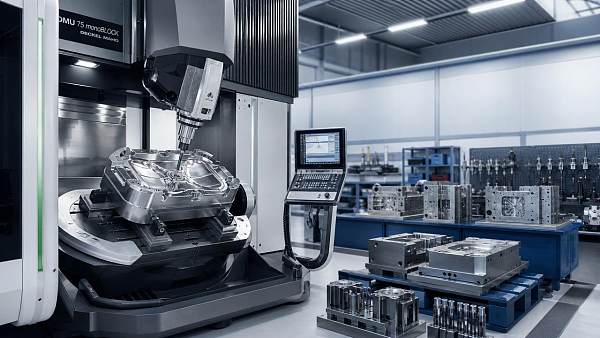
Search intent around a 5 axis milling machine for mold making is usually commercial and evaluative. Readers are not looking for a basic definition. They want to know whether the machine creates measurable business value.
For business evaluators, the real concern is not whether 5 axis technology is advanced. It is whether that capability improves quoting power, mold quality, production flexibility, and margin protection enough to offset higher capital cost.
In practical terms, a 5 axis investment tends to make sense when mold programs involve deep cavities, complex contours, undercuts, angled features, multi-face machining, or demanding surface finish requirements that slow 3 axis production.
It also becomes more attractive when a company serves automotive, medical, consumer electronics, aerospace-adjacent, or high-precision industrial customers who expect shorter lead times and lower defect risk from tooling partners.
If the majority of work consists of straightforward plates, simple inserts, or low-complexity molds, a 3 axis or 3+2 solution may still deliver better capital efficiency. The machine must match the revenue profile.
What business problems does 5 axis machining actually solve in mold making?
The biggest advantage is setup reduction. Traditional mold machining often requires multiple fixtures, manual repositioning, and repeated alignment checks. A 5 axis platform can machine more surfaces in a single setup, reducing handling time.
Fewer setups usually mean fewer opportunities for cumulative error. That matters in mold making because dimensional deviations, however small, can affect part quality, polishing effort, fitting time, and downstream trial adjustments.
Another important gain is tool access. With simultaneous axis movement, the cutter can approach difficult surfaces at more effective angles. This improves reach into deep cavities and supports shorter tools with better stability.
Shorter, more rigid tools help improve surface finish and reduce chatter. In mold work, that can lower benching and polishing labor, which is often underestimated when managers compare only spindle time.
5 axis machining can also compress lead time. Instead of splitting roughing, semi-finishing, and finishing across multiple clamping stages, shops can streamline flow and deliver molds faster to customers under launch pressure.
For companies competing on responsiveness, that speed becomes a sales advantage, not just a production improvement. Faster mold completion can support premium pricing, stronger retention, and better fit with urgent project schedules.
How much productivity improvement should decision-makers realistically expect?
Claims around productivity can be exaggerated, so evaluators should approach them carefully. The return from a 5 axis milling machine for mold making depends heavily on part complexity, CAM quality, operator skill, and programming discipline.
That said, many shops see meaningful gains in total process efficiency rather than dramatic reductions in pure cutting time alone. The strongest benefits often come from fewer setups, less manual intervention, and reduced rework.
For complex molds, total cycle compression can be significant because multiple operations are consolidated. For moderate-complexity work, the improvement may be more modest but still worthwhile when labor shortages or deadline pressure are present.
It is useful to measure productivity in broader terms: hours from job release to completed mold component, labor hours per mold, finishing hours, scrap exposure, machine utilization, and on-time delivery performance.
Evaluators should avoid approving the machine based only on theoretical spindle efficiency. A stronger business case comes from mapping how the equipment changes the full mold production workflow and its hidden cost drivers.
Where does the return on investment usually come from?
ROI usually comes from five areas: reduced setups, lower labor content, higher first-pass accuracy, better surface finish, and increased ability to win more technically demanding or higher-margin mold contracts.
Setup reduction has direct labor value. If skilled machinists currently spend substantial time repositioning parts, aligning fixtures, and verifying orientations, a 5 axis machine can convert non-cutting time into productive capacity.
Quality improvement creates another financial benefit. Better geometric consistency can reduce fitting, spotting, hand finishing, and mold trial corrections. These costs are real, even when they are not assigned clearly in accounting systems.
Revenue upside is often underestimated. A shop equipped for advanced mold geometry may qualify for projects that buyers would not confidently place with a conventional machining-only supplier.
There is also strategic capacity value. When one machine can complete more operations in fewer steps, it can relieve bottlenecks in toolrooms where labor availability limits throughput more than raw machine hours do.
However, ROI weakens when the machine sits idle, when programming capability is immature, or when the work mix rarely demands 5 axis motion. Utilization discipline is essential to financial success.
What costs and risks are often underestimated before purchase?
The machine price is only the visible part of the investment. Business evaluators should account for CAM software capability, post-process development, tooling, workholding, probing systems, training, maintenance, and facility readiness.
Programming complexity is a major factor. A 5 axis milling machine for mold making delivers value only when CAM strategies are reliable, collision control is strong, and programmers understand tool orientation choices for mold surfaces.
Talent risk is equally important. Shops without experienced 5 axis programmers or machinists may face a long ramp-up period. During this stage, promised efficiency gains can be delayed by conservative cycle planning or avoidable errors.
Maintenance and downtime risk should also be reviewed. More complex kinematics, rotary components, and calibration requirements can increase service sensitivity compared with simpler machine platforms.
Another underestimated issue is process fit. If upstream design data is inconsistent, if job planning is weak, or if operators lack standardized setup methods, advanced equipment may expose organizational inefficiencies rather than solve them.
Finally, there is demand risk. If projected mold complexity or customer volume does not materialize, the machine may become an expensive symbol of ambition rather than a productive asset.
How should buyers compare 3 axis, 3+2, and full 5 axis options?
Not every mold shop needs full simultaneous 5 axis machining. For some businesses, 3+2 indexing can capture much of the access and setup benefit at lower cost and lower programming complexity.
3 axis remains viable for simple geometries, larger flat features, and highly standardized mold components. It is often easier to staff, easier to maintain, and easier to justify for predictable lower-complexity production.
3+2 can be a strong middle path. It allows the part to be positioned at different fixed angles while machining occurs in three axes. This supports better access without requiring full simultaneous toolpath sophistication.
Full 5 axis becomes more compelling when surface continuity, difficult cavity access, blended forms, or tight cycle targets demand continuous axis movement. It is especially valuable when mold geometry complexity is rising over time.
Business evaluators should therefore compare not just machine prices but fit by job portfolio. The best option is the one that matches current revenue while supporting the most likely next stage of customer demand.
What evaluation criteria matter most for a sound purchase decision?
A disciplined assessment starts with job history. Review the last twelve to twenty-four months of mold work and classify jobs by geometry complexity, number of setups, finishing effort, rework hours, and lost quoting opportunities.
Then estimate how many of those jobs would benefit materially from 5 axis capability. If only a small fraction of annual revenue requires it, the machine may be difficult to justify unless strategic market expansion is planned.
Next, calculate the value of reduced lead time. In mold making, speed can influence customer retention, production launch reliability, and ability to command premium positioning. This benefit should be quantified, not treated vaguely.
Buyers should also review labor constraints. If experienced mold machinists are scarce, technology that reduces manual intervention may have greater value than in regions or facilities where skilled labor remains abundant.
Machine selection should include vendor support quality, application engineering, training depth, local service response, and post-sale process support. Weak implementation support can undermine the economics of even an excellent machine.
Finally, ask whether the investment aligns with market direction. If the business intends to pursue more precision tooling, higher-complexity sectors, or faster-turn mold programs, the strategic logic becomes stronger.
In which scenarios is a 5 axis milling machine for mold making not worth it?
It may not be worth it for shops with irregular mold demand, low machine utilization, limited programming resources, or a customer base that rarely requires advanced surface geometry or tight turnaround performance.
It can also be a poor fit when the business lacks process maturity. If scheduling, data preparation, tooling control, and inspection systems are inconsistent, the gains from 5 axis technology may be diluted.
Another warning sign is buying for image rather than workload. Some firms invest because customers expect advanced equipment on paper, yet they never build the application depth needed to use the machine effectively.
If simpler equipment already meets dimensional, finish, and lead time requirements at strong margins, replacing that model with a higher-cost platform may add complexity without enough commercial return.
For these companies, outsourcing occasional high-complexity work or adding 3+2 capability may provide a better balance of flexibility and financial discipline than jumping directly into full 5 axis production.
Final verdict for business evaluators
So, is a 5 axis milling machine for mold making worth it? For many mold manufacturers, yes, especially when complex geometry, setup reduction, precision consistency, and delivery speed directly influence competitiveness and profitability.
But the investment is not automatically justified by technology alone. Its value depends on workload complexity, utilization rates, internal programming capability, labor economics, and the company’s ability to convert technical capacity into stronger market position.
The best decisions come from looking beyond machine specifications to full-process impact. Measure setup savings, finishing reduction, rework avoidance, throughput effects, customer demand, and strategic revenue potential in one model.
If those indicators show repeatable value, a 5 axis platform can become a high-leverage asset in mold making. If they do not, a phased approach may protect capital while preserving flexibility. For business evaluators, that is the real test of whether the investment is worth it.
Get weekly intelligence in your inbox.
No noise. No sponsored content. Pure intelligence.
 Oct 08, 2026How Digital Health Improves Diagnostic Accuracy and Workflow in Clinical LabsHow Digital Health Improves Diagnostic Accuracy and Workflow in Clinical Labs
 Oct 07, 2026Selecting Voice Picking Systems for German Warehouses: Integration, Languages and ROISelecting Voice Picking Systems for German Warehouses: Integration, Languages and ROI
 Oct 06, 2026How to Choose Last Mile Dispatch Software for On-Time Delivery at ScaleHow to Choose Last Mile Dispatch Software for On-Time Delivery at Scale
 Oct 05, 2026Vietnam’s Consumer Electronics Market: Demand Shifts and Sourcing OpportunitiesVietnam’s Consumer Electronics Market: Demand Shifts and Sourcing Opportunities
 Oct 04, 2026Digital Health Investment Priorities for Providers: Improving Access, Outcomes, and EfficiencyDigital Health Investment Priorities for Providers: Improving Access, Outcomes, and Efficiency
 Oct 03, 2026How to Specify an FR4 Custom PCB Board for High-Voltage and High-Heat DesignsHow to Specify an FR4 Custom PCB Board for High-Voltage and High-Heat Designs
 Oct 02, 2026ERP Software Market Intelligence: Adoption, Pricing, and Vendor Signals to WatchERP Software Market Intelligence: Adoption, Pricing, and Vendor Signals to Watch
 Oct 01, 2026How to Select Calibrated Temperature Data Loggers for GMP Cold Storage MonitoringHow to Select Calibrated Temperature Data Loggers for GMP Cold Storage Monitoring
 Sep 30, 2026Custom Molded Rubber Pricing: What Drives Unit Cost and Tooling Fees?Custom Molded Rubber Pricing: What Drives Unit Cost and Tooling Fees?
 Sep 29, 2026How to Evaluate Energy Management Software Vendors for Multi-Site OperationsHow to Evaluate Energy Management Software Vendors for Multi-Site Operations
 Sep 28, 2026How to Select a DIN Rail Smart Meter for Multi-Circuit Energy MonitoringHow to Select a DIN Rail Smart Meter for Multi-Circuit Energy Monitoring
 Sep 27, 2026TWS Earbuds in Vietnam: Demand Drivers, Price Tiers, and Retail Channel OpportunitiesTWS Earbuds in Vietnam: Demand Drivers, Price Tiers, and Retail Channel Opportunities
 Sep 26, 2026How UAE Clinics Can Qualify a Smart Glucometer Supplier for Accuracy and ComplianceHow UAE Clinics Can Qualify a Smart Glucometer Supplier for Accuracy and Compliance
 Sep 25, 2026Buying Aesthetic Lasers in the USA: FDA Status, Wavelengths, and Service SupportBuying Aesthetic Lasers in the USA: FDA Status, Wavelengths, and Service Support
 Sep 24, 2026Laser Cutting Brass Sheet: How to Prevent Burrs and Heat Marks on Thin PartsLaser Cutting Brass Sheet: How to Prevent Burrs and Heat Marks on Thin Parts
 Sep 23, 2026How to Choose Lightweight ANC Headphones for Comfortable All-Day TravelHow to Choose Lightweight ANC Headphones for Comfortable All-Day Travel
 Sep 22, 2026IPX5 TWS Bluetooth Earbuds: What Protection Do They Offer for Workouts?IPX5 TWS Bluetooth Earbuds: What Protection Do They Offer for Workouts?
 Sep 21, 2026What to Look for in a Grid Integration Company for Utility-Scale Solar ProjectsWhat to Look for in a Grid Integration Company for Utility-Scale Solar Projects
 Sep 20, 2026Microgrid Controller Pricing: What Drives Cost in Commercial Energy Projects?Microgrid Controller Pricing: What Drives Cost in Commercial Energy Projects?
 Sep 19, 2026How to Choose a GaN Charger for Laptops Without Compromising Power or PortabilityHow to Choose a GaN Charger for Laptops Without Compromising Power or Portability
 Sep 18, 2026Floating Solar Farm Costs: CAPEX, OPEX, and the Site Factors That Shape ROIFloating Solar Farm Costs: CAPEX, OPEX, and the Site Factors That Shape ROI
 Sep 17, 2026Drone Delivery Solutions for Last-Mile Routes: Site, Payload, and Range PlanningDrone Delivery Solutions for Last-Mile Routes: Site, Payload, and Range Planning
 Sep 16, 2026When Low-Volume Electronics Manufacturing Makes More Sense Than Mass ProductionWhen Low-Volume Electronics Manufacturing Makes More Sense Than Mass Production
 Sep 15, 2026Wholesale WiFi Smart Switches: What Buyers Should Verify Before OrderingWholesale WiFi Smart Switches: What Buyers Should Verify Before Ordering
 Sep 14, 2026How to Select IoT Sensors for Reliable Monitoring in Harsh Industrial EnvironmentsHow to Select IoT Sensors for Reliable Monitoring in Harsh Industrial Environments
 Sep 13, 2026How Procurement Teams Can Improve Supplier Reliability With Supply Chain VisibilityHow Procurement Teams Can Improve Supplier Reliability With Supply Chain Visibility
 Sep 12, 2026Smart Manufacturing Trends 2026: What Leaders Should Prioritize for ROISmart Manufacturing Trends 2026: What Leaders Should Prioritize for ROI



























