
What CNC machining services high precision should prove
For technical evaluators, proving the value of CNC machining services high precision goes beyond tight tolerances alone. It requires clear evidence of process stability, material consistency, inspection capability, and repeatable quality under real production demands.
This article outlines the core indicators and verification standards that distinguish truly high-precision machining partners from suppliers making unsupported claims.
What should CNC machining services high precision actually prove?
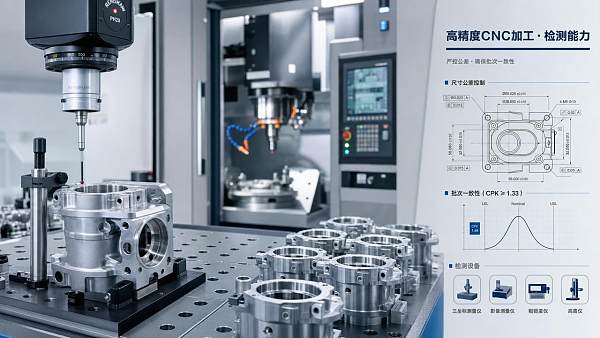
In cross-sector sourcing, the phrase CNC machining services high precision is often used loosely. For a technical evaluator, the real question is not whether a supplier can quote a micron value, but whether that precision can be maintained across batches, materials, geometries, and delivery schedules.
A credible machining partner should prove capability in a measurable, auditable way. That means documented process control, traceable inspection records, equipment suitability, and a stable quality system that supports both prototypes and scaled production.
Core proof points technical evaluators should request
- Tolerance evidence tied to part features, not generic claims. A serious supplier should state achievable tolerances by bore, slot, thread, flatness, concentricity, and surface finish.
- Process capability records showing repeatability over time. Single-sample success does not prove production readiness.
- Material control documents covering grade verification, lot traceability, and handling requirements for aluminum, stainless steel, titanium, engineering plastics, or specialty alloys.
- Inspection planning with calibrated instruments such as CMM, height gauges, bore gauges, optical systems, and surface roughness testers.
- Nonconformance response processes, including root cause analysis, corrective action, and containment for ongoing deliveries.
This matters across advanced manufacturing, smart electronics, healthcare technology, green energy, and supply chain digitalization because each sector links dimensional precision to assembly reliability, downstream yield, and total supply risk.
Which technical indicators reveal real high-precision machining capability?
When evaluating CNC machining services high precision, technical teams need a practical framework. The table below helps separate marketing language from engineering evidence by mapping common claims to the proof that should accompany them.
This table shows why the evaluation process should focus on proof by feature, by lot, and by workflow. High precision is not one specification. It is a controlled system that reduces variability from setup to shipment.
Why repeatability matters more than a single tight dimension
A supplier may machine one part successfully under ideal conditions. Yet technical evaluators are usually responsible for larger risks: line stoppage, assembly mismatch, field failure, and requalification costs. That is why repeatability often matters more than a headline tolerance number.
Repeatability depends on machine condition, fixturing rigidity, tool wear management, thermal stability, programming discipline, and operator control. If any one of these factors is weak, precision may drift long before the order is complete.
How do application scenarios change the definition of high precision?
CNC machining services high precision should be judged in context. A housing for smart electronics, a fluid path component for healthcare equipment, and a sealing surface in green energy hardware do not carry the same risk profile.
For this reason, technical evaluators should assess required precision against function, assembly behavior, and regulatory or validation implications, not against a universal number.
Scenario-based expectations
- Advanced manufacturing parts often require tight positional accuracy for jigs, automation interfaces, and high-cycle mechanical assemblies.
- Smart electronics components may prioritize miniature features, cosmetic consistency, and controlled burr removal around connector areas.
- Healthcare technology parts may require stronger emphasis on material traceability, surface integrity, clean handling, and validated inspection practices.
- Green energy components often demand precision under thermal cycling, vibration, or sealing requirements rather than laboratory-only dimensions.
TradeNexus Pro tracks these differences through sector-specific intelligence. That gives procurement and engineering teams a broader decision base when comparing machining suppliers serving multiple global industries.
What documents and inspection methods should a supplier provide?
Technical evaluators should ask for a documentation package that proves CNC machining services high precision under actual production controls. This is especially important when supplier qualification must support new product introduction, multi-site sourcing, or customer audits.
Useful verification documents
- First article inspection reports showing actual measurements against drawing requirements.
- Calibration records for critical measuring equipment used on the project.
- Material certificates or mill documentation linked to the delivered lot.
- Control plans or in-process inspection checkpoints for production orders.
- Nonconformance and corrective action records when prior issues have occurred.
The next table summarizes which inspection methods are commonly associated with different quality risks and what each method can realistically prove during supplier evaluation.
A balanced inspection plan often combines several methods. Technical evaluators should be cautious when a supplier relies on one instrument type for every requirement, especially for parts with mixed geometric and surface-critical features.
How should buyers compare suppliers beyond price?
Price remains important, but evaluating CNC machining services high precision only on quote value can create hidden cost. Scrap, expedited remakes, delayed launches, and incoming inspection burdens often outweigh the initial savings from a lower unit price.
Comparison points that influence total procurement value
- Engineering responsiveness during drawing review, tolerance clarification, and manufacturability feedback.
- Capability to manage low-volume prototypes and transition smoothly into repeat production.
- Lead-time reliability for urgent builds, qualification lots, and revision-controlled repeat orders.
- Transparency in documenting process changes, subcontracted operations, and inspection exceptions.
- Alignment with customer-specific quality expectations and common international quality system practices.
This is where a platform like TradeNexus Pro adds strategic value. Instead of comparing suppliers through shallow directory listings, teams can use deeper market intelligence, sector context, and vetted technical content to refine longlists and reduce qualification noise.
What are the most common misconceptions about high-precision CNC machining?
Technical evaluators often inherit assumptions from internal stakeholders who equate high precision with high quality in every dimension. In reality, precision claims can be misleading when separated from application fit, process maturity, and measurement discipline.
Misconceptions that create sourcing risk
- Tighter tolerance always means a better part. Unnecessary tight tolerances can increase cost and lead time without improving product function.
- A modern machine alone guarantees precision. Machine quality matters, but tooling, fixturing, programming, and inspection discipline matter just as much.
- Prototype success proves production capability. Many issues emerge only in repeated runs, especially with thermal drift and tool wear.
- Inspection reports eliminate all risk. Reports confirm measured outcomes, but they do not replace process understanding or supply chain control.
Removing these misconceptions helps technical teams write better RFQs, set realistic acceptance criteria, and avoid supplier disputes later in the project lifecycle.
FAQ: what do technical evaluators ask most about CNC machining services high precision?
How do I verify whether a quoted tolerance is realistic?
Ask the supplier to link the tolerance to a specific feature, material, machine type, and inspection method. A realistic answer will describe process assumptions, not just a number on a capabilities sheet. Request measured examples from similar geometries when possible.
Which parts benefit most from CNC machining services high precision?
The strongest fit is for parts where geometry directly affects assembly, sealing, motion, electrical alignment, or regulatory validation. Examples include fixture interfaces, connector housings, fluid control features, heat management components, and tolerance-critical mating surfaces.
What should I prioritize if my budget is limited?
Prioritize critical-to-function features, material traceability, and inspection on high-risk dimensions. You can often reduce cost by relaxing nonfunctional tolerances, simplifying cosmetic requirements, or combining prototype learning with staged qualification instead of applying maximum control everywhere.
How important are standards and quality systems?
They matter because they indicate process discipline, document control, and consistency. While one standard alone does not prove technical excellence, a supplier that follows recognized quality practices is usually better prepared for traceability, audit response, and controlled production change management.
Why choose us when evaluating high-precision machining options?
TradeNexus Pro supports technical evaluators with a decision environment built for serious B2B sourcing. Our focus is not broad listing volume. It is deep sector intelligence across advanced manufacturing, green energy, smart electronics, healthcare technology, and supply chain SaaS.
If you are assessing CNC machining services high precision for a new supplier, a qualification project, or a production transfer, we can help you refine the evaluation criteria that matter most to your application and sourcing model.
You can consult us on
- Parameter confirmation for tolerance, surface finish, feature criticality, and material expectations before RFQ release.
- Supplier comparison frameworks for prototype work, pilot runs, and stable production sourcing.
- Lead-time and delivery risk assessment when timing is critical for launch or line continuity.
- Custom evaluation checklists covering inspection methods, documentation, traceability, and change control requirements.
- Support for certification-related questions, sample review priorities, and quote communication structure.
For teams that need clearer supplier shortlisting, stronger technical screening, or better alignment between engineering and procurement, contacting TradeNexus Pro is a practical next step. The goal is not simply to find a machinist, but to confirm which machining partner can prove precision under real operating conditions.
Get weekly intelligence in your inbox.
No noise. No sponsored content. Pure intelligence.
 Oct 08, 2026How Digital Health Improves Diagnostic Accuracy and Workflow in Clinical LabsHow Digital Health Improves Diagnostic Accuracy and Workflow in Clinical Labs
 Oct 07, 2026Selecting Voice Picking Systems for German Warehouses: Integration, Languages and ROISelecting Voice Picking Systems for German Warehouses: Integration, Languages and ROI
 Oct 06, 2026How to Choose Last Mile Dispatch Software for On-Time Delivery at ScaleHow to Choose Last Mile Dispatch Software for On-Time Delivery at Scale
 Oct 05, 2026Vietnam’s Consumer Electronics Market: Demand Shifts and Sourcing OpportunitiesVietnam’s Consumer Electronics Market: Demand Shifts and Sourcing Opportunities
 Oct 04, 2026Digital Health Investment Priorities for Providers: Improving Access, Outcomes, and EfficiencyDigital Health Investment Priorities for Providers: Improving Access, Outcomes, and Efficiency
 Oct 03, 2026How to Specify an FR4 Custom PCB Board for High-Voltage and High-Heat DesignsHow to Specify an FR4 Custom PCB Board for High-Voltage and High-Heat Designs
 Oct 02, 2026ERP Software Market Intelligence: Adoption, Pricing, and Vendor Signals to WatchERP Software Market Intelligence: Adoption, Pricing, and Vendor Signals to Watch
 Oct 01, 2026How to Select Calibrated Temperature Data Loggers for GMP Cold Storage MonitoringHow to Select Calibrated Temperature Data Loggers for GMP Cold Storage Monitoring
 Sep 30, 2026Custom Molded Rubber Pricing: What Drives Unit Cost and Tooling Fees?Custom Molded Rubber Pricing: What Drives Unit Cost and Tooling Fees?
 Sep 29, 2026How to Evaluate Energy Management Software Vendors for Multi-Site OperationsHow to Evaluate Energy Management Software Vendors for Multi-Site Operations
 Sep 28, 2026How to Select a DIN Rail Smart Meter for Multi-Circuit Energy MonitoringHow to Select a DIN Rail Smart Meter for Multi-Circuit Energy Monitoring
 Sep 27, 2026TWS Earbuds in Vietnam: Demand Drivers, Price Tiers, and Retail Channel OpportunitiesTWS Earbuds in Vietnam: Demand Drivers, Price Tiers, and Retail Channel Opportunities
 Sep 26, 2026How UAE Clinics Can Qualify a Smart Glucometer Supplier for Accuracy and ComplianceHow UAE Clinics Can Qualify a Smart Glucometer Supplier for Accuracy and Compliance
 Sep 25, 2026Buying Aesthetic Lasers in the USA: FDA Status, Wavelengths, and Service SupportBuying Aesthetic Lasers in the USA: FDA Status, Wavelengths, and Service Support
 Sep 24, 2026Laser Cutting Brass Sheet: How to Prevent Burrs and Heat Marks on Thin PartsLaser Cutting Brass Sheet: How to Prevent Burrs and Heat Marks on Thin Parts
 Sep 23, 2026How to Choose Lightweight ANC Headphones for Comfortable All-Day TravelHow to Choose Lightweight ANC Headphones for Comfortable All-Day Travel
 Sep 22, 2026IPX5 TWS Bluetooth Earbuds: What Protection Do They Offer for Workouts?IPX5 TWS Bluetooth Earbuds: What Protection Do They Offer for Workouts?
 Sep 21, 2026What to Look for in a Grid Integration Company for Utility-Scale Solar ProjectsWhat to Look for in a Grid Integration Company for Utility-Scale Solar Projects
 Sep 20, 2026Microgrid Controller Pricing: What Drives Cost in Commercial Energy Projects?Microgrid Controller Pricing: What Drives Cost in Commercial Energy Projects?
 Sep 19, 2026How to Choose a GaN Charger for Laptops Without Compromising Power or PortabilityHow to Choose a GaN Charger for Laptops Without Compromising Power or Portability
 Sep 18, 2026Floating Solar Farm Costs: CAPEX, OPEX, and the Site Factors That Shape ROIFloating Solar Farm Costs: CAPEX, OPEX, and the Site Factors That Shape ROI
 Sep 17, 2026Drone Delivery Solutions for Last-Mile Routes: Site, Payload, and Range PlanningDrone Delivery Solutions for Last-Mile Routes: Site, Payload, and Range Planning
 Sep 16, 2026When Low-Volume Electronics Manufacturing Makes More Sense Than Mass ProductionWhen Low-Volume Electronics Manufacturing Makes More Sense Than Mass Production
 Sep 15, 2026Wholesale WiFi Smart Switches: What Buyers Should Verify Before OrderingWholesale WiFi Smart Switches: What Buyers Should Verify Before Ordering
 Sep 14, 2026How to Select IoT Sensors for Reliable Monitoring in Harsh Industrial EnvironmentsHow to Select IoT Sensors for Reliable Monitoring in Harsh Industrial Environments
 Sep 13, 2026How Procurement Teams Can Improve Supplier Reliability With Supply Chain VisibilityHow Procurement Teams Can Improve Supplier Reliability With Supply Chain Visibility
 Sep 12, 2026Smart Manufacturing Trends 2026: What Leaders Should Prioritize for ROISmart Manufacturing Trends 2026: What Leaders Should Prioritize for ROI



























