
When 5 axis milling is the right choice for complex parts
For procurement teams sourcing precision components, the key question is not whether 5 axis milling sounds advanced, but whether it is the most practical and cost-effective process for the part in front of you.
The core search intent behind “5 axis milling for complex geometries” is evaluative. Buyers want to know when the process creates measurable value, when it is unnecessary, and how to assess suppliers with confidence.
Procurement readers usually care most about part quality, manufacturability, lead time, quote accuracy, inspection risk, and total landed cost. They also want to avoid overpaying for a premium process that does not improve outcomes.
The most useful content, therefore, is not a generic explanation of machine motion. It is a decision framework: which parts benefit, what trade-offs to expect, what questions to ask, and how to compare suppliers.
This article focuses on those decision points. It emphasizes business value, sourcing risk, application fit, and supplier evaluation, while keeping technical detail only where it helps buyers make better decisions.
When is 5 axis milling actually the right choice?
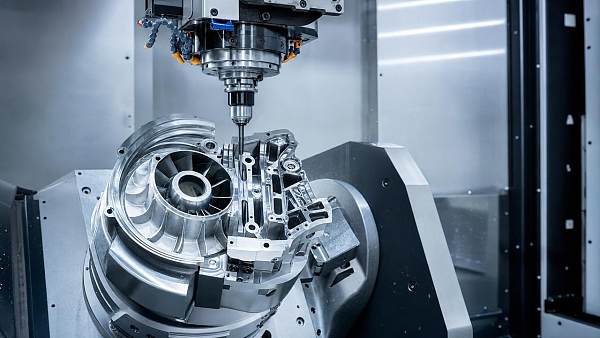
In practical sourcing terms, 5 axis milling is the right choice when part geometry, tolerance requirements, or surface finish demands make 3 axis or indexed 4 axis machining inefficient, risky, or impossible.
That usually means the component has complex contours, deep cavities, compound angles, undercut-like access challenges, or multiple critical features that must remain tightly aligned across several faces of the part.
For these cases, 5 axis milling for complex geometries can reduce repeated setups, improve positional accuracy, shorten machining cycles, and produce better surfaces directly off the machine.
It is especially valuable when a supplier can complete the part in one clamping or in significantly fewer setups than conventional machining would require.
If fewer setups remove fixture changes, re-datum errors, and manual intervention, the process often delivers savings that are not visible from hourly machine rates alone.
Why procurement teams should care about setup reduction
From a buyer’s perspective, setup count is one of the most important hidden cost drivers in precision component sourcing. Every additional setup adds labor, inspection burden, and geometric risk.
When parts must be repositioned several times, there is a greater chance of stack-up error between features. That matters when profiles, holes, slots, and sealing surfaces must align precisely.
5 axis milling can address this by allowing the cutting tool to approach the workpiece from many orientations without repeatedly refixturing the component.
For procurement teams, that translates into more stable quality, less scrap exposure, and often a smoother first-article approval process. It can also improve quote reliability for repeat production.
If a supplier tells you a part can be made in one or two setups instead of five or six, that is not just a production detail. It is a direct indicator of potential process capability.
What kinds of parts benefit most from 5 axis milling for complex geometries?
The strongest candidates are parts with freeform surfaces, intersecting contours, angled features on multiple faces, and tight relationships between features that are difficult to maintain after repeated repositioning.
Typical examples include impellers, turbine-like components, orthopedic instruments, aerospace brackets, high-performance housings, precision manifolds, mold inserts, and complex electronics enclosures.
Advanced manufacturing sectors also use 5 axis machining for lightweight structural parts where material must be removed aggressively without compromising dimensional consistency or edge quality.
If the CAD model contains organic curves, blended transitions, or features inaccessible by straight vertical tool entry, 5 axis milling becomes much more attractive.
Buyers should also pay attention to part depth-to-width ratios, wall thinness, and the need to reach difficult areas using shorter, more stable tooling paths.
When 5 axis milling may not be the best option
Not every precision component needs this process. If the part is mostly prismatic, has simple top-down features, and can be machined in a few stable setups, 3 axis or 4 axis methods may be more economical.
For high-volume parts with mature tooling strategies and uncomplicated geometry, the premium associated with 5 axis equipment may not deliver enough return.
Similarly, if tolerances are moderate and surface finish can be achieved through secondary operations at lower cost, 5 axis machining may be unnecessary.
Procurement teams should be cautious when suppliers propose 5 axis milling without clearly linking it to geometry, quality risk reduction, or lead-time savings.
The right question is not “Can you run this on a 5 axis machine?” but “What measurable advantage does 5 axis bring to this specific part?”
How 5 axis machining affects total cost, not just piece price
One common sourcing mistake is comparing suppliers only on quoted unit price while ignoring the process drivers behind that number. 5 axis milling may look more expensive at first glance.
However, the total cost picture can improve when the process reduces fixture complexity, operator handling, secondary finishing, work-in-process delays, and quality escapes.
For high-value parts, even a small reduction in scrap rate can outweigh a higher machine-hour cost. The same applies when fewer setups cut inspection time and shorten launch cycles.
There are also indirect savings. Better surface quality may reduce polishing. Improved tool access may reduce chatter and tool wear. More stable feature alignment may lower nonconformance risk in assembly.
For procurement, the right evaluation lens is total cost of ownership across production, inspection, logistics, and downstream integration, not just the cheapest initial quote.
What quality advantages matter most in sourcing decisions?
Quality benefits are among the strongest reasons to choose 5 axis milling for complex geometries. These benefits are most significant where geometry and tolerance interact in difficult ways.
Because the cutter can remain better oriented to the surface, 5 axis machining often improves finish consistency on contoured features and reduces visible blend lines left by less efficient toolpaths.
Shorter tool projection can also help improve rigidity. That matters for deep features, thin walls, and difficult materials where vibration can affect both surface integrity and dimensional control.
Another advantage is positional accuracy between multiple features on different faces. When they are machined in a common setup, datums remain more consistent and variation can be reduced.
For procurement teams buying critical components, these quality gains can support stronger process repeatability, easier validation, and fewer late-stage surprises in customer or internal audits.
Lead time implications: can 5 axis be faster?
In many cases, yes. While programming and process planning can be more sophisticated, overall throughput may still improve because fewer fixtures, fewer handoffs, and fewer setups are required.
This is especially true for prototypes, low-to-mid volume production, and parts with frequent design revisions. Flexible multi-axis machining can adapt faster than fixture-heavy conventional methods.
Lead time benefits also appear when the supplier has strong CAM capability and inspection systems aligned with complex-part workflows. In that environment, complexity does not automatically mean delay.
That said, the speed advantage depends heavily on supplier maturity. An inexperienced shop with 5 axis equipment may still struggle with scheduling, toolpath optimization, and first-pass yield.
Procurement should therefore assess not only machine ownership, but also real operational competence in quoting, programming, fixturing, and validating complex components.
Questions procurement teams should ask before approving a 5 axis supplier
Start with capability fit. Ask what percentage of the supplier’s business involves true multi-axis work, and whether they routinely machine parts similar in size, material, and geometry to yours.
Then ask how many setups the supplier expects, what tolerances are critical, and which features specifically require 5 axis access. Good suppliers can answer with clarity rather than vague sales language.
It is also worth asking about CAM software, simulation practices, collision control, in-process probing, and final inspection methods for freeform or multi-surface features.
For regulated or high-spec industries, request evidence of process control, traceability, first-article capability, and prior experience with demanding customer approval requirements.
Finally, ask how they manage risk around thin walls, difficult materials, burr control, distortion, and surface verification. These answers often reveal more than the quoted price ever will.
How to tell whether a quote reflects real process understanding
A strong 5 axis quote usually includes a clear explanation of assumptions, setup strategy, material condition, inspection scope, and any design features that drive time or risk.
If the supplier highlights which surfaces will be finished in one operation, where tolerance relationships are protected, or where geometry may benefit from small design adjustments, that is a positive sign.
Weak quotes often do the opposite. They present a price without explaining how complexity is being managed, or they label the part “5 axis” without identifying the real manufacturing advantage.
Procurement teams should also look for transparency on lead time sensitivity. Complex parts can be highly dependent on tooling availability, fixture design, and inspection scheduling.
Suppliers who think strategically about these factors are more likely to deliver predictable outcomes across both prototype and serial production phases.
Industry scenarios where the process usually delivers strong value
In aerospace and high-performance industrial equipment, complex lightweight structures often demand multi-face machining with strict positional tolerances. 5 axis milling is frequently justified in these applications.
In healthcare technology, surgical tools, implant-related components, and precision housings may require fine finishes, complex surfaces, and careful feature alignment that benefit from reduced setups.
In smart electronics and advanced enclosures, thermal management components and compact precision frames can also benefit when geometry becomes dense and access is restricted.
For energy and fluid systems, impellers, manifold blocks, and flow-critical surfaces are typical cases where multi-axis strategies support both performance and manufacturing quality.
Across these sectors, the pattern is consistent: the more geometry, alignment sensitivity, and surface complexity matter, the more likely 5 axis machining earns its premium.
A practical decision framework for buyers
Use 5 axis milling when the part has complex surfaces, multiple critical faces, difficult tool access, or tolerance relationships that become risky under repeated repositioning.
Give it stronger consideration when setup reduction can remove scrap risk, improve first-pass yield, or eliminate expensive secondary finishing and inspection steps.
Be more cautious when the part is largely prismatic, tolerances are moderate, and simpler machining can meet requirements without excessive labor or quality exposure.
Always evaluate the supplier’s actual multi-axis experience, not just machine ownership. Capability without process discipline does not protect schedules or quality.
For procurement, the best choice is the process that delivers dependable conformity, stable lead times, and lower total supply-chain risk, even if the machine rate is higher.
Conclusion: choose 5 axis milling when complexity creates real manufacturing risk
When sourcing demanding precision parts, 5 axis milling is not a luxury process. It is the right choice when geometry, tolerance, and finish requirements push beyond the reliable limits of simpler setups.
The value comes from fewer setups, better tool access, stronger feature alignment, improved surfaces, and lower process variation. Those benefits often translate directly into lower total cost and sourcing risk.
For buyers evaluating 5 axis milling for complex geometries, the smartest approach is to focus on part-specific value. Ask where the process reduces risk, what it replaces, and how the supplier will prove control.
If the answers are clear and tied to your component’s real manufacturing challenges, 5 axis milling is likely not just appropriate, but strategically necessary.
Get weekly intelligence in your inbox.
No noise. No sponsored content. Pure intelligence.
 Oct 08, 2026How Digital Health Improves Diagnostic Accuracy and Workflow in Clinical LabsHow Digital Health Improves Diagnostic Accuracy and Workflow in Clinical Labs
 Oct 07, 2026Selecting Voice Picking Systems for German Warehouses: Integration, Languages and ROISelecting Voice Picking Systems for German Warehouses: Integration, Languages and ROI
 Oct 06, 2026How to Choose Last Mile Dispatch Software for On-Time Delivery at ScaleHow to Choose Last Mile Dispatch Software for On-Time Delivery at Scale
 Oct 05, 2026Vietnam’s Consumer Electronics Market: Demand Shifts and Sourcing OpportunitiesVietnam’s Consumer Electronics Market: Demand Shifts and Sourcing Opportunities
 Oct 04, 2026Digital Health Investment Priorities for Providers: Improving Access, Outcomes, and EfficiencyDigital Health Investment Priorities for Providers: Improving Access, Outcomes, and Efficiency
 Oct 03, 2026How to Specify an FR4 Custom PCB Board for High-Voltage and High-Heat DesignsHow to Specify an FR4 Custom PCB Board for High-Voltage and High-Heat Designs
 Oct 02, 2026ERP Software Market Intelligence: Adoption, Pricing, and Vendor Signals to WatchERP Software Market Intelligence: Adoption, Pricing, and Vendor Signals to Watch
 Oct 01, 2026How to Select Calibrated Temperature Data Loggers for GMP Cold Storage MonitoringHow to Select Calibrated Temperature Data Loggers for GMP Cold Storage Monitoring
 Sep 30, 2026Custom Molded Rubber Pricing: What Drives Unit Cost and Tooling Fees?Custom Molded Rubber Pricing: What Drives Unit Cost and Tooling Fees?
 Sep 29, 2026How to Evaluate Energy Management Software Vendors for Multi-Site OperationsHow to Evaluate Energy Management Software Vendors for Multi-Site Operations
 Sep 28, 2026How to Select a DIN Rail Smart Meter for Multi-Circuit Energy MonitoringHow to Select a DIN Rail Smart Meter for Multi-Circuit Energy Monitoring
 Sep 27, 2026TWS Earbuds in Vietnam: Demand Drivers, Price Tiers, and Retail Channel OpportunitiesTWS Earbuds in Vietnam: Demand Drivers, Price Tiers, and Retail Channel Opportunities
 Sep 26, 2026How UAE Clinics Can Qualify a Smart Glucometer Supplier for Accuracy and ComplianceHow UAE Clinics Can Qualify a Smart Glucometer Supplier for Accuracy and Compliance
 Sep 25, 2026Buying Aesthetic Lasers in the USA: FDA Status, Wavelengths, and Service SupportBuying Aesthetic Lasers in the USA: FDA Status, Wavelengths, and Service Support
 Sep 24, 2026Laser Cutting Brass Sheet: How to Prevent Burrs and Heat Marks on Thin PartsLaser Cutting Brass Sheet: How to Prevent Burrs and Heat Marks on Thin Parts
 Sep 23, 2026How to Choose Lightweight ANC Headphones for Comfortable All-Day TravelHow to Choose Lightweight ANC Headphones for Comfortable All-Day Travel
 Sep 22, 2026IPX5 TWS Bluetooth Earbuds: What Protection Do They Offer for Workouts?IPX5 TWS Bluetooth Earbuds: What Protection Do They Offer for Workouts?
 Sep 21, 2026What to Look for in a Grid Integration Company for Utility-Scale Solar ProjectsWhat to Look for in a Grid Integration Company for Utility-Scale Solar Projects
 Sep 20, 2026Microgrid Controller Pricing: What Drives Cost in Commercial Energy Projects?Microgrid Controller Pricing: What Drives Cost in Commercial Energy Projects?
 Sep 19, 2026How to Choose a GaN Charger for Laptops Without Compromising Power or PortabilityHow to Choose a GaN Charger for Laptops Without Compromising Power or Portability
 Sep 18, 2026Floating Solar Farm Costs: CAPEX, OPEX, and the Site Factors That Shape ROIFloating Solar Farm Costs: CAPEX, OPEX, and the Site Factors That Shape ROI
 Sep 17, 2026Drone Delivery Solutions for Last-Mile Routes: Site, Payload, and Range PlanningDrone Delivery Solutions for Last-Mile Routes: Site, Payload, and Range Planning
 Sep 16, 2026When Low-Volume Electronics Manufacturing Makes More Sense Than Mass ProductionWhen Low-Volume Electronics Manufacturing Makes More Sense Than Mass Production
 Sep 15, 2026Wholesale WiFi Smart Switches: What Buyers Should Verify Before OrderingWholesale WiFi Smart Switches: What Buyers Should Verify Before Ordering
 Sep 14, 2026How to Select IoT Sensors for Reliable Monitoring in Harsh Industrial EnvironmentsHow to Select IoT Sensors for Reliable Monitoring in Harsh Industrial Environments
 Sep 13, 2026How Procurement Teams Can Improve Supplier Reliability With Supply Chain VisibilityHow Procurement Teams Can Improve Supplier Reliability With Supply Chain Visibility
 Sep 12, 2026Smart Manufacturing Trends 2026: What Leaders Should Prioritize for ROISmart Manufacturing Trends 2026: What Leaders Should Prioritize for ROI



























