
Why precision engineering for aerospace fails audits
When precision engineering for aerospace fails audits, the issue is rarely a single bad part or one missed form. In most cases, audits fail because process discipline, traceability, documentation control, and risk management no longer match the sector’s strict expectations.
For quality control and safety leaders, that matters because aerospace audits test whether a manufacturer can repeatedly deliver compliant, safe, and fully traceable output under pressure. A passed dimensional inspection alone is never enough.
The core search intent behind “precision engineering for aerospace” in this context is practical and diagnostic. Readers want to know why capable suppliers still fail audits, what findings auditors most often raise, and how to prevent recurrence.
Quality and safety professionals are usually most concerned with three outcomes: protecting approvals, avoiding customer escalations, and reducing the operational disruption that follows a major nonconformance or surveillance audit failure.
The most useful content, therefore, is not a generic overview of aerospace manufacturing. It is a clear explanation of root causes, warning signs, audit-sensitive controls, and corrective actions that improve both compliance performance and production reliability.
This article focuses on those priorities. It explains where precision engineering for aerospace breaks down during audits, why documentation and execution drift apart, and what leaders should strengthen first to restore confidence.
Why aerospace audits fail even when the parts look acceptable
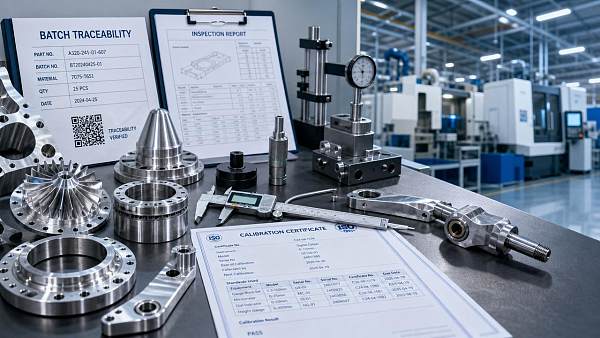
One of the biggest misconceptions in aerospace manufacturing is that product quality can compensate for weak systems. It cannot. Auditors assess whether a business can prove control, not merely whether a sample appears acceptable.
That is why precision engineering for aerospace often fails audits despite strong machining capability. The technical output may be impressive, yet the supporting framework for validation, training, calibration, approval status, and change control may be incomplete.
In aerospace, evidence is part of the product. If the route card is inconsistent, the material certification chain is broken, inspection records are unclear, or process approval is outdated, the delivered component becomes risky by definition.
Auditors also look for repeatability. A supplier that performs well only when experienced personnel are present or customer attention is high will struggle under formal scrutiny. Aerospace compliance depends on stable systems, not heroic effort.
For quality managers, the overall judgment is straightforward. Audit failure usually reflects a control failure, not just a workmanship failure. The sooner that distinction is recognized, the more effective corrective action becomes.
Which audit findings appear most often in precision engineering for aerospace
Although audit checklists vary by customer, regulator, and certification scope, recurring findings tend to cluster around the same operational weaknesses. These patterns are especially common in high-mix, low-volume precision environments.
First, documentation gaps remain one of the leading causes. Shops may have procedures, but revision levels are outdated on the floor, inspection plans do not reflect customer-specific requirements, or records are not completed in real time.
Second, traceability failures are frequent and serious. Material lots, tooling status, serialized parts, special process batches, and inspection results must connect clearly. If any link becomes ambiguous, auditors typically escalate concern quickly.
Third, nonconformance management is often weaker than leaders assume. Parts may be segregated physically, yet disposition records, root-cause logic, rework validation, and concession approvals may not meet aerospace expectations for rigor.
Fourth, process validation and first article discipline are common pain points. Teams sometimes treat first article inspection as a customer formality, when auditors see it as evidence that design requirements were translated into production control correctly.
Fifth, competency and training records can undermine an otherwise capable operation. If inspectors, machinists, or programmers cannot demonstrate current authorization, controlled training completion, and understanding of critical characteristics, confidence drops sharply.
Finally, calibration and measurement system control frequently create hidden exposure. Gages may be in date, yet usage control, environmental conditions, uncertainty awareness, and out-of-tolerance response procedures may be poorly defined.
Why documentation failures are usually symptoms, not the real cause
It is tempting to explain audit failure as a paperwork problem. In reality, poor documentation is often the visible symptom of deeper organizational drift between planning, execution, and accountability.
For example, a missing inspection entry may indicate far more than clerical oversight. It may reveal rushed production scheduling, unclear ownership, weak digital workflow design, or a culture where shipping deadlines override procedural completion.
Similarly, an obsolete procedure on the shop floor may not be a document-control problem alone. It can point to fragmented communication between engineering, quality, and operations, especially after customer drawing changes or process updates.
In many precision engineering for aerospace businesses, documentation breaks down where manual handoffs remain high. Paper travelers, disconnected ERP entries, spreadsheet-based quality records, and verbal approvals create avoidable opportunities for inconsistency.
Auditors recognize this immediately. They do not only ask whether records exist; they test whether the system naturally produces accurate records during normal operations. If the answer depends on last-minute cleanup, the system lacks maturity.
Quality leaders should therefore investigate process architecture, not just form completion. Better templates help, but sustainable audit performance comes from reducing ambiguity, automating control points, and clarifying who owns each compliance-critical step.
How change control undermines compliance in high-precision aerospace work
Few issues damage audit outcomes faster than weak change control. Aerospace manufacturing changes constantly through tooling replacements, CNC program edits, drawing revisions, supplier substitutions, and inspection method adjustments.
Any one of those changes can be legitimate. The problem arises when operational teams make them faster than the quality system can evaluate, approve, communicate, and record them. That gap becomes an audit finding and a safety concern.
Precision engineering for aerospace is especially vulnerable because tolerances are tight and process assumptions are embedded across multiple functions. A minor change in fixturing, tool path, or source material may affect geometry, finish, stress, or fit.
If engineering updates a model but inspection programming still references an earlier requirement, the business may produce seemingly acceptable parts against the wrong standard. Auditors view this as a systemic breakdown, not an isolated mistake.
Robust change control requires more than signatures. It requires impact assessment, effective date discipline, revision visibility at point of use, retraining where needed, and verification that downstream documents and validations were updated accordingly.
Safety managers should pay close attention to informal workarounds. Whenever experienced operators say, “We know how this really runs,” there is a risk that tribal knowledge has replaced controlled process knowledge.
Where supplier management creates audit risk for aerospace manufacturers
Many internal teams focus narrowly on their own machining and inspection controls. Yet audit failures often originate outside the four walls, particularly in outsourced special processes, raw materials, coatings, heat treatment, and finishing.
Aerospace auditors expect supplier oversight to be active, evidence-based, and risk-sensitive. Approved vendor lists alone are not enough if re-evaluations are late, flow-down requirements are incomplete, or incoming verification is superficial.
This matters because the final manufacturer remains accountable. If a subcontractor misses a process parameter, uses an unapproved method, or provides incomplete certification, the compliance burden returns directly to the prime supplier.
For precision engineering for aerospace, supplier control is inseparable from product integrity. A fully compliant machined component can still fail an audit if its material pedigree, special process approval, or external inspection record cannot be trusted.
Strong organizations map supplier-related audit exposure clearly. They identify which external providers affect critical characteristics, what records must accompany each batch, how exceptions are escalated, and when verification requires more than document review.
Procurement, quality, and safety teams should also align on risk thresholds. Cost-driven substitutions, urgent expedites, and split-lot sourcing can introduce compliance complexity that frontline teams are not prepared to absorb without formal review.
What auditors expect to see in root cause and corrective action
After a finding, many companies respond too narrowly. They correct the immediate issue, retrain staff, close the record, and move on. Auditors often reject this approach because it addresses the symptom without preventing recurrence.
Effective root cause in aerospace must explain why the control failed, why it was not detected sooner, and why existing oversight allowed the issue to persist. That requires cross-functional analysis, not quick administrative closure.
For instance, if traceability records are incomplete, the corrective action should not end with “operator reminded to fill in paperwork.” Auditors will ask why the workflow allowed missing data, who reviewed it, and why escapes were not trapped.
The strongest corrective actions usually combine process redesign with accountability measures. Examples include mandatory digital checkpoints, revision-locked documentation, revised approval matrices, error-proofed labels, and layered review for high-risk jobs.
Verification is equally important. Quality teams should define what evidence proves the correction worked over time, such as internal audit results, record completeness trends, scrap reduction, supplier defect rates, or first-pass yield improvement.
When precision engineering for aerospace businesses treat CAPA as a strategic learning mechanism rather than an audit response exercise, findings become far less likely to repeat under customer or certification surveillance.
How quality and safety leaders can spot an audit failure before the auditor does
Most significant audit failures give warning signs long before the official visit. The challenge is that these signals often appear ordinary inside busy operations and are normalized until an external review exposes their seriousness.
One warning sign is chronic dependence on a few experienced employees to “fix” records, interpret specifications, or approve borderline situations. That usually means the system is person-dependent rather than process-dependent.
Another is recurring document lag after engineering changes. If shop packets, inspection plans, and training acknowledgments routinely catch up days later, the organization is operating with compliance latency.
Late nonconformance closure is another red flag. A growing backlog suggests either resource constraints or weak problem ownership. Both conditions increase the chance that similar issues remain active across multiple jobs and customers.
Watch also for inconsistencies between departments. If procurement, production, and quality describe the same control differently, auditors are likely to find a disconnect between stated procedure and actual practice.
Internal audit quality itself is a powerful predictor. If internal audits are checklist-heavy, rushed, and rarely generate meaningful findings, they are not testing the system at the depth external auditors or aerospace customers expect.
Leaders should use pre-audit reviews that follow the full evidence chain: requirement, planning, execution, verification, release, and retained record. This method reveals system fractures far better than isolated document sampling.
What a stronger audit-ready system looks like in practice
An audit-ready operation does not mean a perfect operation. It means a controlled one: requirements are clear, records are current, exceptions are visible, decisions are authorized, and process performance can be demonstrated with evidence.
In practical terms, that starts with disciplined document control and revision management. Everyone should access the same current requirements, and obsolete instructions should be impossible to use accidentally at the point of work.
It also requires embedded traceability, not traceability recreated afterward. Material identity, machine route, operator authorization, inspection status, and external process linkage should move with the job as part of the standard workflow.
For precision engineering for aerospace, first article, in-process inspection, and final release should connect through a coherent digital or tightly controlled manual architecture. Fragmented records undermine trust even when individual steps were completed.
Management review must be operational, not ceremonial. Leaders should routinely examine audit trends, customer escapes, rework causes, supplier risk, calibration exceptions, and training effectiveness as indicators of system health.
Finally, culture matters. Teams need to understand that compliance is not a slowdown imposed by quality. In aerospace, compliance is the mechanism that makes precision trustworthy, repeatable, and safe under external scrutiny.
Conclusion: audit failure in aerospace precision work is usually preventable
When audits fail in precision engineering for aerospace, the root problem is usually not lack of machining skill. It is a gap between technical capability and controlled execution, especially across traceability, change management, documentation, and supplier oversight.
For quality control and safety professionals, the key lesson is to assess system integrity the way an auditor will: can every requirement, action, result, and decision be proven clearly, consistently, and in the correct revision context?
Organizations that answer yes are not just more likely to pass audits. They are also more resilient, more trusted by customers, and better positioned to protect certification status in a sector where process credibility is inseparable from product safety.
If your current controls rely on manual recovery, individual memory, or post hoc record cleanup, the audit risk is already present. The right response is not cosmetic preparation, but structural improvement in how compliance is built into daily work.
Get weekly intelligence in your inbox.
No noise. No sponsored content. Pure intelligence.
 Oct 08, 2026How Digital Health Improves Diagnostic Accuracy and Workflow in Clinical LabsHow Digital Health Improves Diagnostic Accuracy and Workflow in Clinical Labs
 Oct 07, 2026Selecting Voice Picking Systems for German Warehouses: Integration, Languages and ROISelecting Voice Picking Systems for German Warehouses: Integration, Languages and ROI
 Oct 06, 2026How to Choose Last Mile Dispatch Software for On-Time Delivery at ScaleHow to Choose Last Mile Dispatch Software for On-Time Delivery at Scale
 Oct 05, 2026Vietnam’s Consumer Electronics Market: Demand Shifts and Sourcing OpportunitiesVietnam’s Consumer Electronics Market: Demand Shifts and Sourcing Opportunities
 Oct 04, 2026Digital Health Investment Priorities for Providers: Improving Access, Outcomes, and EfficiencyDigital Health Investment Priorities for Providers: Improving Access, Outcomes, and Efficiency
 Oct 03, 2026How to Specify an FR4 Custom PCB Board for High-Voltage and High-Heat DesignsHow to Specify an FR4 Custom PCB Board for High-Voltage and High-Heat Designs
 Oct 02, 2026ERP Software Market Intelligence: Adoption, Pricing, and Vendor Signals to WatchERP Software Market Intelligence: Adoption, Pricing, and Vendor Signals to Watch
 Oct 01, 2026How to Select Calibrated Temperature Data Loggers for GMP Cold Storage MonitoringHow to Select Calibrated Temperature Data Loggers for GMP Cold Storage Monitoring
 Sep 30, 2026Custom Molded Rubber Pricing: What Drives Unit Cost and Tooling Fees?Custom Molded Rubber Pricing: What Drives Unit Cost and Tooling Fees?
 Sep 29, 2026How to Evaluate Energy Management Software Vendors for Multi-Site OperationsHow to Evaluate Energy Management Software Vendors for Multi-Site Operations
 Sep 28, 2026How to Select a DIN Rail Smart Meter for Multi-Circuit Energy MonitoringHow to Select a DIN Rail Smart Meter for Multi-Circuit Energy Monitoring
 Sep 27, 2026TWS Earbuds in Vietnam: Demand Drivers, Price Tiers, and Retail Channel OpportunitiesTWS Earbuds in Vietnam: Demand Drivers, Price Tiers, and Retail Channel Opportunities
 Sep 26, 2026How UAE Clinics Can Qualify a Smart Glucometer Supplier for Accuracy and ComplianceHow UAE Clinics Can Qualify a Smart Glucometer Supplier for Accuracy and Compliance
 Sep 25, 2026Buying Aesthetic Lasers in the USA: FDA Status, Wavelengths, and Service SupportBuying Aesthetic Lasers in the USA: FDA Status, Wavelengths, and Service Support
 Sep 24, 2026Laser Cutting Brass Sheet: How to Prevent Burrs and Heat Marks on Thin PartsLaser Cutting Brass Sheet: How to Prevent Burrs and Heat Marks on Thin Parts
 Sep 23, 2026How to Choose Lightweight ANC Headphones for Comfortable All-Day TravelHow to Choose Lightweight ANC Headphones for Comfortable All-Day Travel
 Sep 22, 2026IPX5 TWS Bluetooth Earbuds: What Protection Do They Offer for Workouts?IPX5 TWS Bluetooth Earbuds: What Protection Do They Offer for Workouts?
 Sep 21, 2026What to Look for in a Grid Integration Company for Utility-Scale Solar ProjectsWhat to Look for in a Grid Integration Company for Utility-Scale Solar Projects
 Sep 20, 2026Microgrid Controller Pricing: What Drives Cost in Commercial Energy Projects?Microgrid Controller Pricing: What Drives Cost in Commercial Energy Projects?
 Sep 19, 2026How to Choose a GaN Charger for Laptops Without Compromising Power or PortabilityHow to Choose a GaN Charger for Laptops Without Compromising Power or Portability
 Sep 18, 2026Floating Solar Farm Costs: CAPEX, OPEX, and the Site Factors That Shape ROIFloating Solar Farm Costs: CAPEX, OPEX, and the Site Factors That Shape ROI
 Sep 17, 2026Drone Delivery Solutions for Last-Mile Routes: Site, Payload, and Range PlanningDrone Delivery Solutions for Last-Mile Routes: Site, Payload, and Range Planning
 Sep 16, 2026When Low-Volume Electronics Manufacturing Makes More Sense Than Mass ProductionWhen Low-Volume Electronics Manufacturing Makes More Sense Than Mass Production
 Sep 15, 2026Wholesale WiFi Smart Switches: What Buyers Should Verify Before OrderingWholesale WiFi Smart Switches: What Buyers Should Verify Before Ordering
 Sep 14, 2026How to Select IoT Sensors for Reliable Monitoring in Harsh Industrial EnvironmentsHow to Select IoT Sensors for Reliable Monitoring in Harsh Industrial Environments
 Sep 13, 2026How Procurement Teams Can Improve Supplier Reliability With Supply Chain VisibilityHow Procurement Teams Can Improve Supplier Reliability With Supply Chain Visibility
 Sep 12, 2026Smart Manufacturing Trends 2026: What Leaders Should Prioritize for ROISmart Manufacturing Trends 2026: What Leaders Should Prioritize for ROI



























