
Are die casting parts worth it for heavy machinery builds
For business evaluators weighing cost, durability, and production efficiency, the question is not simply whether die casting parts are affordable, but whether they deliver long-term value in demanding applications. In heavy equipment projects, die casting parts for industrial machinery can offer clear advantages in consistency, scalability, and design precision—provided the material choice, load requirements, and operating conditions are properly assessed.
When do die casting parts make sense in heavy machinery builds?
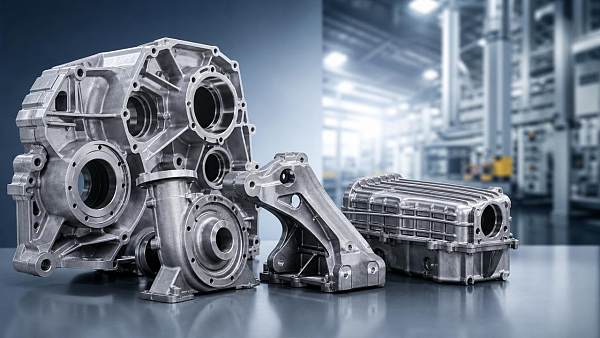
For procurement teams and business evaluators, the real issue is fit-for-purpose use. Die casting parts for industrial machinery are not automatically the best choice for every structural component, but they can be highly effective in housings, covers, brackets, pump bodies, gearbox cases, enclosures, and precision support parts.
Heavy machinery operates under vibration, impact, dust, heat, moisture, and long service cycles. That means buyers must judge die casting on more than unit price. They need to compare dimensional repeatability, machining reduction, production volume, alloy behavior, and total lifecycle cost.
- Choose die casting when the part benefits from high dimensional consistency across medium to large production runs.
- Use it when complex geometries can eliminate secondary assembly steps or reduce machining time.
- Be cautious when the part carries extreme static loads, repeated shock loads, or severe thermal cycling without design validation.
- Review alloy, wall thickness, porosity control, and post-processing before approving critical machine applications.
In cross-sector procurement, this matters because many machinery programs now share design logic with advanced manufacturing, energy systems, electronics integration, and healthcare equipment platforms. Buyers need component decisions that support performance and scalable sourcing at the same time.
What business evaluators often overlook
Some teams compare cast, forged, and machined parts only at quotation stage. That is too late. The highest hidden costs usually come from tolerance drift, long machining cycles, assembly mismatch, delayed tooling approval, or supplier process inconsistency. Die casting parts for industrial machinery can reduce these risks when the design window is defined early.
How die casting compares with machining, sand casting, and forging
The table below helps evaluators compare common manufacturing routes for industrial machinery components. It focuses on the decision points that affect sourcing strategy, cost recovery, and operational risk rather than engineering theory alone.
This comparison shows why die casting parts for industrial machinery are valuable in the right category of components. They often win where precision geometry, repeatable production, and assembly efficiency matter more than extreme load-bearing strength.
A practical decision rule
If a part is highly complex, ordered in recurring volume, and expensive to machine from billet, die casting deserves serious consideration. If the same part also acts as a primary stress member with significant impact exposure, buyers should ask whether a forged or machined design offers lower long-term risk.
Which technical factors determine long-term value?
Evaluating die casting parts for industrial machinery requires more than reviewing the drawing. The buyer should connect mechanical performance to service conditions, not just nominal specifications. A part that performs well in stationary equipment may fail early in mobile or vibration-intensive machinery.
Key technical checks before approval
- Alloy selection: Aluminum alloys are common for lightweight housings and thermal management, while zinc alloys may suit smaller precision components with fine detail requirements.
- Wall thickness balance: Uneven sections can increase shrinkage variation, internal defects, and cycle inefficiency.
- Porosity control: Pressure tightness matters for hydraulic, pneumatic, and fluid-handling machinery parts.
- Tolerance zones: Understand which features can remain as-cast and which need secondary machining.
- Surface treatment compatibility: Corrosion resistance, paint adhesion, and wear behavior depend on both alloy and finishing route.
For business evaluators, these technical factors are commercial factors. They influence scrap rates, maintenance frequency, sealing performance, field returns, and supplier qualification confidence.
The following table summarizes typical evaluation criteria used when screening die casting parts for industrial machinery across varied heavy equipment categories.
Using a structured checklist like this prevents a common sourcing mistake: approving a casting based on drawing compliance alone while ignoring how production scale and field conditions reshape total value.
What are the strongest applications for die casting parts for industrial machinery?
Not every heavy machinery assembly should be cast, but many subcomponents benefit directly from die casting. The best applications are those where shape complexity and repeatability support operational efficiency.
High-fit scenarios
- Transmission and gearbox housings where dimensional stability supports assembly alignment and lubrication control.
- Motor and electronics enclosures in smart machinery where heat dissipation and cable routing are built into the geometry.
- Pump bodies and valve-related casings when pressure management and finishing requirements are properly validated.
- Protective covers, control boxes, and support brackets where weight reduction and fast assembly matter.
- Integrated mounting parts used across advanced manufacturing lines, green energy support equipment, and sensor-enabled industrial systems.
These use cases reflect a larger market shift. Heavy machinery is no longer isolated from digitalization and system integration. Buyers increasingly need components that support mechanical function, electrical compatibility, and cleaner assembly logic at once.
How should procurement teams assess cost, tooling, and payback?
The most common objection to die casting parts for industrial machinery is initial tooling cost. That concern is valid, but incomplete. The better metric is cost over program life, including machining reduction, assembly simplification, quality consistency, and reorder predictability.
Cost drivers that change the equation
- Tooling investment is front-loaded, so payback improves when demand is stable or forecastable.
- Complex parts may combine multiple functions into one casting, lowering fastener count and assembly labor.
- Repeatability can reduce incoming inspection variability and field-fit problems across multiple production batches.
- Poor design for casting can erase savings through scrap, rework, leak issues, or excessive machining.
Business evaluators should ask suppliers for a total cost view rather than a piece-price-only quote. That discussion should include tooling life assumptions, machining allowances, finishing needs, packaging logic, and expected lead-time stability.
A simple payback mindset
If die casting reduces downstream machining, assembly labor, and defect variation across thousands of units, the upfront investment can be commercially justified. If volume is uncertain and design changes are still likely, a lower-tooling process may be safer during early program stages.
What standards, compliance checks, and supplier controls matter?
In global B2B supply chains, compliance is part of value. Buyers of die casting parts for industrial machinery should not rely only on material declarations. They also need process visibility, traceability discipline, and practical quality controls that match the application risk.
Common checkpoints during supplier evaluation
- Confirm material standards and alloy documentation relevant to the target market and equipment category.
- Review dimensional inspection methods, leak testing where applicable, and process control for porosity-sensitive parts.
- Check whether surface finishing, coating, or post-machining is managed consistently across batches.
- Assess whether the supplier can support PPAP-style documentation, first article review, or customer-specific quality requirements when needed.
For decision-makers operating across manufacturing, energy, electronics, healthcare technology, or software-connected supply chains, the real advantage comes from informed comparison. That is where data-driven sourcing intelligence becomes essential.
TradeNexus Pro supports this process by helping buyers interpret supplier capabilities, market signals, and application-specific risks through a sharper industry lens. Instead of generic listings, evaluators benefit from deeper context on production strategy, technology shifts, and sourcing priorities.
FAQ: what do buyers ask most about die casting parts for industrial machinery?
Are die casting parts strong enough for heavy equipment?
They can be, depending on the part function. Die casting parts for industrial machinery are often suitable for housings, cases, covers, and brackets. For highly stressed impact-loaded structural elements, forged or machined alternatives may be more appropriate unless the design is specifically validated.
How do I know whether tooling cost is justified?
Look at annual volume, part complexity, machining reduction, and program duration. If your project needs recurring batches and stable design, tooling can be offset by lower unit cost and faster assembly. If demand is uncertain, start with a broader process comparison before committing.
What are the biggest risks during sourcing?
The biggest risks include selecting the wrong alloy, underestimating porosity sensitivity, assuming as-cast tolerances will replace all machining, and evaluating suppliers only on price. In heavy machinery, field failures often come from process mismatch rather than visible design errors.
How long is the typical lead time?
Lead time depends on tooling complexity, sample approval, machining scope, and finishing requirements. Buyers should separate tooling development time from repeat production time and ask for milestone visibility, especially when launch schedules are tight.
Why choose us for deeper sourcing evaluation and next-step planning?
For organizations comparing die casting parts for industrial machinery across suppliers, regions, and application scenarios, better decisions come from better context. TradeNexus Pro helps procurement directors, sourcing managers, and business evaluators move beyond surface-level quotes and into application-aware assessment.
- Clarify whether your target component is a strong candidate for die casting or a better fit for machining, forging, or another route.
- Review parameter priorities such as alloy choice, tolerance strategy, pressure tightness, surface treatment, and assembly integration.
- Discuss delivery timing, tooling implications, sampling milestones, and supplier screening factors for global sourcing programs.
- Evaluate custom solution paths for heavy equipment, smart industrial systems, and cross-sector machinery platforms with clearer commercial logic.
If your team needs support with parameter confirmation, product selection, delivery planning, customization options, certification questions, sample strategy, or quotation comparison, TradeNexus Pro can help structure the decision process with industry-specific intelligence that reduces uncertainty and shortens evaluation time.
Get weekly intelligence in your inbox.
No noise. No sponsored content. Pure intelligence.
 Oct 08, 2026How Digital Health Improves Diagnostic Accuracy and Workflow in Clinical LabsHow Digital Health Improves Diagnostic Accuracy and Workflow in Clinical Labs
 Oct 07, 2026Selecting Voice Picking Systems for German Warehouses: Integration, Languages and ROISelecting Voice Picking Systems for German Warehouses: Integration, Languages and ROI
 Oct 06, 2026How to Choose Last Mile Dispatch Software for On-Time Delivery at ScaleHow to Choose Last Mile Dispatch Software for On-Time Delivery at Scale
 Oct 05, 2026Vietnam’s Consumer Electronics Market: Demand Shifts and Sourcing OpportunitiesVietnam’s Consumer Electronics Market: Demand Shifts and Sourcing Opportunities
 Oct 04, 2026Digital Health Investment Priorities for Providers: Improving Access, Outcomes, and EfficiencyDigital Health Investment Priorities for Providers: Improving Access, Outcomes, and Efficiency
 Oct 03, 2026How to Specify an FR4 Custom PCB Board for High-Voltage and High-Heat DesignsHow to Specify an FR4 Custom PCB Board for High-Voltage and High-Heat Designs
 Oct 02, 2026ERP Software Market Intelligence: Adoption, Pricing, and Vendor Signals to WatchERP Software Market Intelligence: Adoption, Pricing, and Vendor Signals to Watch
 Oct 01, 2026How to Select Calibrated Temperature Data Loggers for GMP Cold Storage MonitoringHow to Select Calibrated Temperature Data Loggers for GMP Cold Storage Monitoring
 Sep 30, 2026Custom Molded Rubber Pricing: What Drives Unit Cost and Tooling Fees?Custom Molded Rubber Pricing: What Drives Unit Cost and Tooling Fees?
 Sep 29, 2026How to Evaluate Energy Management Software Vendors for Multi-Site OperationsHow to Evaluate Energy Management Software Vendors for Multi-Site Operations
 Sep 28, 2026How to Select a DIN Rail Smart Meter for Multi-Circuit Energy MonitoringHow to Select a DIN Rail Smart Meter for Multi-Circuit Energy Monitoring
 Sep 27, 2026TWS Earbuds in Vietnam: Demand Drivers, Price Tiers, and Retail Channel OpportunitiesTWS Earbuds in Vietnam: Demand Drivers, Price Tiers, and Retail Channel Opportunities
 Sep 26, 2026How UAE Clinics Can Qualify a Smart Glucometer Supplier for Accuracy and ComplianceHow UAE Clinics Can Qualify a Smart Glucometer Supplier for Accuracy and Compliance
 Sep 25, 2026Buying Aesthetic Lasers in the USA: FDA Status, Wavelengths, and Service SupportBuying Aesthetic Lasers in the USA: FDA Status, Wavelengths, and Service Support
 Sep 24, 2026Laser Cutting Brass Sheet: How to Prevent Burrs and Heat Marks on Thin PartsLaser Cutting Brass Sheet: How to Prevent Burrs and Heat Marks on Thin Parts
 Sep 23, 2026How to Choose Lightweight ANC Headphones for Comfortable All-Day TravelHow to Choose Lightweight ANC Headphones for Comfortable All-Day Travel
 Sep 22, 2026IPX5 TWS Bluetooth Earbuds: What Protection Do They Offer for Workouts?IPX5 TWS Bluetooth Earbuds: What Protection Do They Offer for Workouts?
 Sep 21, 2026What to Look for in a Grid Integration Company for Utility-Scale Solar ProjectsWhat to Look for in a Grid Integration Company for Utility-Scale Solar Projects
 Sep 20, 2026Microgrid Controller Pricing: What Drives Cost in Commercial Energy Projects?Microgrid Controller Pricing: What Drives Cost in Commercial Energy Projects?
 Sep 19, 2026How to Choose a GaN Charger for Laptops Without Compromising Power or PortabilityHow to Choose a GaN Charger for Laptops Without Compromising Power or Portability
 Sep 18, 2026Floating Solar Farm Costs: CAPEX, OPEX, and the Site Factors That Shape ROIFloating Solar Farm Costs: CAPEX, OPEX, and the Site Factors That Shape ROI
 Sep 17, 2026Drone Delivery Solutions for Last-Mile Routes: Site, Payload, and Range PlanningDrone Delivery Solutions for Last-Mile Routes: Site, Payload, and Range Planning
 Sep 16, 2026When Low-Volume Electronics Manufacturing Makes More Sense Than Mass ProductionWhen Low-Volume Electronics Manufacturing Makes More Sense Than Mass Production
 Sep 15, 2026Wholesale WiFi Smart Switches: What Buyers Should Verify Before OrderingWholesale WiFi Smart Switches: What Buyers Should Verify Before Ordering
 Sep 14, 2026How to Select IoT Sensors for Reliable Monitoring in Harsh Industrial EnvironmentsHow to Select IoT Sensors for Reliable Monitoring in Harsh Industrial Environments
 Sep 13, 2026How Procurement Teams Can Improve Supplier Reliability With Supply Chain VisibilityHow Procurement Teams Can Improve Supplier Reliability With Supply Chain Visibility
 Sep 12, 2026Smart Manufacturing Trends 2026: What Leaders Should Prioritize for ROISmart Manufacturing Trends 2026: What Leaders Should Prioritize for ROI



























